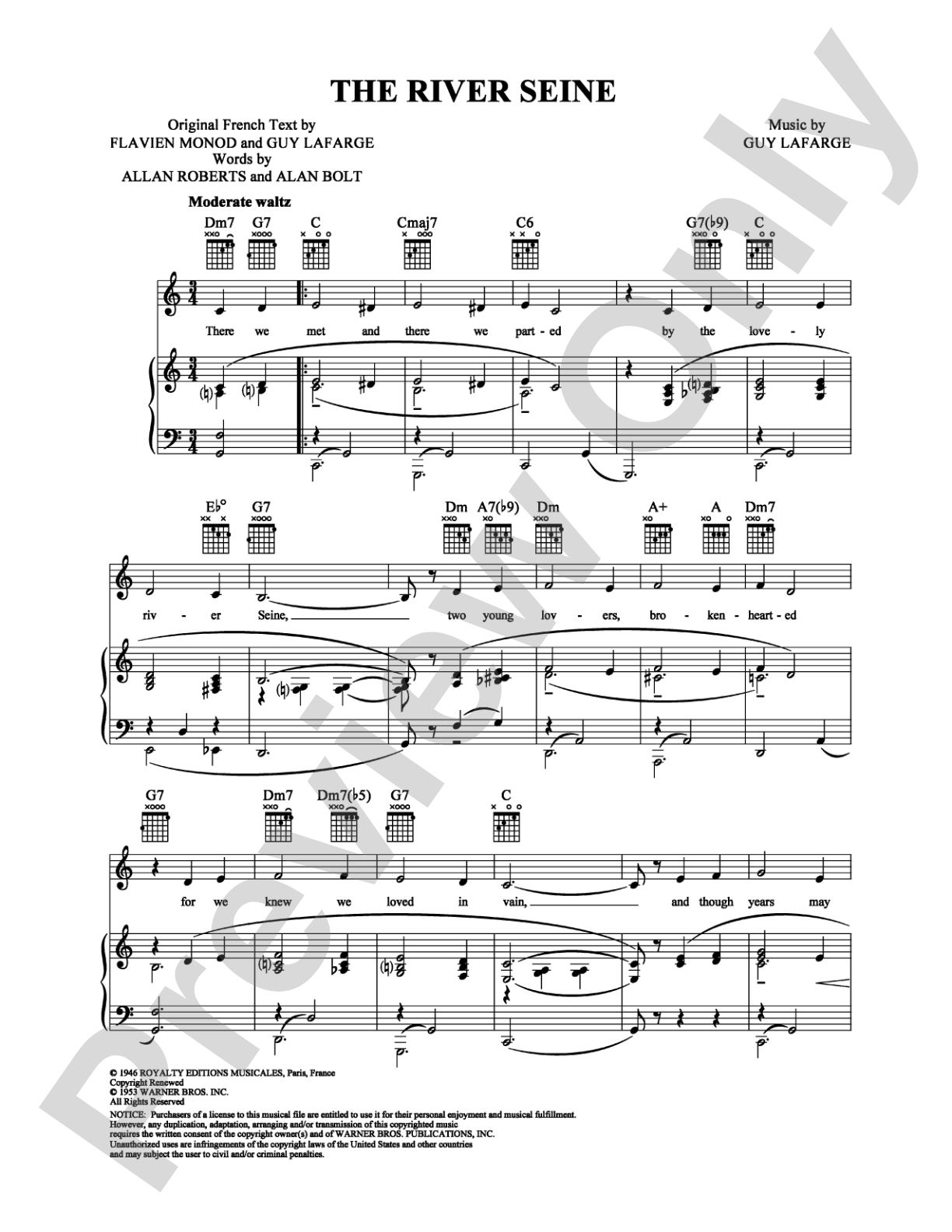
The River Seine: Piano/Vocal/Chords Digital Sheet Music

The River Seine: Piano/Vocal/Chords Digital Sheet Music

Hugo Winterhalter, Guy Lafarge

Item: 00-PS-0008518

Digital Download
$3.99
Description

The River Seine: Piano/Vocal/Chords Digital Sheet Music isn't in MakeMusic Cloud just yet...but it could be. Let us know you'd like to see it, and you'll help shape what comes next. In the meantime, start a free trial and dive into thousands of interactive titles your students can play along with today.

Sample Audio
No sample audio found.
Sample Video
Additional Details
SKU: 00-PS-0008518

More about this title

About the Artist: Hugo Winterhalter

Hugo Winterhalter (1909, 1973) was an arranger and conductor who shaped the sound of American popular music during the 1950s and 1960s. His lush orchestrations and sophisticated harmonic sensibilities made him a go-to arranger for major labels, and his work bridged the worlds of jazz standards, light classical music, and vocal ballads with remarkable fluency.

Winthalter's approach to arrangement emphasized clarity and elegance. He understood how to frame a melody without overwhelming it, and his jazz sensibilities informed even his most commercial work. For music educators, his scores offer a masterclass in voice leading and orchestration that students can study and emulate.

Why we love this

This is a jazz standard with real harmonic substance, making it valuable for pianists and singers working through the repertoire beyond beginner fake books. The piano/vocal/chords format gives you flexibility to work with accompaniment in a lesson or rehearsal setting, or to use it as a study score for understanding voice leading and chord voicing in a jazz context.

What to expect

This piece evokes the gentle, reflective quality of the Seine itself. Winterhalter's harmonies create a sense of movement without urgency, more like drifting than rushing. The overall mood is nostalgic and sophisticated, inviting listeners into an intimate moment rather than demanding their attention.

Who it's for

Jazz pianists and vocalists building their standard repertoire, as well as piano teachers working with intermediate to advanced students who are ready to explore jazz voicing and interpretation. This format also works well for music students studying jazz harmony and arrangement.

How to get the most out of it

  • Listen closely to the harmonic rhythm and resist rushing through sustained chords; jazz standards often depend on space and the weight of each chord change to communicate the melody.
  • Work the melodic line and chord progression separately before combining them, so the voice or right hand can shape the tune while the left hand locks into the harmonic foundation.
  • Pay attention to the pickup notes and phrasing before each main phrase; they set up the groove and prevent the melody from landing too squarely on the downbeat.

How to use it

Pair this with other jazz standards in a recital to demonstrate a vocalist's or pianist's command of the genre, or use it as a study piece in a jazz ensemble context to explore how chord charts translate to ensemble voicing. It also stands alone beautifully as an intermission or closing number in a mixed classical and popular program.

Skills your students will build

  • Reading and interpreting chord symbols in a jazz context
  • Understanding voice leading and harmonic function in standards
  • Balancing melodic phrasing with accompaniment texture
  • Developing stylistically appropriate rubato and interpretation

You May Also Like