
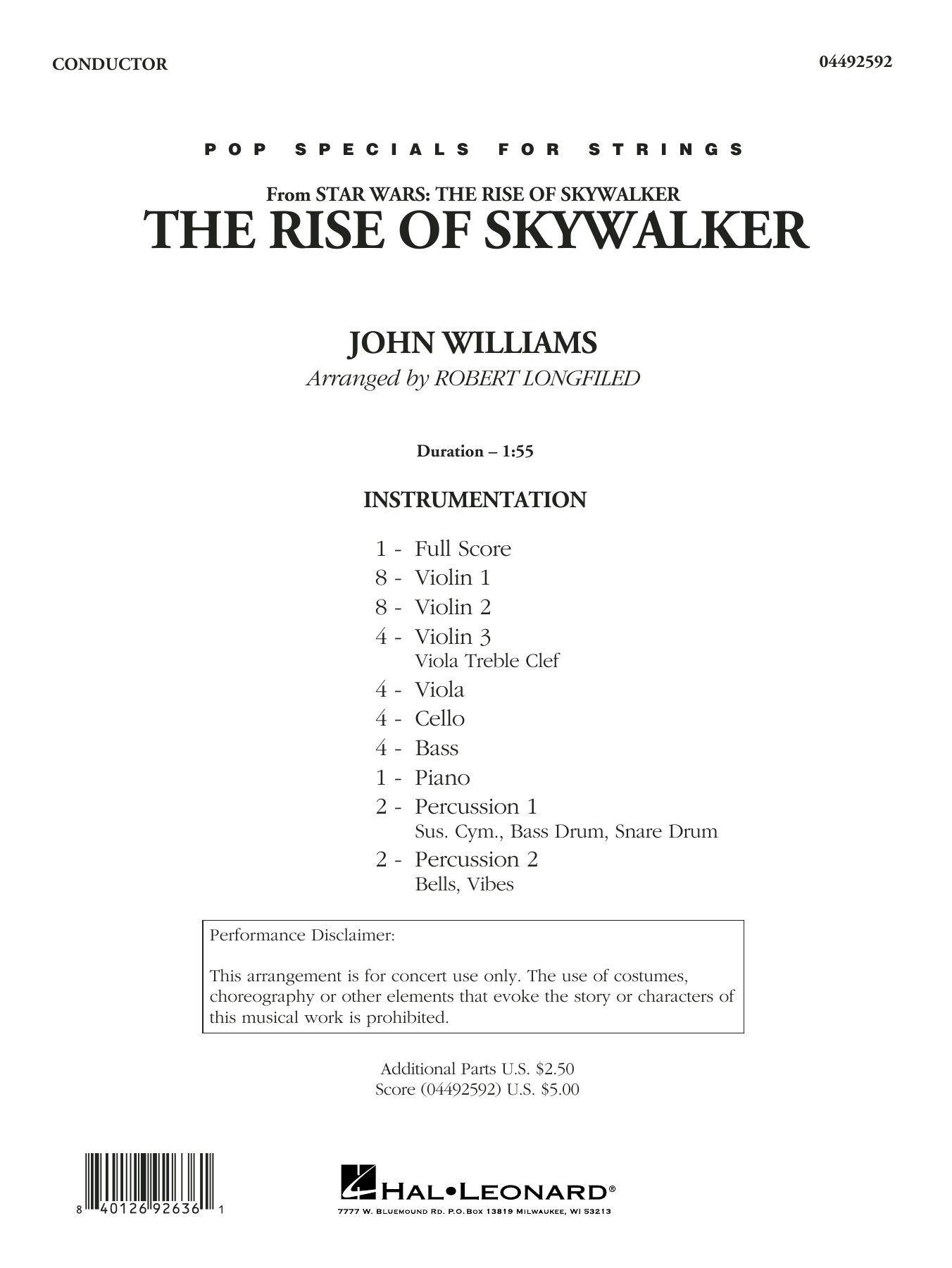

The Rise of Skywalker (from Star Wars: The Rise of Skywalker) (arr. Robert Longfield): String Orchestra Conductor Score & Parts
By John Williams / Arranged by Robert Longfield
Item: 35-PK00486320
$55.00
Pickup currently not available
Buy Extra Parts (Digital PDF Download)
Parts Added to Cart!
Description
The Rise of Skywalker (from Star Wars: The Rise of Skywalker) (arr. Robert Longfield)


The Rise of Skywalker (from Star Wars: The Rise of Skywalker) (arr. Robert Longfield): String Orchestra Conductor Score & Parts isn't in MakeMusic Cloud just yet...but it could be. Let us know you'd like to see it, and you'll help shape what comes next. In the meantime, start a free trial and dive into thousands of interactive titles your students can play along with today.
Request This Title
Tell us you want it.
Start Your Free Trial
Explore everything that's ready to play right now.
Sample Audio
No sample audio found.
Sample Video
No sample videos found.
Additional Details
Publisher:
Hal Leonard
SKU:
35-PK00486320
More about this title
About the Composer: John Williams
John Williams stands as one of the most consequential film composers in history, with a career spanning over six decades and dozens of Academy Award nominations. His work across the Star Wars saga, Indiana Jones, Jurassic Park, and countless other franchises has shaped how entire generations experience music in cinema. For music educators, Williams offers an invaluable resource: orchestral writing that balances accessibility with sophistication, memorable thematic material that students engage with immediately, and masterful scoring techniques that reveal themselves through careful study and performance.
What makes Williams particularly relevant to string educators is his gift for writing idiomatically for strings while maintaining the dramatic thrust of his film scores. His orchestrations respect the technical abilities of student musicians while demanding genuine musicianship and interpretive maturity.
Why we love this
This arrangement captures the epic sweep of the final Star Wars film's theme in a form that works beautifully for student orchestras without sacrificing the grandeur of Williams's original conception. The string scoring offers clear parts for advancing musicians while the conductor retains all the dramatic momentum and heroic character audiences expect from this material.
What to expect
Triumphant and sweeping, with the weight of narrative culmination built into every phrase. The music carries both the majesty of adventure and the gravity of stakes that come with a saga's final chapter, unfolding with the kind of orchestral grandeur that reminds listeners why they love film scores.
Who it's for
String orchestras at the intermediate to advanced level seeking substantial film music that connects with audiences immediately. Directors programming concerts with contemporary appeal or looking to include recognizable thematic material alongside standard repertoire will find this a natural fit.
How to get the most out of it
- Shape the opening theme with a sense of inevitability rather than rush; the heroic quality emerges from committed, sustained tone and careful phrase architecture rather than aggressive articulation.
- Balance the upper strings against violas and cellos; Williams wrote these voices with specific dramatic intent, and transparent layering reveals the architecture of the arrangement.
- Mark all section-specific rehearsal priorities in advance with your musicians so they understand how their part contributes to the whole; awareness builds ownership and musicianship.
How to use it
Open a pops concert or family performance with this theme to set an energetic, celebratory tone, or place it as a finale that sends audiences out with the heroic momentum film music does so well. It also serves as an excellent repertoire choice for spring concerts when directors want to program something contemporary and engaging alongside classical works.
Skills your students will build
- Sustained legato phrasing across extended melodic lines
- Balance and blend within an expanded string section (multiple violin parts, viola and cello independence)
- Responding to dramatic arc and emotional narrative through ensemble playing
- Reading music at a moderate tempo with clear rhythmic clarity and articulation variety