The Right Time Sheet Music Preview

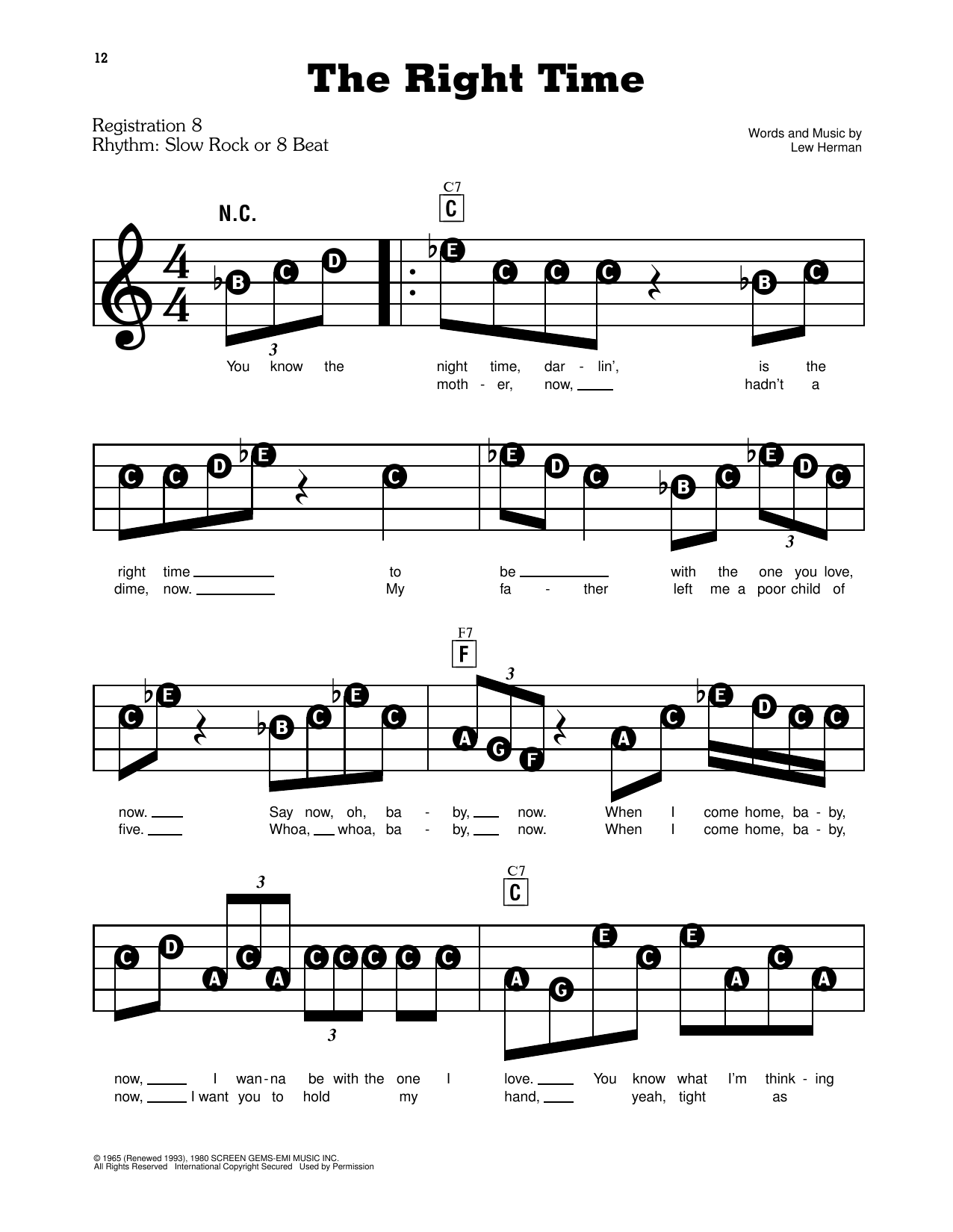
The Right Time: E-Z Play Today

As performed by Ray Charles

Item: 35-DS00755364

Digital Download
$4.99
Description

The Right Time: E-Z Play Today isn't in MakeMusic Cloud just yet...but it could be. Let us know you'd like to see it, and you'll help shape what comes next. In the meantime, start a free trial and dive into thousands of interactive titles your students can play along with today.

Sample Audio
No sample audio found.
Sample Video
Additional Details
Publisher: Hal Leonard
Page Count: 5
SKU: 35-DS00755364

More about this title

About the Artist: Ray Charles

Ray Charles revolutionized American music by fusing gospel, blues, country, and jazz into a deeply personal sound that transcended genre boundaries. His keyboard work combined stride piano technique with blues vocabulary and orchestral sensibility, making him one of the most influential pianists in popular music history.

Why we love this

Ray Charles's compositions demand that pianists grapple with authentic blues-jazz phrasing alongside pop accessibility, creating repertoire that feels both serious and joyful. The blend of sophisticated harmony with straightforward melodic appeal gives students permission to play music that swings without apologizing for its commercial roots.

What to expect

The piece carries an unhurried confidence, moving through Ray's signature chord movement with the ease of someone who knows exactly where the song will go. There's warmth and wit woven through the changes, an emotional openness that makes even complex harmonies feel natural and inevitable.

Who it's for

This arrangement serves pianists building comfort with blues changes and jazz phrasing conventions who want to work with genuine American songwriting rather than pedagogical exercises. It works equally well for students studying popular music idioms and those exploring how classical training intersects with vernacular styles.

How to get the most out of it

  • Let the left hand establish the groove before layering melodic content; Ray's stride patterns anchor everything else that happens at the keyboard.
  • Explore the space between strict time and rhythmic freedom. Ray's phrasing often sits slightly behind the beat, creating a relaxed pocket rather than locked-in precision.
  • Voice the chords with warmth rather than brightness. This isn't a classical piece; darker, richer voicings honor the soul music roots.
  • Pay attention to the lyrical quality of melody lines. Even uptempo sections need singing quality, not just accuracy.

How to use it

Consider pairing this with other 20th century American songwriting to demonstrate how popular music and concert music occupy the same compositional landscape. It also provides an ideal bridge repertoire when introducing jazz standards to students trained primarily in classical literature.

Skills your students will build

  • Blues harmony and seventh chord voicings
  • Stride piano technique and left hand independence
  • Rhythmic flexibility and swing phrasing
  • Reading jazz chord symbols and comping
  • Balancing technical demands with lyrical expression

You May Also Like