
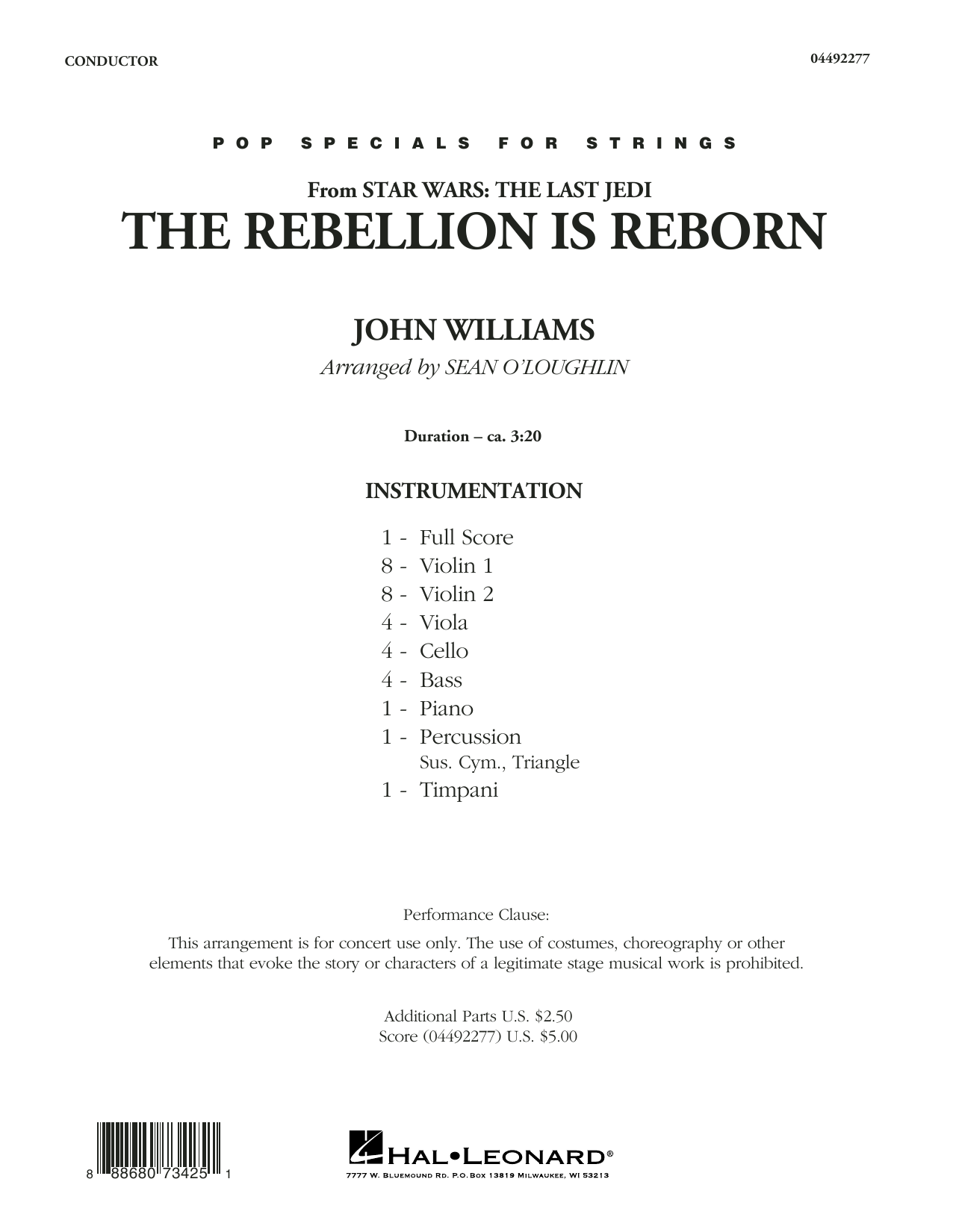

The Rebellion Is Reborn (from Star Wars: The Last Jedi): String Orchestra Conductor Score & Parts
By John Williams / Arranged by Sean O'Loughlin
Grade: 3-4
Item: 35-PK00415347
$55.00
Pickup currently not available
Buy Extra Parts (Digital PDF Download)
Parts Added to Cart!
Description
From Episode VIII of the Star Wars saga, here is a masterful setting for mature string ensembles. Based on the "concert" edition created by Mr. Williams himself, "The Rebellion is Reborn" brings the excitement and drama of "The Last Jedi" to the concert stage.


The Rebellion Is Reborn (from Star Wars: The Last Jedi): String Orchestra Conductor Score & Parts isn't in MakeMusic Cloud just yet...but it could be. Let us know you'd like to see it, and you'll help shape what comes next. In the meantime, start a free trial and dive into thousands of interactive titles your students can play along with today.
Request This Title
Tell us you want it.
Start Your Free Trial
Explore everything that's ready to play right now.
Sample Audio
No sample audio found.
Sample Video
No sample videos found.
Additional Details
Publisher:
Hal Leonard
SKU:
35-PK00415347
More about this title
About the Composer: John Williams
John Williams stands as the most performed composer of the modern era, with a catalog spanning seven decades of film scores that have defined generations of moviegoers. His mastery of orchestration and thematic development draws directly from the classical tradition, making his concert works exceptionally valuable for music education. His string writing in particular showcases sophisticated harmonic language and emotional depth that challenges and rewards student musicians at every level.
Why we love this
This arrangement captures the dramatic sweep of Williams' original without oversimplifying the orchestration, giving your string ensemble a chance to play genuinely sophisticated material that sounds impressive without requiring professional technique. The "concert" edition designation means it's been thoughtfully adapted for the stage rather than hastily transcribed, and Sean O'Loughlin's arranging respects the integrity of Williams' voice while making the piece teachable at Grade 3-4 level.
What to expect
Soaring and defiant, with orchestral colors that shift from intimate string writing to sweeping unison passages. The music conveys urgency and hope in equal measure, the kind of emotional directness that makes concert audiences sit forward in their seats.
Who it's for
String orchestras with solid fundamentals and the maturity to handle film score repertoire that demands both technical control and musical storytelling. This works for programs looking to balance classical training with material that excites students and audiences alike.
How to get the most out of it
- Balance the melodic line across the first violins and violas; Williams layers his themes across multiple voices, and clarity matters more than volume when revealing this counterpoint.
- Shape the dynamic arcs in full phrase units rather than responding to every marking. This music is about forward momentum and emotional arc, not moment-to-moment reactions.
- Work the rhythmic precision of the lower strings early and separately. The foundation needs to lock before you layer in the textural details from the upper voices.
- Record rehearsals and listen back to check intonation in the sustained passages. String vibrato and ensemble tuning become especially noticeable when the tempo slows.
How to use it
Consider opening a concert with this piece to establish energy and engagement before moving into longer classical works, or pair it with other film music arrangements to create a thematic program around cinema scoring. It also serves as an excellent capstone to a unit on modern orchestration and arrangement, since students can study how a composer adapts material for different contexts.
Skills your students will build
- Sustaining long melodic lines with dynamic shape and consistent vibrato
- Reading and executing rapid position shifts in upper register passages
- Balancing ensemble intonation across divisi writing
- Responding to complex dynamic layering and sectional cues
- Interpreting thematic material and maintaining narrative arc across multiple phrases