
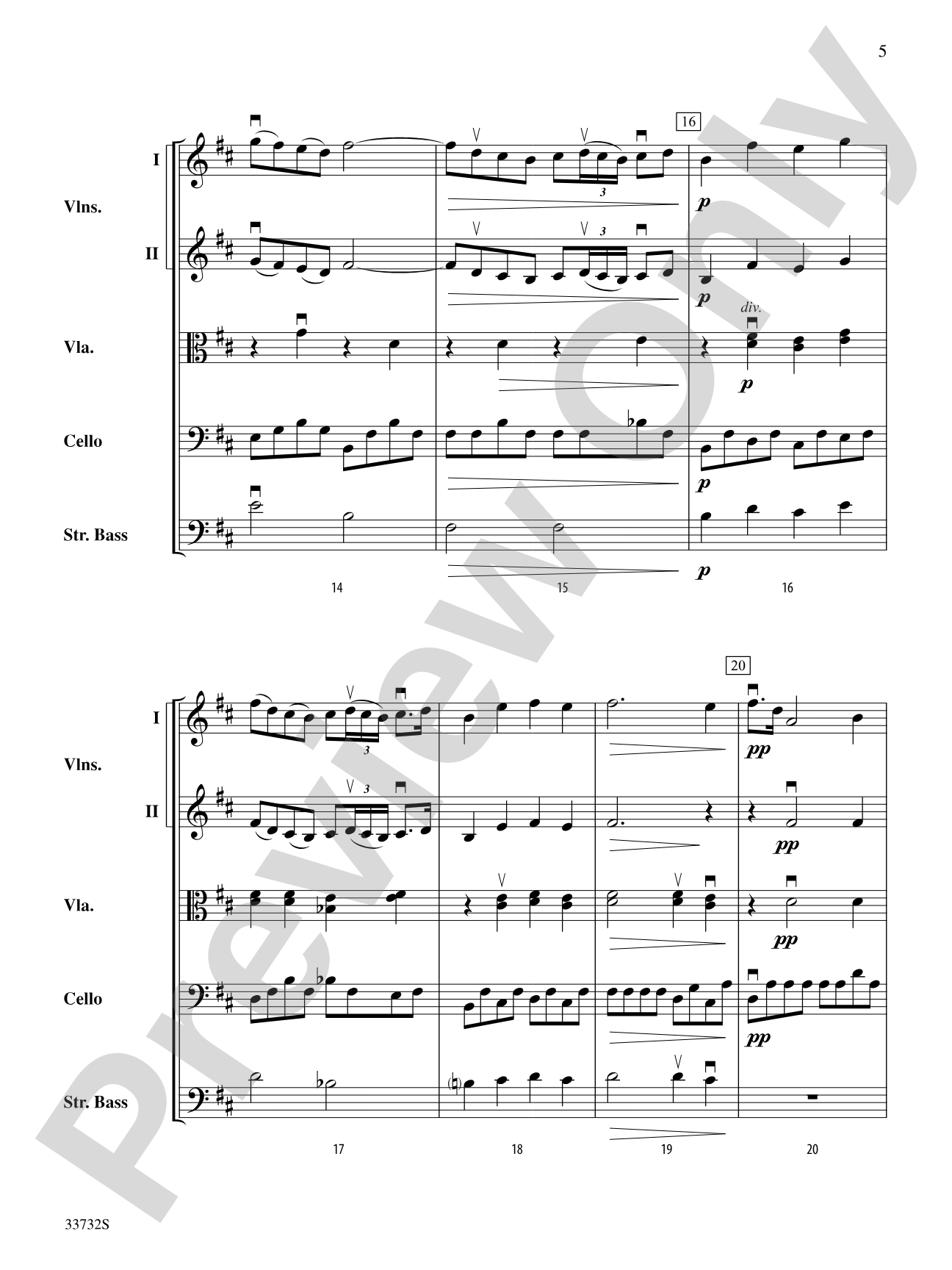
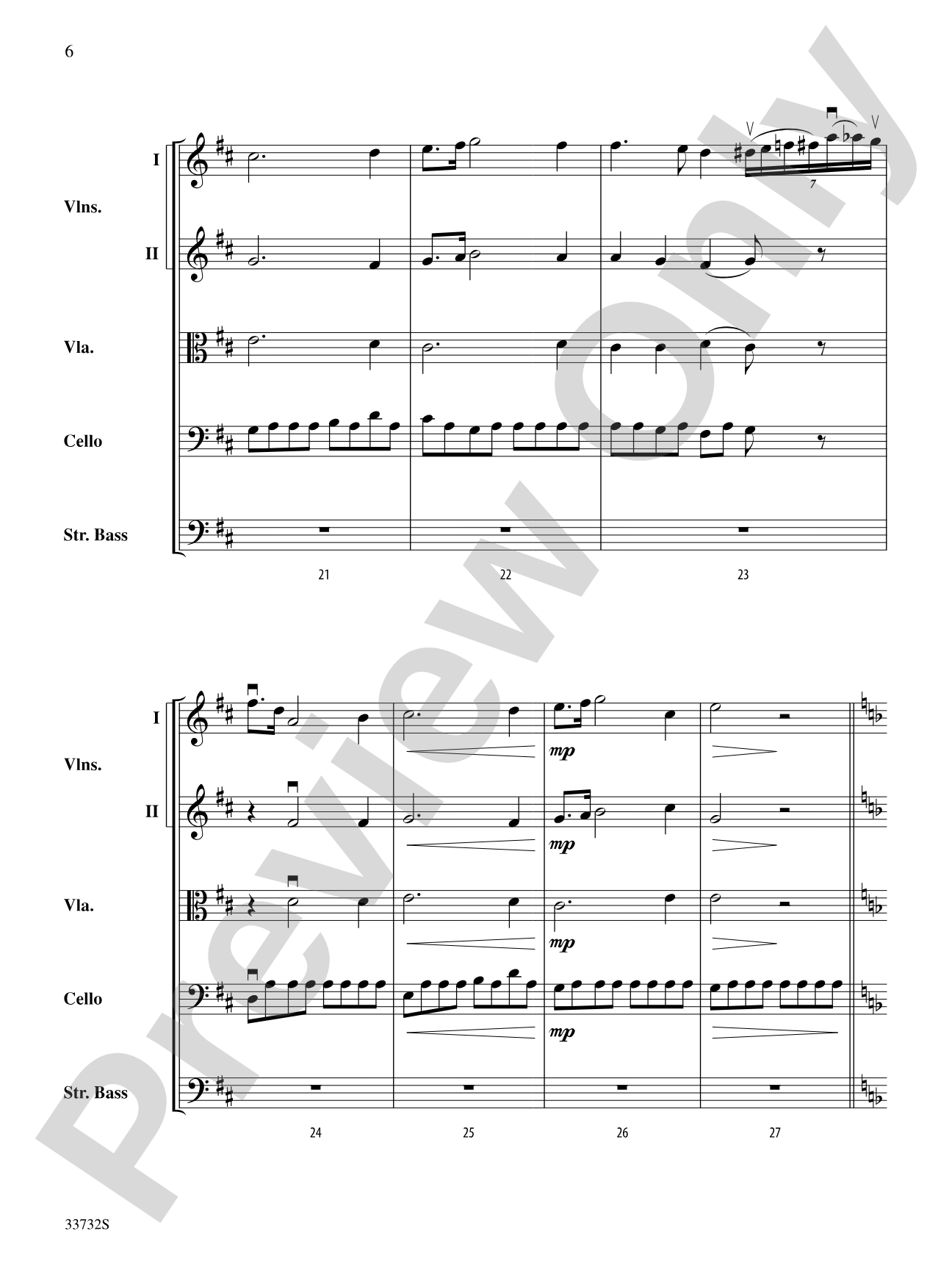
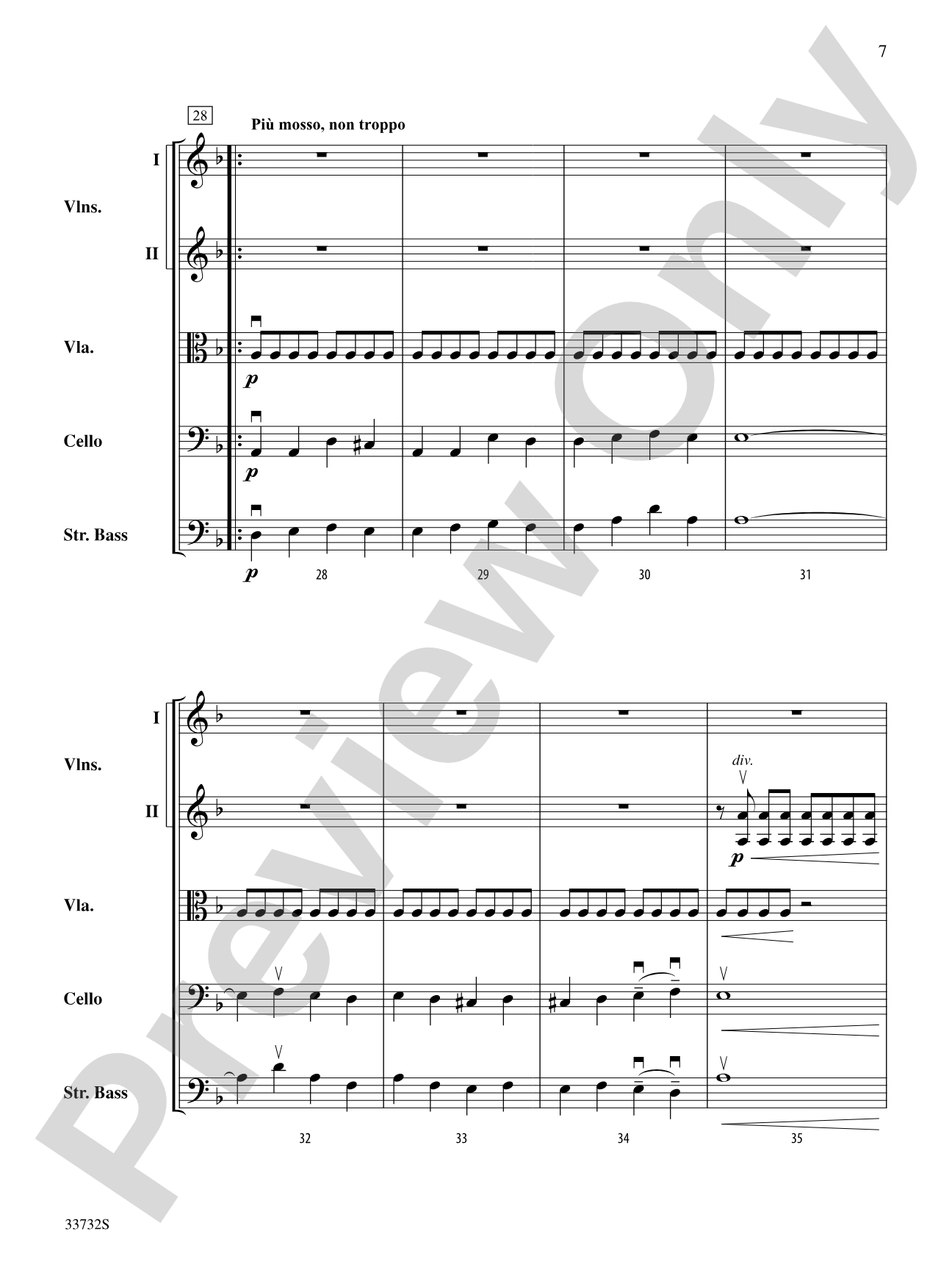
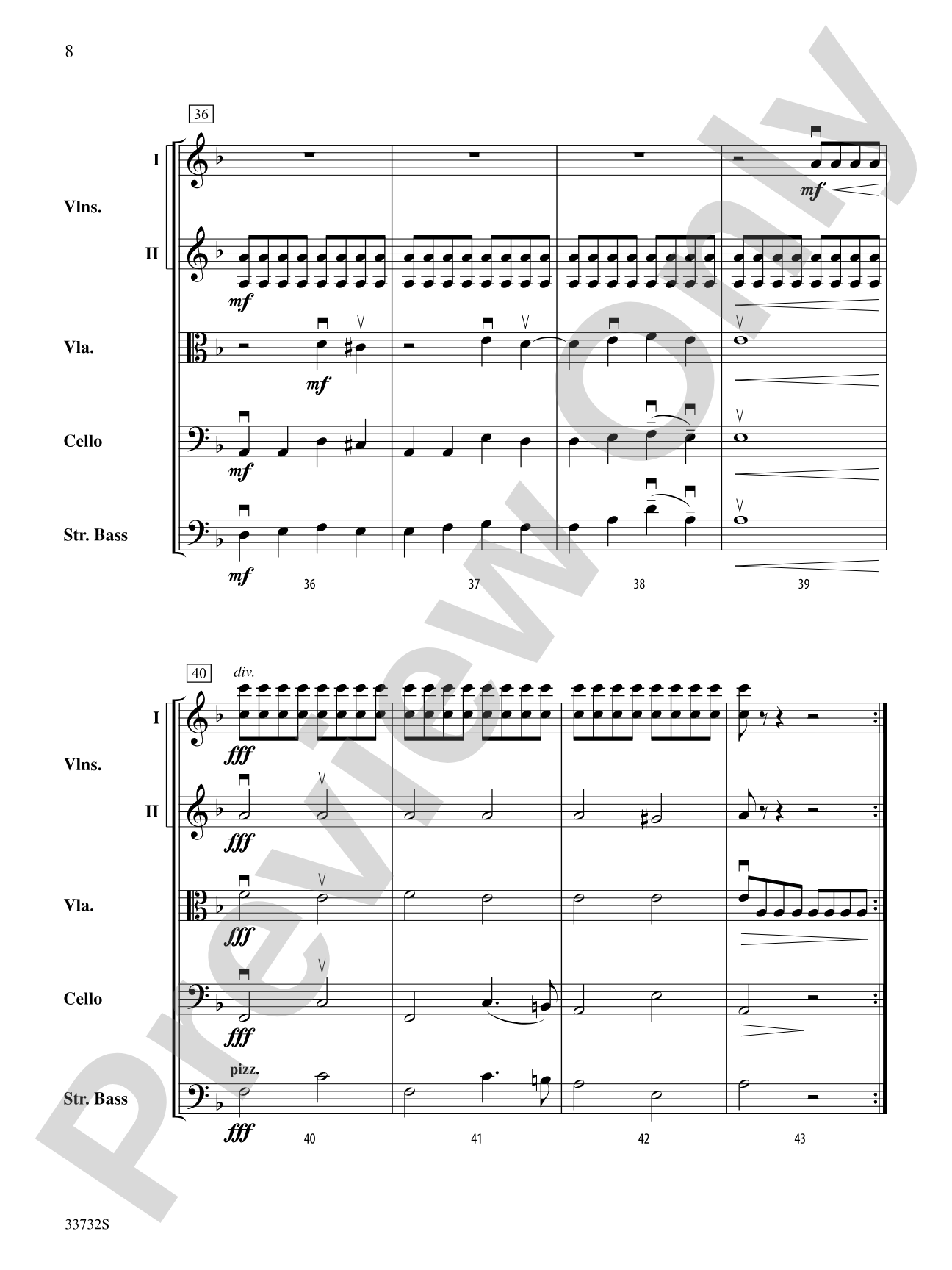

The "Raindrop" Prelude: String Orchestra Conductor Score & Parts
By Frédéric Chopin / arr. Ryan E. Ellefsen
Grade: 2.5
Item: 00-PK-0004221

$47.00
Pickup currently not available
Buy Extra Parts (Digital PDF Download)
| Product | Price | Quantity |
|---|---|---|
| The "Raindrop" Prelude: Score | $9.00 | |
| The "Raindrop" Prelude: 1st Violin | $5.99 | |
| The "Raindrop" Prelude: 2nd Violin | $5.99 | |
| The "Raindrop" Prelude: Viola | $5.99 | |
| The "Raindrop" Prelude: Cello | $5.99 | |
| The "Raindrop" Prelude: String Bass | $5.99 |
Parts Added to Cart!
Description
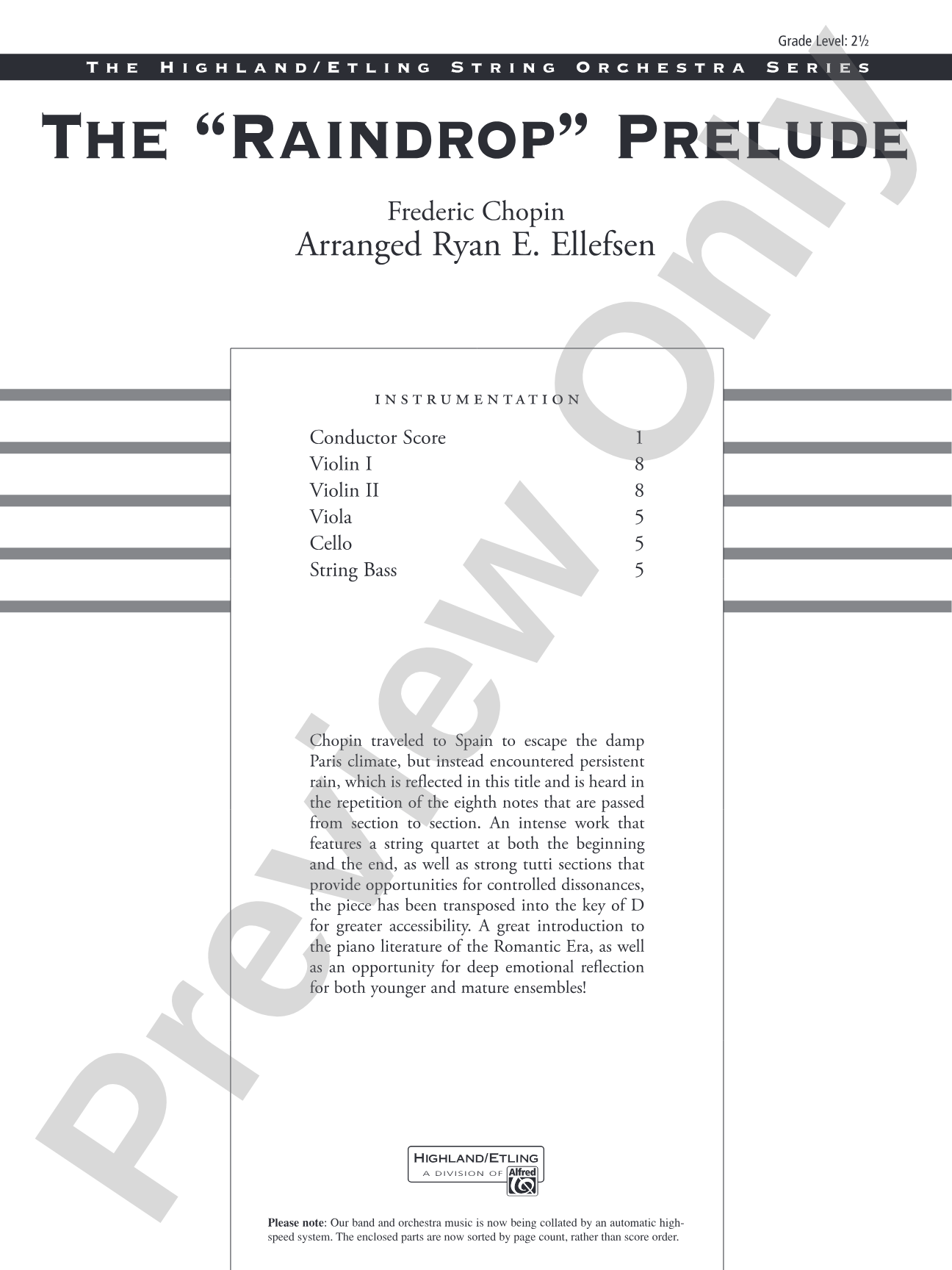
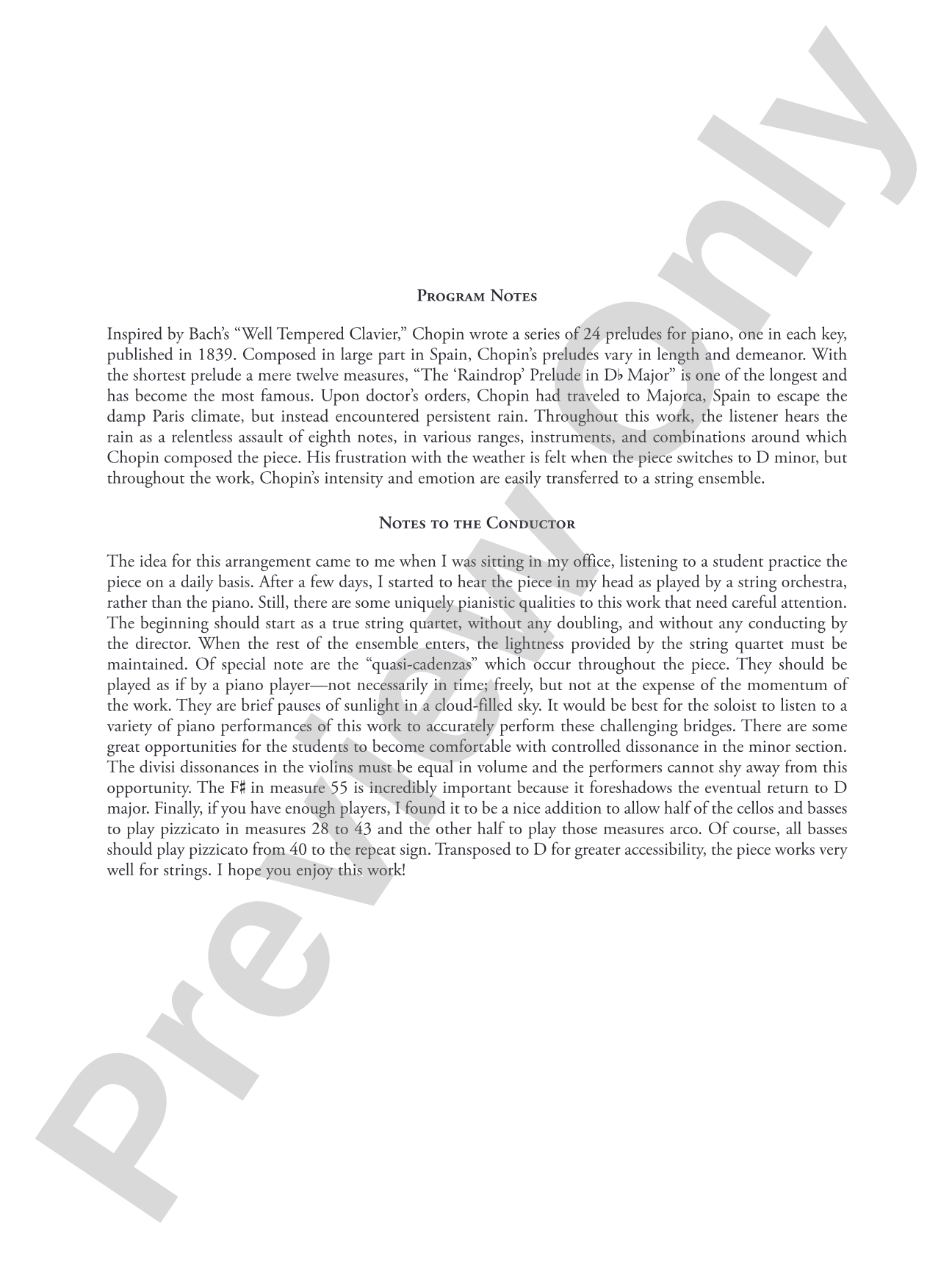
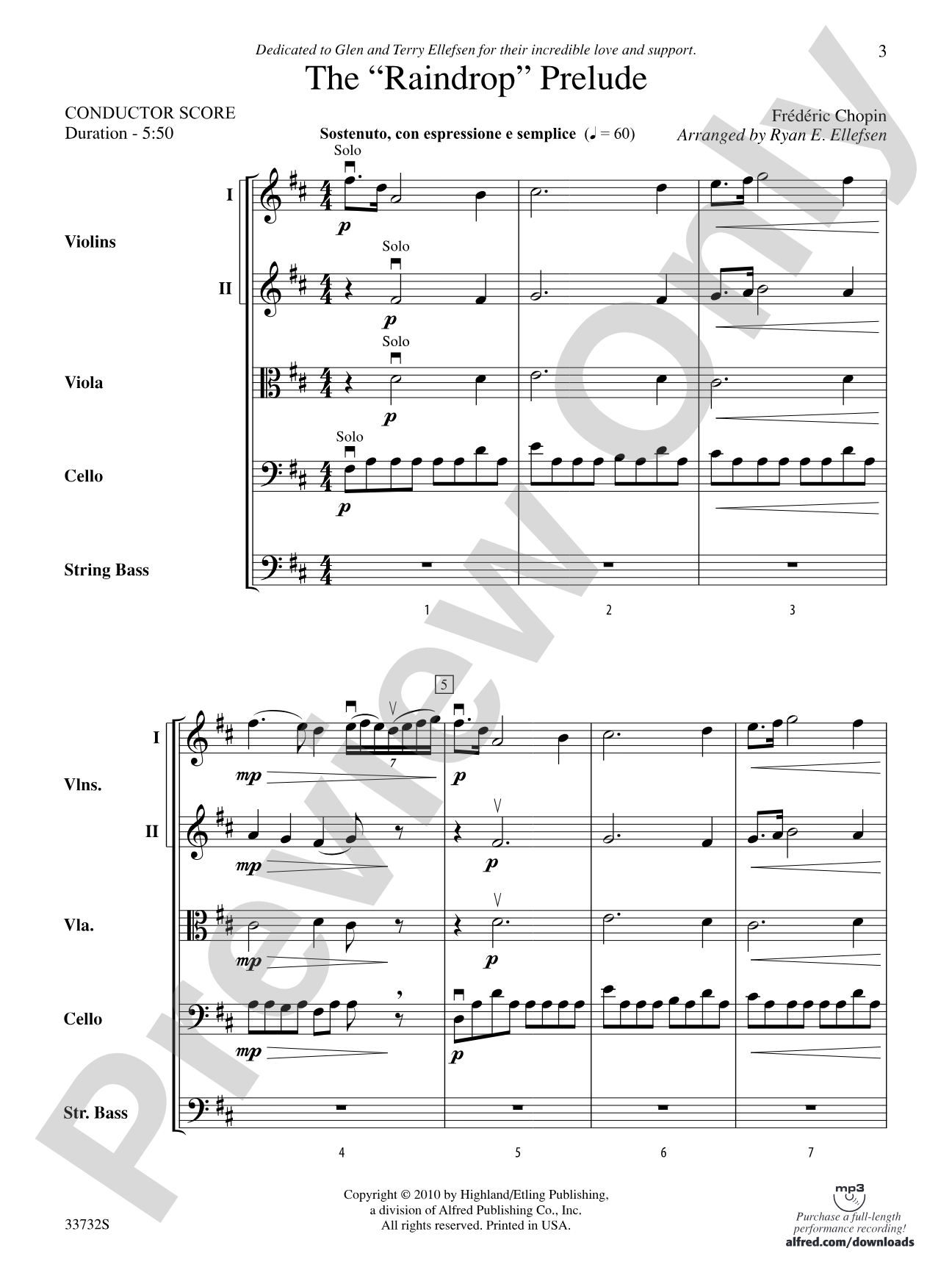
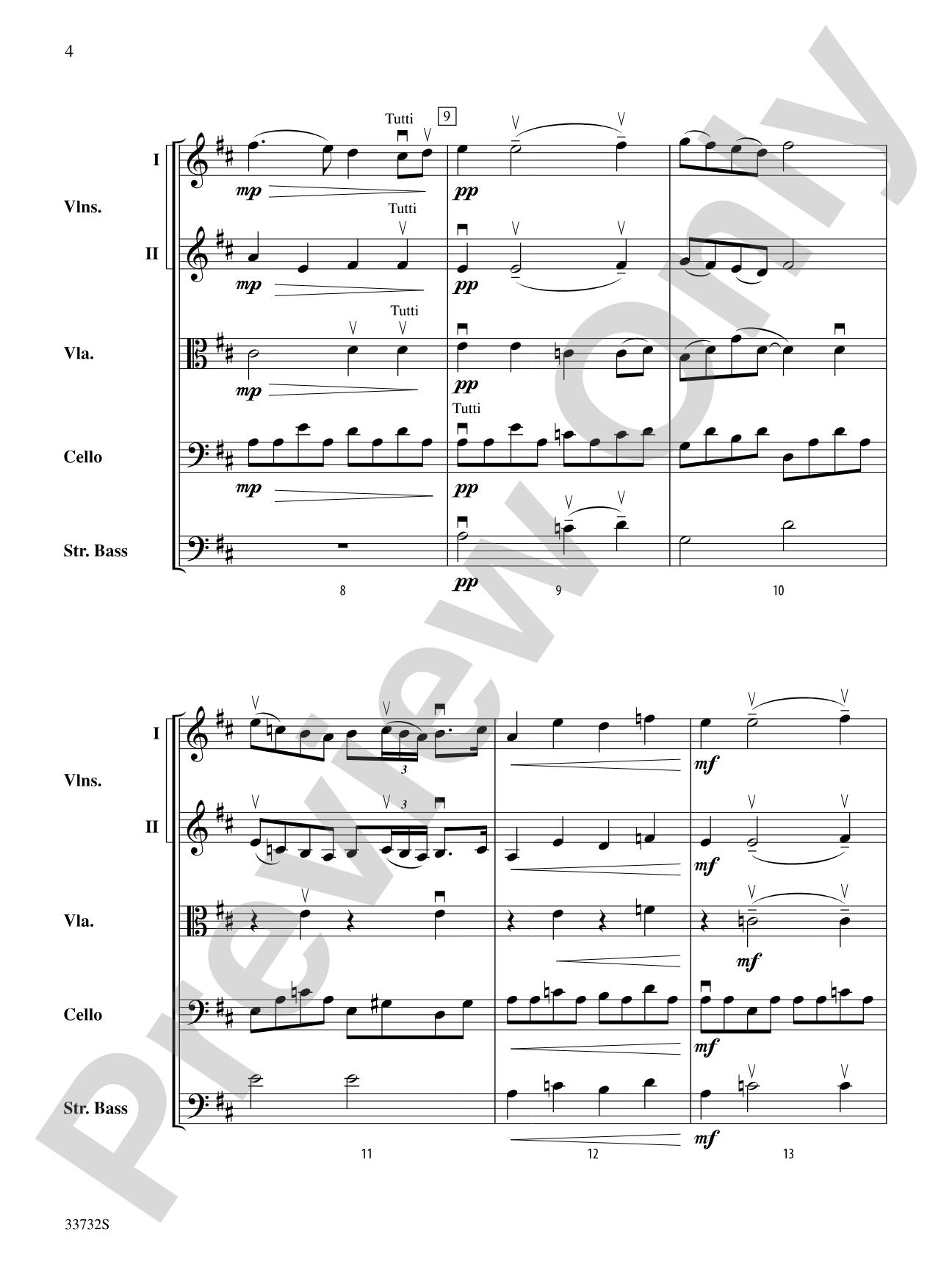
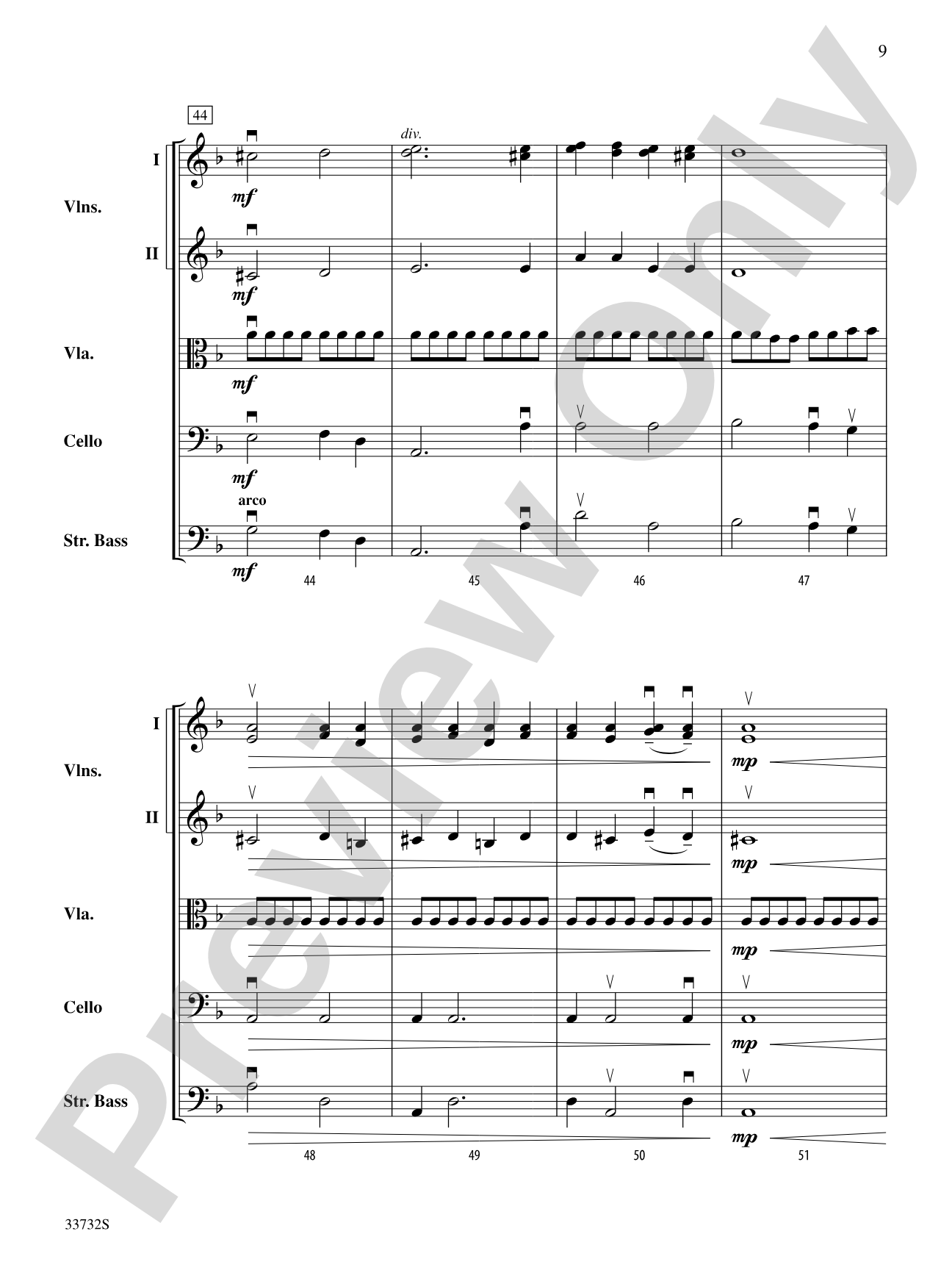
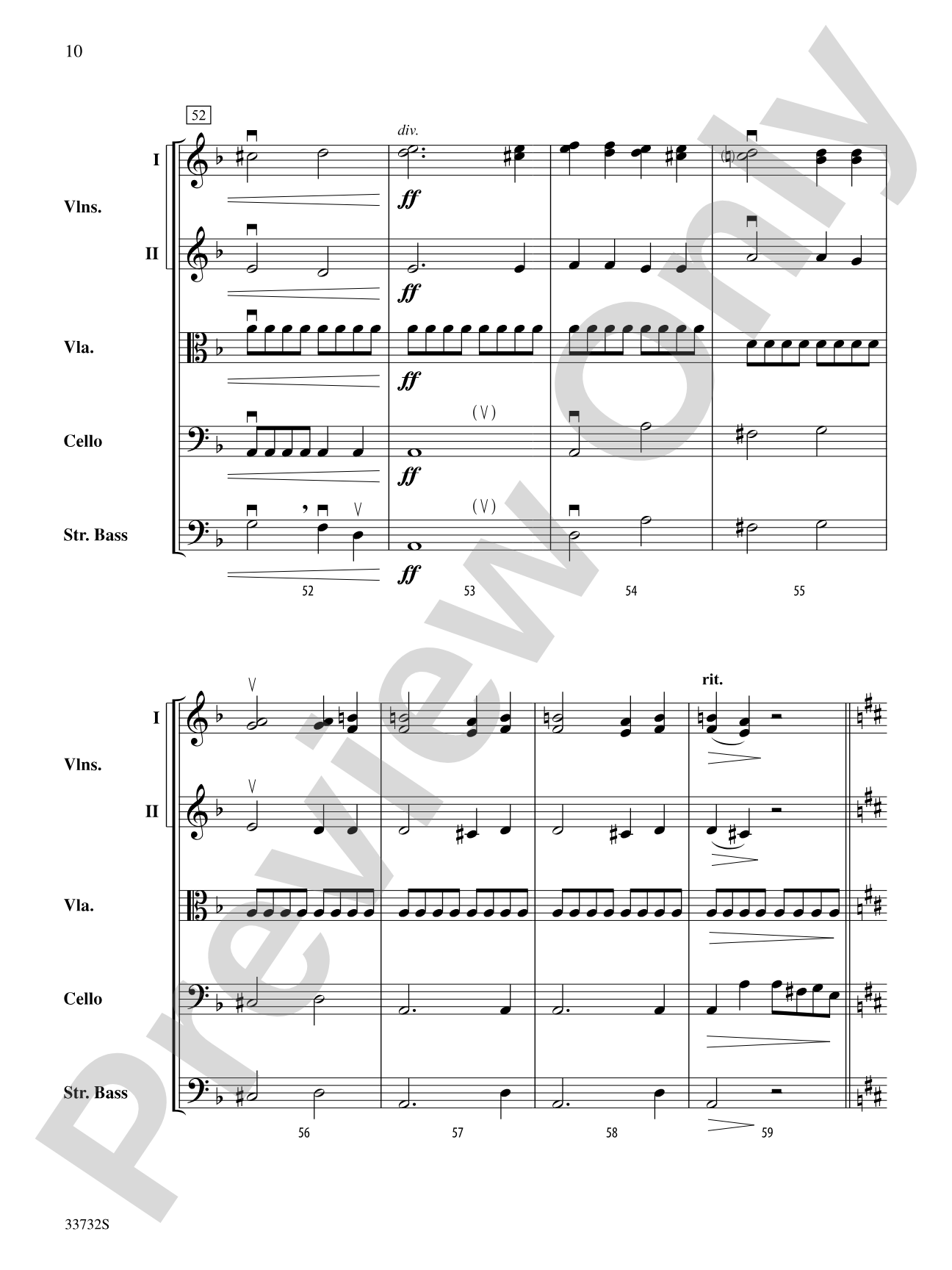
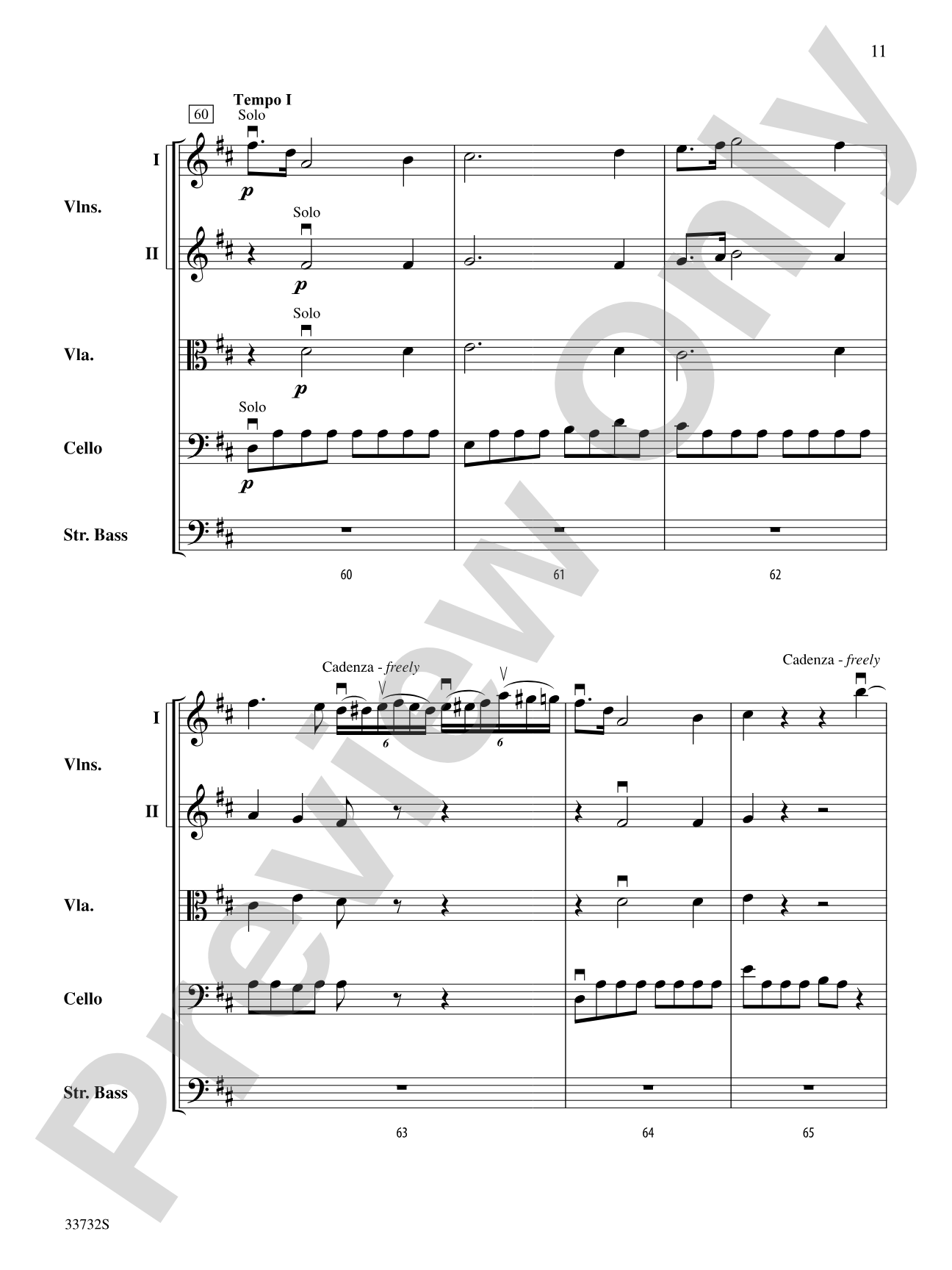
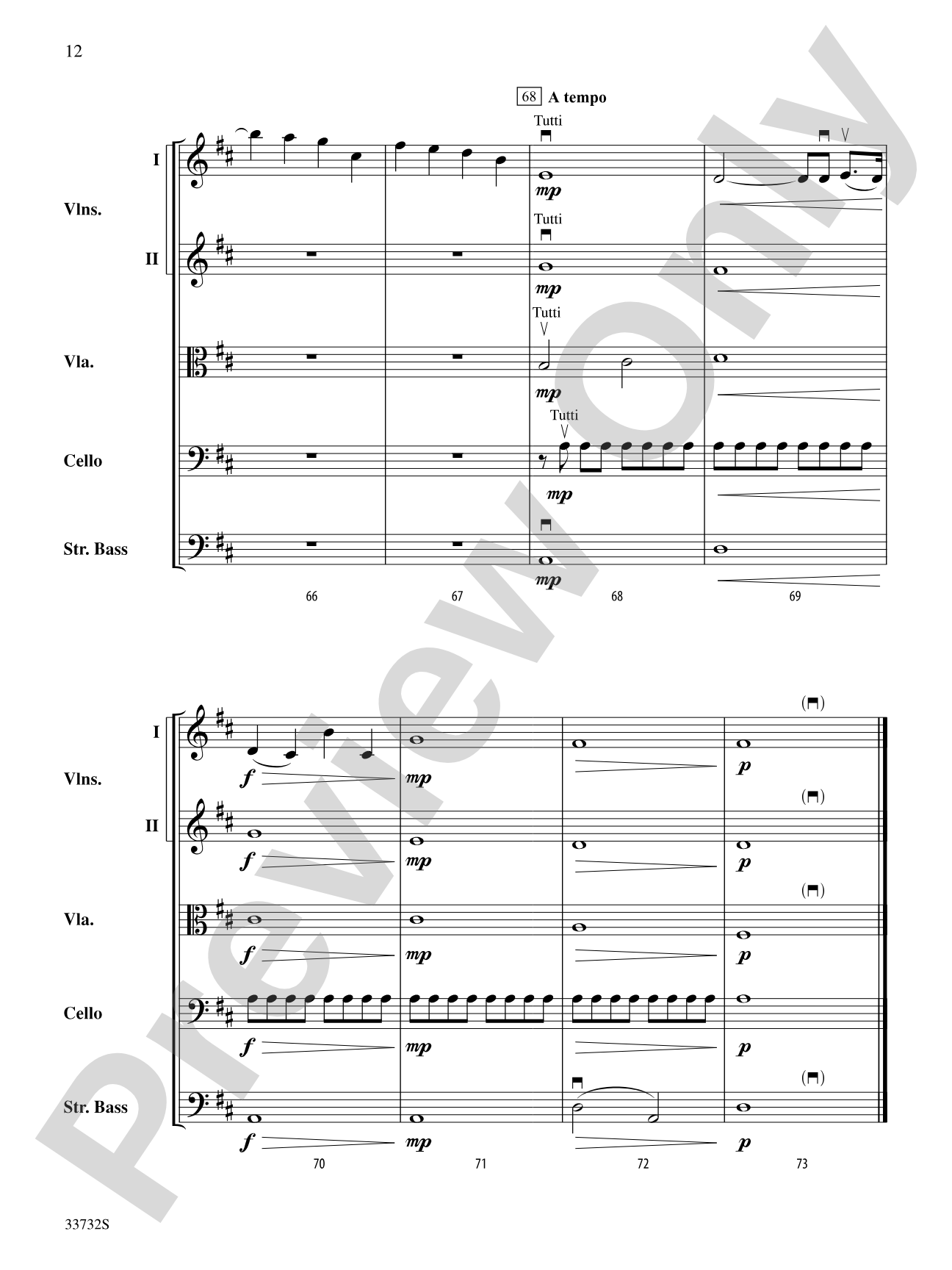
Chopin traveled to Spain to escape the damp Paris climate but instead encountered persistent rain, which is reflected in this title and is heard in the repetition of the eighth notes that are passed from section to section. An intense work that features a string quartet at both the beginning and the end as well as strong tutti sections that provide opportunities for controlled dissonances, the piece has been transposed into the key of D for greater accessibility. A great introduction to the piano literature of the Romantic Era, as well as an opportunity for deep emotional reflection for both younger and mature ensembles!


Don't just read it, hear it, play along with it, and watch your students grow with it. In MakeMusic Cloud, The "Raindrop" Prelude: String Orchestra Conductor Score & Parts comes alive with professional accompaniment, adjustable tempo, and built-in practice tools that turn solo practice into real progress.
Open in the Player
Jump straight in and assign it today.
Start Your Free Trial
Open this title and explore the full library in minutes.
Sample Audio
1
Audio File
--:--
0:00
0:00
Sample Video
No sample videos found.
Additional Details
Series:
Highland/Etling String Orchestra
Publisher:
Alfred Music
Page Count:
114
SKU:
00-PK-0004221
More about this title
About the Composer: Frédéric Chopin
Frédéric Chopin (1810, 1849) was a Polish composer and pianist who fundamentally transformed how composers wrote for the instrument. His nocturnes, études, and preludes expanded the expressive and technical possibilities of piano music, establishing him as a central figure of the Romantic era. Though he spent most of his career in Paris, his music was shaped by his deep connection to Polish folk traditions and his constant search for new sonorities and emotional depth.
Chopin's influence extends far beyond pianists. His harmonic innovations, use of rubato, and integration of lyrical melody with technical brilliance have made his work a vital resource for string musicians and conductors. The Raindrop Prelude exemplifies his gift for building emotional intensity through obsessive repetition and subtle harmonic shifts, qualities that translate powerfully to the string orchestra.
Why we love this
This arrangement captures the hypnotic, introspective quality of Chopin's original while making it accessible to young string ensembles. The transposition to D major and the careful distribution of the famous repetitive figuration across the orchestra allows students to engage with genuine Romantic complexity without the virtuosic demands of the piano part. It's the rare arrangement that honors both the source material and the developmental needs of intermediate musicians.
What to expect
Contemplative and hypnotic, with the relentless eighth-note pattern creating an almost meditative atmosphere. Moments of quiet introspection give way to fuller, more intense ensemble writing, allowing students to move between intimate chamber textures and richer orchestral sound. The piece carries an underlying melancholy tempered by lyrical beauty.
Who it's for
String orchestras at the intermediate level seeking meaningful engagement with Romantic masterworks. This arrangement works equally well for younger ensembles building foundational skills and more mature groups looking for pieces with genuine emotional and harmonic substance.
How to get the most out of it
- Establish a steady pulse beneath the repeating eighth-note figures; they should create a shimmering effect rather than sound mechanical or rushed.
- Shape the string quartet passages at the beginning and end with particular attention to vibrato control and dynamic nuance; these sections define the emotional landscape.
- Balance the tutti dissonances carefully so they create tension without muddying the harmonic progression. Rehearse these moments separately if needed.
- Allow for slight rubato in the lyrical sections to honor Chopin's Romantic aesthetic, but maintain rhythmic integrity in the accompanying figures.
How to use it
This work pairs naturally with other Romantic arrangements or original string orchestra pieces on a concert centered on introspection and emotion. Its moderate length and Grade 2.5 accessibility make it ideal for a mid-program placement, offering audiences a moment of reflection while showcasing your ensemble's ability to shape nuanced, lyrical writing. It also works well in festival competitions where students benefit from performing a recognized masterwork.
Skills your students will build
- Maintaining rhythmic stability while accompanying lyrical lines
- Balancing section independence and ensemble unity in sustained passages
- Shaping dynamics and phrasing in non-tonal harmonic contexts
- Executing controlled dissonances within a Romantic harmonic language
- Transitioning between chamber and tutti textures with musical coherence