The Rainbow Connection Sheet Music Preview

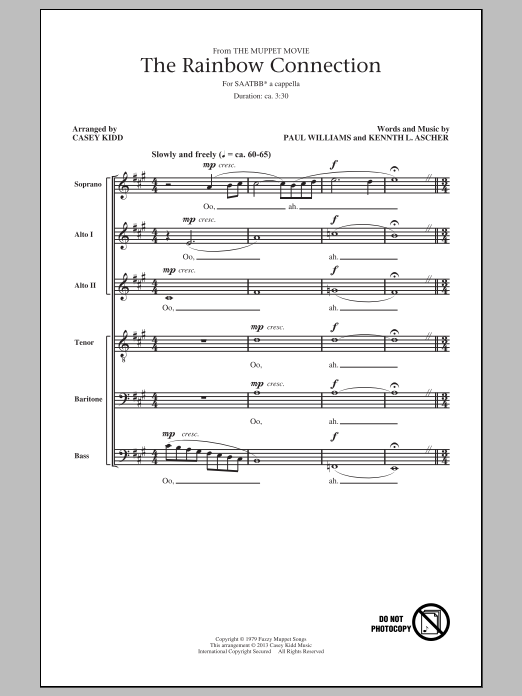
The Rainbow Connection: SATB Choral Octavo

As performed by Ken Ascher / As performed by The Muppets / As performed by Paul Williams / As performed by Kermit The Frog / As performed by Kenneth L. Ascher / Arranged by Casey Kidd

Item: 35-DS00290548

Digital Download
$2.99
Description

The Rainbow Connection: SATB Choral Octavo isn't in MakeMusic Cloud just yet...but it could be. Let us know you'd like to see it, and you'll help shape what comes next. In the meantime, start a free trial and dive into thousands of interactive titles your students can play along with today.

Sample Audio
No sample audio found.
Sample Video
Additional Details
Publisher: Hal Leonard
Page Count: 10
SKU: 35-DS00290548

More about this title

About the Artist: Ken Ascher

Ken Ascher composed the original score for The Muppet Movie (1979), creating music that became instantly recognizable to multiple generations. His gift for melody served the film's emotional core, particularly in "The Rainbow Connection," written with lyricist Paul Williams. Ascher's work demonstrates how accessible, singable melodies can carry genuine depth without sacrificing immediate appeal to young performers and audiences.

Why we love this

Casey Kidd's arrangement respects the song's essential optimism while giving choirs real musical work to do. The SATB voicing sits naturally for singers at multiple levels, making it equally valuable for middle school choirs discovering ensemble singing and high school groups seeking repertoire with broader appeal.

What to expect

Hopeful and grounded. The melody carries an almost hymn-like quality beneath its pop sensibility, creating music that feels earnest rather than cynical. Singers often discover they care more about this text than they expected.

Who it's for

Choirs looking for repertoire that connects with audiences of all ages without sacrificing musicality. This works equally well for concert contexts that need a moment of genuine warmth and accessibility, or as part of a program that explores the intersection of pop and choral traditions.

How to get the most out of it

  • Balance the melody line so it floats above the supporting voices; this isn't a piece where all four parts carry equal weight, and clarity here rewards careful listening from the audience.
  • Let the text shape your phrasing rather than forcing symmetrical, predictable phrase endings; the lyrics suggest where the breath should land, and honoring that creates a more conversational quality.
  • Find the emotional center in the bridge section; many singers coast through middle sections, but this arrangement reveals real harmonic interest if you commit to the moment.
  • Record a run-through without the accompaniment and listen back as an ensemble; you'll hear balance issues and intonation drift that disappear when the track covers them.

How to use it

Place this where you need to reset the room's emotional temperature, perhaps after heavier concert music or as a closing statement about resilience. It's equally at home in a family-friendly spring concert or as part of a program exploring music from film and television.

Skills your students will build

  • Balancing melody against harmonic support in four-part writing
  • Sustaining legit vowel shapes across phrase spans
  • Connecting lyrical content to interpretive choices
  • Navigating major key harmony with clear voice leading

You May Also Like