The Raider Returns Sheet Music Preview

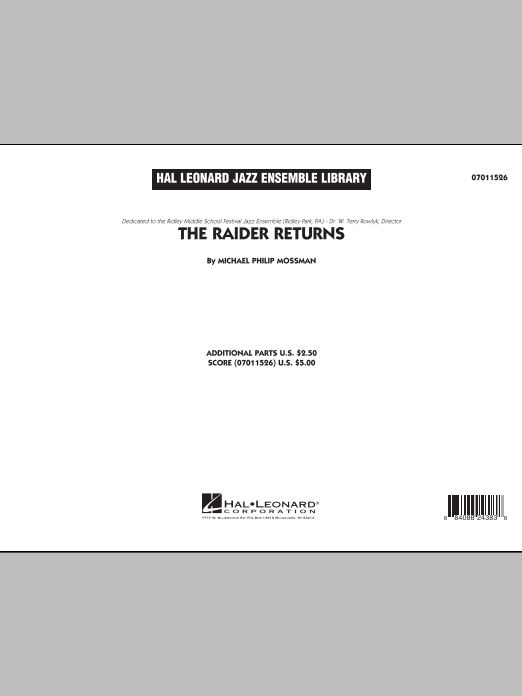
The Raider Returns: Jazz Ensemble Conductor Score & Parts

By Michael Philip Mossman

Grade: 4

Item: 35-PK00136750

Digital Download
$50.00

One moment…

Description
Written in a driving Latin feel, this energetic original features biting melodies, edgy harmonies and even foot stomps and hand claps. Including a solo for tenor sax and plenty of powerful ensemble writing, this is certain to be an exciting addition to your repertoire.

The Raider Returns: Jazz Ensemble Conductor Score & Parts isn't in MakeMusic Cloud just yet...but it could be. Let us know you'd like to see it, and you'll help shape what comes next. In the meantime, start a free trial and dive into thousands of interactive titles your students can play along with today.

Sample Audio
No sample audio found.
Sample Video
Additional Details
Publisher: Hal Leonard
SKU: 35-PK00136750

More about this title

About the Composer: Michael Philip Mossman

Michael Philip Mossman is a composer and arranger with deep roots in both classical and jazz traditions. His work for educational ensembles demonstrates a gift for writing idiomatically for young players while maintaining musical sophistication and genuine style.

Why we love this

Mossman crafts an arrangement that feels authentically jazzy without sacrificing clarity or playability at the Grade 4 level. The Latin rhythmic foundation gives your ensemble something kinetic to latch onto, and the tenor sax solo provides a natural showcase moment that audiences remember long after the piece ends.

What to expect

The Latin propulsion keeps momentum moving forward from the opening note. Biting harmonies and edgy melodic hooks create a modern, slightly sharp-edged character that feels current and alive, while the participatory elements like foot stomps and hand claps invite the ensemble into the groove rather than keeping them at a distance.

Who it's for

Jazz ensembles at the high school level or advanced middle school programs looking for a contemporary original with energy and style. This works especially well for groups that want to program something beyond standard swing charts and need material that excites both players and audiences.

How to get the most out of it

  • Lock the Latin groove in your rhythm section first. The foot stomps and hand claps only land with conviction when the drums, bass, and piano are locked into the same pocket.
  • Shape the biting melodies with dynamic contrast. These lines benefit from punchy articulation at the start of phrases followed by subtle releases.
  • Give your tenor soloist plenty of rehearsal time to own that solo. This is their moment to shine, and a confident, committed statement elevates the entire performance.
  • Balance the ensemble writing so individual voices don't disappear into the blend. Jazz voicings reveal themselves when each section has space and clarity.

How to use it

This lands perfectly as a high-energy mid-set or closer that showcases your ensemble's rhythmic precision and jazz sensibility. If you're building a concert around diverse jazz styles, pair it with a ballad or swing number to give audiences the full range of your group's abilities.

Skills your students will build

  • Latin rhythmic feel and clave patterns
  • Jazz articulation and phrasing
  • Ensemble precision with rhythmic unison figures
  • Tenor saxophone solo improvisation and interpretation
  • Listening and locking to a groove-based foundation
  • Reading modern jazz harmonies and voicings

You May Also Like