
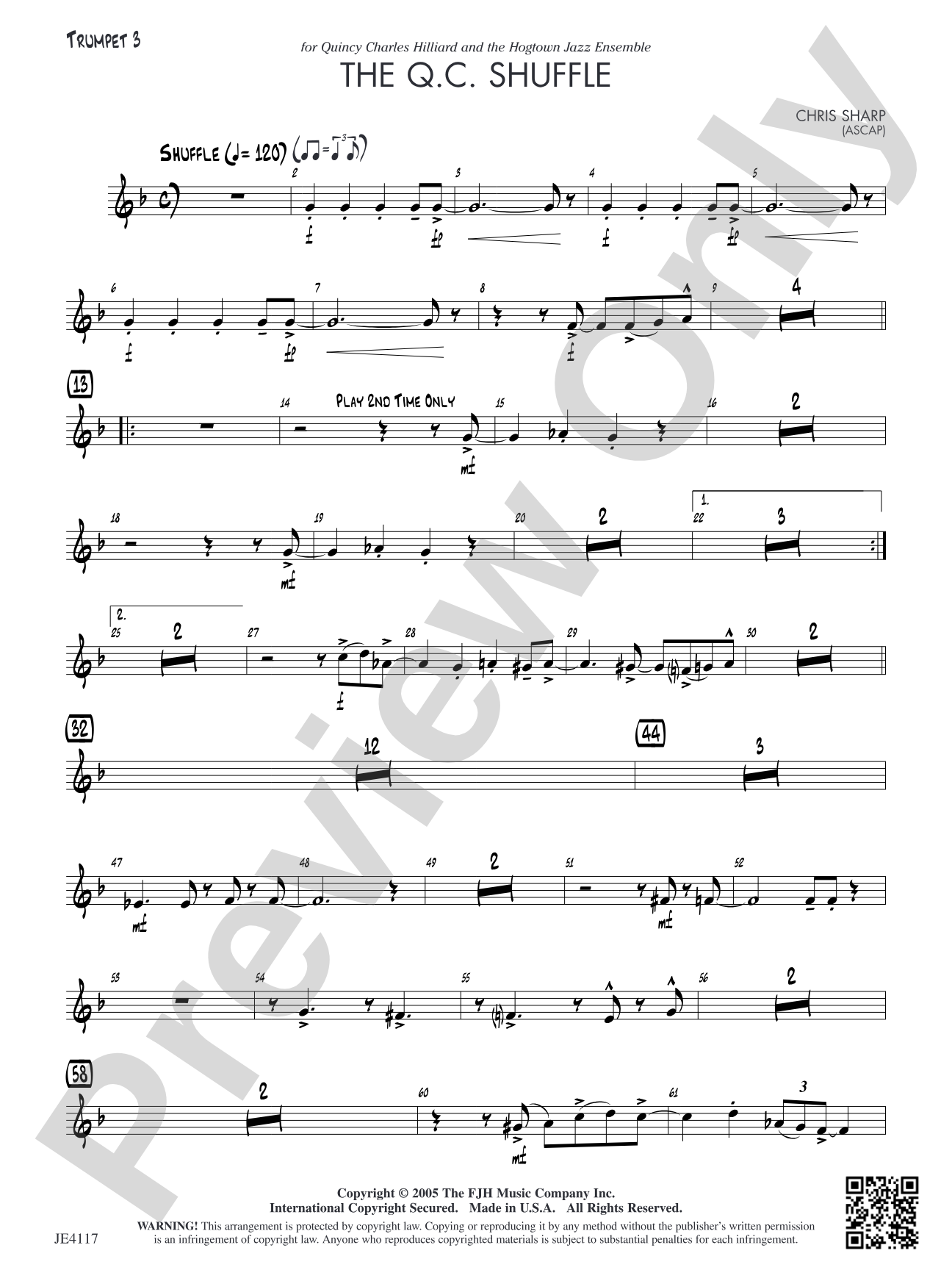

The Q.C. Shuffle: Trumpet 3
By Chris Sharp
Grade: 2.5
Item: 98-PC-DJE4117_T3
$7.00
Pickup currently not available
Description
This outstanding original is guaranteed to be the hit of your next concert! A full ensemble opening leads into a catchy melody before solo opportunities begin for alto sax and trombone (written solos are provided along with chord changes). Saxes then become the rhythm section in a fun a cappella winds feature followed by a shout chorus that really lives up to the name! This is one chart you will not want to overlook!


The Q.C. Shuffle: Trumpet 3 isn't in MakeMusic Cloud just yet...but it could be. Let us know you'd like to see it, and you'll help shape what comes next. In the meantime, start a free trial and dive into thousands of interactive titles your students can play along with today.
Request This Title
Tell us you want it.
Start Your Free Trial
Explore everything that's ready to play right now.
Sample Audio
1
Audio File
--:--
0:00
0:00
Sample Video
No sample videos found.
Additional Details
Series:
FJH Developing Jazz Ensemble
Publisher:
The FJH Music Company, Inc.
SKU:
98-PC-DJE4117_T3
More about this title
About the Composer: Chris Sharp

Chris Sharp holds a doctorate and has built a distinctive career spanning performance, composition, and education. As a trombonist, he spent eleven years as a performing musician and bandleader at Walt Disney World, and since 1984 has served as arranger and orchestrator for Disney parks worldwide, creating music for live shows, recordings, and national broadcasts. His freelance work includes commissions from Universal Studios, the Boston Pops, the Dallas Brass, and service bands including the USAF Airmen of Note.
Sharp is an active educator and clinician who has taught at middle school, high school, and college levels. He currently directs bands at Polk State College in Winter Haven, Florida, where he also teaches music theory, music technology, and arranging. His compositions and arrangements for concert and jazz ensembles appear regularly at major festivals including the Midwest Clinic, and he has received multiple ASCAPlus awards for his work.
Why we love this
Sharp knows exactly what makes a jazz ensemble chart sing, and this one delivers on every level. The balance between structured ensemble writing and genuine solo space (with written alternatives so you're never stuck) means players stay engaged whether they're reading in the section or stepping into the spotlight. The shout chorus finale has real punch without becoming chaotic, making it a program closer that audiences remember.
What to expect
A high-energy swing piece with genuine personality. It opens with collective swagger, settles into a groove that feels modern and approachable, and builds toward a finale that makes everyone in the ensemble feel like they're part of something fun and tight.
Who it's for
Jazz ensemble directors working with developing musicians (grades 2-3 level) who want something that sounds sophisticated without overwhelming the section. Soloists benefit from having written parts provided alongside chord changes, making this accessible for players who are still building improvisation confidence.
How to get the most out of it
- Nail the rhythmic precision of that full ensemble opening. The groove sets the tone for everything that follows, so lock the articulation and time feel before moving into solos.
- Give your saxes confidence in the a cappella winds section. They're no longer comping; they're the foundation. That shift in role needs to feel intentional and clean.
- Let the solo melodies breathe. The written solos give your players a safety net, but encourage them to swing the phrasing and add light inflections that fit the groove.
- Build energy deliberately into the shout chorus. This is where the arrangement's title pays off, so shape the dynamic arc so that final hit lands with maximum impact.
How to use it
This works as a concert closer or the centerpiece of a jazz-focused set because it has enough presence to anchor a program without requiring virtuoso soloists. It also serves as a morale booster mid-rehearsal season when ensemble energy dips.
Skills your students will build
- Swing articulation and phrasing in an ensemble context
- Reading chord changes and responding to harmonic movement
- Solo improvisation using written guide melodies and changes
- Role flexibility (transitioning between ensemble and rhythm section duties)
- Shout chorus phrasing and dynamics in a ensemble setting
- Listening and locking in with the rhythm section during structured solos