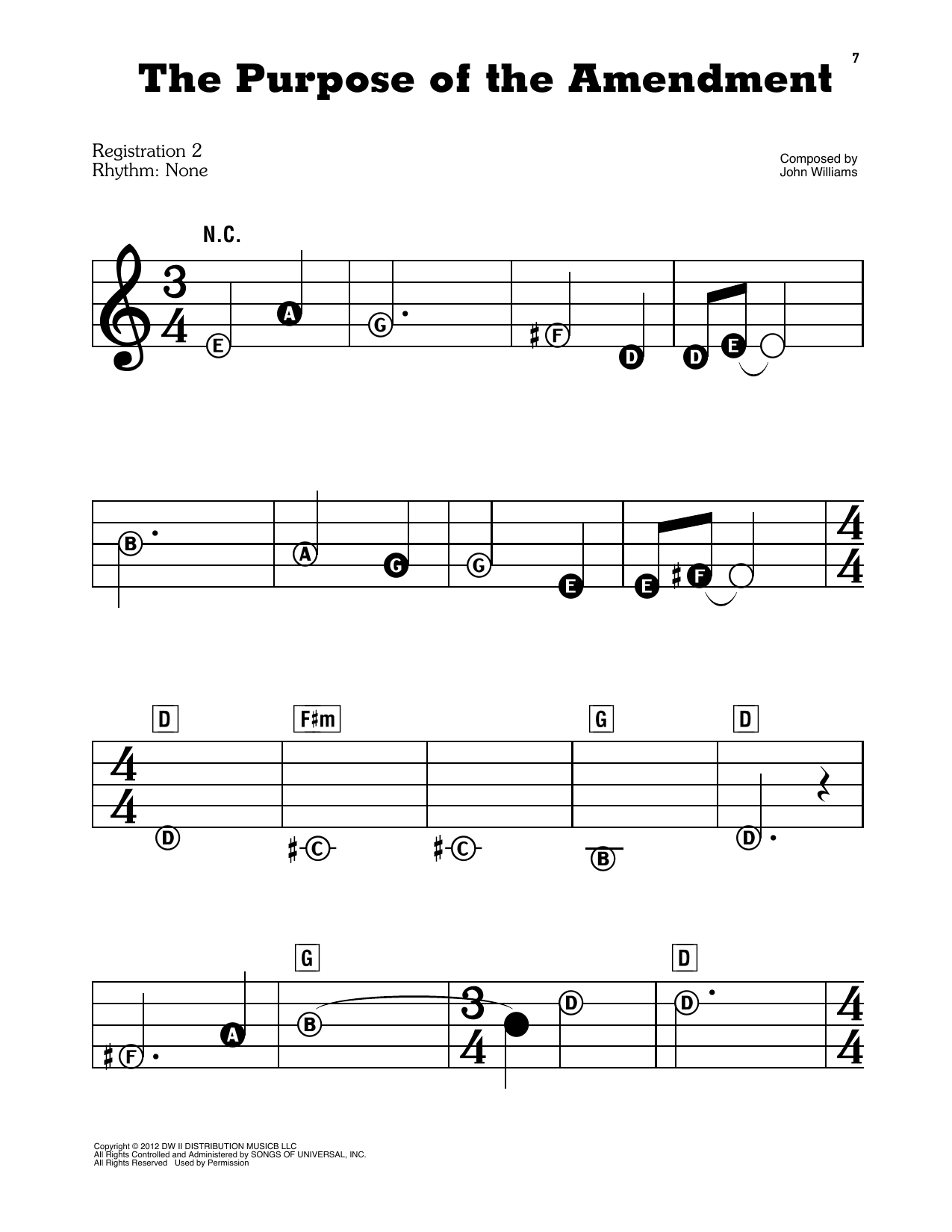
The Purpose Of The Amendment (from Lincoln) Sheet Music Preview

The Purpose Of The Amendment (from Lincoln): E-Z Play Today

By John Williams

Item: 35-DS01885876

Digital Download
$4.99
Description

The Purpose Of The Amendment (from Lincoln): E-Z Play Today isn't in MakeMusic Cloud just yet...but it could be. Let us know you'd like to see it, and you'll help shape what comes next. In the meantime, start a free trial and dive into thousands of interactive titles your students can play along with today.

Sample Audio
No sample audio found.
Sample Video
Additional Details
Publisher: Hal Leonard
Page Count: 3
SKU: 35-DS01885876

More about this title

About the Composer: John Williams

John Williams stands among the most performed film composers in history, with a catalog spanning seven decades of cinema. His gift for melody and orchestration has shaped the musical language of modern storytelling, from intimate character moments to sweeping historical narratives, making his work essential study for musicians interested in how thematic writing serves dramatic purpose.

Why we love this

Williams composed the Lincoln score to underscore intimate moments of conviction and moral clarity, and this particular cue captures that restraint beautifully. For pianists working through film music arrangements, you get a masterclass in how sparse, purposeful writing can carry tremendous emotional weight without virtuosic display.

What to expect

Quiet conviction. The music unfolds with the clarity of someone speaking truth in a moment that demands it, without rhetoric or flourish. There is dignity in the simplicity.

Who it's for

Pianists preparing for auditions or recitals who want film music with substance and restraint. Teachers building units on how film composers approach historical or dramatic material will find this an accessible entry point into Williams' compositional voice.

How to get the most out of it

  • Approach the tempo as deliberate and measured rather than slow; this music needs forward momentum despite its contemplative character
  • Shape phrases toward moments of harmonic shift or resolution, treating the piano as a voice speaking with intention
  • Balance any accompanying figures against the melodic line so nothing competes for attention in what is fundamentally a focused, honest texture

How to use it

Feature this as a crossover piece for a mixed audience concert that blends classical and contemporary. Its three pages fit neatly into a recital program where you want to shift emotional terrain without disrupting the flow.

Skills your students will build

  • Phrasing sustained melodic lines across harmonic changes
  • Reading and executing film music arranging conventions for solo piano
  • Maintaining clarity and intentionality in understated textures
  • Bringing character and dramatic purpose to music with minimal technical display

You May Also Like