
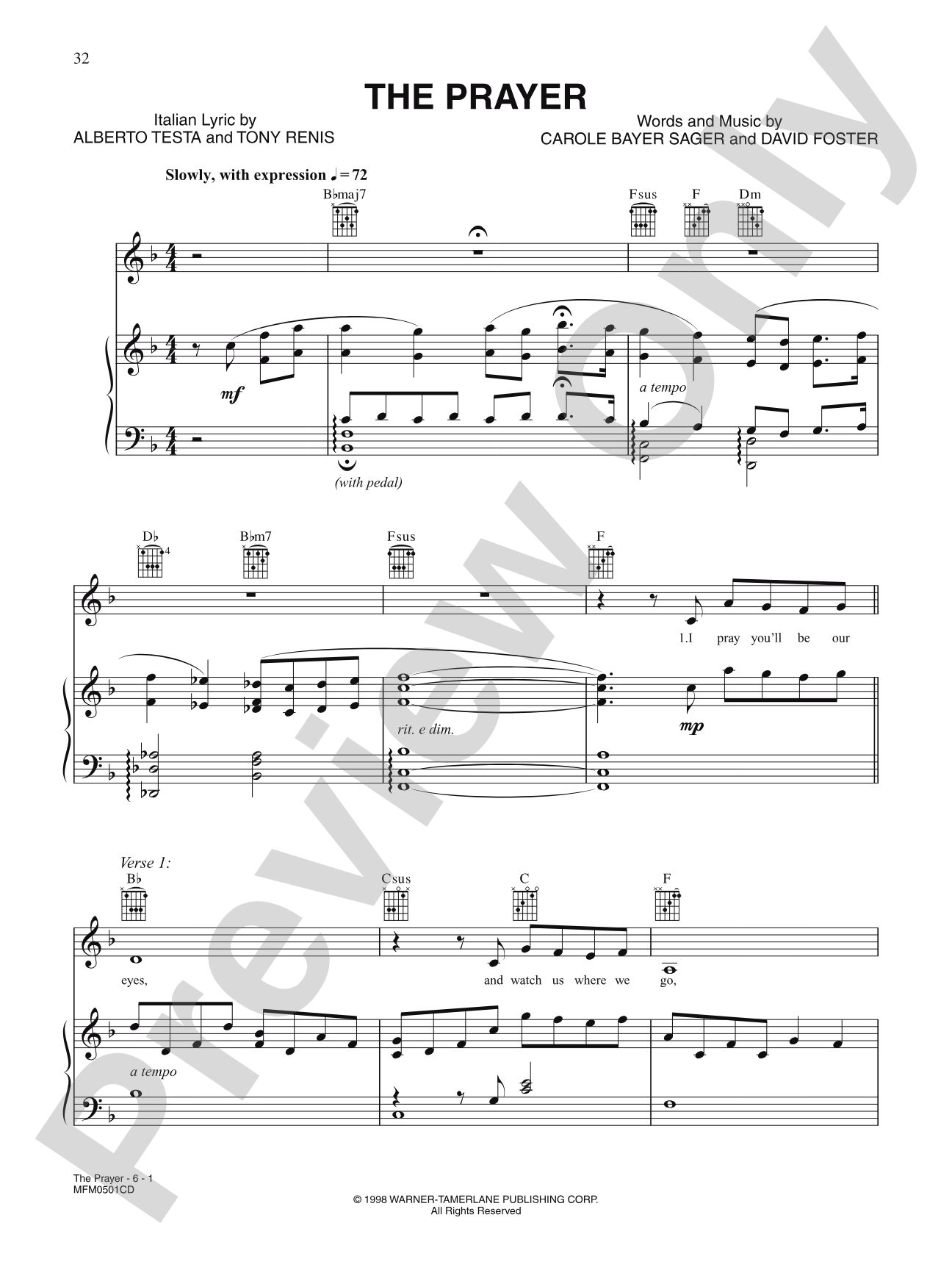
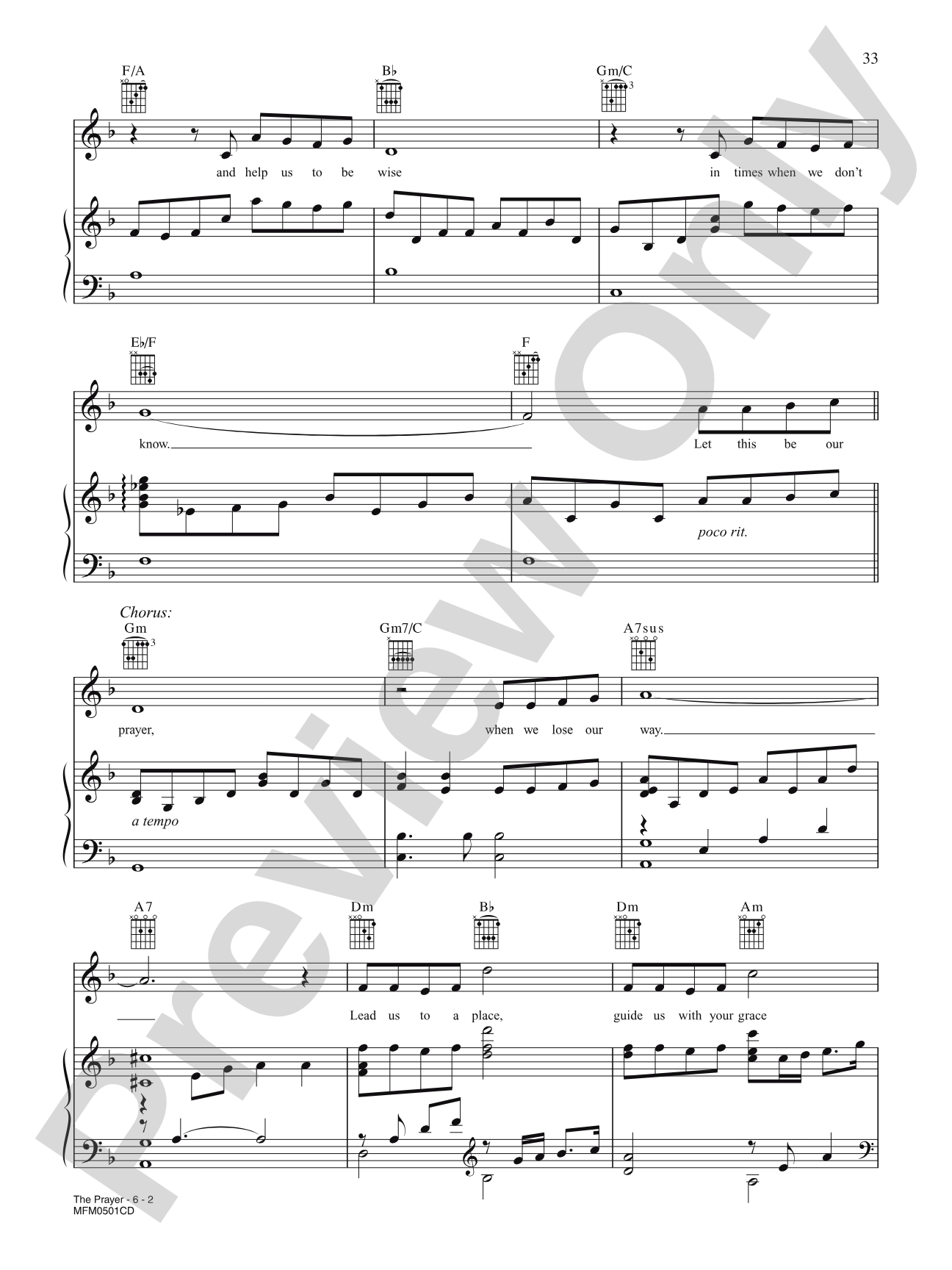

The Prayer: Piano/Vocal/Chords
Celtic Woman
Item: 00-PSP-000312
$3.99
Pickup currently not available
Related Items
Celtic Woman Songbook: Piano/Vocal/Chords Book |
$34.99
|
View |
Description
Celtic Woman built a massive global following by delivering authentic Celtic music via spectacular live concerts and gorgeous, platinum-certified recordings. Musicians will delight in the vibrant, uniquely Celtic rhythms and tonal embellishments detailed in this first-ever Celtic Woman Songbook. From contemporary hits to classical favorites, 26 of Celtic Woman's most popular songs are arranged for voice with piano accompaniment and guitar chord grids. Essential violin cues and solos are included for selected pieces.
Titles: Ave Maria * Beyond the Sea * The Blessing * The Butterfly * Caledonia * Carrickfergus * Danny Boy * Dulaman * Isle of Innisfree * Lascio Chio Pianga * Mo Ghile Mear * Nella Fantasia * One World * Over the Rainbow * The Prayer * Scarborough Fair * Send Me a Song * She Moved Through the Fair * Shenandoah * Siulil a Run * The Sky and the Dawn and the Sun * The Soft Goodbye * Someday * Vivaldi's Rain * The Voice * You Raise Me Up.


Titles: Ave Maria * Beyond the Sea * The Blessing * The Butterfly * Caledonia * Carrickfergus * Danny Boy * Dulaman * Isle of Innisfree * Lascio Chio Pianga * Mo Ghile Mear * Nella Fantasia * One World * Over the Rainbow * The Prayer * Scarborough Fair * Send Me a Song * She Moved Through the Fair * Shenandoah * Siulil a Run * The Sky and the Dawn and the Sun * The Soft Goodbye * Someday * Vivaldi's Rain * The Voice * You Raise Me Up.
The Prayer: Piano/Vocal/Chords isn't in MakeMusic Cloud just yet...but it could be. Let us know you'd like to see it, and you'll help shape what comes next. In the meantime, start a free trial and dive into thousands of interactive titles your students can play along with today.
Request This Title
Tell us you want it.
Start Your Free Trial
Explore everything that's ready to play right now.
Sample Audio
No sample audio found.
Sample Video
No sample videos found.
Additional Details
Publisher:
Alfred Music
Page Count:
168
SKU:
00-PSP-000312
More about this title
About the Composer: David Foster
David Foster is a Canadian music producer, composer, and arranger whose work spans multiple genres and decades. He has crafted platinum-selling albums for artists across pop, R&B, and adult contemporary music, earning a reputation for his ability to shape vocalists' interpretations and orchestrate sophisticated arrangements that serve the song's emotional core.
Why we love this
This songbook captures 26 pieces from Celtic Woman's catalog in a format that honors both the vocal line and the harmonic sophistication that defines their sound. The inclusion of essential violin cues and solos acknowledges the instrumental voice that Celtic Woman fans expect, while the chord grids make the arrangements accessible to guitarists and pianists working together in rehearsal or performance.
What to expect
These arrangements invite you into spaces that feel simultaneously intimate and expansive. Whether you're working with a traditional ballad like "Danny Boy" or a contemporary piece like "You Raise Me Up," the writing respects the emotional weight of each song while the piano accompaniment provides harmonic depth and structural clarity that prevents the vocal line from ever feeling exposed or thin.
Who it's for
Vocalists performing in recital or concert settings who want to access Celtic Woman's repertoire with professional-level arrangements will find this songbook essential. Piano teachers and accompanists preparing soloists for performance or audition can use these arrangements to develop students' interpretive range while maintaining musical authenticity.
How to get the most out of it
- Treat the violin cues as melodic guides, not ornaments. When a violin solo is marked, allow the vocalist to breathe and listen; the instrumental line should feel conversational, not competitive.
- Pay attention to the Celtic rhythmic inflections notated in the piano part. These are not incidental details—they anchor the authentic sound that distinguishes these arrangements.
- Coordinate with any accompanying guitarist on the chord voicings. The written chords suggest harmony, but the piano voicings in the score may employ extended or modal sonorities typical of Celtic harmony.
- Balance vocal projection with the lyrical quality of the melodic line. These songs reward legato singing and careful phrase shaping over volume.
How to use it
Program one or more of these pieces in a recital focused on world music, art song, or contemporary vocal literature. The variety of styles within the collection allows you to build a thoughtful set that moves between classical arrangements, traditional folk songs, and modern compositions without losing musical coherence.
Skills your students will build
- Reading and interpreting Celtic rhythmic patterns and ornamentation
- Coordinating vocal phrasing with piano accompaniment in through-composed arrangements
- Managing chord progressions and harmonic language across modal and contemporary harmonic systems
- Balancing vocal projection with instrumental cues in arrangements that feature essential violin solos
- Interpreting style-specific articulation and expression in both Celtic traditional and contemporary pieces