

The Prayer: 2-Part Choral Octavo
Words and music by Carole Bayer Sager and David Foster / arr. Greg Gilpin
Item: 00-PO-0006470

$2.25
Minimum order quantity: 20 copies
Pickup currently not available
Description
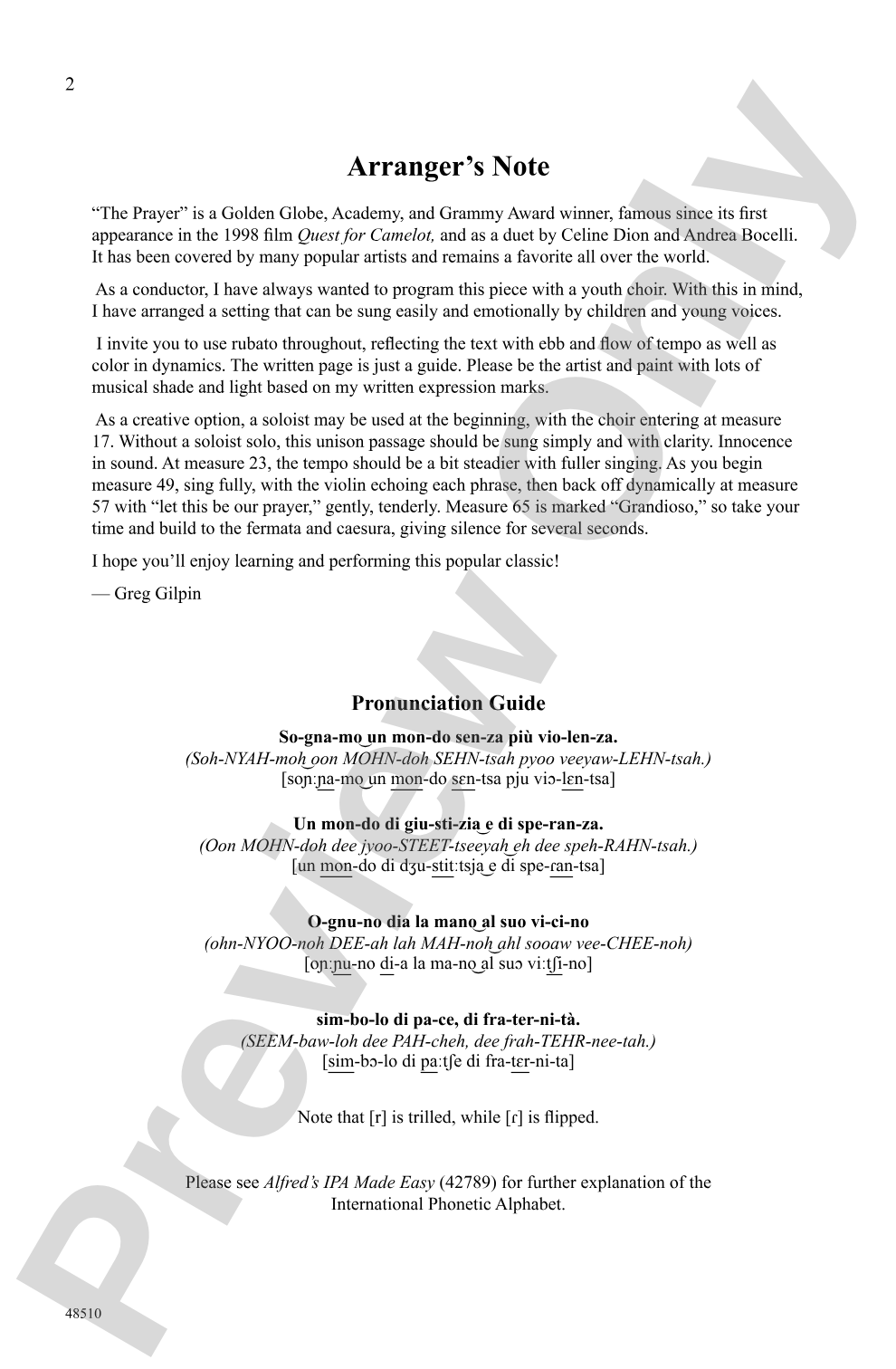
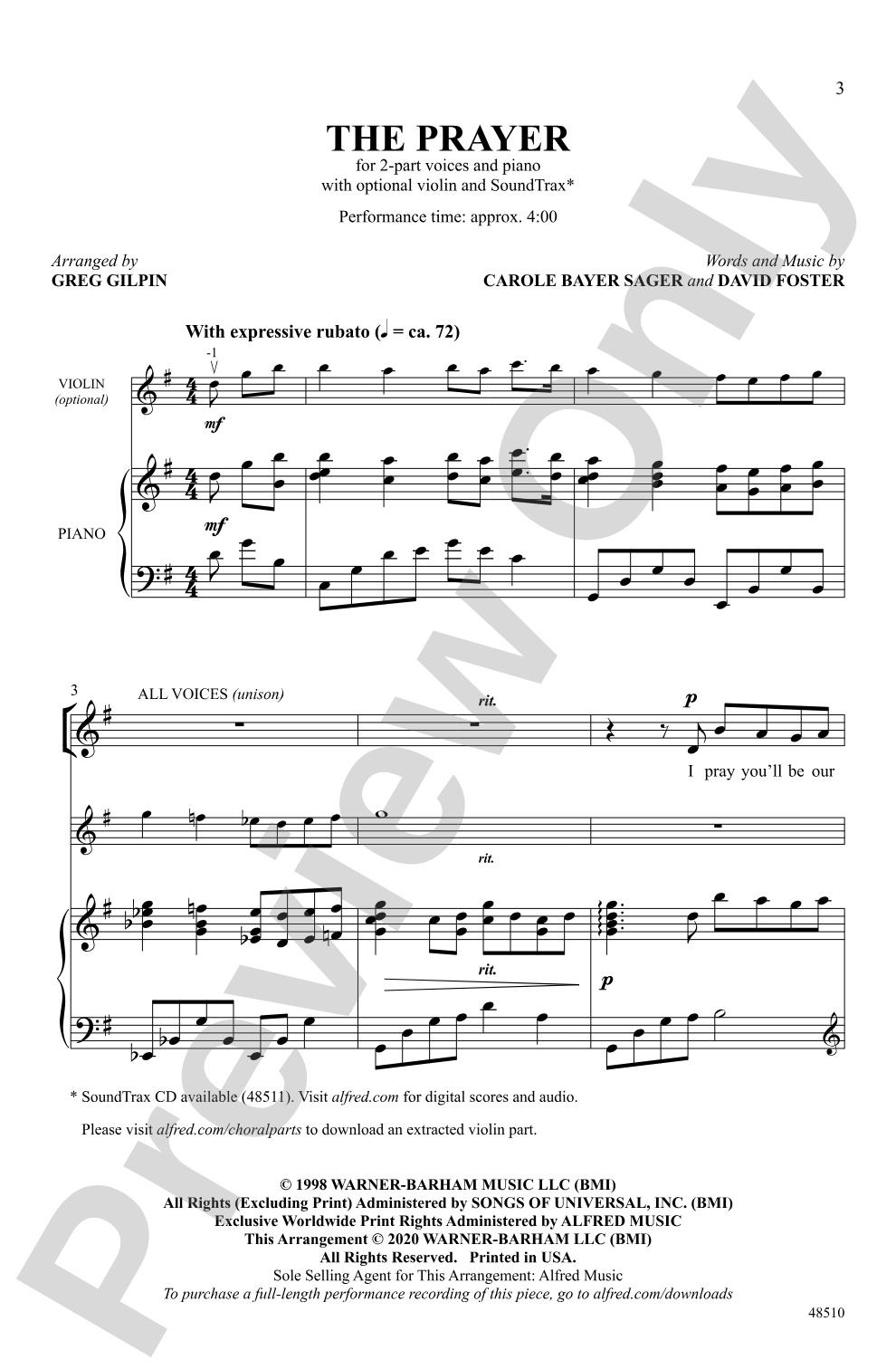
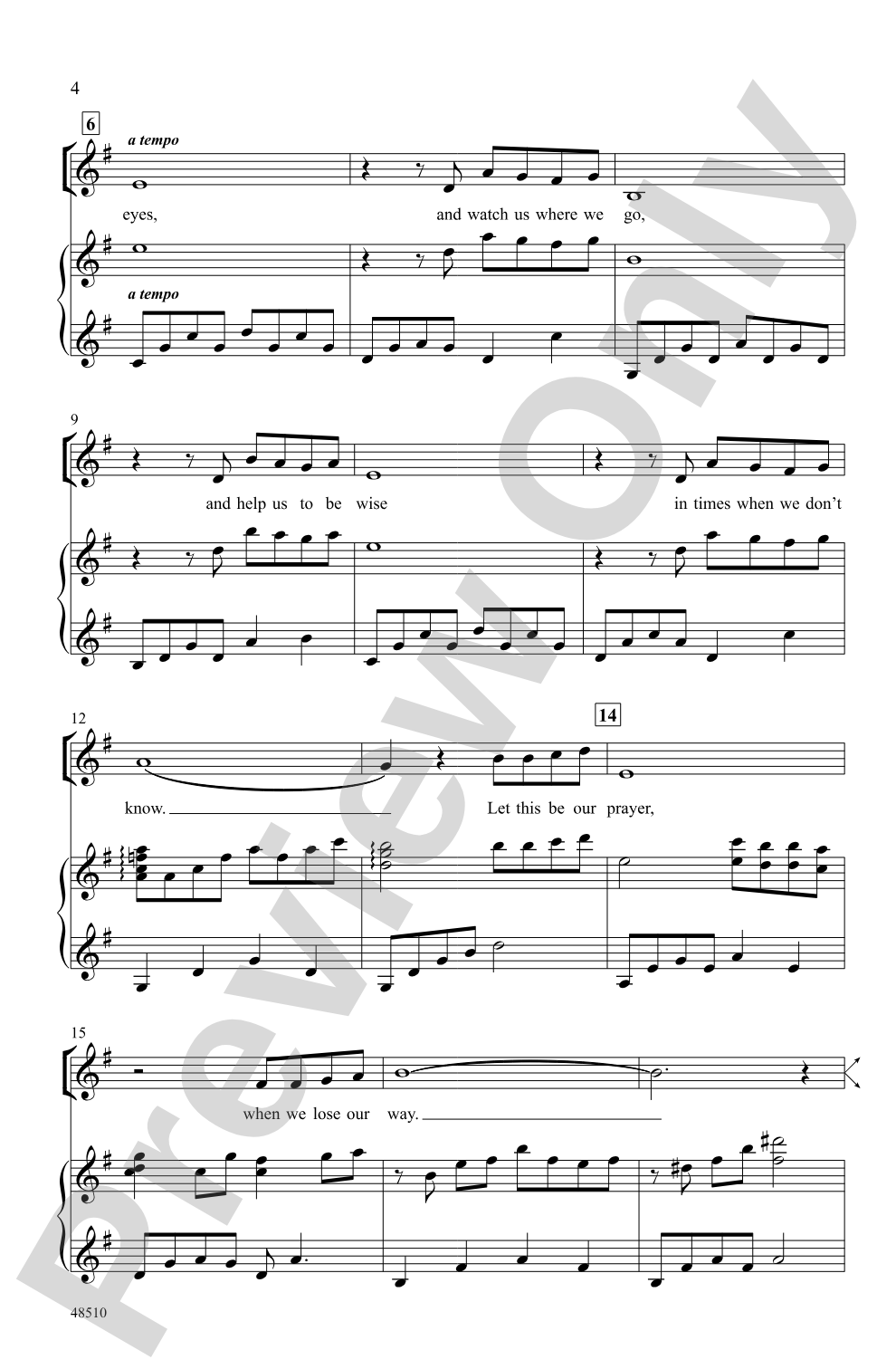
This breathtaking arrangement brings the world-famous Celine Dion and Andrea Bocelli duet to 2-part choirs with a well-crafted piano accompaniment and an optional violin obbligato. Elegant voice parts come naturally, allowing rehearsals to focus on deeper musicality. The arranger's thoughtful foreword invites conductors and singers to use the ebb and flow of tempo, creating shade and light reflective of the text. For ease of learning, there are fewer Italian words than in the original, and a pronunciation guide is included.


Don't just read it, hear it, play along with it, and watch your students grow with it. In MakeMusic Cloud, The Prayer: 2-Part Choral Octavo comes alive with professional accompaniment, adjustable tempo, and built-in practice tools that turn solo practice into real progress.
Open in the Player
Jump straight in and assign it today.
Start Your Free Trial
Open this title and explore the full library in minutes.
Sample Audio
1
Audio File
--:--
0:00
0:00
Sample Video
Additional Details
Series:
Alfred Pop Choral Series
Publisher:
Alfred Music
Page Count:
16
SKU:
00-PO-0006470
More about this title
About the Composer: Carole Bayer Sager
Carole Bayer Sager is a Grammy Award-winning songwriter and composer whose career spans six decades of pop, film, and theatrical music. She has written or co-written dozens of hits for recording artists across multiple genres, bringing a distinctive melodic sensibility and emotional depth to every project. Her work in film composition, particularly "The Prayer" with David Foster, demonstrates her gift for creating songs that transcend their original context and resonate across different musical settings.
Why we love this
Greg Gilpin's arrangement captures the intimacy and grandeur of the original duet while making it genuinely singable for 2-part choirs. The foreword's invitation to shape tempo and dynamics gives singers agency over the emotional arc, transforming what could be a simple pop arrangement into an interpretive experience. Paired with the optional violin obbligato and straightforward piano part, this works equally well as a show-stopper at graduation or as a meaningful closer to a spring concert.
What to expect
The piece opens with quiet reverence and builds toward moments of soaring conviction, supported by a piano part that frames rather than overwhelms the voices. Singers experience the interplay between restraint and release, learning to create contrast through dynamics and phrasing rather than vocal strain. The overall effect is intimate yet grand, exactly the emotional territory the original inhabits.
Who it's for
This arrangement serves choirs with developing sight-readers and mixed voice ranges who want to tackle a meaningful, recognizable piece without excessive technical demands. It's ideal for groups seeking material that feels contemporary and emotionally accessible while maintaining musical substance. Directors will appreciate that the elegant voice parts allow rehearsal focus to shift quickly from learning notes to refining interpretation.
How to get the most out of it
- Honor the foreword's guidance on tempo flexibility; allow singers to breathe into the "ebb and flow" rather than locking into a metronomic pulse.
- Shape the dynamic arc across the longer phrases to highlight the text's emotional shifts; resist the urge to sing at full volume throughout.
- If using the optional violin obbligato, rehearse the choir independently first so voices establish their own security before layering in the instrumental line.
- Use the pronunciation guide not just as a reference tool but as an opportunity to connect singers to the song's meaning, even with fewer Italian words than the original.
How to use it
This is natural programming for spring or graduation concerts, where it can anchor a thematic set around hope, perseverance, or new beginnings. Consider pairing it with other arranged pop standards to create a short set that showcases your choir's versatility, or use it as a closing encore to signal the seriousness and beauty of the occasion. Its recognizable melody also makes it an engaging choice for school assemblies or community performances where you want to reach audiences beyond traditional choir venues.
Skills your students will build
- Interpreting tempo markings and conductor cues for expressive phrasing
- Balancing two distinct voice parts while maintaining blend
- Connecting foreign language text (Italian) to musical meaning with pronunciation guidance
- Shaping dynamic contours across longer melodic phrases
- Responding to optional instrumental accompaniment (violin obbligato) while maintaining independence