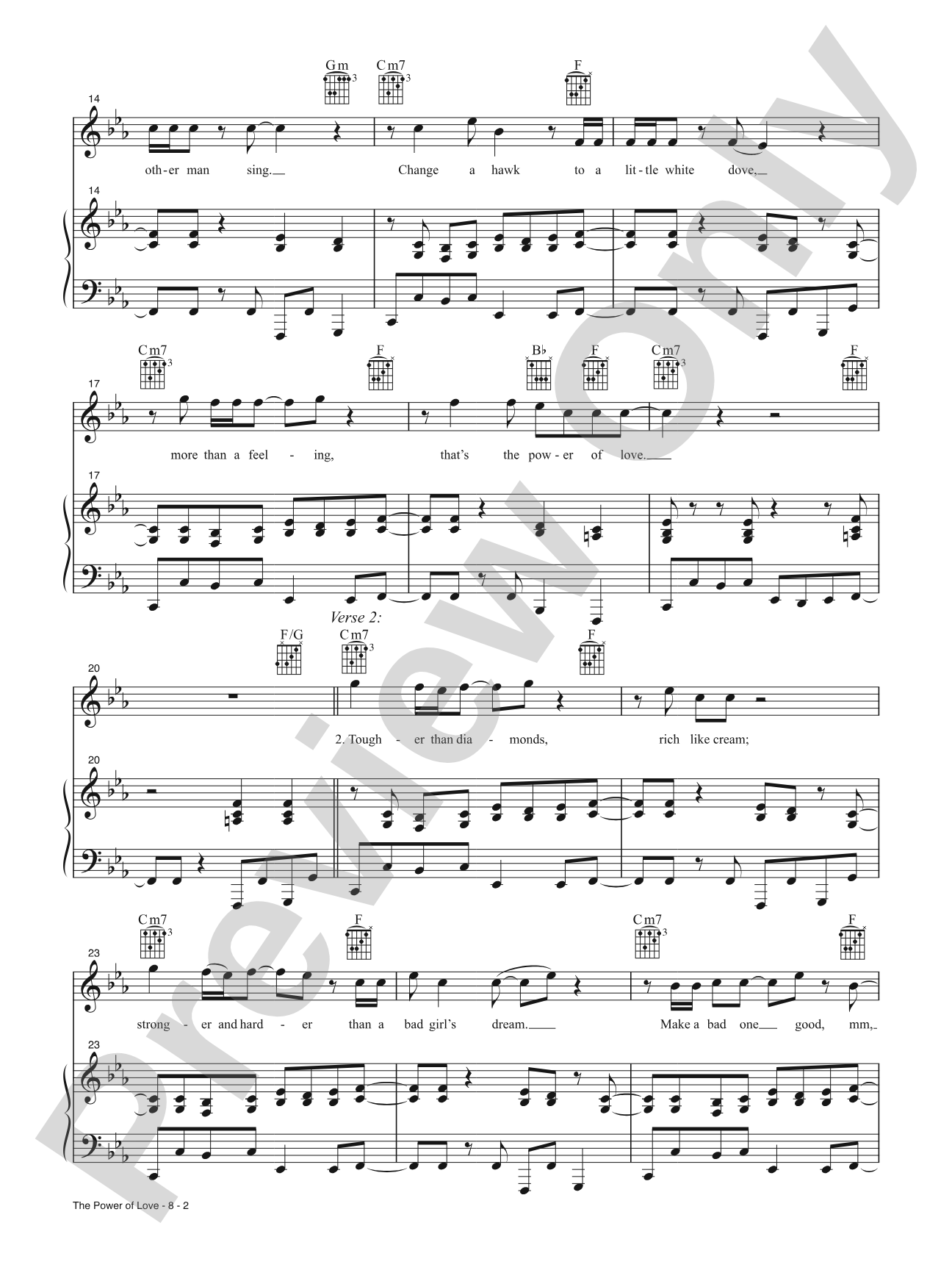
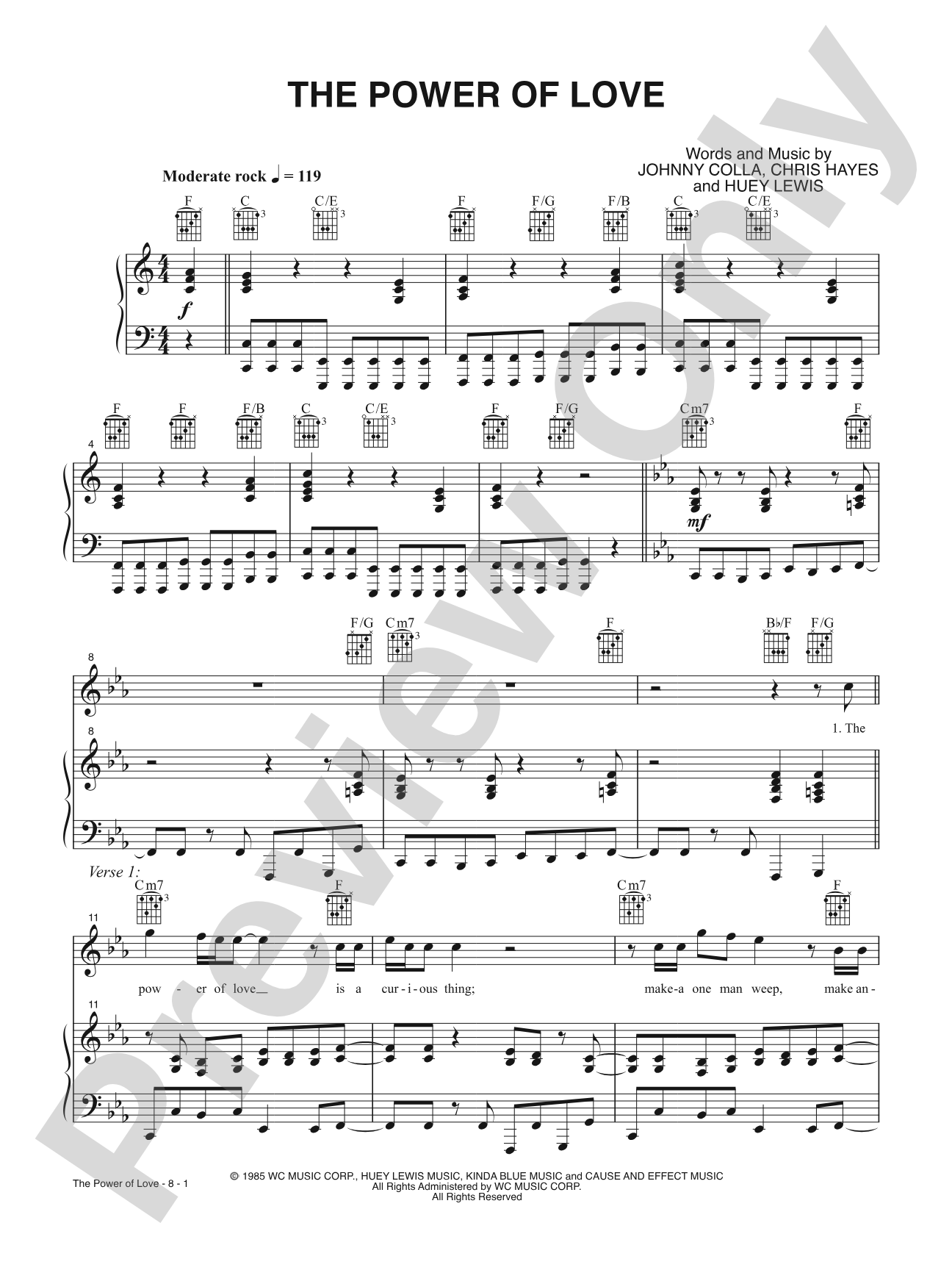
The Power of Love Sheet Music Preview

The Power of Love: Piano/Vocal/Guitar

Words and Music by JOHNNY COLLA, CHRIS HAYES and HUEY LEWIS

Item: 00-PS-0016727

Digital Download
$3.99

One moment…

Description
"The Power of Love" is a 1985 single by Huey Lewis and the News, written for the soundtrack of the 1985 blockbuster film Back to the Future.

The Power of Love: Piano/Vocal/Guitar isn't in MakeMusic Cloud just yet...but it could be. Let us know you'd like to see it, and you'll help shape what comes next. In the meantime, start a free trial and dive into thousands of interactive titles your students can play along with today.

Sample Audio
No sample audio found.
Sample Video
Additional Details
SKU: 00-PS-0016727

More about this title

About the Composer: Johnny Colla

Johnny Colla is a guitarist, keyboardist, and composer best known for his work with Huey Lewis and the News, the pop-rock band that dominated the 1980s charts. As a core member of the group, Colla co-wrote several of the band's most enduring hits, including "The Power of Love," which became a cultural touchstone through its use in Back to the Future. His contributions to the band's sound blended rock credibility with accessible pop sensibility, making their music engaging for both radio audiences and live concert crowds.

Beyond his work with Huey Lewis and the News, Colla has maintained a career as a session musician and composer, collaborating across genres and helping shape the sound of 1980s popular music. His ability to craft memorable melodies and arrange them for multiple instruments reflects both his technical skill and his understanding of what makes a song resonate with listeners.

Why we love this

This is a song students actually want to learn, which already sets it apart. The melody sits beautifully in the vocal range, the piano part balances accessibility with genuine musicality, and the rhythmic drive of the original translates directly to the page. Programming it opens doors: it works as a solo piece for voice students, a duet with pianist, or a fun ensemble arrangement number that reminds students why they fell in love with music in the first place.

What to expect

Bright, earnest, and infectious. The song radiates youthful optimism and romantic sincerity, with enough harmonic sophistication to engage musicians while remaining thoroughly singable. There's an undeniable lift to the melody, a sense of momentum and hope that feels as fresh now as it did in 1985.

Who it's for

This arrangement serves pianists with vocal experience, singers who want to accompany themselves, and collaborative performers working with a pianist or guitarist. It's equally suited for voice studio instruction, contemporary music ensembles, or talented students looking for repertoire that bridges the gap between classical technique and pop sensibility.

How to get the most out of it

  • Capture the propulsive energy of the original by locking the piano rhythm with the vocal phrasing; the groove matters as much as the melody.
  • Use the guitar voicings in the chart as a roadmap for voice leading, even if you're playing on piano alone, to preserve the harmonic richness of the arrangement.
  • Balance vocal projection with clarity in the upper register; this melody climbs, and singers need space to breathe at the peaks without oversinging.
  • Shape the dynamics to mirror the building tension of the film scene; start conversational and let the song swell naturally toward the emotional peak.

How to use it

Consider this as a concert opener or finale that connects with audiences across ages and musical backgrounds. It pairs naturally with other well-crafted pop standards in a popular music recital or senior capstone performance. Voice students benefit from using it as a teaching tool for phrasing, dynamics, and stylistic interpretation in a contemporary idiom.

Skills your students will build

  • Vocal phrasing across pop-rock idioms
  • Reading and interpreting guitar-based chord voicings on piano
  • Balancing melody and accompaniment in self-accompanied singing
  • Understanding rhythmic groove and its role in contemporary style
  • Dynamic shaping and emotional storytelling in a commercial song context

You May Also Like