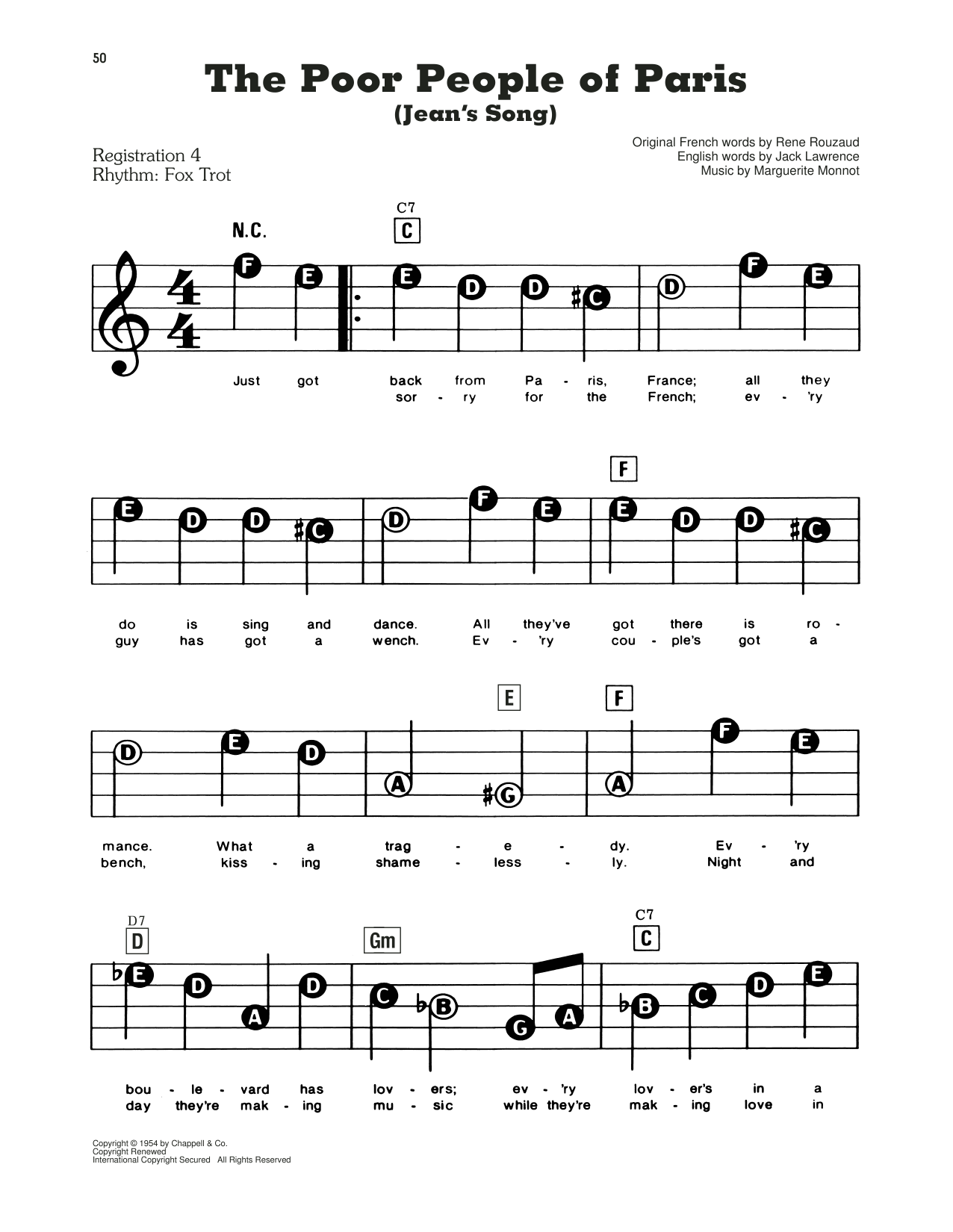
The Poor People Of Paris Sheet Music Preview

The Poor People Of Paris: E-Z Play Today

Item: 35-DS01130056

Digital Download
$4.99
Description

The Poor People Of Paris: E-Z Play Today isn't in MakeMusic Cloud just yet...but it could be. Let us know you'd like to see it, and you'll help shape what comes next. In the meantime, start a free trial and dive into thousands of interactive titles your students can play along with today.

Sample Audio
No sample audio found.
Sample Video
Additional Details
Publisher: Hal Leonard
Page Count: 3
SKU: 35-DS01130056

More about this title

Why we love this

This arrangement captures the wistful charm of a French standard in an accessible format that doesn't sacrifice musicality. E-Z Play Today's thoughtful voicings let pianists focus on phrasing and tone color rather than wrestling with technical demands.

What to expect

Nostalgic and gently melancholic, with the particular warmth of a mid-century Paris bistro ballad. The melody floats easily over supportive harmonies, inviting listeners into a moment of quiet reflection.

Who it's for

Piano students at beginner to early intermediate levels who want to play recognizable songs with genuine character. Teachers seeking repertoire that builds foundation skills without resorting to oversimplified arrangements.

How to get the most out of it

  • Shape the melody with gentle dynamic swells rather than playing it straight through; the song's emotional weight lives in its contours.
  • Balance left-hand accompaniment so it supports without overwhelming the right-hand line.
  • Lean into the standard's nostalgic quality by keeping tempos unhurried and allowing rubato in the verses.

How to use it

Pair this with other standards from the same era for a retrospective concert set, or use it as a teaching piece to develop interpretive choices within a simple harmonic framework. Its three-page length makes it ideal for student recitals or casual performance settings.

Skills your students will build

  • Pedal control and tone production on sustained melodic passages
  • Balancing melody against accompaniment texture
  • Expressive phrasing and dynamic shaping within accessible harmonic language
  • Reading lead-sheet style arrangements with chord symbols

You May Also Like