
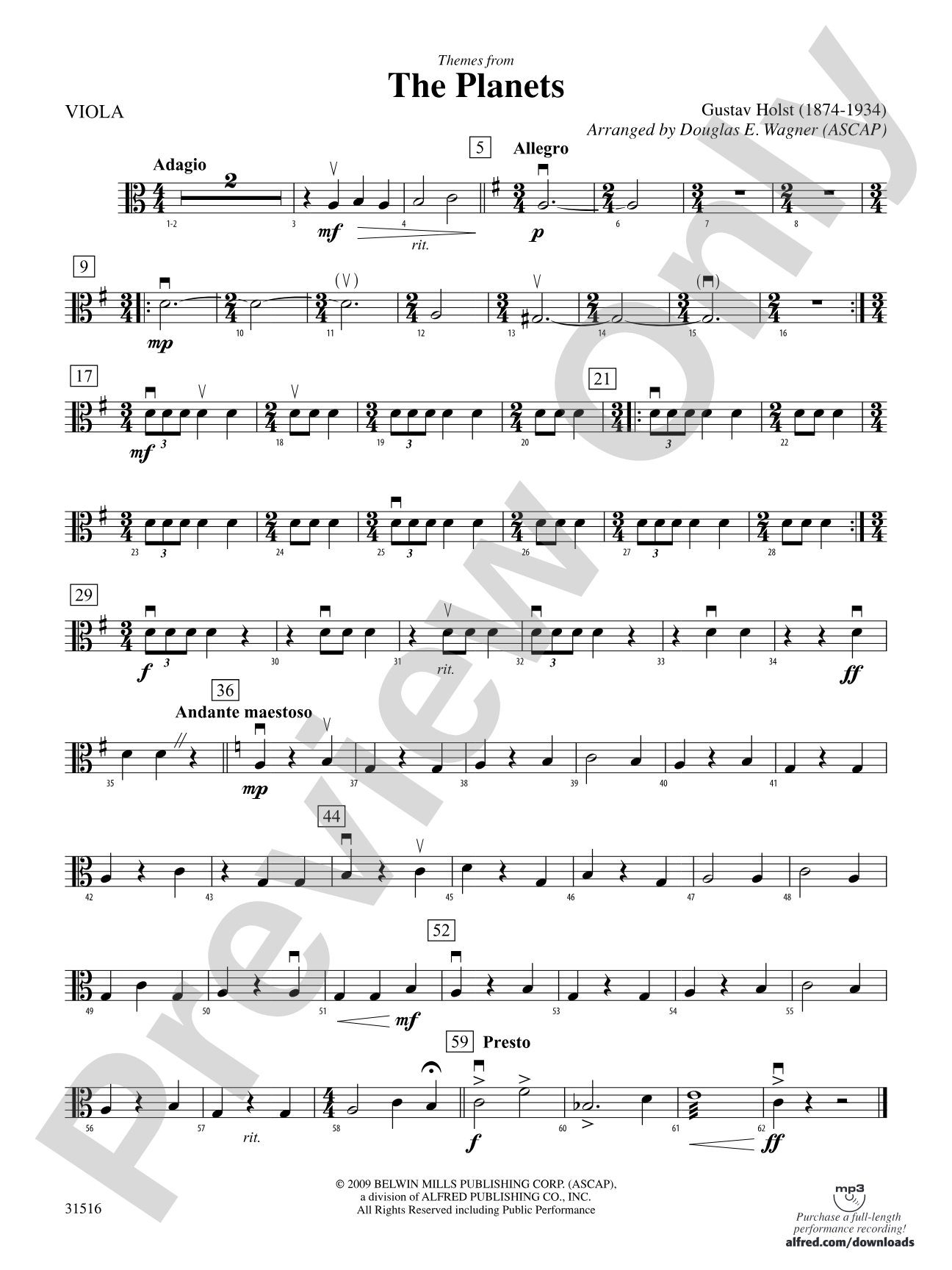

The Planets, Themes from: Viola
By Gustav Holst / arr. Douglas E. Wagner
Grade: 2
Item: 00-PC-0001710_VA1
$5.99
Pickup currently not available
Description
Themes from three of the suite's seven movements are seamlessly presented in this medley for young players. Material from the following movements is included: Venus, the Bringer of Peace * Mars, the Bringer of War * and Jupiter, the Bringer of Jollity. What a lovely way to introduce young players to the grandeur possible in music! (2:38) This title is available in MakeMusic Cloud.


Don't just read it, hear it, play along with it, and watch your students grow with it. In MakeMusic Cloud, The Planets, Themes from: Viola comes alive with professional accompaniment, adjustable tempo, and built-in practice tools that turn solo practice into real progress.
Open in the Player
Jump straight in and assign it today.
Start Your Free Trial
Open this title and explore the full library in minutes.
Sample Audio
1
Audio File
--:--
0:00
0:00
Sample Video
Additional Details
Series:
Belwin Beginning String Orchestra
Publisher:
Alfred Music
Page Count:
148
SKU:
00-PC-0001710_VA1
More about this title
About the Arranger: Douglas E. Wagner

Douglas E. Wagner grew up in Chicago and earned both undergraduate and graduate degrees in music from Butler University. He spent three decades as a high school music educator and administrator before transitioning to full-time composition and arrangement work.
Since 1973, Wagner has published more than 3,500 works across nearly every ensemble type: school and church choirs, concert bands, orchestras, handbells, organ, piano, and vocal literature. His music has reached an estimated seventeen million copies worldwide and continues to appear in concert halls, broadcast performances, and festivals throughout North America and internationally. He now lives in Indianapolis with his wife, Sandy.
Why we love this
Wagner captures the essence of Holst's iconic suite while respecting the capabilities of developing string players. By weaving together three thematically rich movements, this medley introduces young orchestras to sophisticated orchestral literature without overwhelming them technically, and the 2:38 runtime keeps energy and focus intact for a concert or festival setting.
What to expect
Moving seamlessly from the serene beauty of Venus through the dramatic tension of Mars and into the jubilant swagger of Jupiter, this medley offers young players a taste of emotional range and orchestral grandeur. The familiar themes resonate immediately while the arrangement respects the technical maturity of the group.
Who it's for
String orchestra directors working with Grade 2 ensembles who want to program recognizable, artistically rich material. This arrangement suits players ready to handle sustained singing lines and program transitions, making it ideal for young orchestras preparing for festivals or concert performances.
How to get the most out of it
- Shape the opening of Venus with sustained, singing tone; resist the temptation to rush through the slower material, which demands confidence in long bows and phrase direction.
- Approach Mars with rhythmic precision and controlled intensity rather than raw volume; Grade 2 players benefit from clear conducting and ensemble lock before attempting dramatic dynamics.
- Balance Jupiter's joyful character against the weight of what precedes it; younger players often underestimate the importance of articulation and crisp rhythms in lifting the mood toward the finale.
- Use the substantial length of this medley (148 pages for score and parts) to work on stamina and concentration across an extended piece; break rehearsals into movement-based segments if needed.
How to use it
Open a concert with this medley to establish artistic credibility and engage audiences with recognizable masterwork material; its moderate length and dramatic arc make it an effective centerpiece between lighter repertoire and a closing feature. For festival settings, it demonstrates musicianship and arrangement sophistication at the Grade 2 level.
Skills your students will build
- Sustaining long phrases and managing bow control across extended singing lines
- Responding to tempo transitions between contrasting movements
- Balancing dynamic intensity and restraint within a single piece
- Maintaining ensemble cohesion during programmatic shifts in character and style
- Reading and performing across a full-length orchestral medley