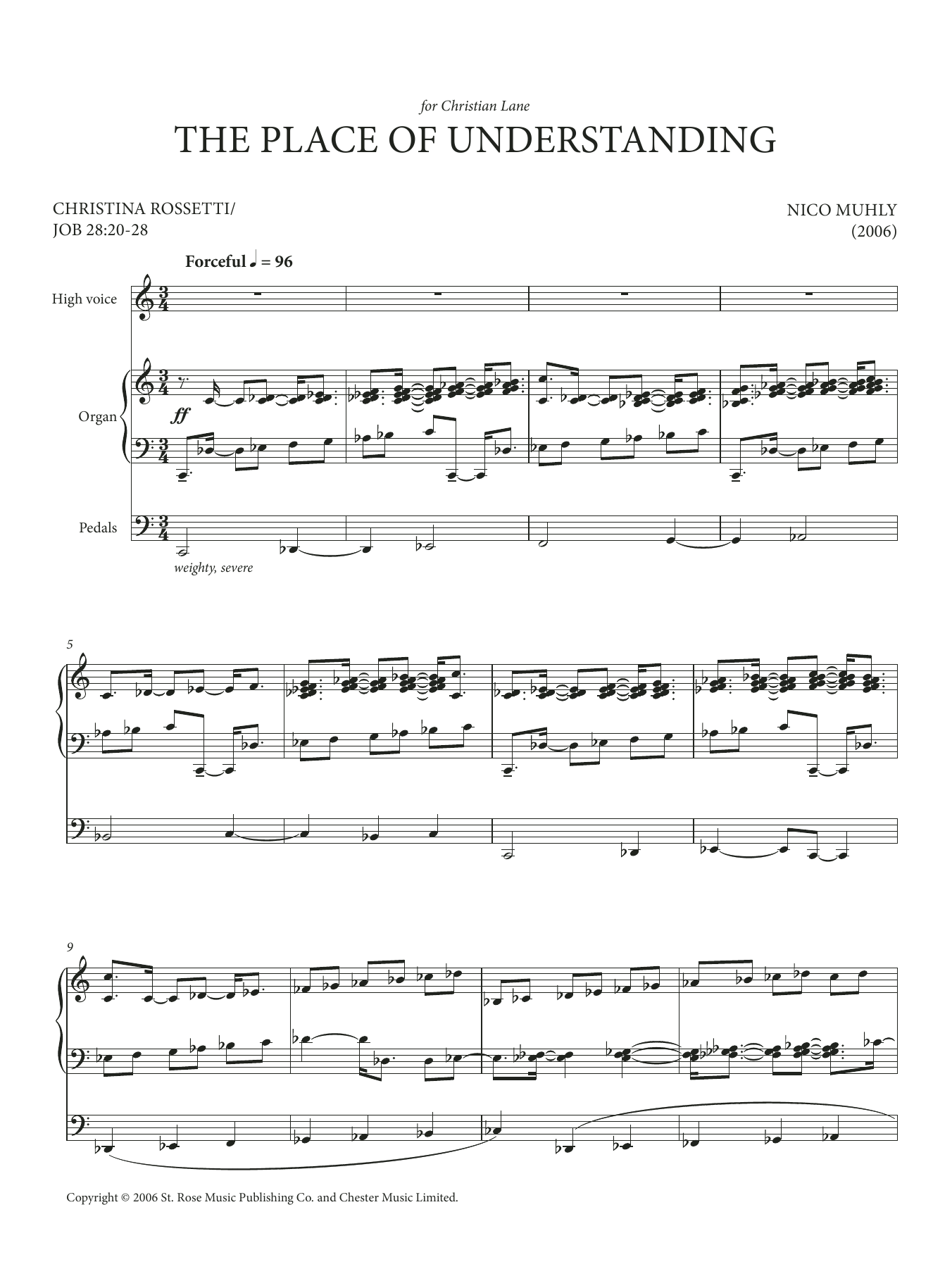
The Place Of Understanding (for High Voice and Organ) Sheet Music Preview

The Place Of Understanding (for High Voice and Organ): Piano Vocal

As performed by Nico Muhly

Item: 35-DS00414900

Digital Download
$9.99
Description

The Place Of Understanding (for High Voice and Organ): Piano Vocal isn't in MakeMusic Cloud just yet...but it could be. Let us know you'd like to see it, and you'll help shape what comes next. In the meantime, start a free trial and dive into thousands of interactive titles your students can play along with today.

Sample Audio
No sample audio found.
Sample Video
Additional Details
Publisher: Hal Leonard
Page Count: 22
SKU: 35-DS00414900

More about this title

About the Artist: Nico Muhly

Nico Muhly is a Brooklyn-based composer whose work spans opera, orchestral music, and vocal chamber pieces. His compositional voice blends accessible lyricism with sophisticated harmonic language, drawing on his background in both classical training and contemporary music.

Why we love this

Muhly writes for the human voice with rare intelligence. The text setting feels inevitable rather than imposed, and the organ accompaniment creates an intimate yet substantial sonic foundation that gives singers real material to shape.

What to expect

These songs occupy a contemplative space. Muhly's harmonic language is modern without being austere; the writing feels honest and introspective, inviting performers and listeners into intimate moments of reflection.

Who it's for

High sopranos and tenors seeking contemporary vocal repertoire that combines literary sophistication with genuine singability. This works equally well for advanced music students developing their art song repertoire and for recitalists looking to expand beyond traditional 19th-century literature.

How to get the most out of it

  • Treat the organ part as a full ensemble partner, not merely accompaniment. Balance your voice to sit within the harmonic colors Muhly creates rather than floating above them.
  • Let the text breathe between phrases. The emotional weight of these songs comes from restraint and careful pacing, not from pushing the line.
  • Explore the dynamic range on the organ. Subtle changes in registration and touch can transform how the songs unfold without requiring dramatic vocal gestures.

How to use it

Feature this as a standalone set on a recital devoted to 21st-century vocal music, or pair individual songs with earlier art song traditions to demonstrate how contemporary composers approach text and voice. The modest instrumentation makes it ideal for chamber concert contexts or salon-style performances.

Skills your students will build

  • Contemporary text setting and diction in modern English
  • Subtle dynamic control in intimate performance settings
  • Collaborative listening with instrumental partners
  • Navigating modern harmonic language without traditional tonal anchors

You May Also Like