
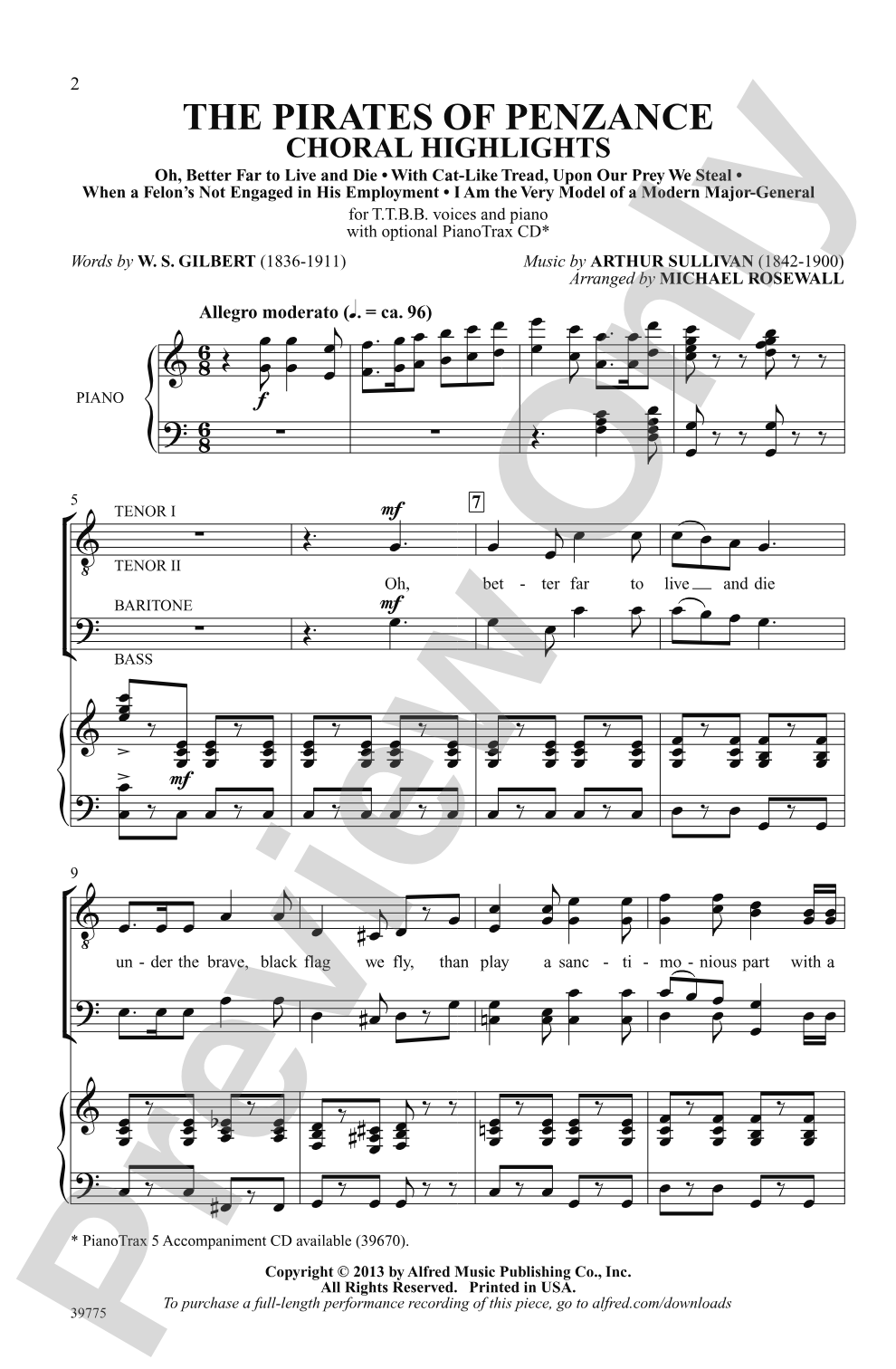

The Pirates of Penzance: Choral Highlights: TTBB Choral Octavo
Words by W. S. Gilbert, music by Arthur Sullivan / arr. Michael Rosewall
Item: 00-PO-0001598
$2.25
Minimum order quantity: 20 copies
Pickup currently not available
Description
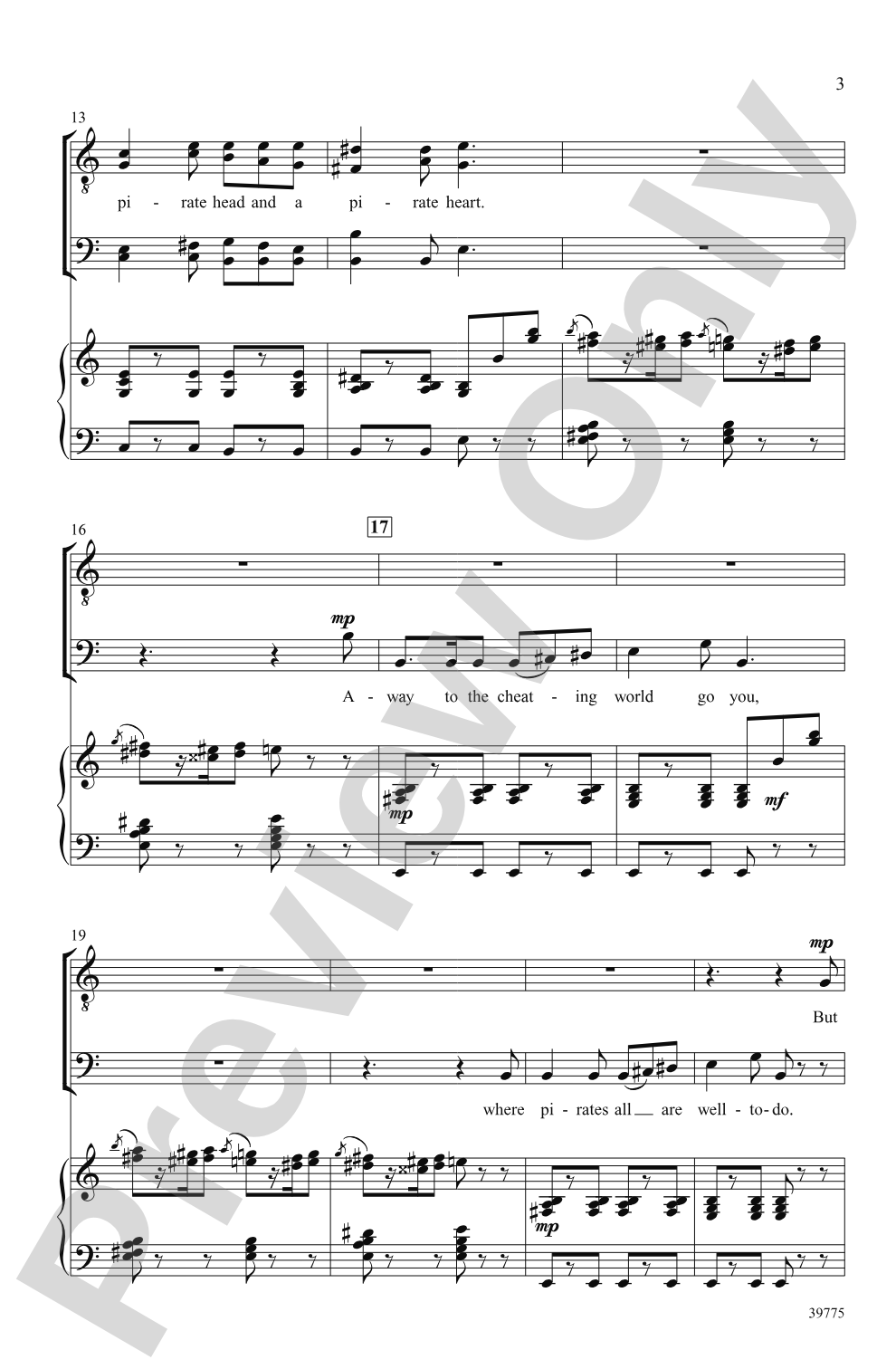
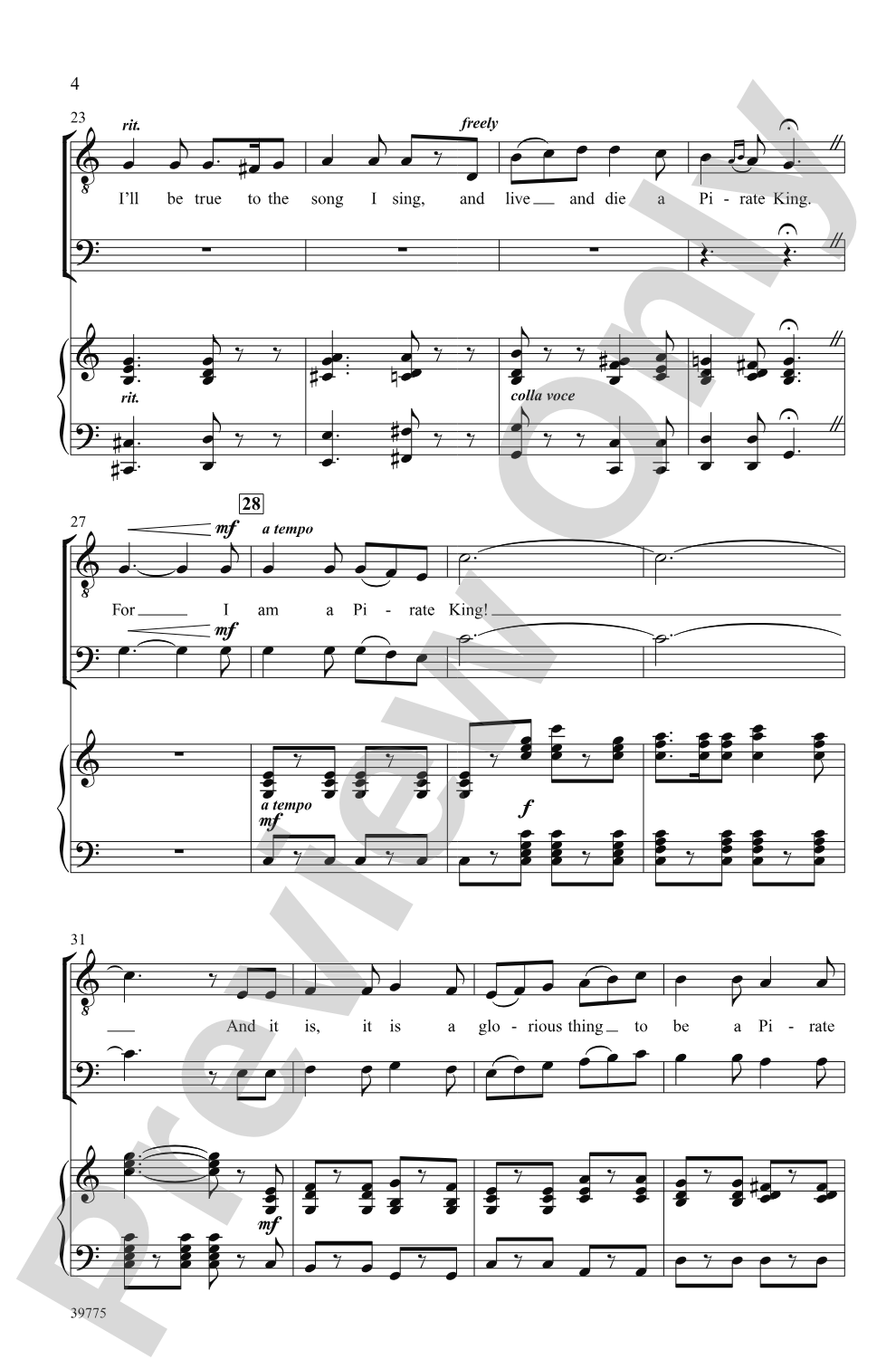
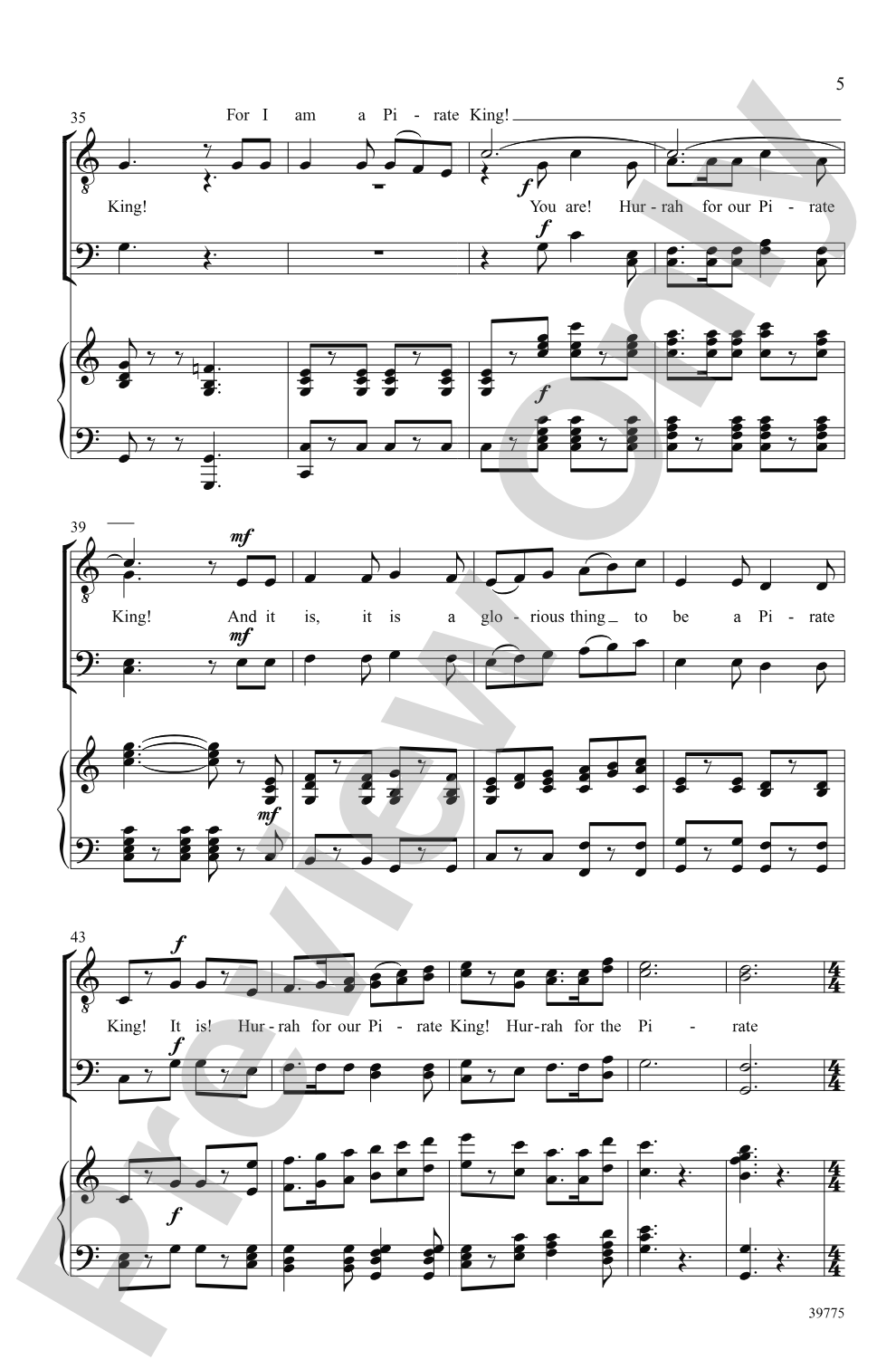
Let the men be men as they sing this rollicking swashbuckler! Smooth transitions steer the ship through four favorites from the witty G & S operetta, in just under five minutes. Full harmonies, significant solos, sophisticated humor, and a dig-in piano part are sure to impress.


The Pirates of Penzance: Choral Highlights: TTBB Choral Octavo isn't in MakeMusic Cloud just yet...but it could be. Let us know you'd like to see it, and you'll help shape what comes next. In the meantime, start a free trial and dive into thousands of interactive titles your students can play along with today.
Request This Title
Tell us you want it.
Start Your Free Trial
Explore everything that's ready to play right now.
Sample Audio
1
Audio File
--:--
0:00
0:00
Sample Video
No sample videos found.
Additional Details
Series:
Alfred Choral Designs
Publisher:
Alfred Music
Page Count:
20
SKU:
00-PO-0001598
More about this title
About the Composer: Arthur Sullivan
Arthur Sullivan (1842-1900) stands as one of the most gifted melodists in the English musical tradition. His partnership with librettist W.S. Gilbert produced fourteen comic operettas that defined Victorian popular theater and remain remarkably playable in educational and community settings today.
Sullivan's gift for writing memorable, singable lines served him equally well in his symphonic and sacred work, but the Gilbert and Sullivan operettas showcase his genius for comedy through music. His orchestrations are brilliantly economic, his part-writing sits naturally in the voice, and his harmonic language is sophisticated enough to engage musicians while remaining accessible to singers of varying experience.
Why we love this
Rosewall's arrangement captures the theatrical sparkle of Sullivan's original while building in enough harmonic depth to keep a mature men's choir engaged. The four-movement structure moves briskly without feeling rushed, and the solo opportunities scattered through the piece give singers individual moments to shine. Programming a G&S medley adds lift and humor to any concert, and this version proves that four minutes of comic opera can stand proudly alongside more serious repertoire.
What to expect
Swashbuckling charm mixed with genuine musical sophistication. The energy is infectious and theatrical, yet the harmonies demand attention and precision. Singers feel the wit in every phrase, and audiences hear a piece that's both lighthearted and thoroughly crafted.
Who it's for
Men's choirs and TTBB ensembles looking for substantial material that entertains without sacrifice of musicianship. This works equally well for community choruses seeking a crowd-pleasing concert piece and high school or college choirs wanting to tackle Sullivan's harmonic language in a shorter, more focused work.
How to get the most out of it
- Keep the text crystal clear. Sullivan's wit lives in the words, and audiences need to hear every syllable to appreciate the humor.
- Shape phrases toward the downbeat rather than away from it; this maintains the operatic drive without sounding stodgy.
- Use the piano part as a character in the arrangement. The "dig-in" writing Rosewall provides is meant to be heard, so balance voices accordingly.
- Mark the transitions between numbers clearly in rehearsal. Smooth handoffs keep the piece's forward momentum and remind singers they're moving through a sung narrative.
How to use it
Plant this in the middle of a concert program to shift the mood and energy without dropping musical standards. It pairs beautifully with other British choral repertoire, or use it as a palate-cleanser between heavier sacred or art-song selections. The five-minute length makes it ideal for festival competitions or community concert slots where lighter material can make a genuine artistic statement.
Skills your students will build
- Singing in mixed TTBB harmony with secure voice leading across all four parts
- Lyrical phrasing with comedic timing and text clarity
- Following smooth transitions between contrasting musical sections
- Supporting a strong, independent piano part with rhythmic precision
- Balancing solo work with ensemble blend in the same piece