The Pirates of Dragon's Mouth Cove Sheet Music Preview

The Pirates of Dragon's Mouth Cove: Piano

By Nancy Woodin

Level: Late Elementary

Item: 00-PS-0016062

Digital Download
$3.99
Description
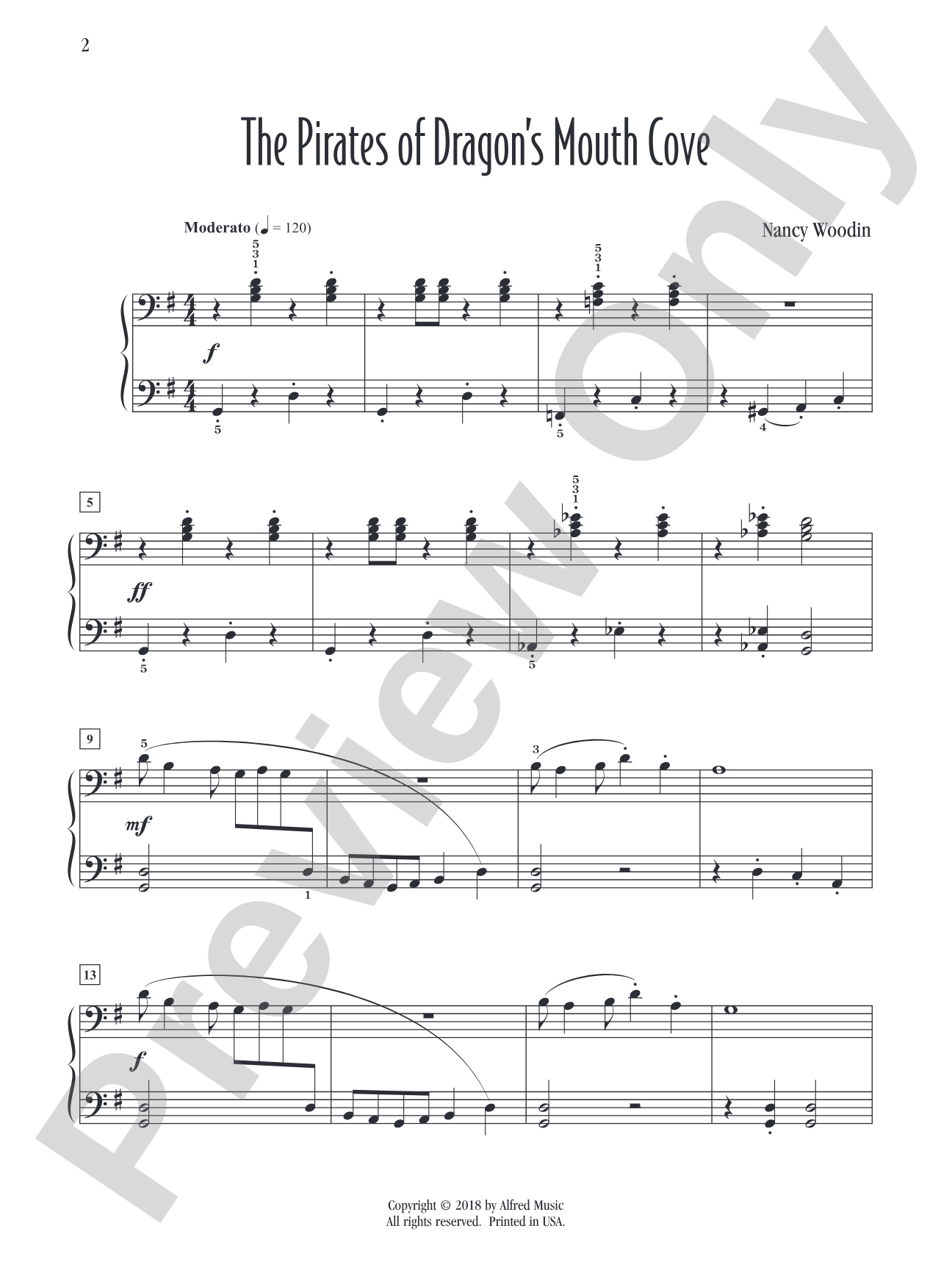
Late elementary students will enjoy this energetic and upbeat solo. The opening and closing sections feature chords that suggest Lydian mode. The middle section has a syncopated melody divided between the hands, as well as melodic intervals that alternate between the hands.

The Pirates of Dragon's Mouth Cove: Piano isn't in MakeMusic Cloud just yet...but it could be. Let us know you'd like to see it, and you'll help shape what comes next. In the meantime, start a free trial and dive into thousands of interactive titles your students can play along with today.

Sample Audio
No sample audio found.
Sample Video
Additional Details
Series: Signature Series
Publisher: Alfred Music
Page Count: 4
SKU: 00-PS-0016062

More about this title

Why we love this

Woodin writes with a clear understanding of what late elementary pianists can handle musically without oversimplifying. The Lydian mode harmony in the opening and closing frames the piece with genuine color rather than generic I-IV progressions, while the syncopated middle section keeps students engaged with rhythmic variety that feels achievable once they've practiced it through.

What to expect

A swashbuckling adventure that bounces along with bright energy. The opening's Lydian harmony gives it an almost medieval-fantasy quality, while the syncopated middle section creates forward momentum and playfulness, as if the pirates are mid-heist.

Who it's for

Late elementary pianists who've moved beyond simple blocked accompaniments and are ready for modal harmony and hand independence. Students need basic reading fluency in treble clef and comfort with staccato and legato articulation.

How to get the most out of it

  • Isolate the syncopated melody pattern in the middle section by playing it hands separately at a slower tempo first, then gradually increase speed to match the recorded tempo before combining hands.
  • Shape the opening chords by listening for which notes need prominence; the Lydian character comes through more clearly when the top voice sings slightly above the inner voices.
  • Mark phrase endings clearly so the piece doesn't blur into one long energy burst; the closing section should feel like a return to something familiar, not a repeat of the opening.

How to use it

Pair this with other character pieces for a recital focused on storytelling through music, or use it as a showcase for a student who's ready to demonstrate rhythmic independence without tackling a sonata movement. The four-page length makes it substantial enough for a student's own recital but brief enough for a group performance.

Skills your students will build

  • Reading and playing modal harmony (Lydian mode)
  • Hand independence with syncopated rhythms
  • Distributing a single melodic line between two hands
  • Articulation control (staccato and legato in the same piece)
  • Rhythmic accuracy with syncopation

You May Also Like