
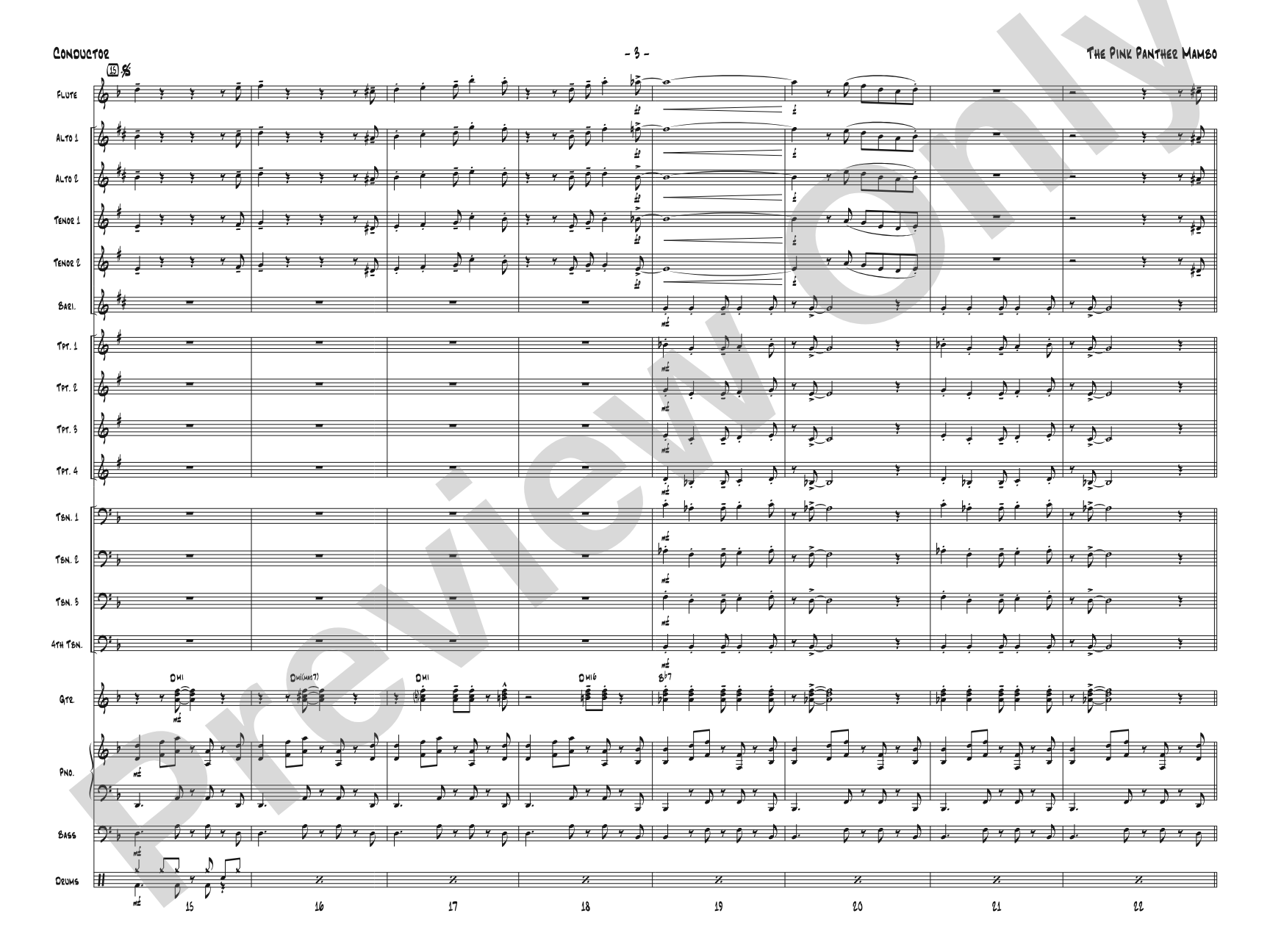
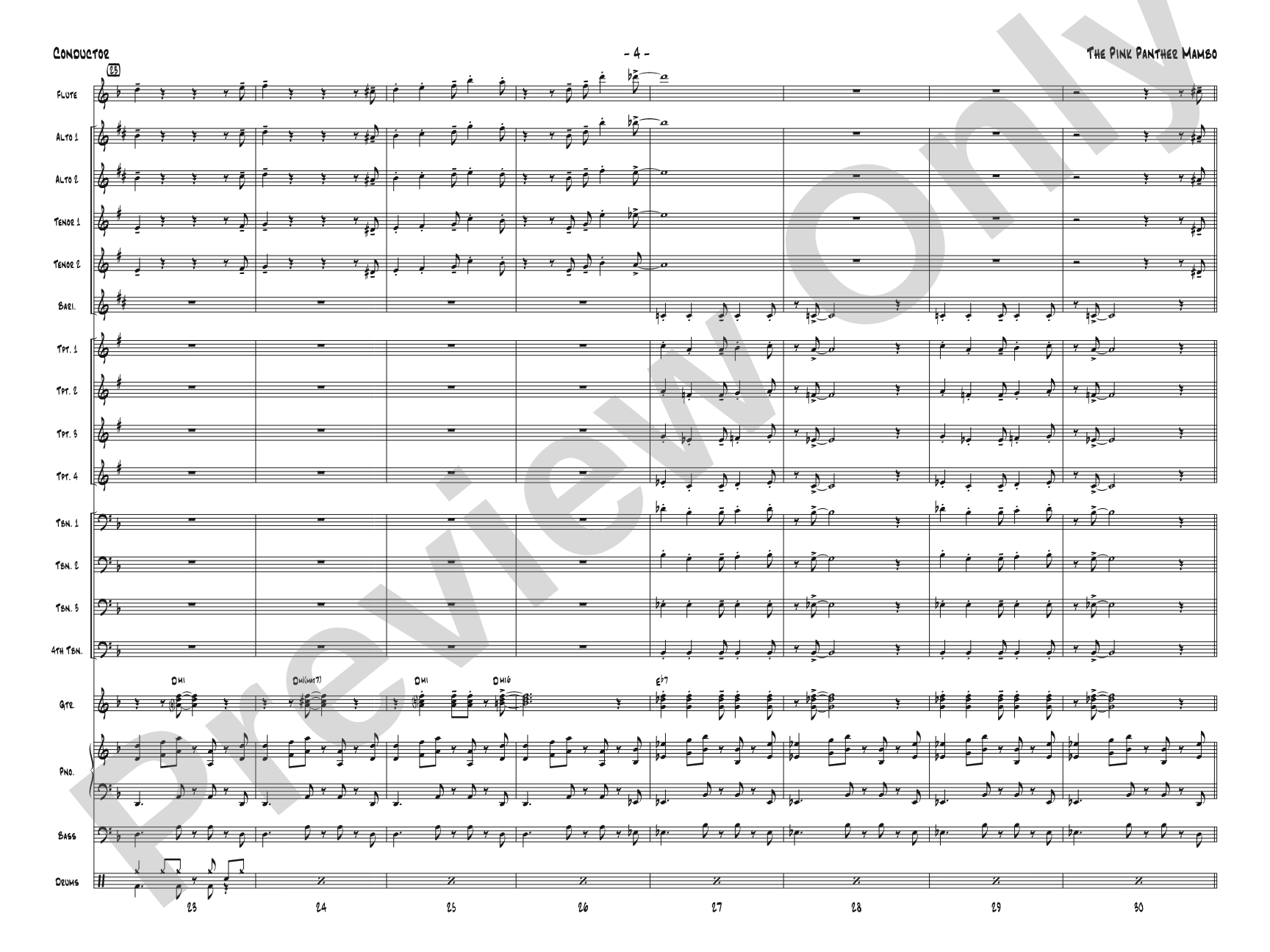
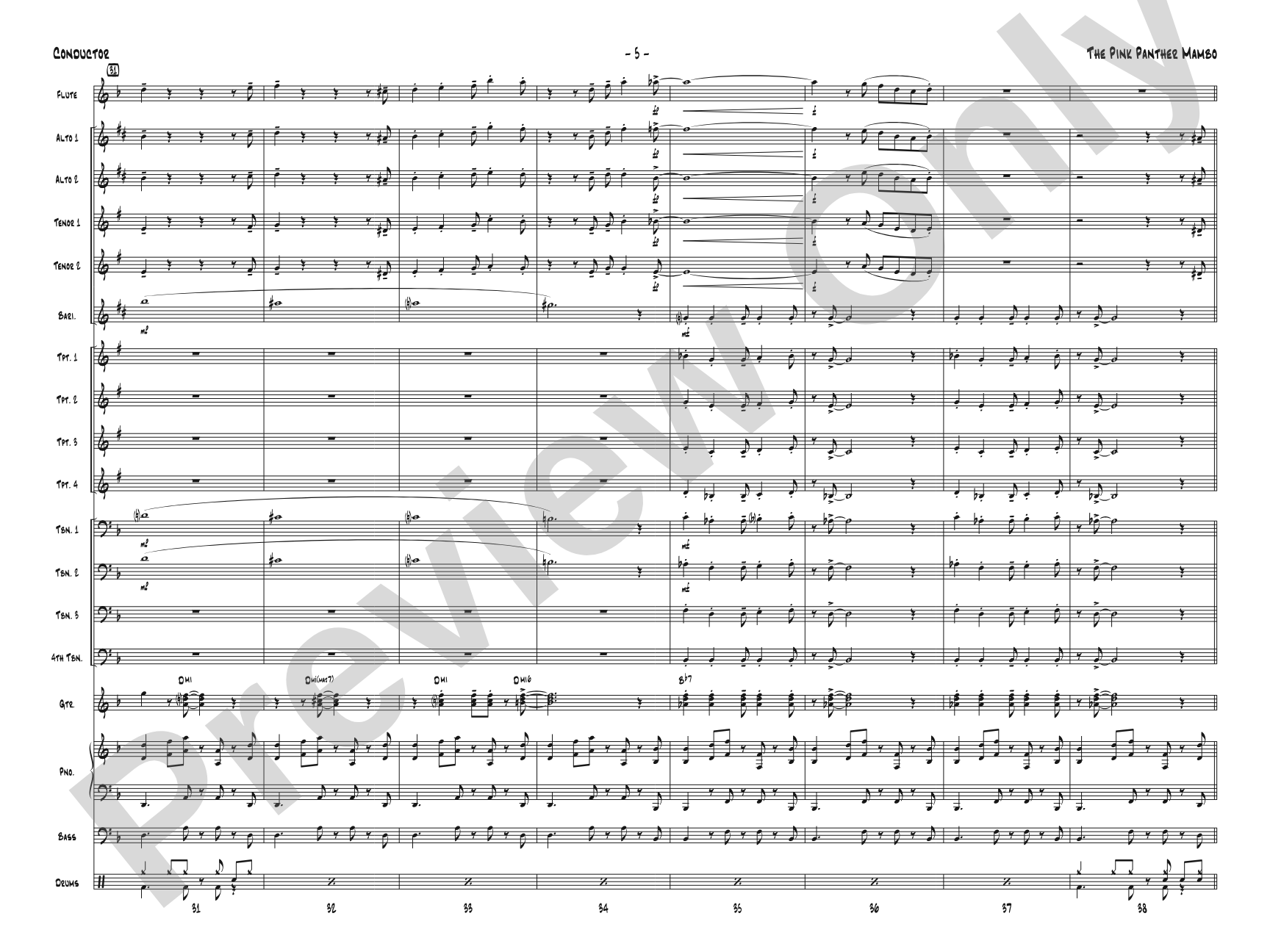
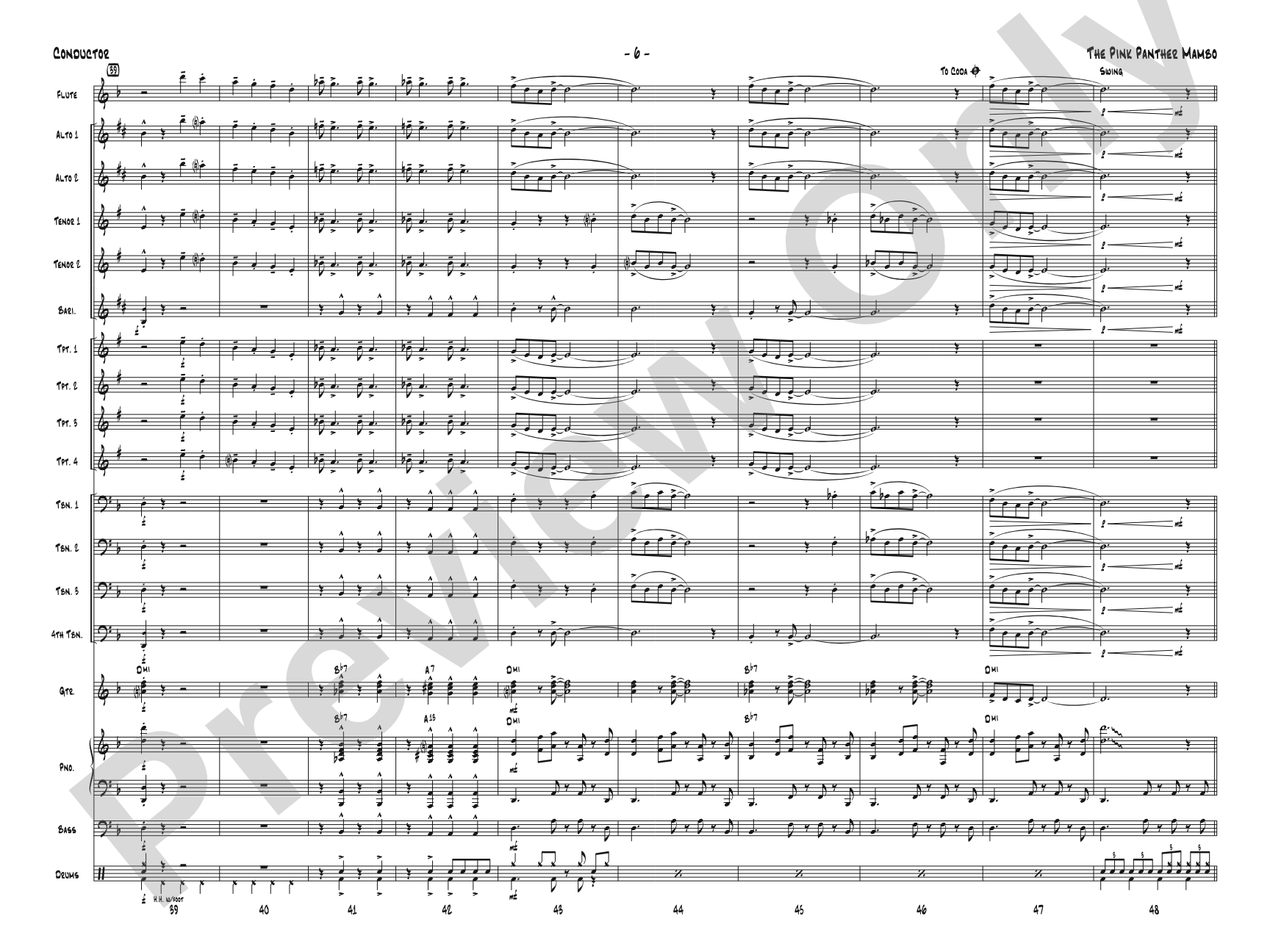
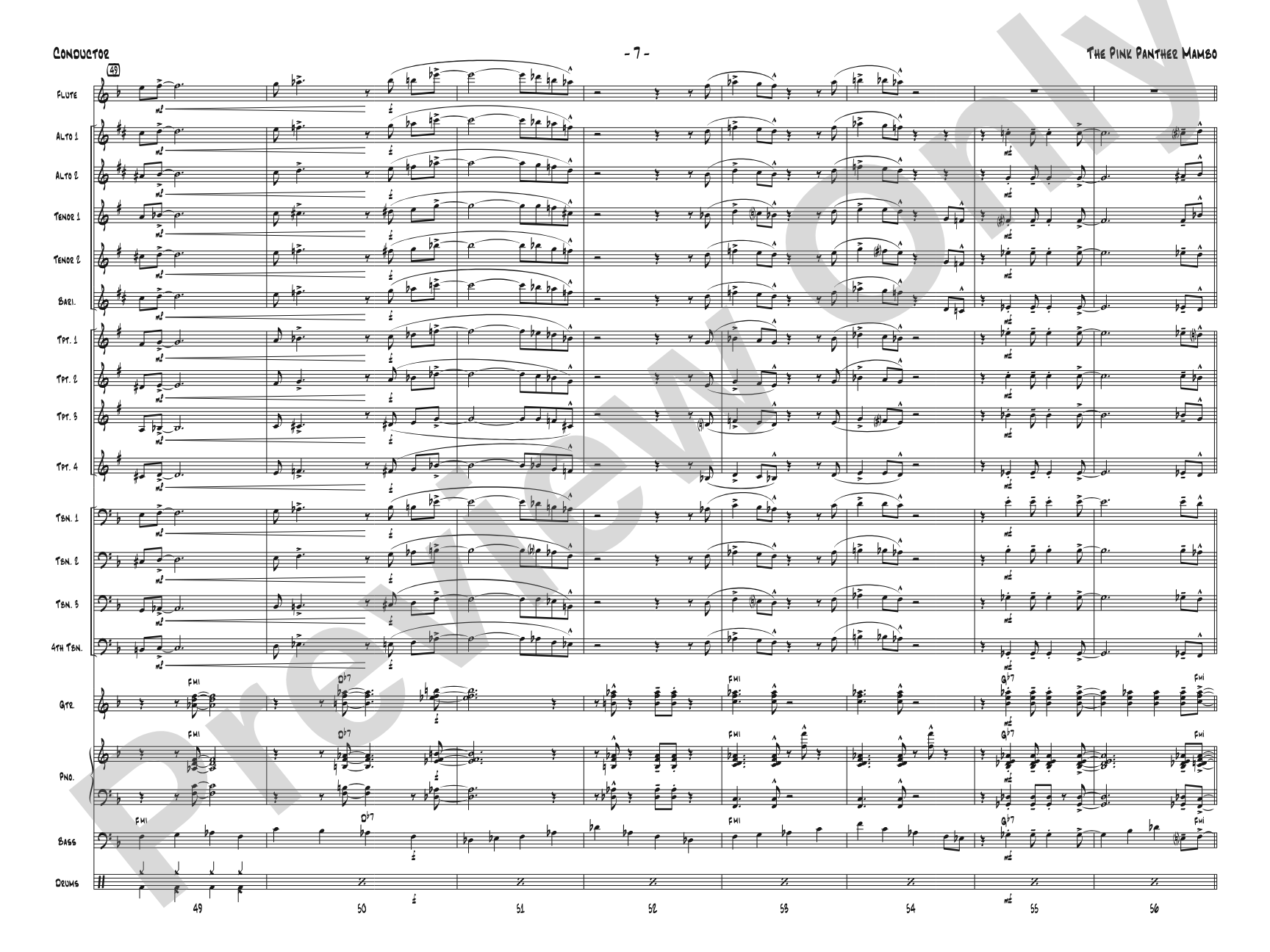
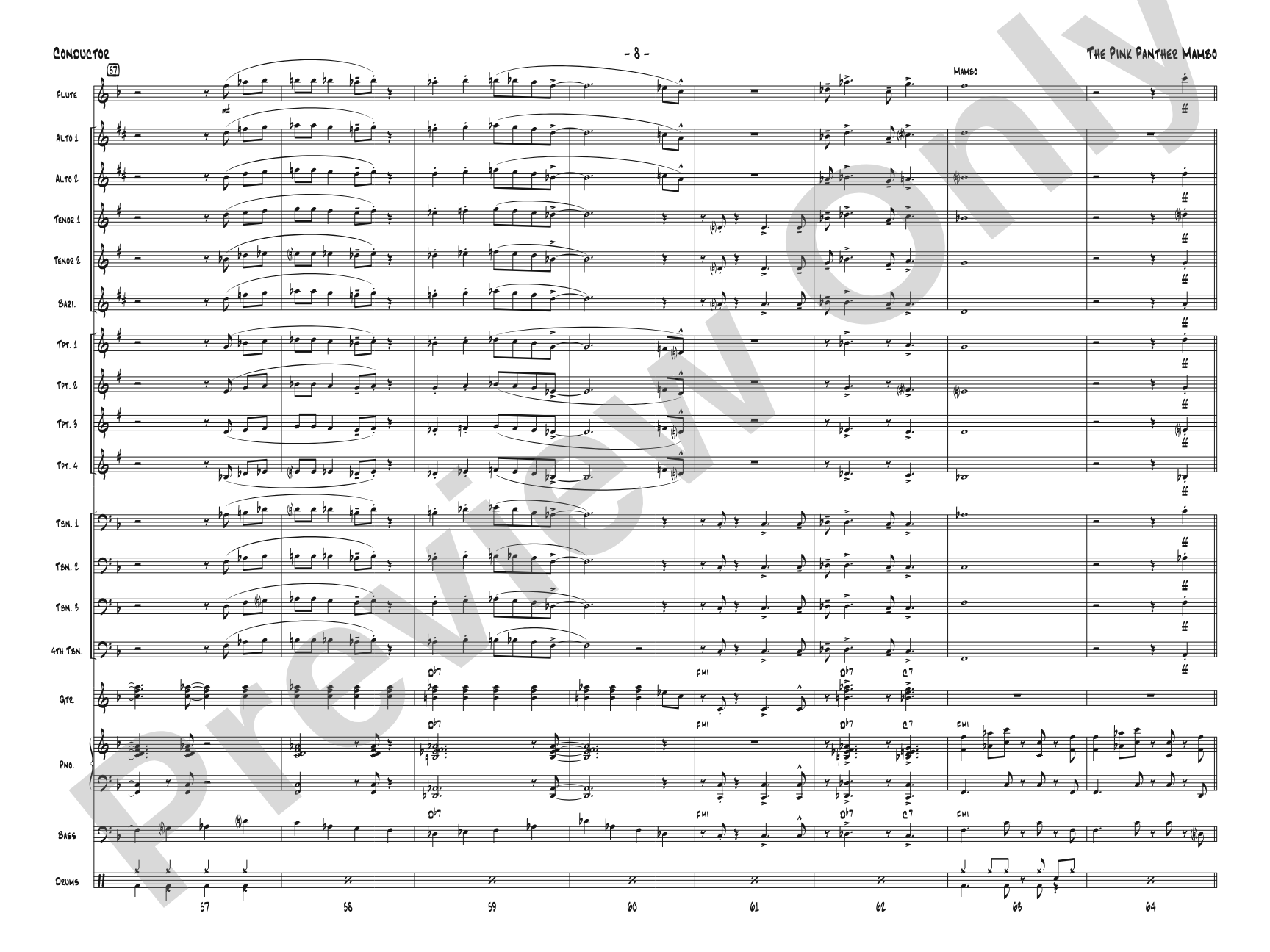
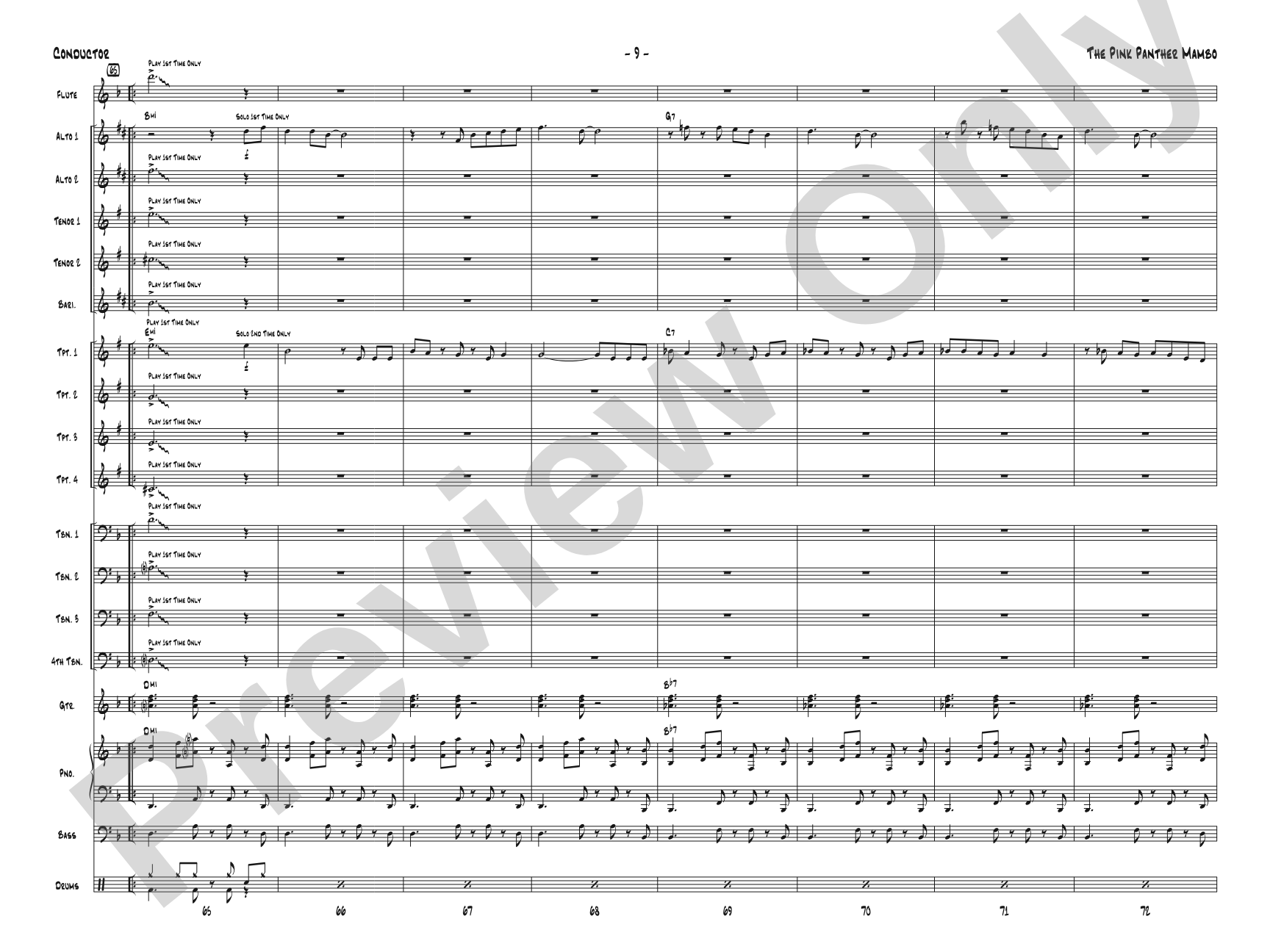
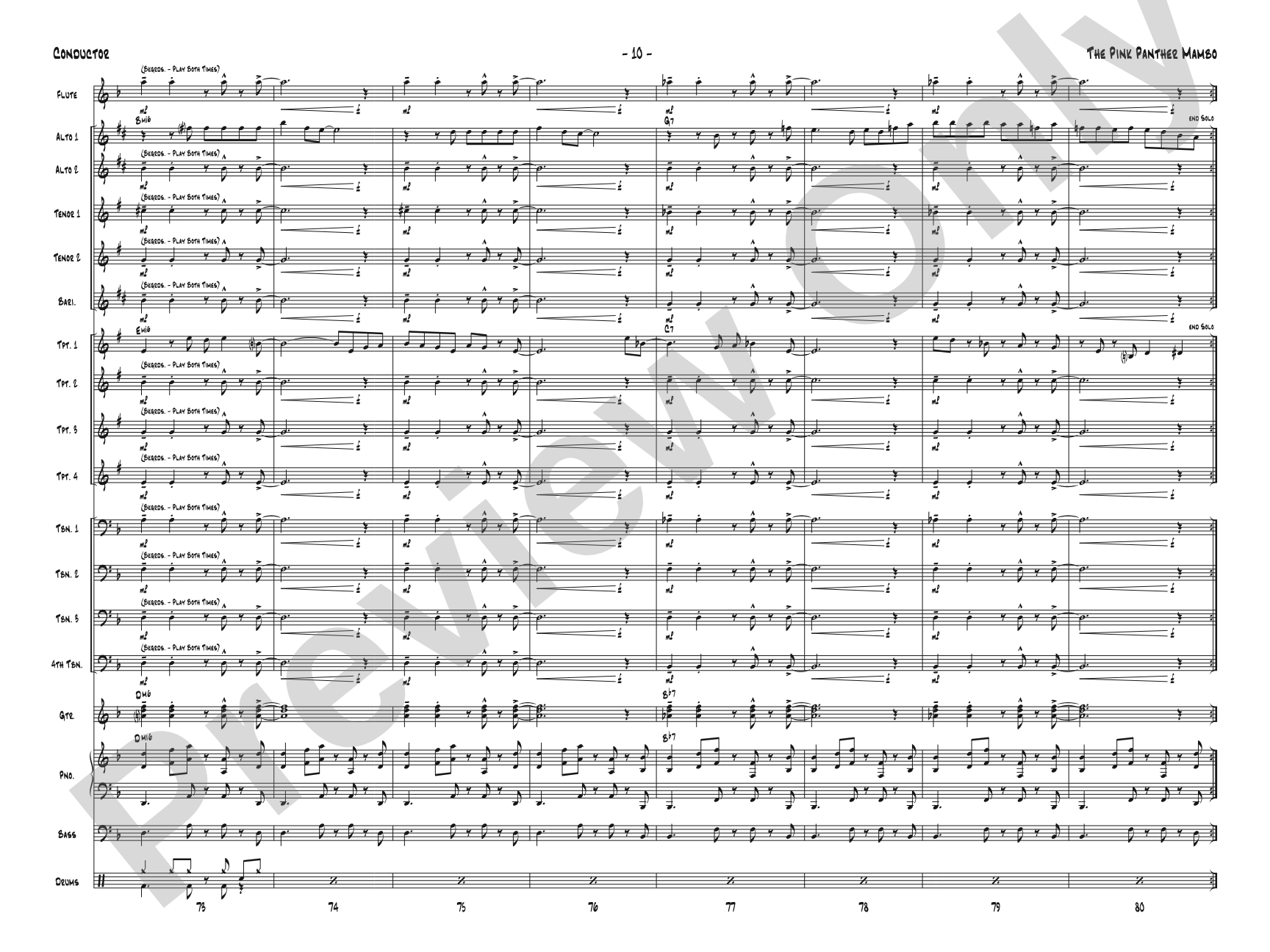
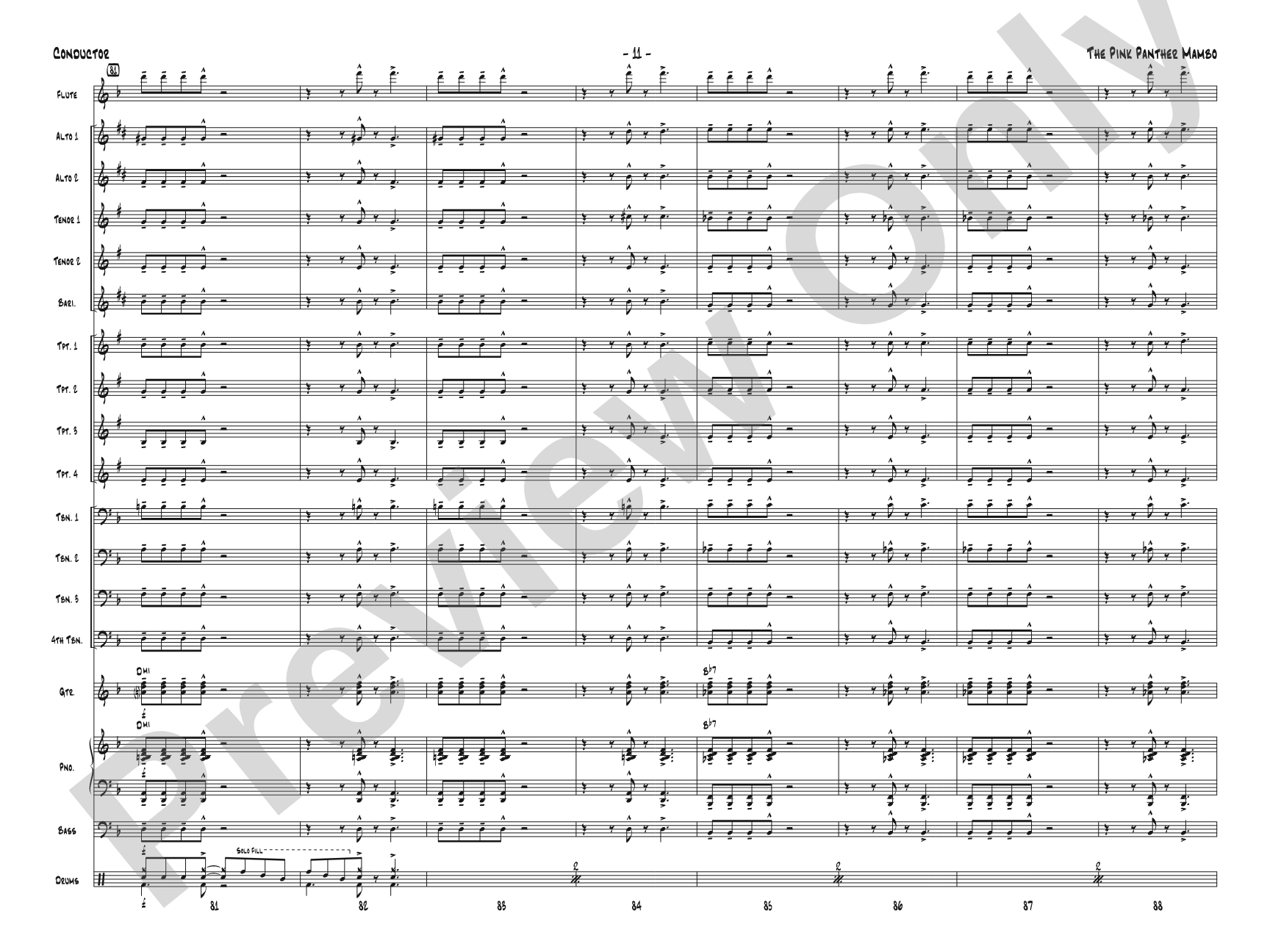
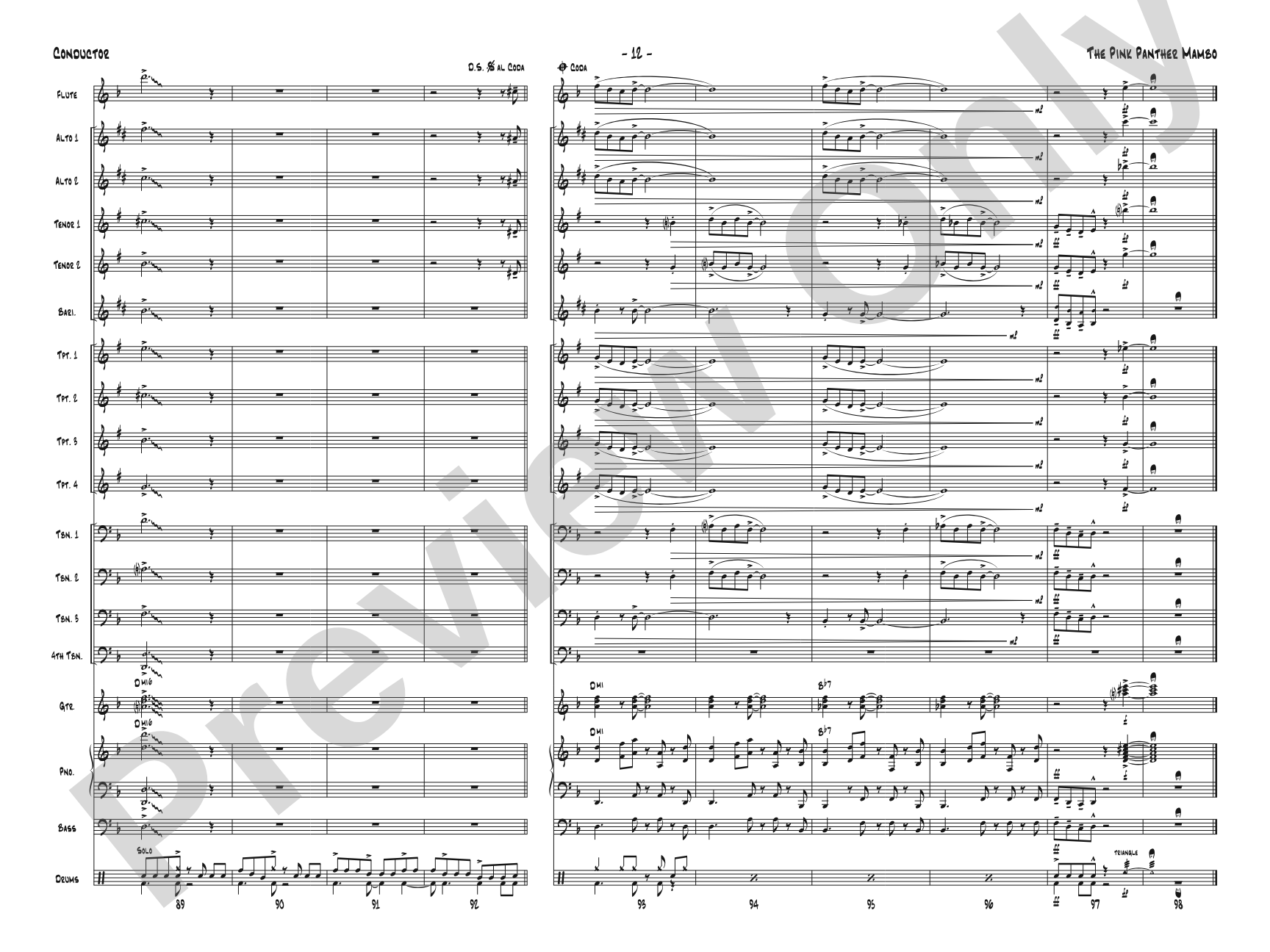

The Pink Panther Mambo: Jazz Ensemble Conductor Score & Parts
Composed by Henry Mancini / arr. Greg Nielsen
Grade: 2.5
Item: 00-PK-0009060

$52.00
One moment…
Description
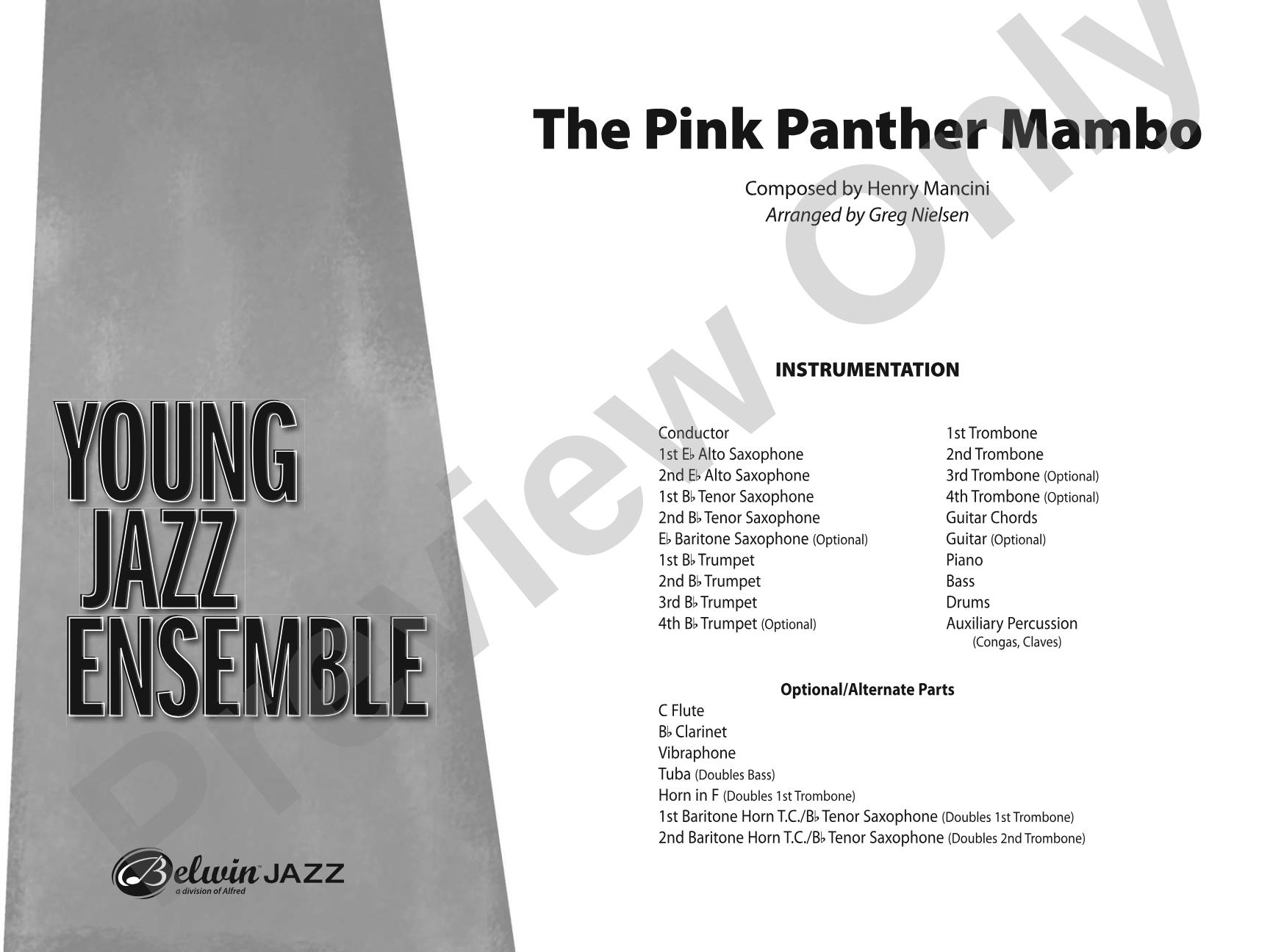
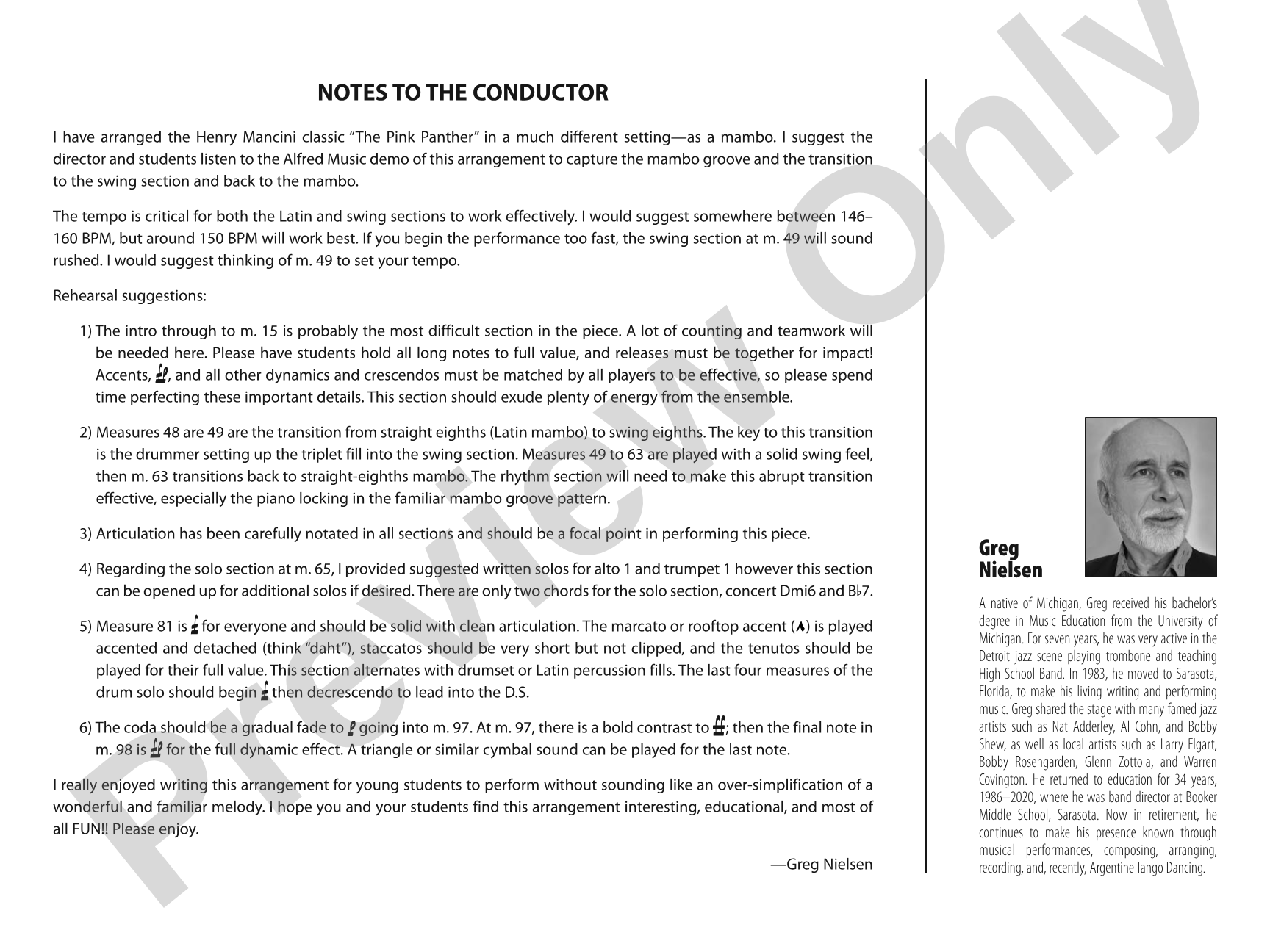
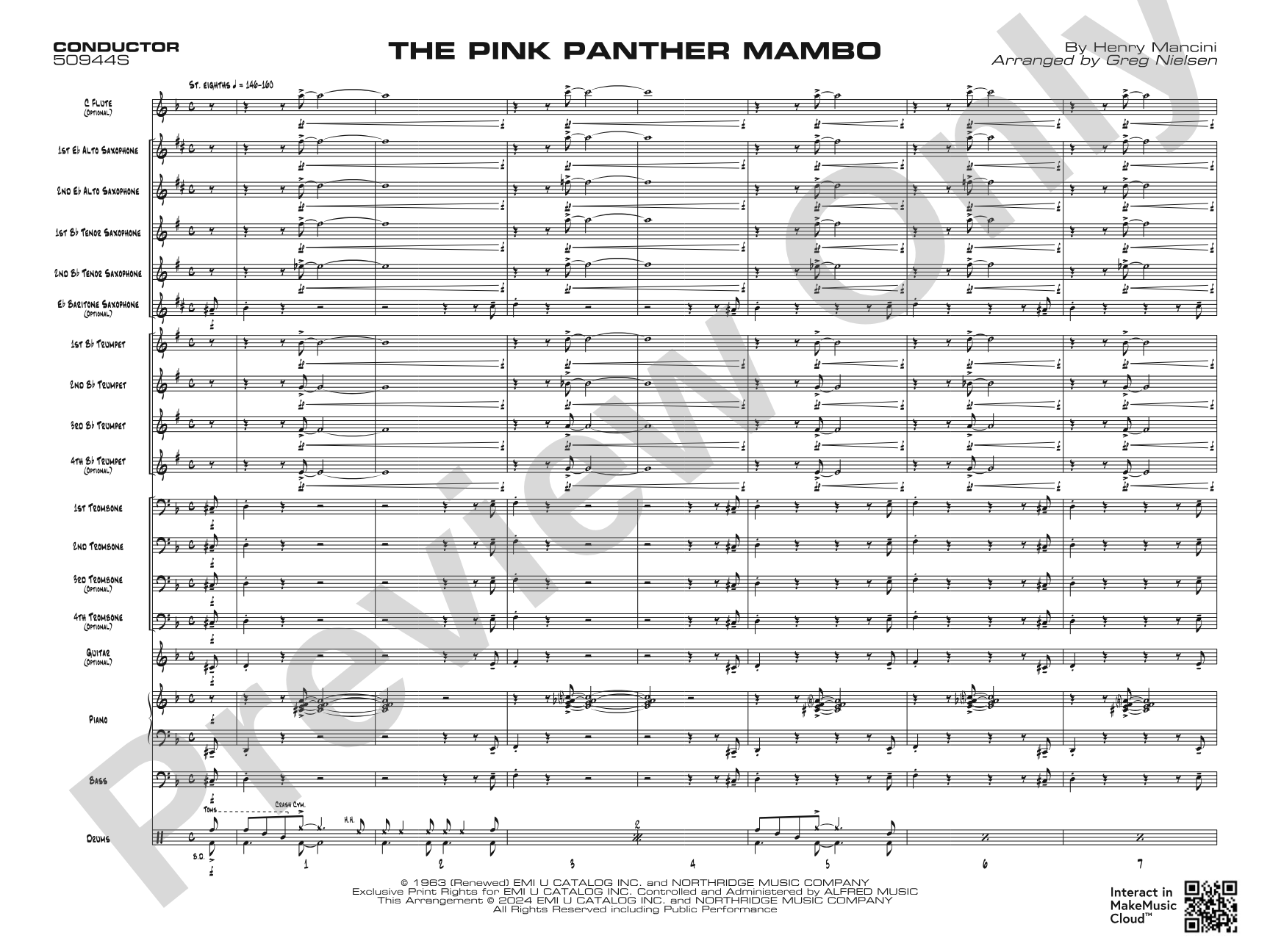
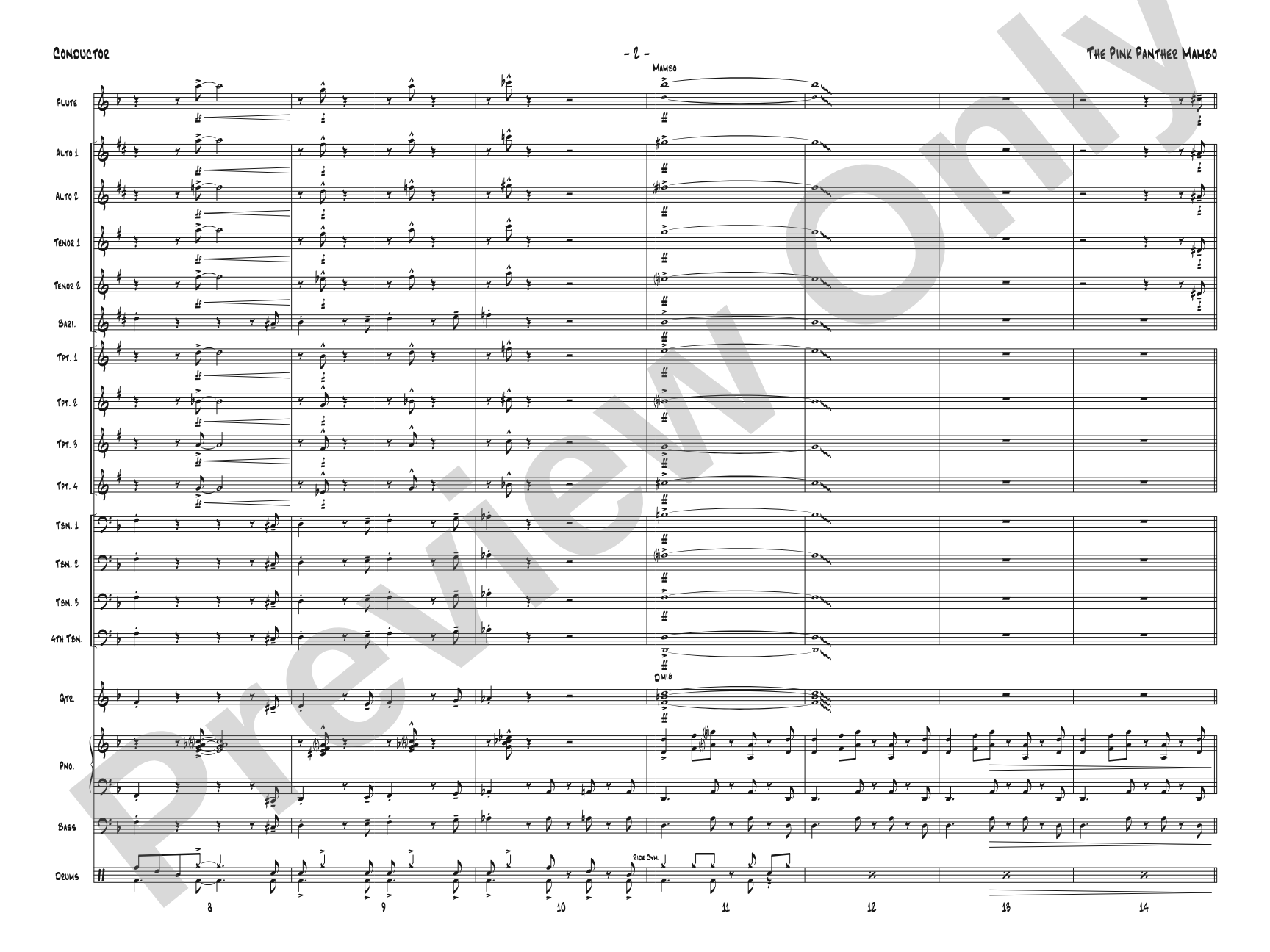
You've probably never heard the Pink Panther as a mambo, especially like this. Very playable for the young band with optional solos for alto 1 and trumpet 1, with lead trumpet range to written F top line. Optional parts include vibes and auxiliary percussion. Your band and the audience will love this chart! (4:00)


Don't just read it, hear it, play along with it, and watch your students grow with it. In MakeMusic Cloud, The Pink Panther Mambo: Jazz Ensemble Conductor Score & Parts comes alive with professional accompaniment, adjustable tempo, and built-in practice tools that turn solo practice into real progress.
Open in the Player
Jump straight in and assign it today.
Start Your Free Trial
Open this title and explore the full library in minutes.
Sample Audio
1
Audio File
--:--
0:00
0:00
Sample Video
Additional Details
Series:
Young Jazz Ensemble
Publisher:
Alfred Music
SKU:
00-PK-0009060
More about this title
About the Composer: Henry Mancini
Henry Mancini (1924-1994) composed some of the most recognizable film and television music of the twentieth century. His gift for melody and orchestration made him a master of accessible, sophisticated writing that appealed equally to concert audiences and casual listeners. Mancini's Pink Panther theme became a cultural touchstone, and his body of work demonstrates how popular music can achieve genuine artistry without sacrificing playability or charm.
For music educators, Mancini's legacy offers a practical lesson: great composition serves the performer and listener first. His orchestrations were always idiomatic, written with clear understanding of what instruments do well. Young musicians gravitate toward his music because it sounds professional, fun, and achievable.
Why we love this
Greg Nielsen's mambo treatment transforms the iconic Pink Panther theme into a chart that genuinely swings while staying well within the reach of developing jazz ensembles. The optional solos and flexible voicing mean your section leaders get rewarding moments without exposing weak readers, and the auxiliary percussion and vibes parts let you deploy musicians flexibly as your ensemble grows. Most importantly, the arrangement respects both Mancini's melody and what young players can actually execute.
What to expect
The Pink Panther as mambo is playful and sophisticated at once. You get the iconic melody everyone knows, filtered through the propulsive rhythm and bright colors of Latin jazz. There's comedy in the concept, but the arrangement itself is warmhearted and genuinely musical; your students will feel like they're playing a real jazz chart, not a novelty.
Who it's for
Grade 2.5 jazz ensembles that want a recognizable, audience-friendly chart without sacrificing musicianship. Directors looking for a piece that lets developing soloists shine and works for both concert and festival settings will find the optional parts and moderate difficulty especially useful.
How to get the most out of it
- Establish the mambo clave (son clave) early in sectional rehearsals with your rhythm section and auxiliary percussion; lock that foundation before layering the ensemble figures.
- Balance the front line carefully so the lead trumpet's F top line sits above the ensemble without overshadowing the harmonic colors underneath.
- Feature the optional alto 1 and trumpet 1 solos as performance moments that reward individual growth; rehearse them separately so soloists feel secure and can relax into phrasing.
- Keep the tempo steady and dance-like rather than mechanical; this is mambo, not a march, so allow the ensemble to breathe rhythmically as a single body.
How to use it
This works beautifully as a concert closer or festival opener where you want to end on a high-energy, crowd-pleasing note. You might also program it alongside other Mancini adaptations or use it as a bridge between your classical and jazz repertoire to show students how great melodies transcend genre. The four-minute length makes it ideal for festivals with strict time limits.
Skills your students will build
- Sight-reading jazz ensemble voicings and rhythmic figures at moderate complexity
- Playing son clave and mambo rhythms with ensemble precision
- Balancing melodic lines against harmonic accompaniment in a Latin jazz texture
- Executing optional solo passages with control and appropriate jazz articulation
- Responding to a conductor's shaping of phrase and tempo in a dance-based idiom