
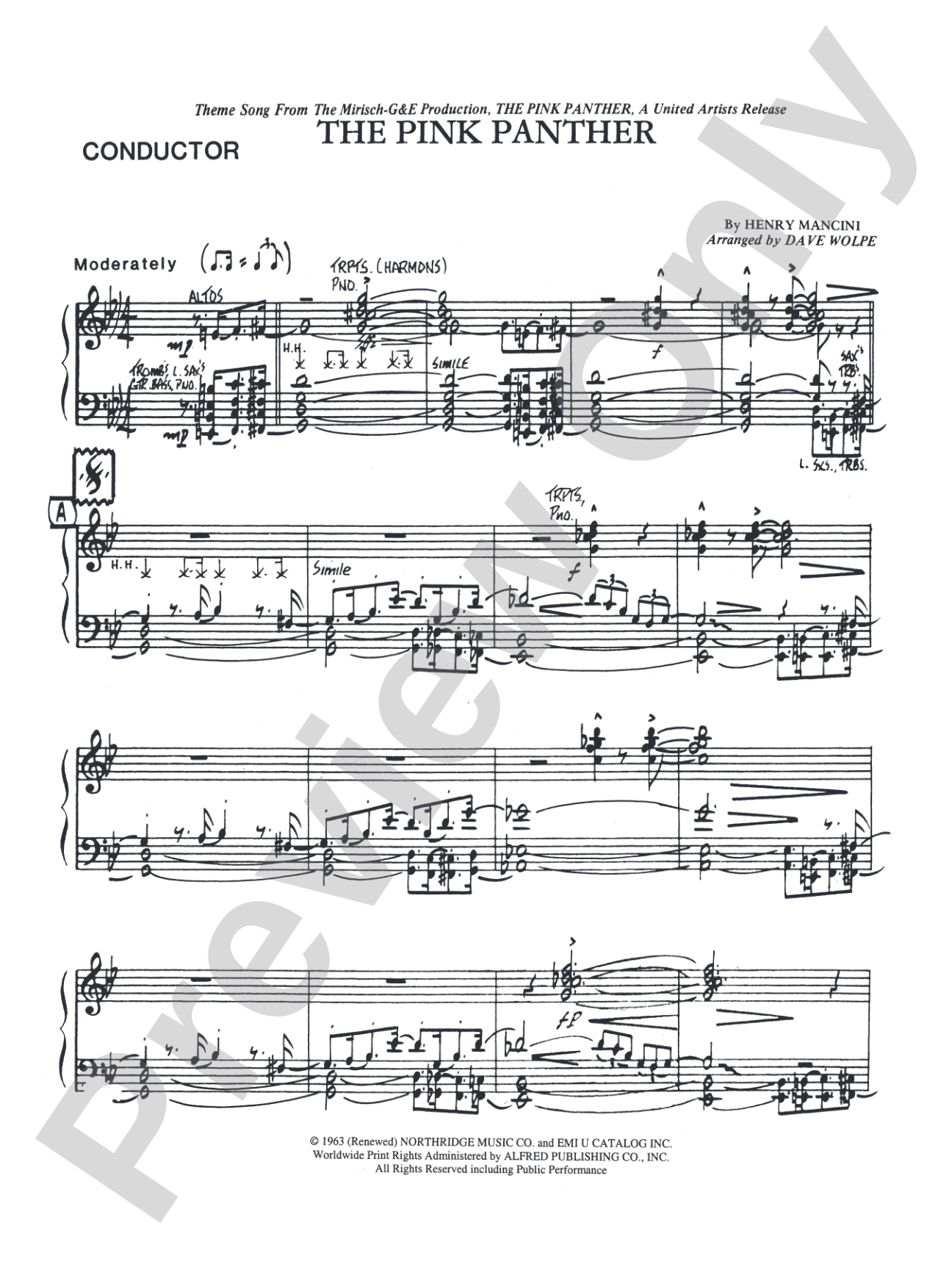
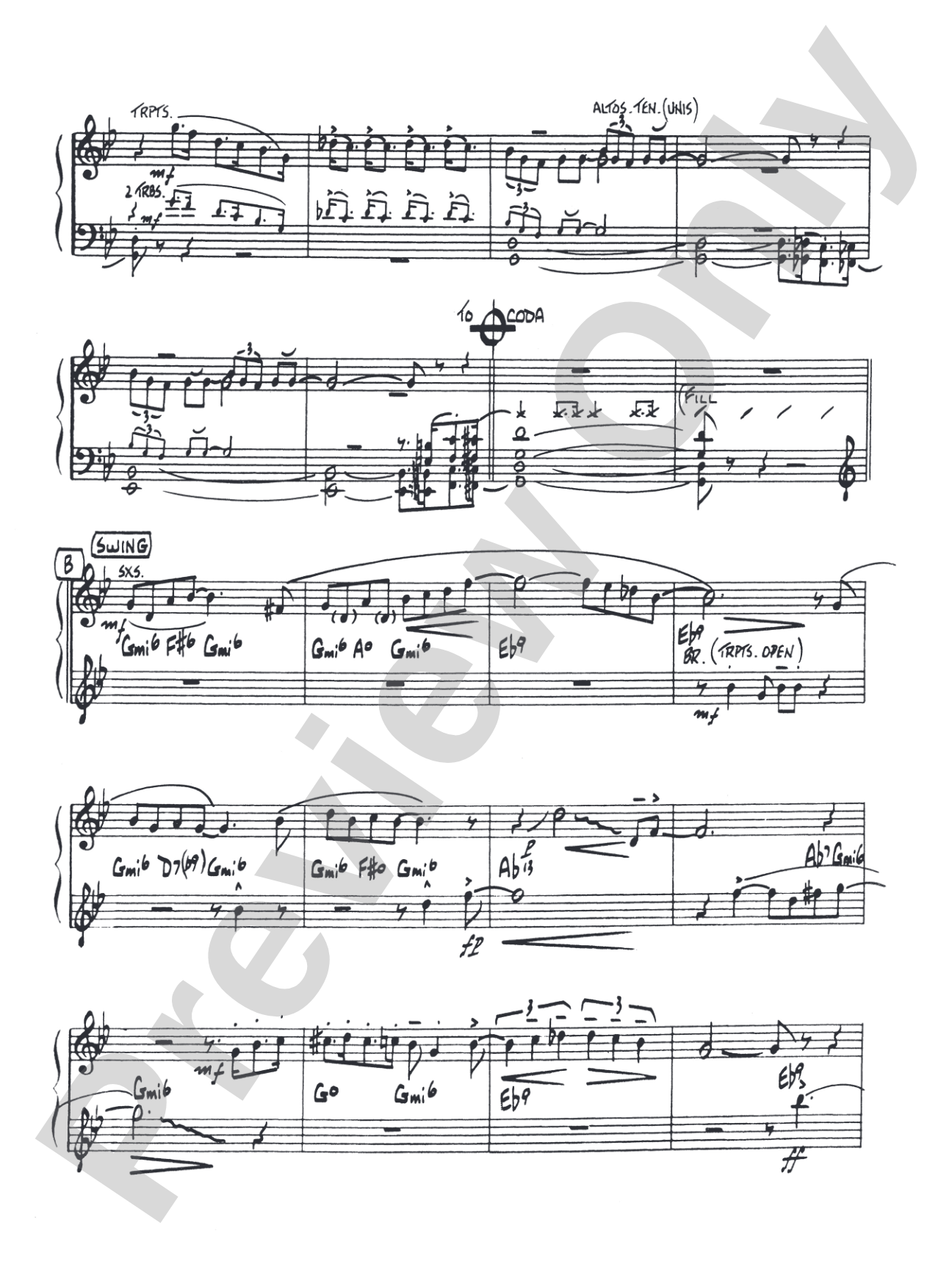
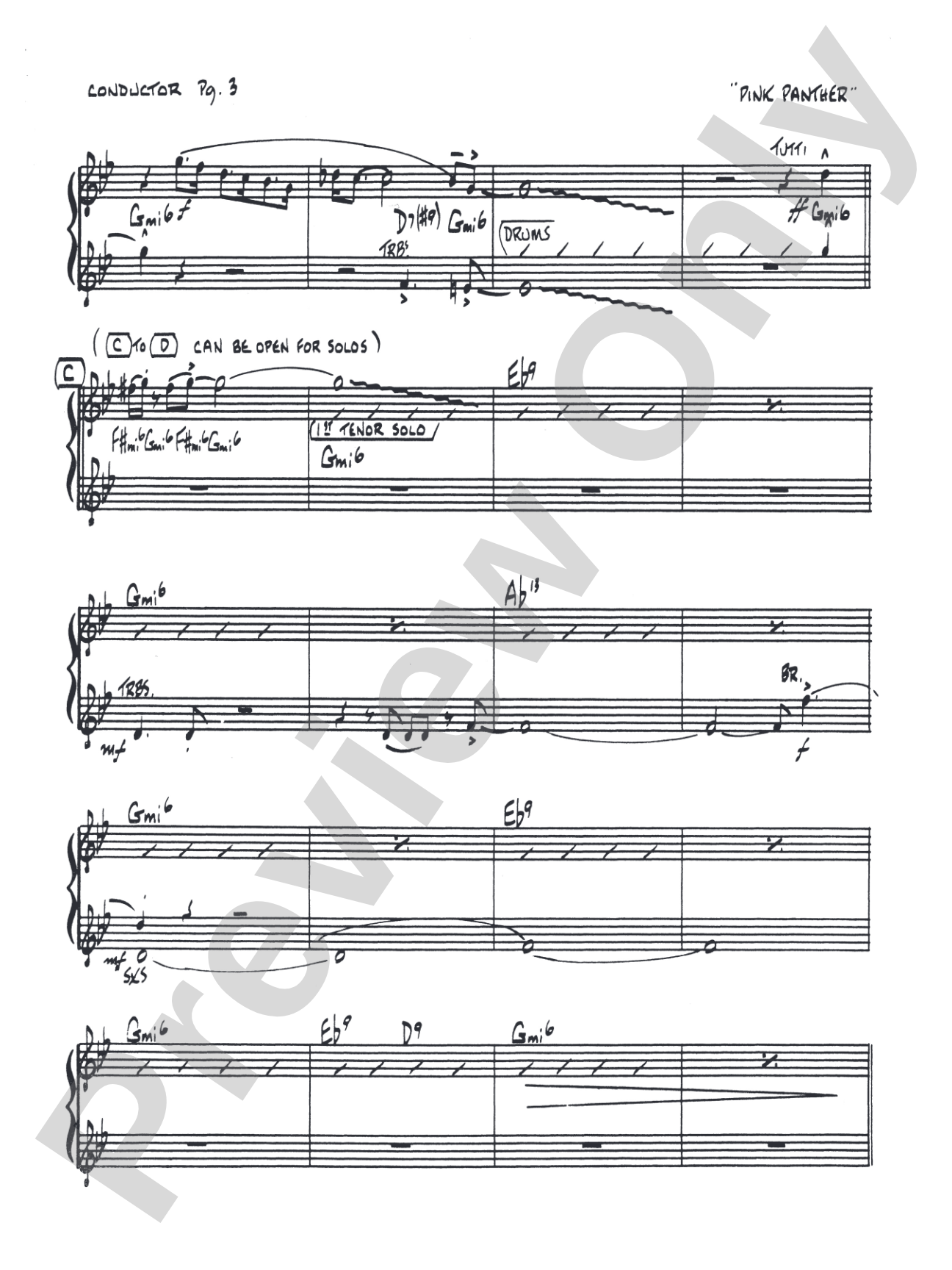
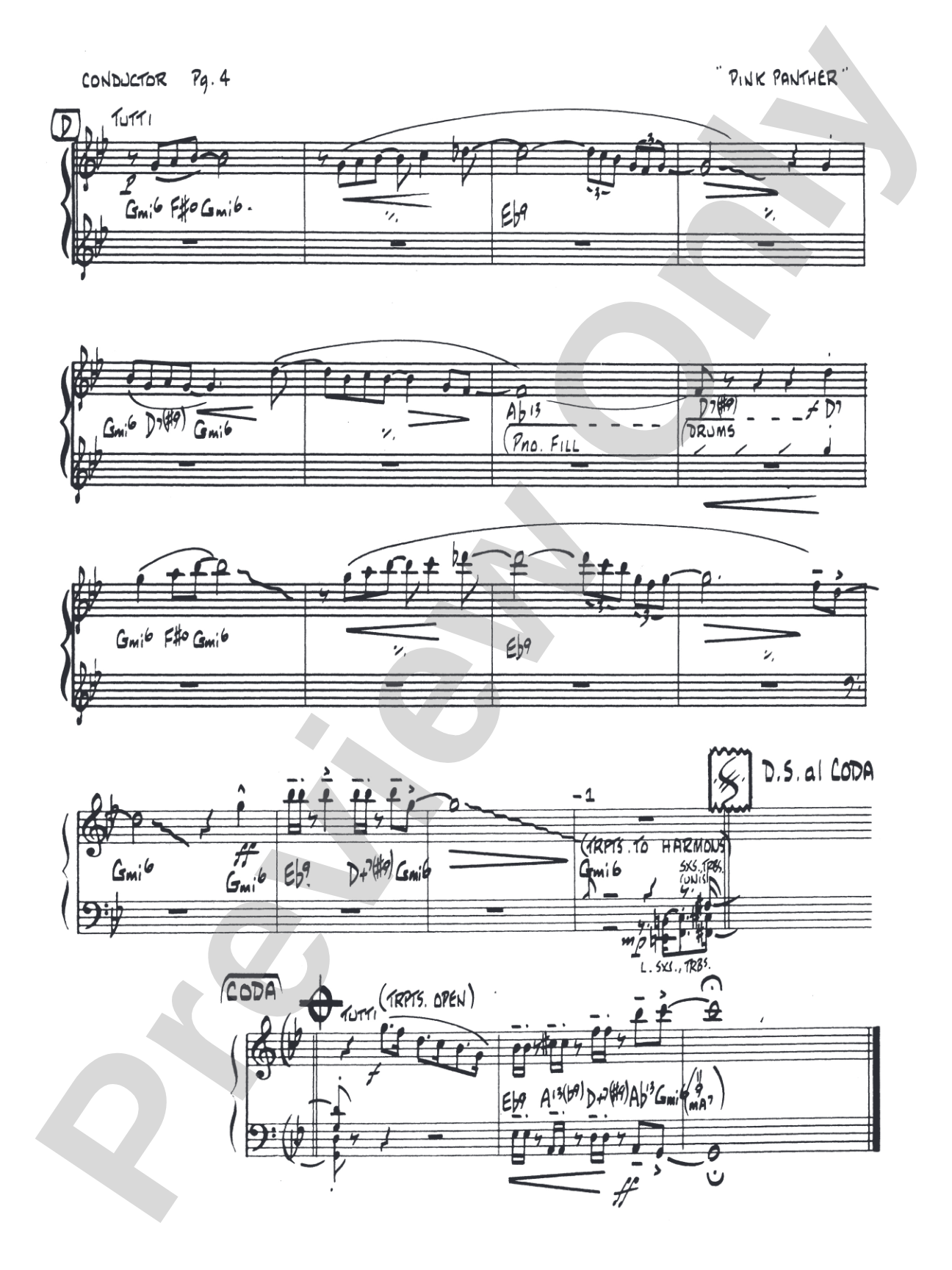

The Pink Panther: Jazz Ensemble Conductor Score & Parts
By Henry Mancini / arr. Dave Wolpe
Grade: 3 (Medium)
Item: 00-PK-0006883

$50.00
Pickup currently not available
Buy Extra Parts (Digital PDF Download)
Parts Added to Cart!
Description
You'll love this updated jazz arrangement of the Henry Mancini classic. It has everything---sax chorus, brass shout and that familiar melody and mood. Should be a favorite on any concert.


Don't just read it, hear it, play along with it, and watch your students grow with it. In MakeMusic Cloud, The Pink Panther: Jazz Ensemble Conductor Score & Parts comes alive with professional accompaniment, adjustable tempo, and built-in practice tools that turn solo practice into real progress.
Open in the Player
Jump straight in and assign it today.
Start Your Free Trial
Open this title and explore the full library in minutes.
Sample Audio
No sample audio found.
Sample Video
No sample videos found.
Additional Details
Series:
Jazz Band Series
Publisher:
Alfred Music
Page Count:
84
SKU:
00-PK-0006883
More about this title
About the Composer: Henry Mancini
Henry Mancini (1924-1994) shaped American popular music through his work in film and television. His gift for melody and orchestration made him one of the most recorded composers of the twentieth century, and his scores remain teaching staples because they balance accessibility with genuine sophistication.
Mancini's jazz-influenced writing bridges classical training and vernacular idioms in ways that resonate with student musicians. His work demonstrates how popular music can contain real compositional craft, making him an ideal entry point for ensembles learning to navigate style, phrasing, and ensemble blend.
Why we love this
Dave Wolpe's arrangement captures what makes this theme instantly recognizable while giving your ensemble real musical meat to sink into. The Grade 3 voicing keeps the focus on style and articulation rather than technical fireworks, so students can concentrate on authentic jazz feel and the interplay between sections.
What to expect
Cool and sophisticated with a lightness that never feels trivial. The arrangement glides through moments of lyrical warmth, playful rhythmic snap, and ensemble unity, capturing the suave confidence of the original without losing its essential melodic charm.
Who it's for
Jazz ensemble directors working at the intermediate level who want to program something with genuine style credentials and immediate audience appeal. Students benefit from learning a canonical tune that demands attention to swing rhythm, section balance, and ensemble cohesion without overwhelming technical demands.
How to get the most out of it
- Shape the melody with a legit swing feel rather than straighter eighths; the rhythm section's pocket should breathe and lay back just slightly.
- Balance the sax chorus against the ensemble; this isn't a feature number, but the solo voice needs room to speak without the band overpowering.
- Lock the brass shout passages with crisp, unified articulation and attacks—precision here contrasts beautifully with the relaxed groove elsewhere.
- Allow space around the familiar melody statements; resist the urge to rush or push the tempo, which lets the lyricism shine.
How to use it
Program this alongside other Grade 3 jazz standards to build a concert that showcases your ensemble's stylistic range and musicianship. Its recognizable melody and accessible difficulty make it ideal for a spring concert where you want to balance audience engagement with solid musical substance.
Skills your students will build
- Swing eighth-note interpretation and jazz phrasing
- Balanced ensemble blend across saxophone, brass, and rhythm sections
- Clean articulation and rhythmic precision in brass shout passages
- Solo line accompaniment and supportive ensemble writing