
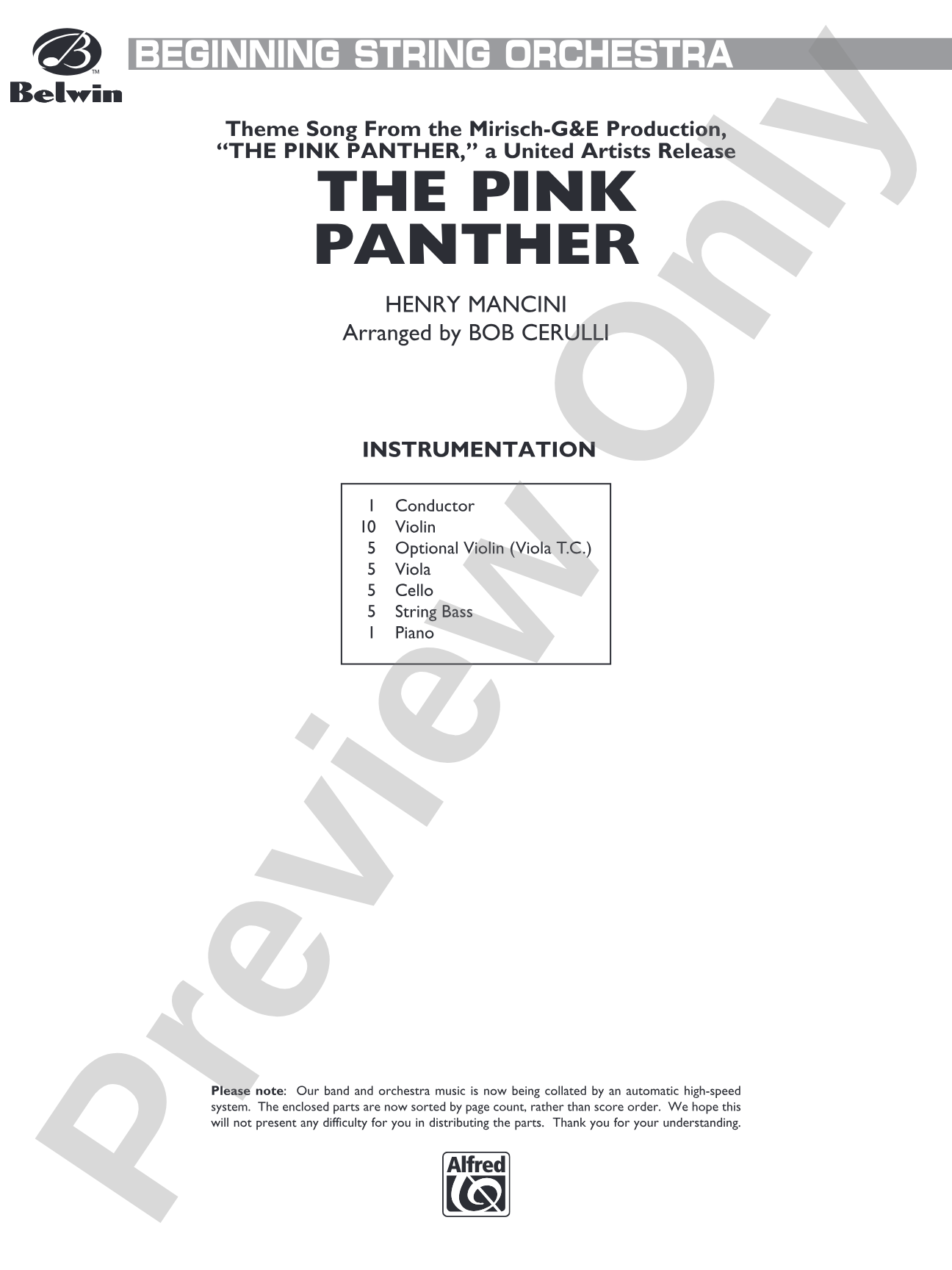

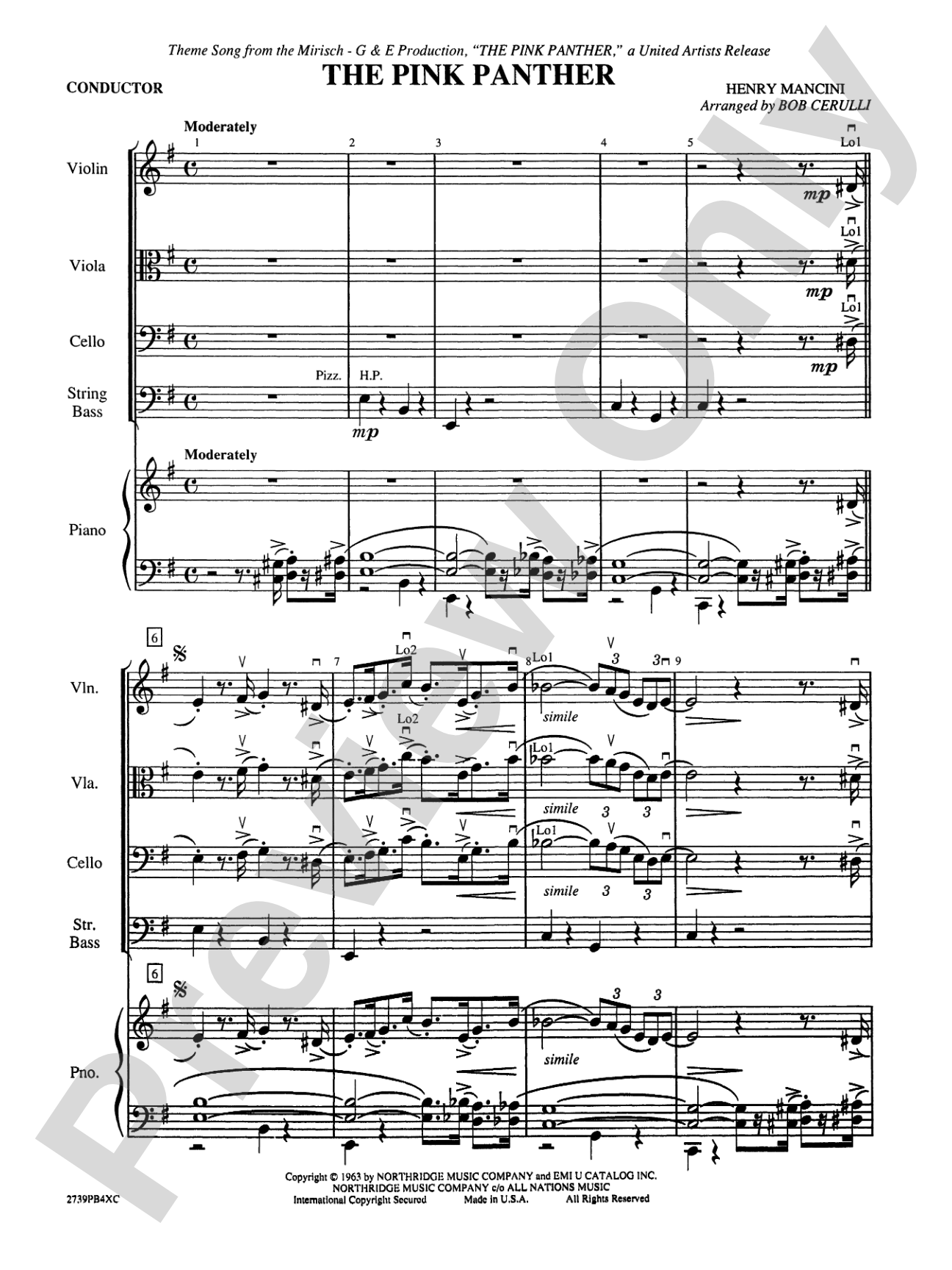
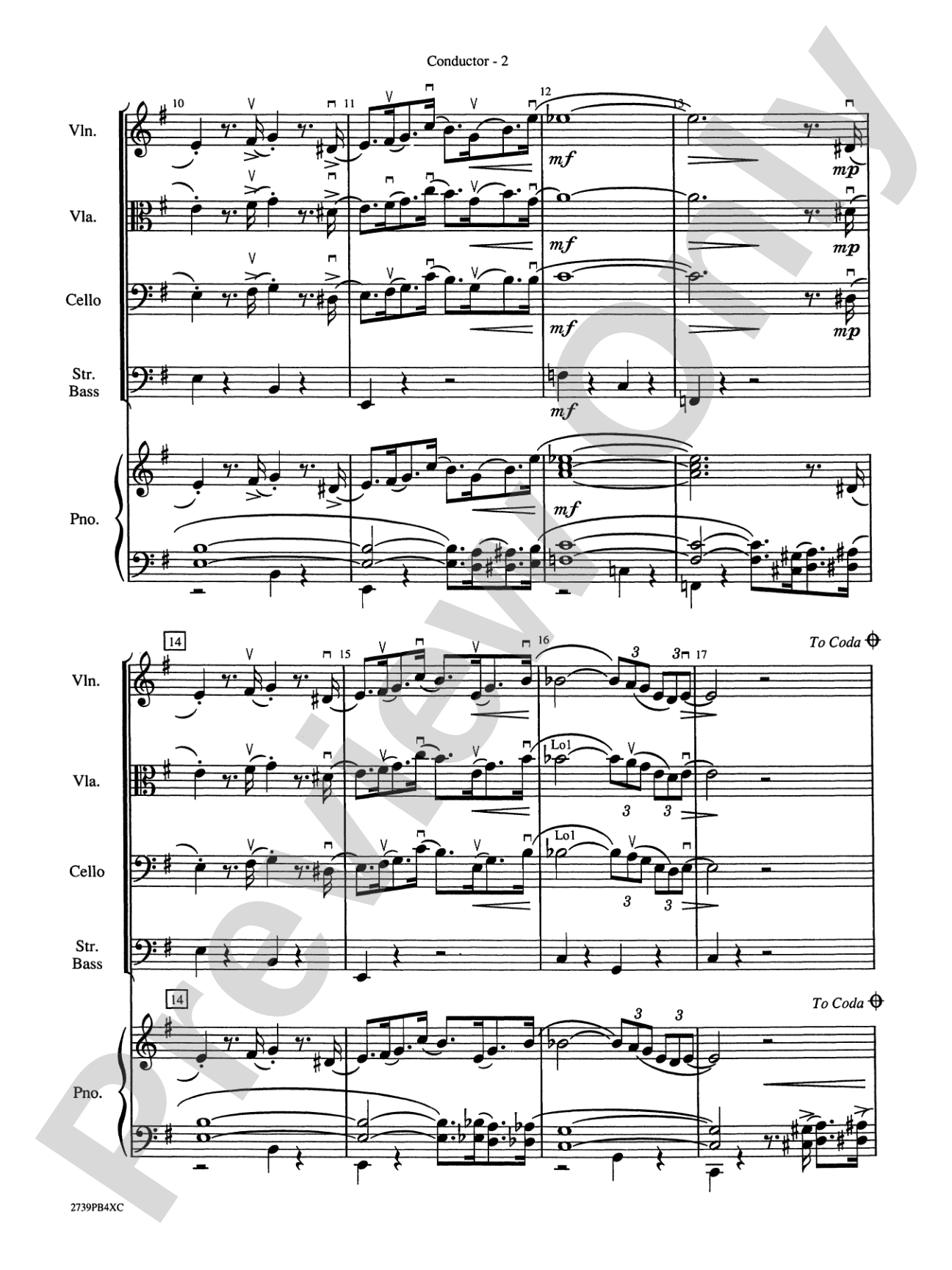
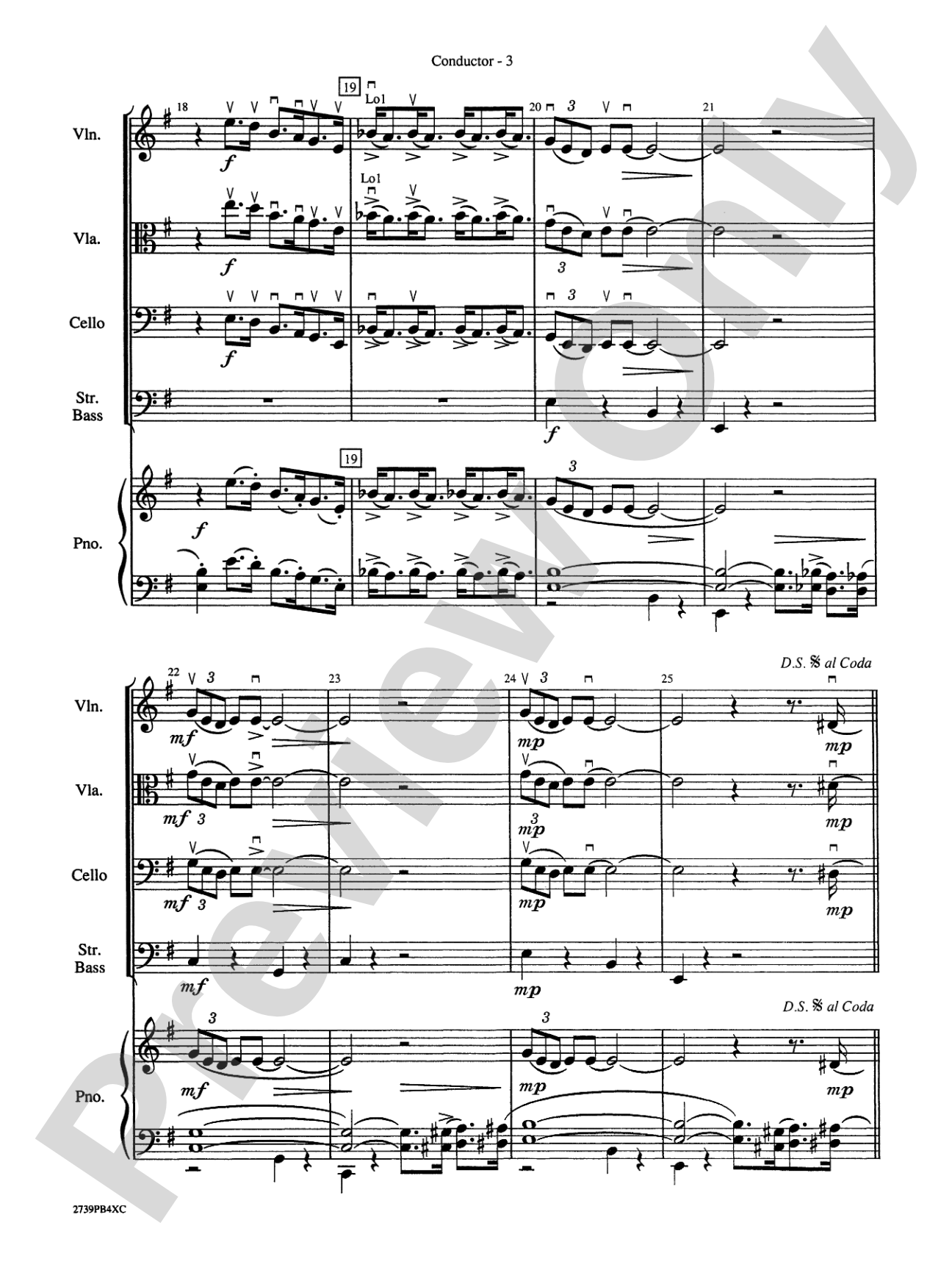
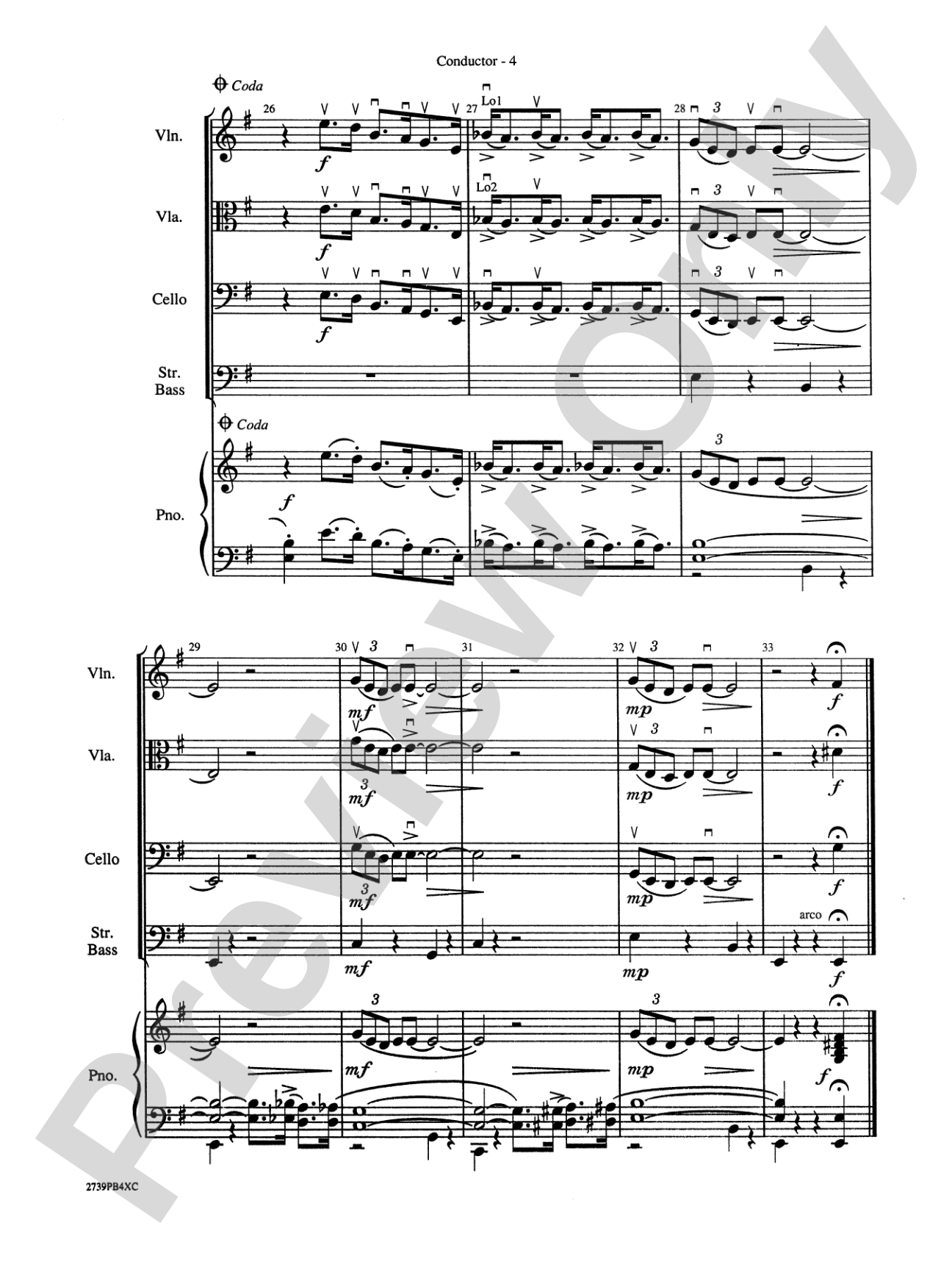



The Pink Panther: String Orchestra Conductor Score & Parts
By Henry Mancini / arr. Bob Cerulli
Grade: 1
Item: 00-PK-0001322

$50.00
Pickup currently not available
Buy Extra Parts (Digital PDF Download)
| Product | Price | Quantity |
|---|---|---|
| The Pink Panther: Score | $6.00 | |
| The Pink Panther: 1st Violin | $5.99 | |
| The Pink Panther: 3rd Violin (Viola [TC]) | $5.99 | |
| The Pink Panther: Viola | $5.99 | |
| The Pink Panther: Cello | $5.99 | |
| The Pink Panther: String Bass | $5.99 | |
| The Pink Panther: Piano Accompaniment | $5.99 |
Parts Added to Cart!
Related Items
The Pink Panther: Full Orchestra Conductor Score & Parts |
$65.00
|
View | |
The Pink Panther: String Orchestra Conductor Score & Parts |
$50.00
|
View | |
The Pink Panther: String Orchestra Conductor Score |
$6.00
|
View | |
The Pink Panther: Full Orchestra Conductor Score & Parts |
$65.00
|
View | |
The Pink Panther: Full Orchestra Conductor Score |
$7.00
|
View |
Description
Everyone knows this one, and now even first year string players can join in the fun. Simplified for limited playing skills, Bob Cerulli's arrangement is bound to be a big hit with students and audience alike.


Don't just read it, hear it, play along with it, and watch your students grow with it. In MakeMusic Cloud, The Pink Panther: String Orchestra Conductor Score & Parts comes alive with professional accompaniment, adjustable tempo, and built-in practice tools that turn solo practice into real progress.
Open in the Player
Jump straight in and assign it today.
Start Your Free Trial
Open this title and explore the full library in minutes.
Sample Audio
No sample audio found.
Sample Video
No sample videos found.
Additional Details
Series:
Pop Beginning String Orchestra
Publisher:
Alfred Music
Page Count:
64
SKU:
00-PK-0001322
More about this title
About the Composer: Henry Mancini
Henry Mancini (1924–1994) stands among the most prolific and commercially successful composers of the 20th century, earning 20 Grammy Awards and four Academy Awards over his career. His gift for melody and orchestration made him the architect of the modern film score, and his work shaped how generations of students first encounter composed music through cinema and television.
Why we love this
This arrangement captures everything students love about the piece—the instantly recognizable melody, the groovy bass line, the coolness factor—while staying honest to what beginning string players can actually execute. Cerulli's orchestration keeps the humor and sophistication of the original intact without overwhelming young musicians, making it a rare arrangement that doesn't feel compromised.
What to expect
Suave and playful, with just enough swagger to feel sophisticated without pretension. The smooth melody floats over a sophisticated harmonic foundation, creating a sense of cool that appeals equally to musicians and listeners.
Who it's for
Beginning string orchestras and first-year string players who are ready for recognizable, engaging repertoire with genuine musical substance. Any director building student confidence through material that resonates with audiences and keeps young musicians motivated.
How to get the most out of it
- Shape the main melody with consistent dynamic control; the opening and A section benefit from a relaxed, slightly detached articulation that lets the tune breathe rather than driving through it.
- Balance the bass line carefully in your lowest section. The walking quarter-note figure is the heartbeat of this arrangement, so confirm those players lock in rhythm together before bringing full ensemble texture.
- Resist rushing the tempo, especially in early rehearsals. Students often want to push this groovy line forward; establish a comfortable, swinging pace and hold it throughout.
- Use the contrast between the main section and any secondary material as a rehearsal tool. Isolate passages by section, then layer them back together to build ensemble confidence and awareness of how parts interlock.
How to use it
Perfect for a pops concert, a young musicians' showcase, or a community engagement program where non-traditional audiences will immediately recognize and enjoy the piece. This works equally well as a confidence-building performance for a school's first orchestra concert or as a fun contrast on a more classical program.
Skills your students will build
- Playing through-composed melodies with consistent phrasing and dynamic shape
- Maintaining steady ensemble rhythm with walking bass lines and quarter-note accompaniment
- Reading and executing standard string articulations (slurs, staccato, detaché) in an accessible context
- Balancing melody and accompaniment across the ensemble