

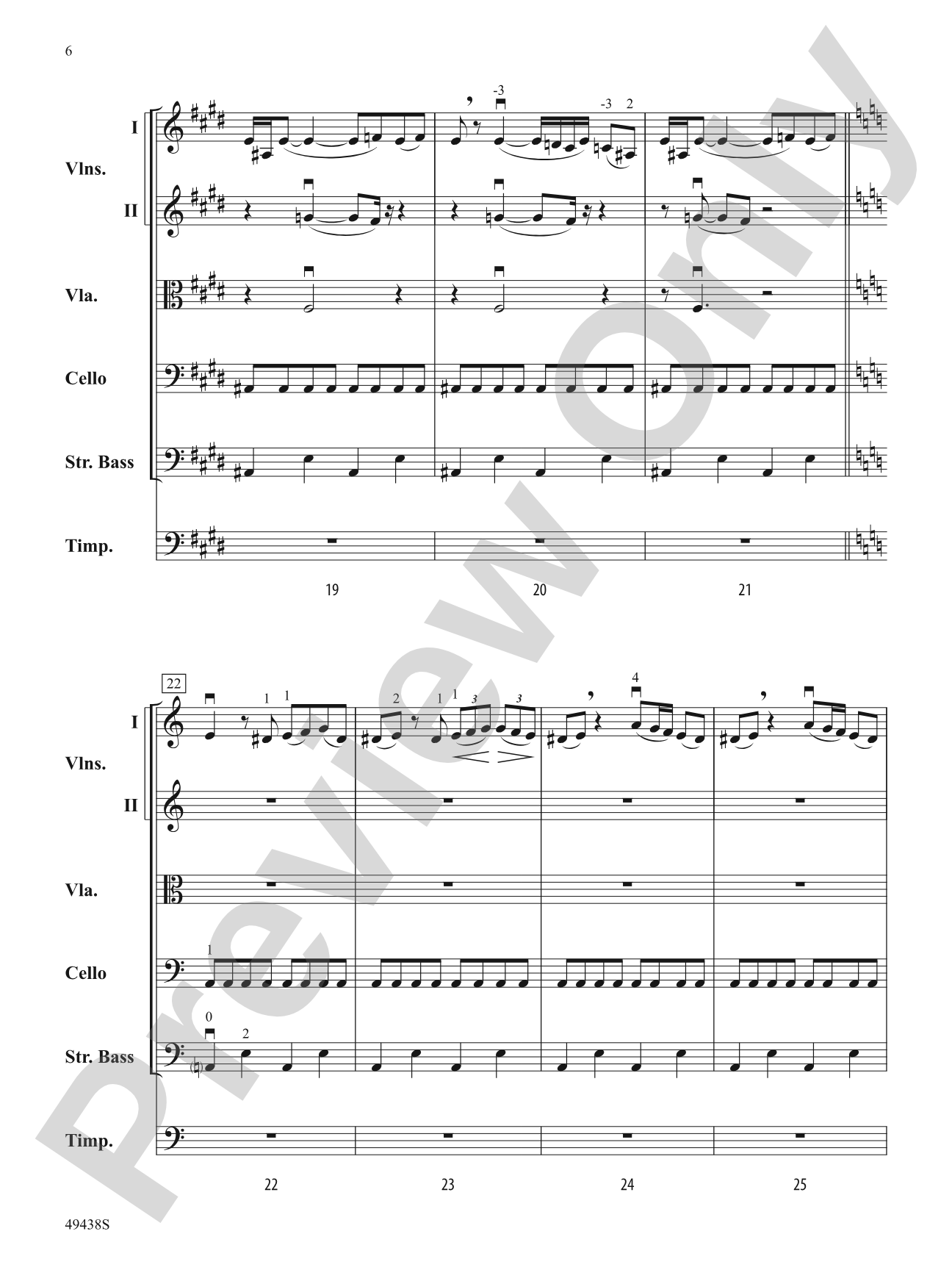
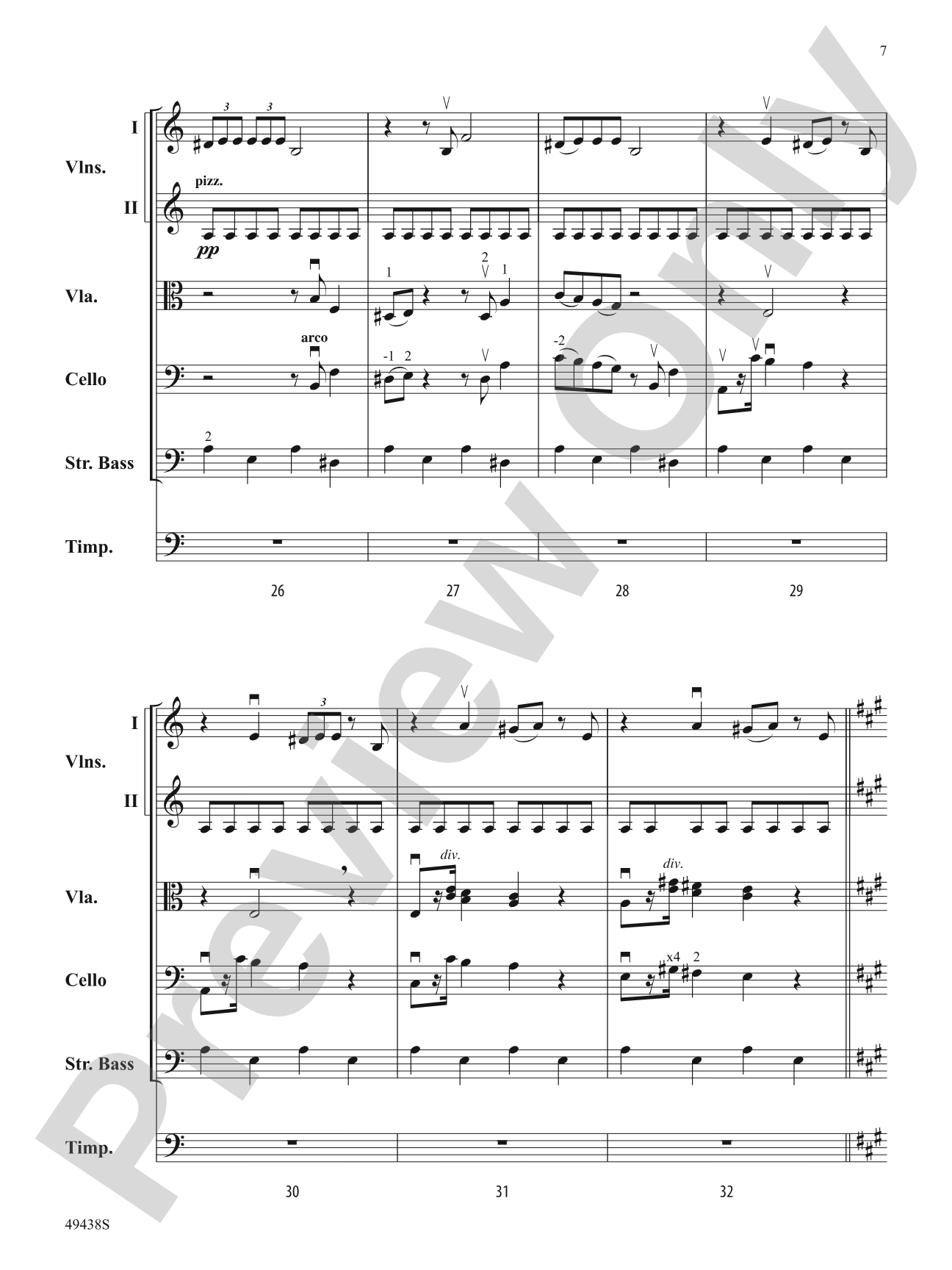
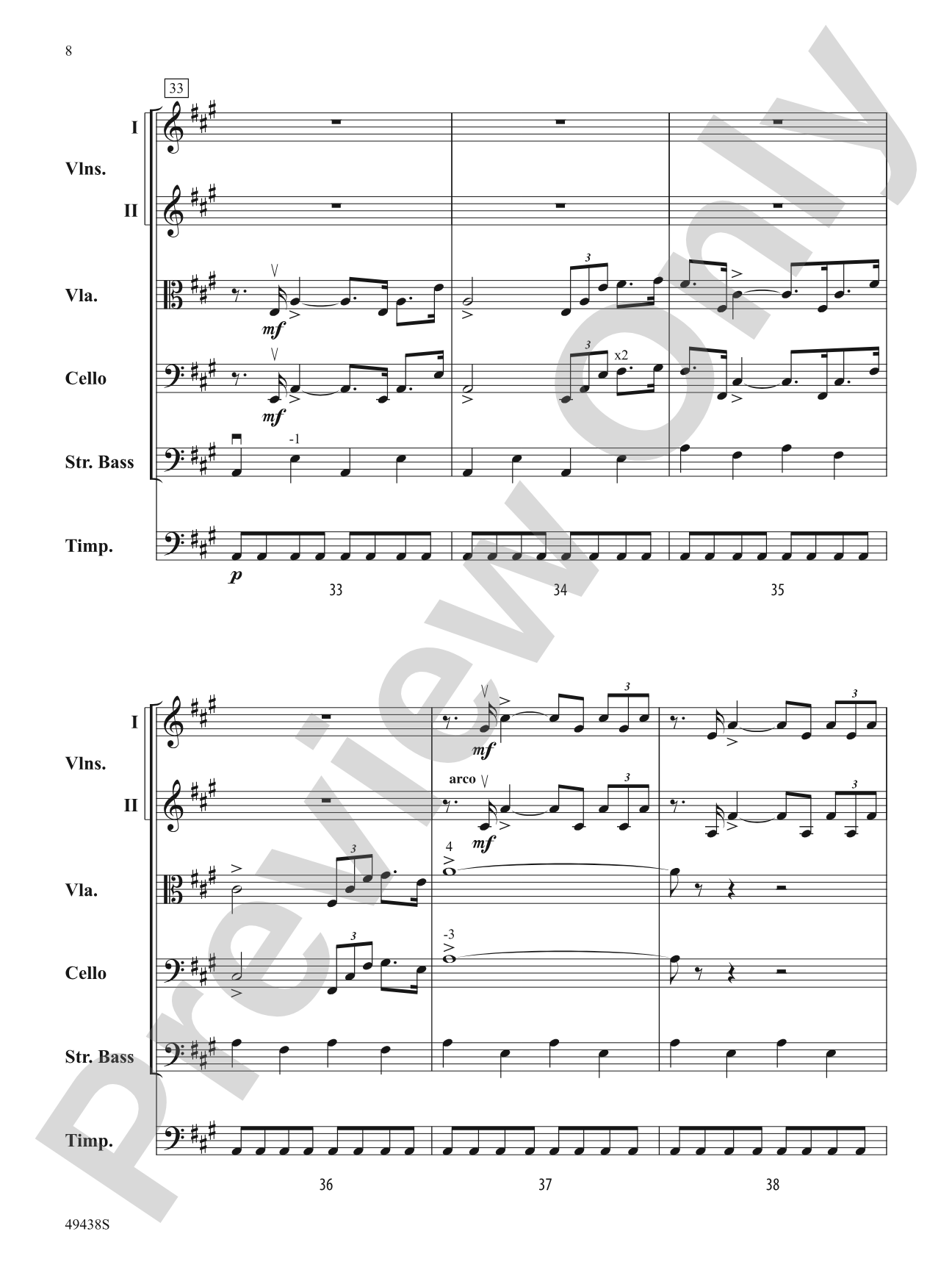
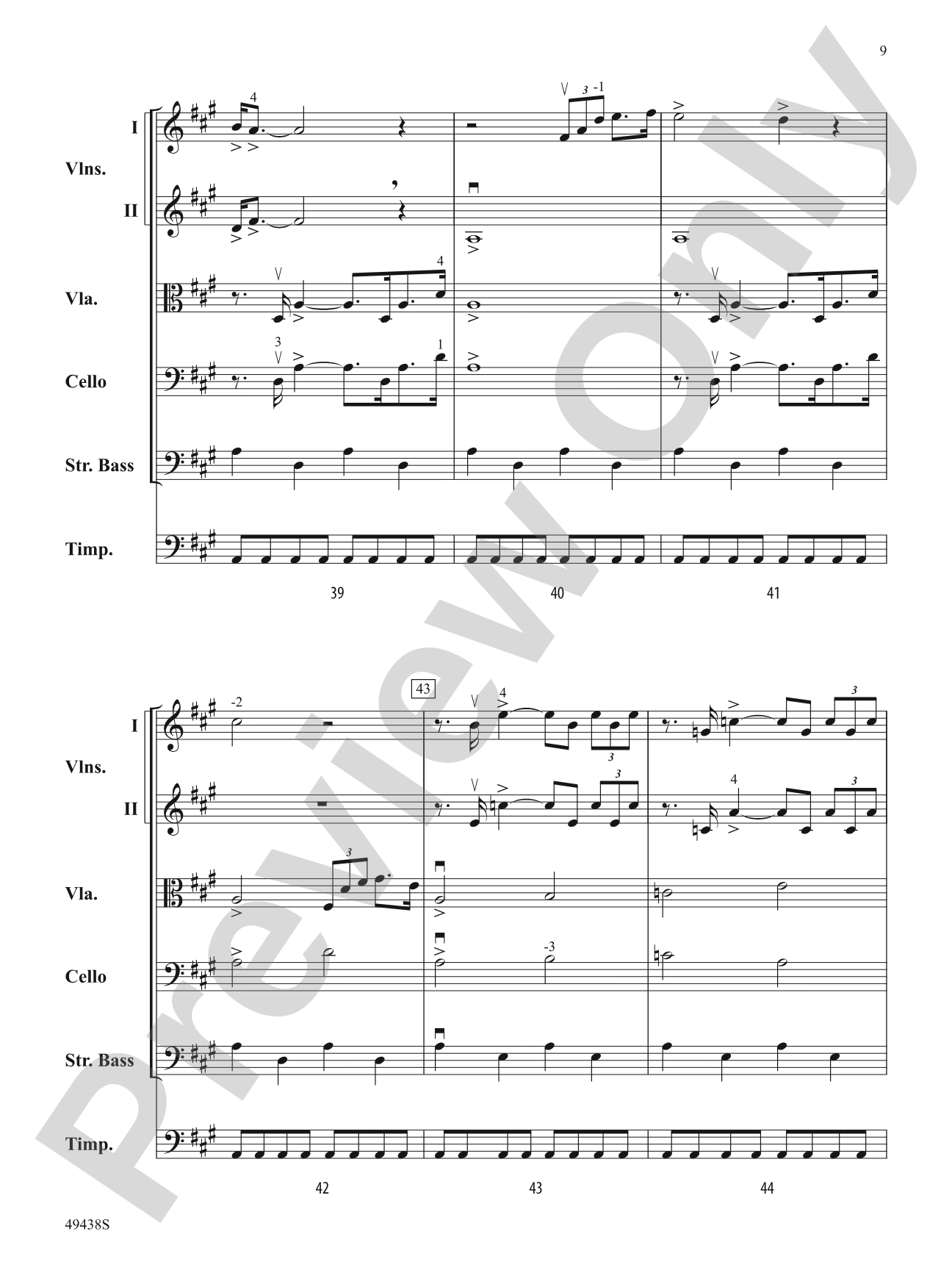
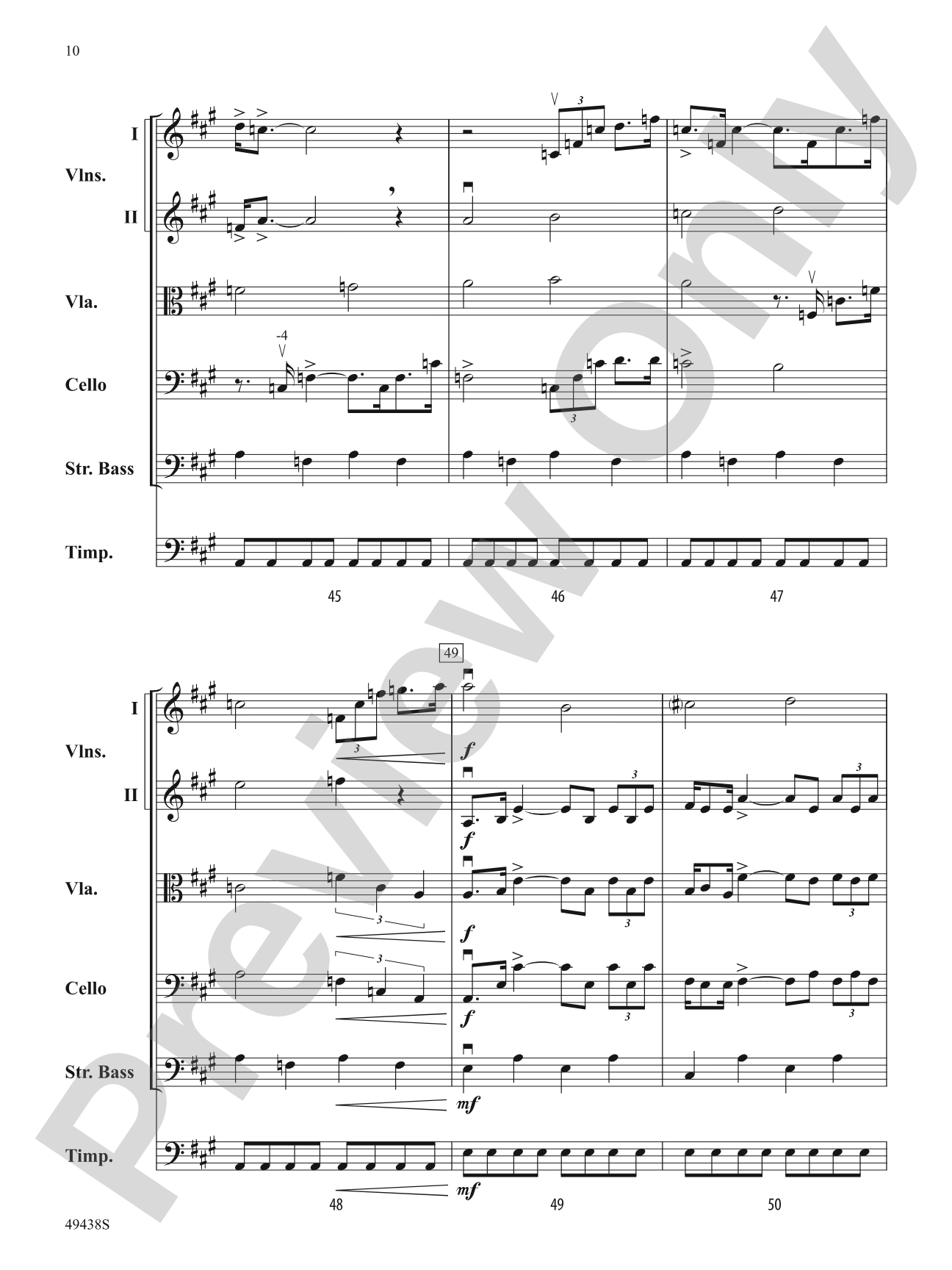
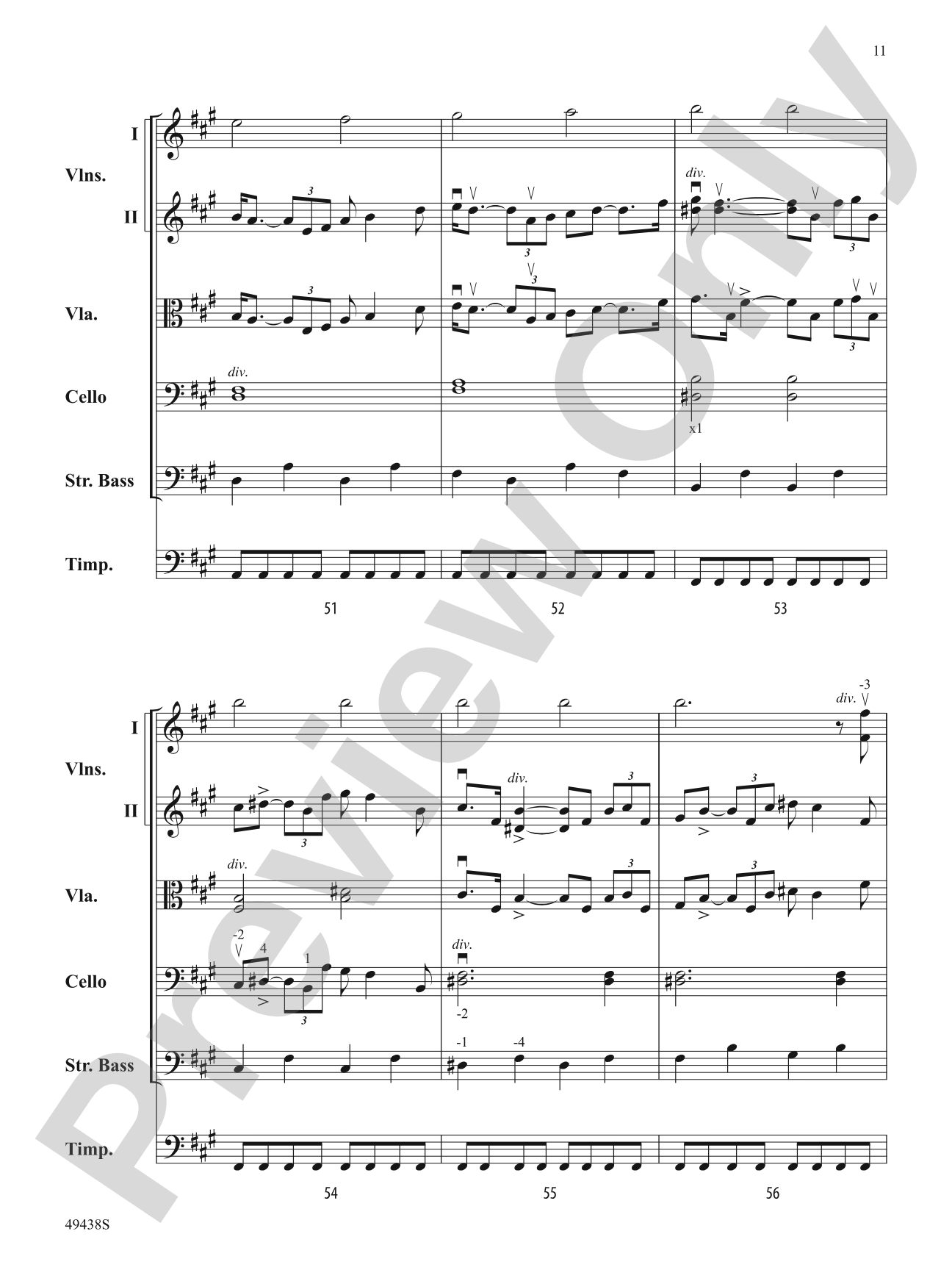
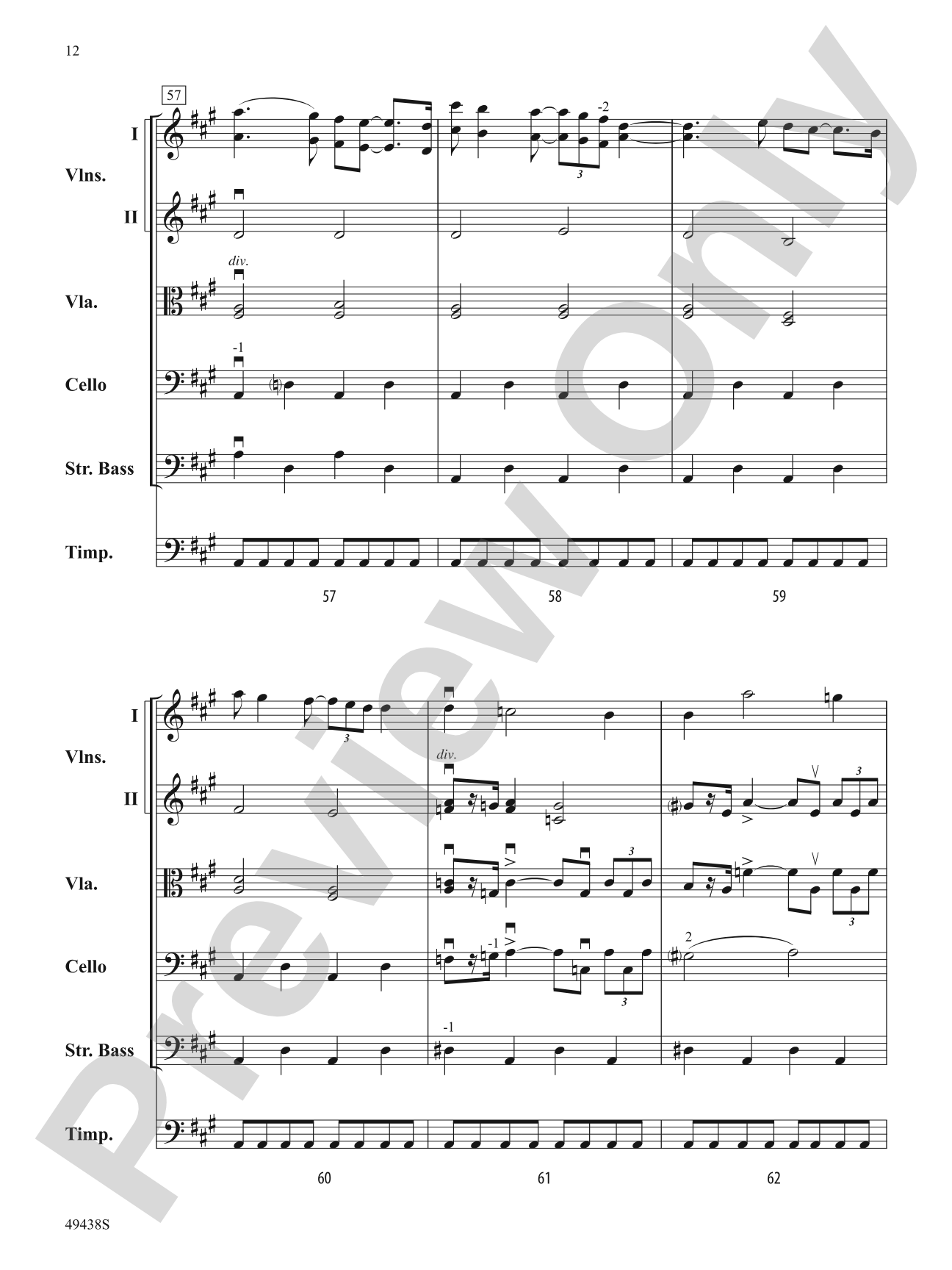
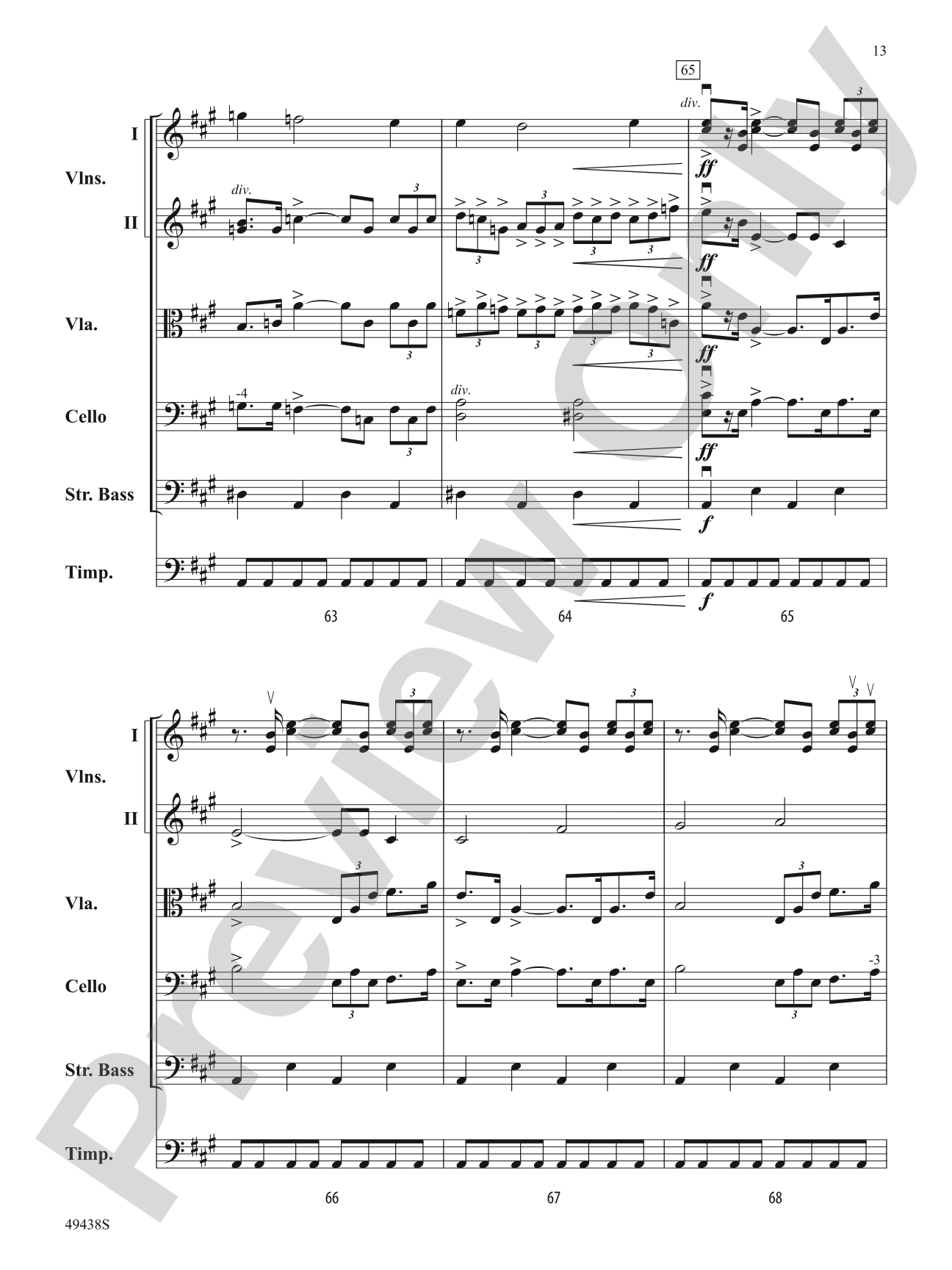

The Pines of the Appian Way: String Orchestra Conductor Score & Parts
From Pines of Rome
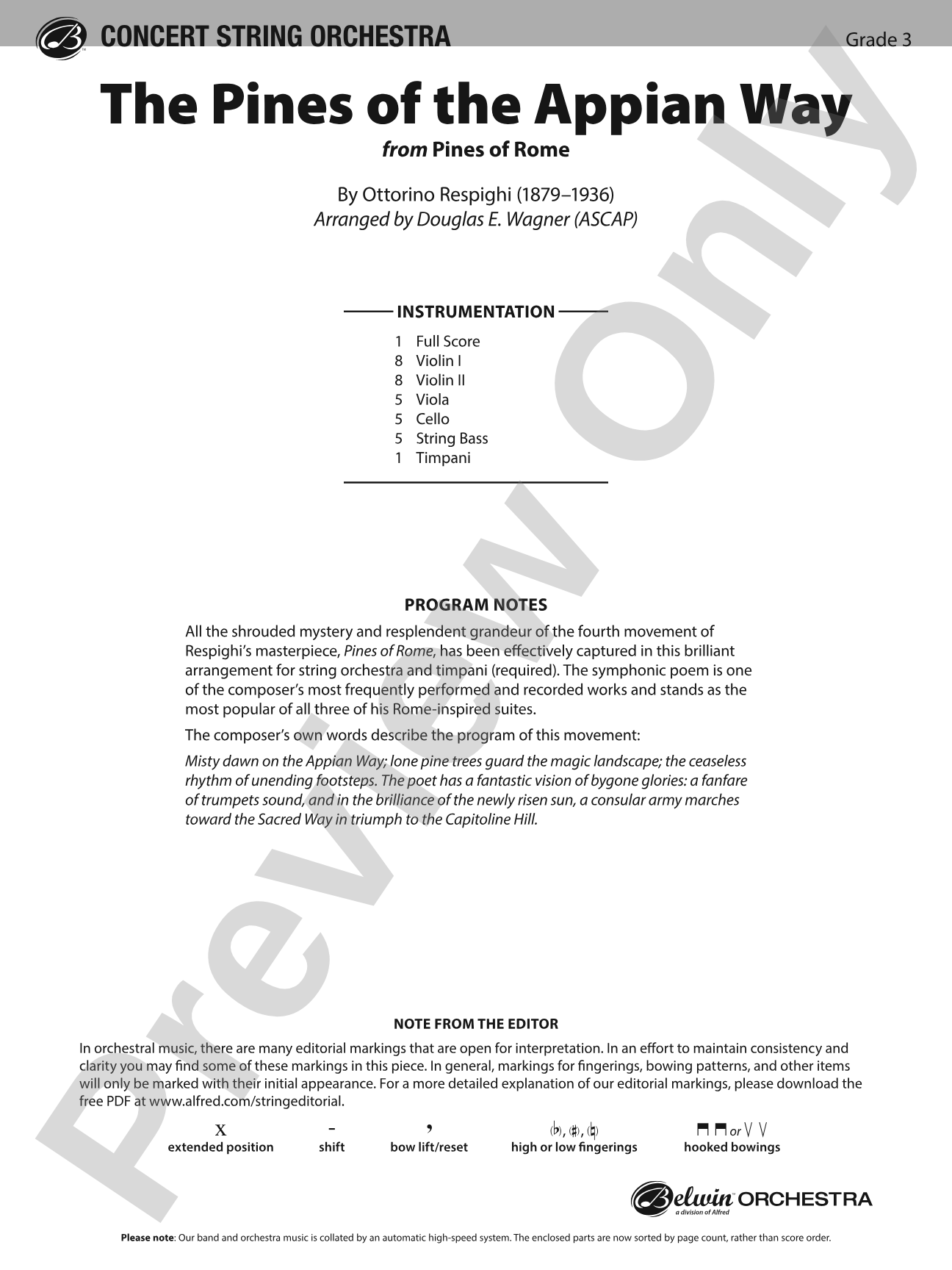
By Ottorino Respighi / arr. Douglas E. Wagner
Grade: 3
Item: 00-PK-0008471

$60.00
Pickup currently not available
Buy Extra Parts (Digital PDF Download)
| Product | Price | Quantity |
|---|---|---|
| The Pines of the Appian Way: Score | $9.00 | |
| The Pines of the Appian Way: 1st Violin | $3.00 | |
| The Pines of the Appian Way: 2nd Violin | $3.00 | |
| The Pines of the Appian Way: Viola | $3.00 | |
| The Pines of the Appian Way: Cello | $3.00 | |
| The Pines of the Appian Way: String Bass | $3.00 | |
| The Pines of the Appian Way: Timpani | $3.00 |
Parts Added to Cart!
Description
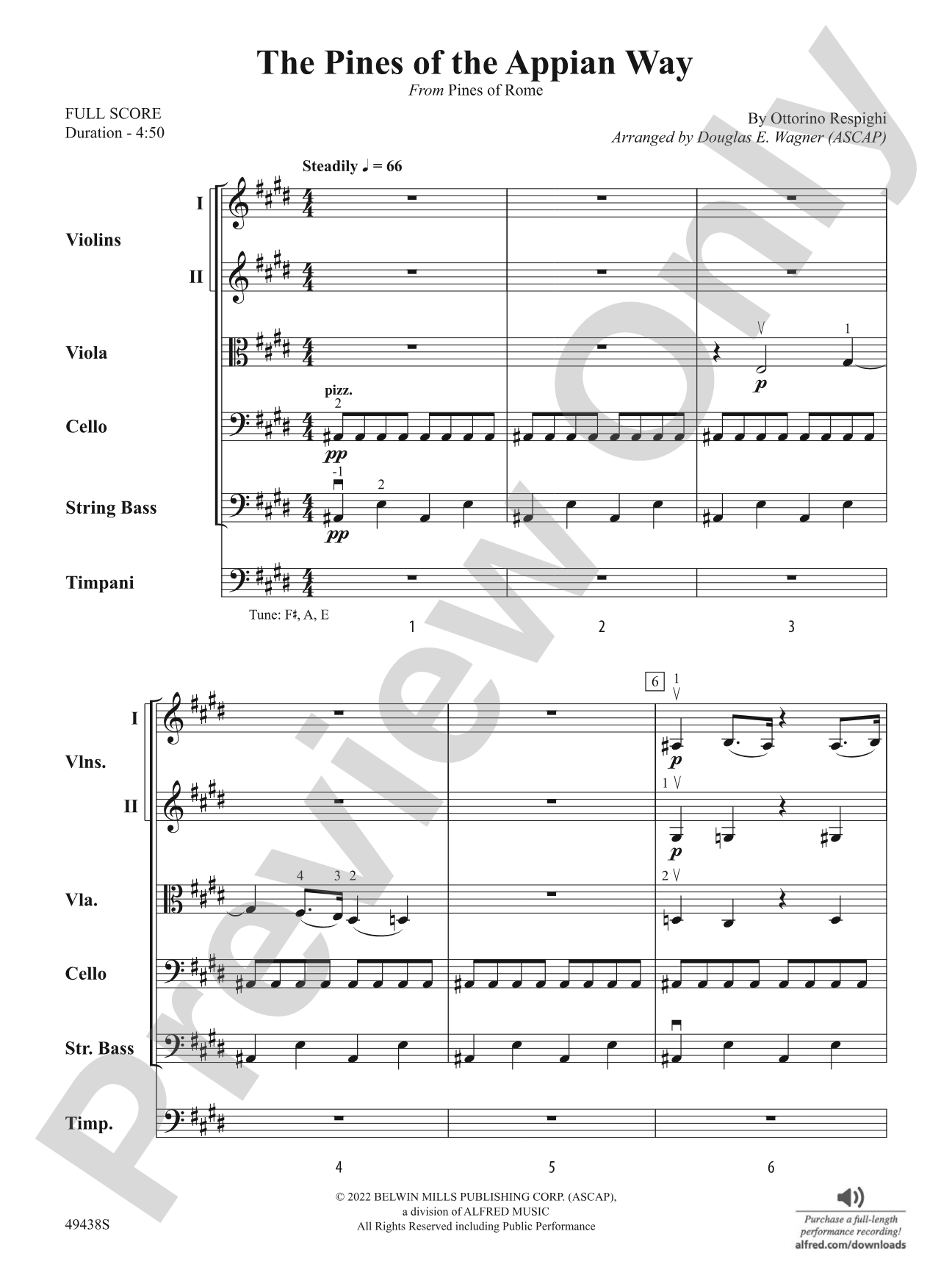
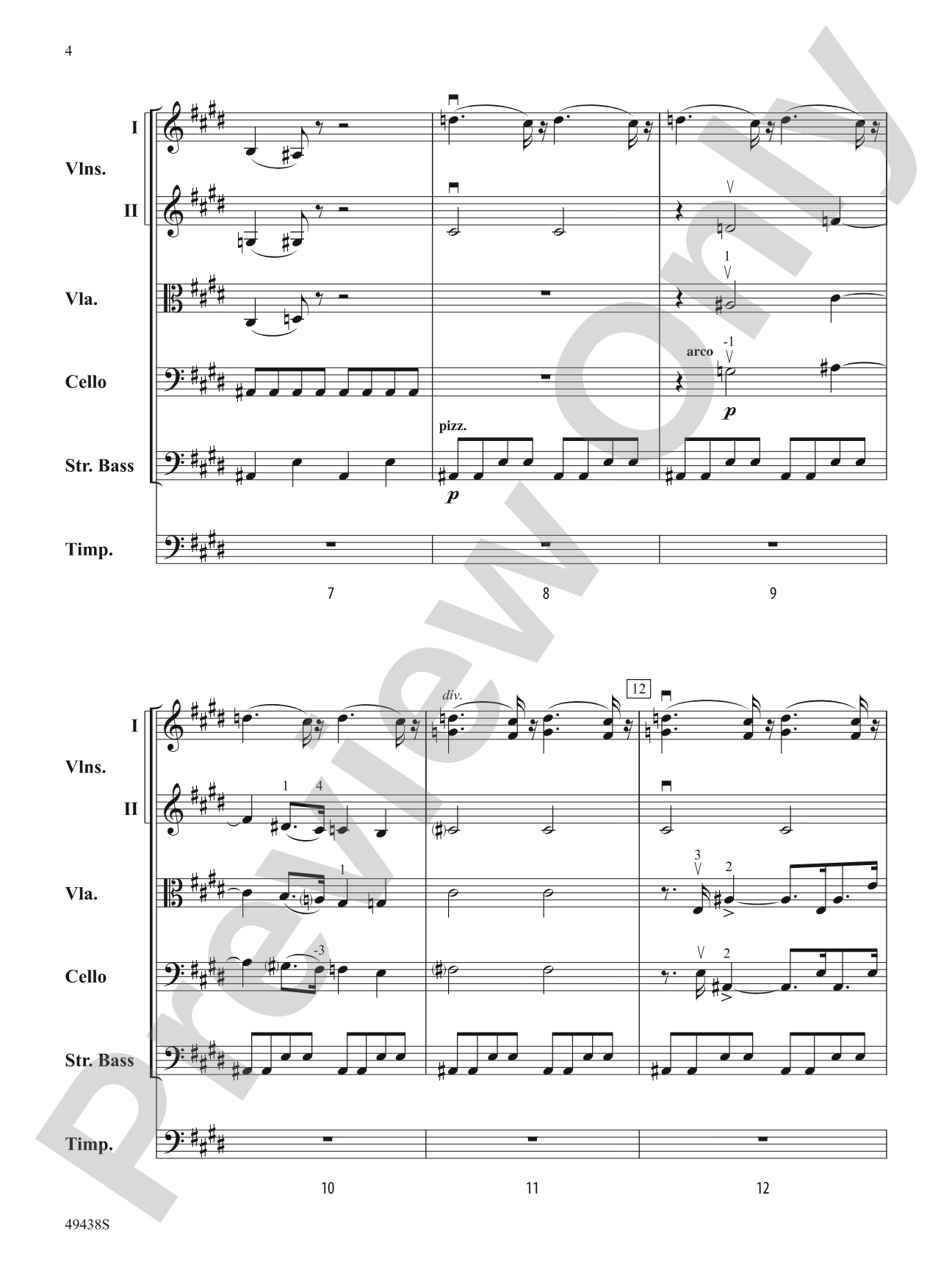
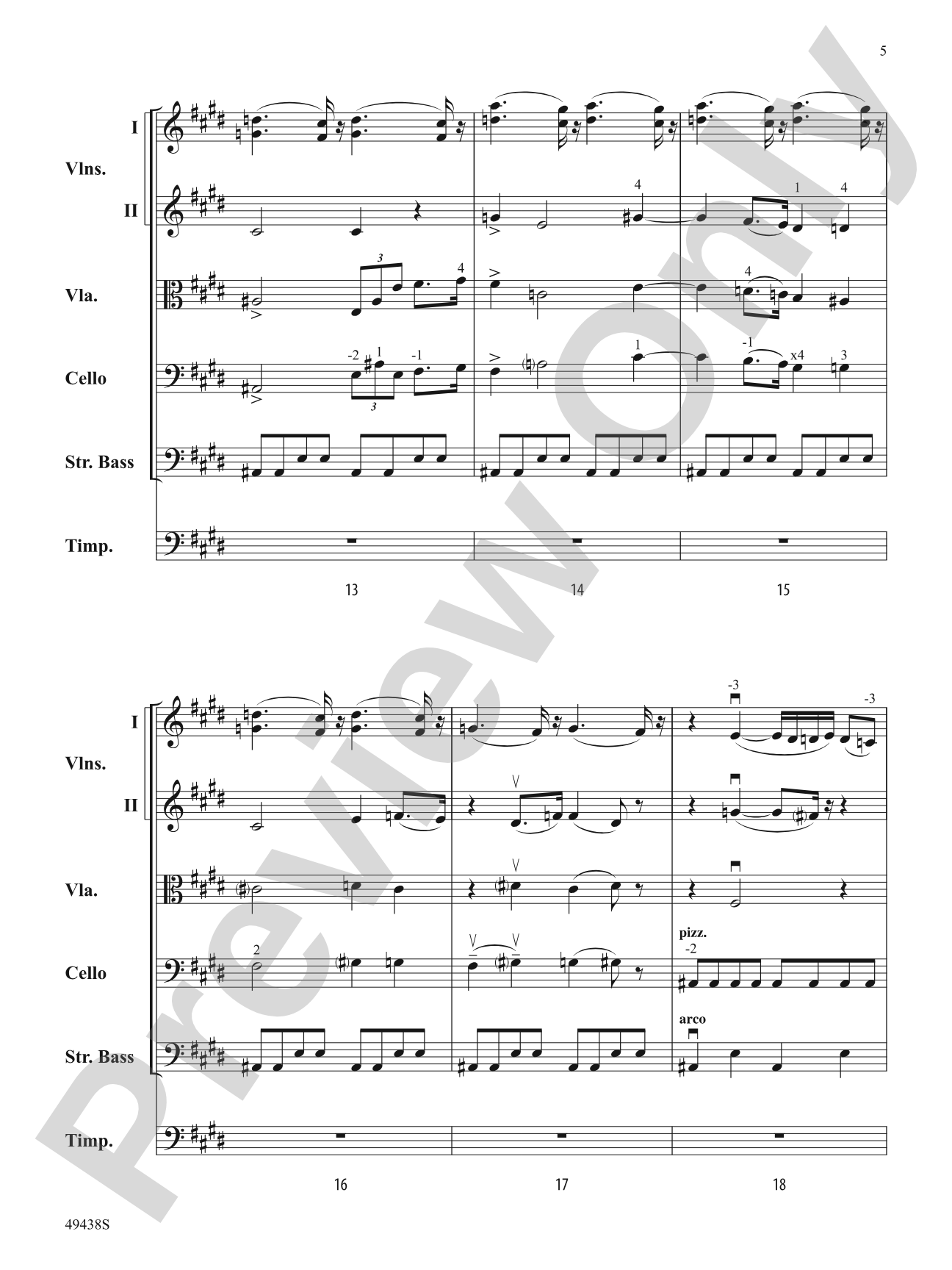
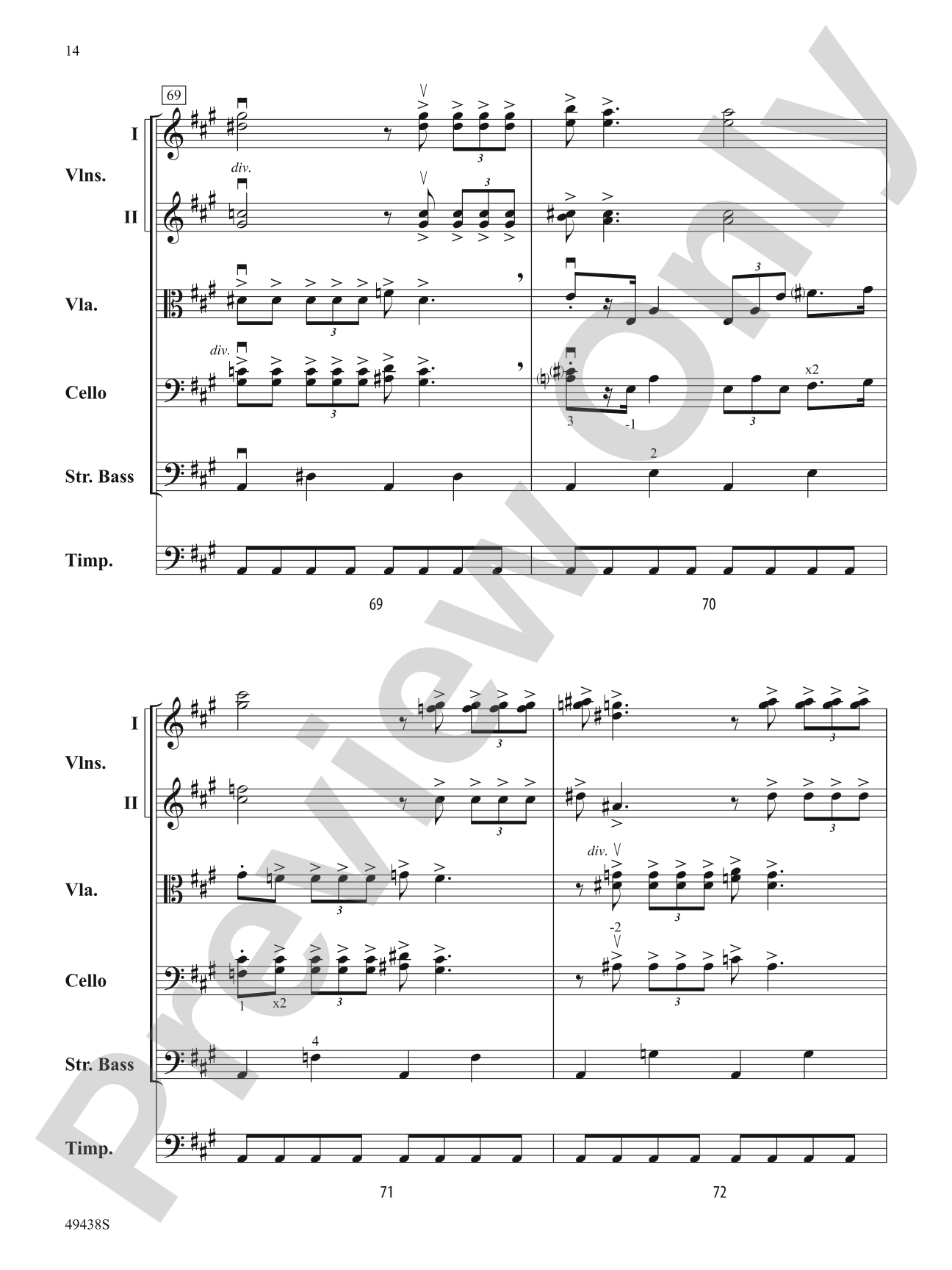
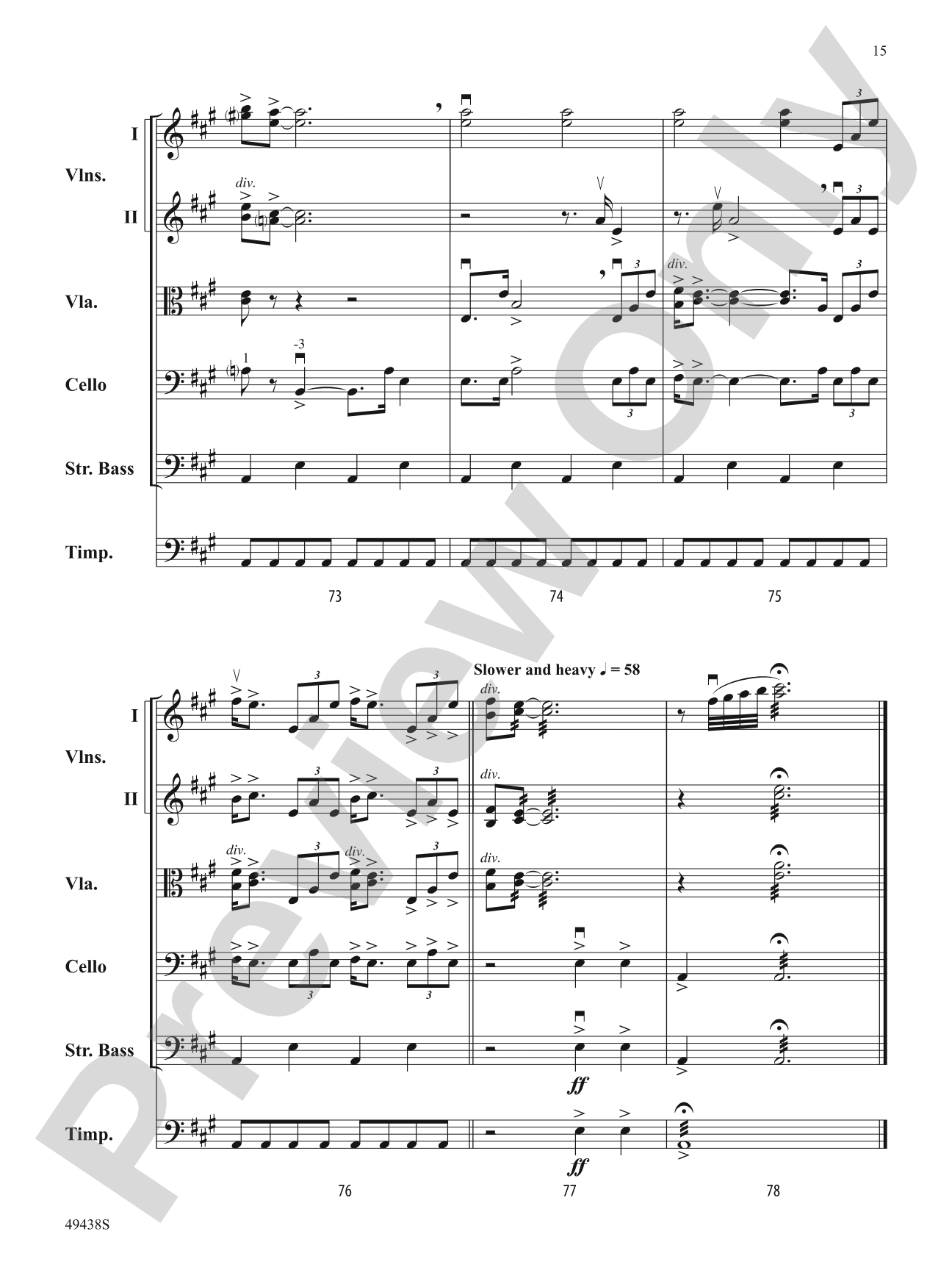
All the shrouded mystery and resplendent grandeur of the fourth movement of Respighi's masterpiece, Pines of Rome, has been effectively captured in this brilliant arrangement by Douglas E. Wagner for string orchestra and timpani (required). The symphonic poem, "The Pines of the Appian Way" is one of Respighi's most frequently performed and recorded works and stands as the most popular of all three of his Rome-inspired suites. (4:50) This title is available in MakeMusic Cloud.


Don't just read it, hear it, play along with it, and watch your students grow with it. In MakeMusic Cloud, The Pines of the Appian Way: String Orchestra Conductor Score & Parts comes alive with professional accompaniment, adjustable tempo, and built-in practice tools that turn solo practice into real progress.
Open in the Player
Jump straight in and assign it today.
Start Your Free Trial
Open this title and explore the full library in minutes.
Sample Audio
1
Audio File
--:--
0:00
0:00
Sample Video
Additional Details
Series:
Belwin Concert String Orchestra
Publisher:
Alfred Music
SKU:
00-PK-0008471
More about this title
About the Composer: Ottorino Respighi
Ottorino Respighi (1879-1936) was an Italian composer and conductor whose orchestral works defined the sound of early twentieth-century nationalism in concert music. He studied composition in Bologna and Berlin, absorbing techniques from both Rimsky-Korsakov and Strauss, yet his voice remained distinctly Italian. His gift for orchestration and his ability to weave classical forms with vivid pictorial imagery made him one of the most performed orchestral composers of his era.
Respighi's three Rome suites (Pines of Rome, Fountains of Rome, and Roman Festivals) remain central to orchestral repertoire. These symphonic poems showcase his mastery of color and his skill at transforming musical impressions into immersive sonic landscapes. His compositions continue to reward both professional ensembles and serious student orchestras with their technical demands and emotional depth.
Why we love this
Douglas E. Wagner's arrangement brings the lush grandeur of Respighi's original to a string ensemble while preserving the work's architectural sweep and dramatic arc. At Grade 3, this is one of the few arrangements of a major symphonic poem that remains genuinely performable without sacrificing the music's emotional impact. Directors consistently find that students rise to the occasion when given access to a masterwork this substantial.
What to expect
The Appian Way unfolds like a procession through ancient Roman twilight. The music evokes both grandeur and mystery, moving between moments of tender, sustained melodic beauty and surges of dramatic intensity. There is majesty without bombast, mystery without heaviness; the orchestration draws you into a world that feels both distant and immediate.
Who it's for
String orchestra directors leading strong Grade 2-3 ensembles who want to program substantial masterwork literature without stepping into Grade 4 territory. This works equally well for all-state festival preparation, spring concert centerpieces, or groups that need a showpiece with real musical meat. Students who have solid fundamental technique and intonation will find this arrangement genuinely rewarding to perform.
How to get the most out of it
- Balance the long melodic lines across the violin sections rather than assigning the full weight to the firsts; this reduces fatigue and allows the theme to sustain with warmth across four minutes.
- Let the timpani articulations breathe independent of the strings at key structural moments, especially in the second half. The percussion is required here, not optional, so give it room to shape transitions.
- Shape the crescendo passages in longer waves rather than driving relentlessly forward; Respighi builds his climaxes through layered texture, not pure volume.
- Rehearse the sustained tremolo passages separately to ensure consistency of tone quality and bow control across all string parts.
How to use it
This arrangement serves brilliantly as the anchor work on a concert built around European masterworks or as a stand-alone statement of your string program's artistic ambitions. Pair it with lighter, shorter works earlier in the program to set up this piece as an emotional and technical culmination. The timing (approximately 4:50) makes it ideal for programming opposite a choral work or at the close of a concert section.
Skills your students will build
- Reading and executing sustained tremolo across multiple measures
- Balancing transparent melodic lines in divided sections
- Controlling longer phrases across orchestral textures without loss of shape
- Responding to color and dynamic nuance in a symphony-length work
- Precision ensemble intonation in moderate tempo passage work and climactic fortissimo sections