The Pinery Boy: Violoncello Sheet Music Preview

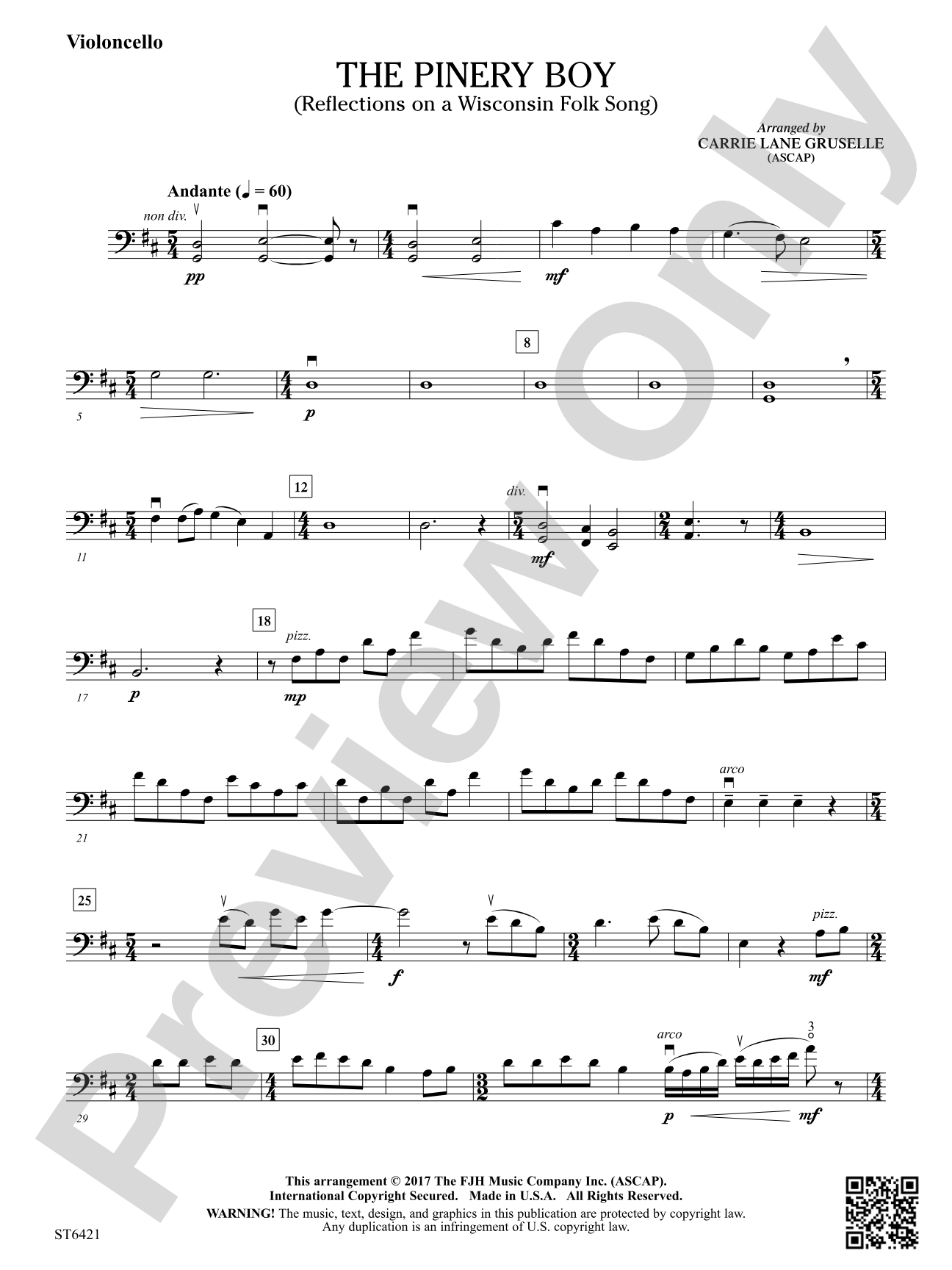
The Pinery Boy: Violoncello

Arranged by Carrie Lane Gruselle

Grade: 4

Item: 98-PC-DST6421_VC1

Digital Download
$7.00
Description
This arrangement allows students to explore a full range of expression and further develop musicality as individuals and ensemble. The beautiful, yet plaintive melody weaves seamlessly through several variations and simple meter changes. From the softest and most touching moments to the powerful and soaring lines, this will be a dramatic moment in your concert that will leave your audience breathless.

The Pinery Boy: Violoncello isn't in MakeMusic Cloud just yet...but it could be. Let us know you'd like to see it, and you'll help shape what comes next. In the meantime, start a free trial and dive into thousands of interactive titles your students can play along with today.

Sample Audio
0:00
0:00
Sample Video
Additional Details
Series: FJH String Orchestra
Publisher: The FJH Music Company, Inc.
SKU: 98-PC-DST6421_VC1

More about this title

About the Arranger: Carrie Lane Gruselle

Carrie Lane Gruselle

Carrie Lane Gruselle earned her Bachelor of Music Education from the University of Wisconsin–Eau Claire and her Master of Music Education from the University of Wisconsin–Stevens Point, where she specialized in Suzuki pedagogy. She brings classroom and private studio experience to her arranging work, having taught strings at the elementary and middle school levels in the Appleton Area School District and maintained a cello studio through the Lawrence University Arts Academy.

Why we love this

Gruselle's arrangement respects the emotional core of this folk melody while giving it room to breathe across a full string orchestra. The meter changes and textural variations feel organic rather than imposed, and the dynamic range she builds allows even younger orchestras to discover how much drama they're capable of creating together. This is the kind of piece that reminds audiences why they came to the concert.

What to expect

The melody arrives like a quiet memory, tender and searching. As it passes through the orchestra's voices, it gathers weight and yearning, swelling into moments of genuine power before drawing back into introspection. The simple meter changes anchor these emotional shifts, creating a journey that feels both inevitable and intimate.

Who it's for

String orchestras at the Grade 4 level looking for repertoire that deepens musicianship without requiring advanced technical facility. This arrangement works equally well for groups preparing for festivals and contests or those seeking a showpiece that demonstrates emotional maturity and ensemble cohesion.

How to get the most out of it

  • Shape the opening phrases with intentional rubato in the softest passages; the arrangement relies on your willingness to linger and let the melody unfold rather than push forward mechanically.
  • Balance the melody through the ensemble as it passes between sections; mark your score clearly to show who carries the line at each variation so players understand their role in the bigger picture.
  • Prepare the meter changes in sectionals and run them with a metronome at performance tempo before addressing them with the full group.
  • Reserve your full dynamic power for the climactic soaring lines and guard against ensemble swelling too early; the restraint in the gentle moments will make the fortissimo passages land harder.

How to use it

Place this arrangement where it can be a moment of hushed focus before or after higher-energy repertoire. The plaintive character and dynamic contrasts make it an ideal closer or centerpiece for a concert that explores folk music across cultures, and its festival credentials mean it can serve double duty in both performance and competition settings.

Skills your students will build

  • Voicing and doubling awareness across string sections
  • Dynamic control from ppp to ff and back without loss of tone
  • Reading and executing simple meter changes (2/4, 3/4, 4/4)
  • Responding to subtle conducting gestures in softer passages
  • Sustaining line and phrase shape across rests and section transitions

You May Also Like