The Pied Piper Sheet Music Preview

The Pied Piper: Piano

By Gretchen Heller

Item: 98-DE1035

Digital Download
$3.50
Description
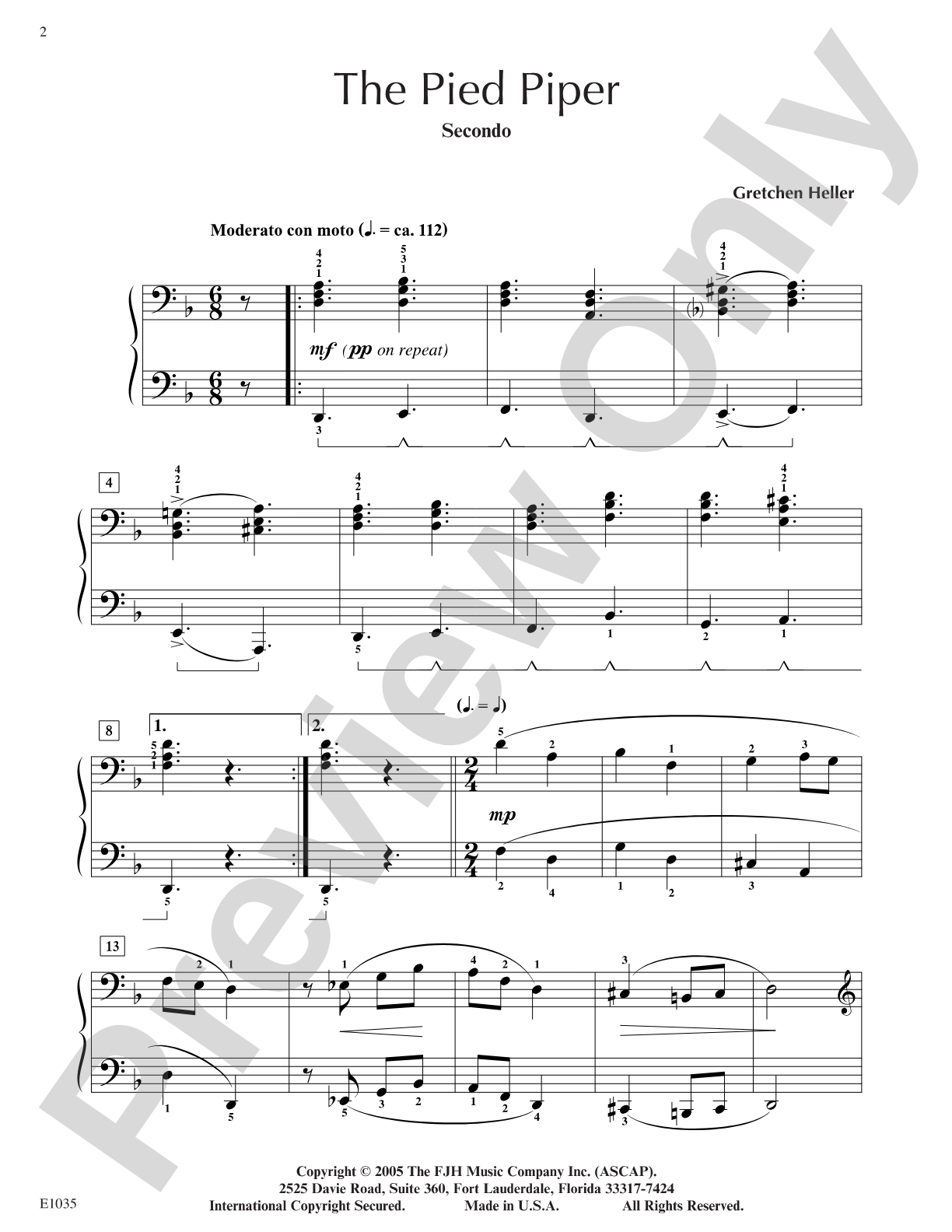
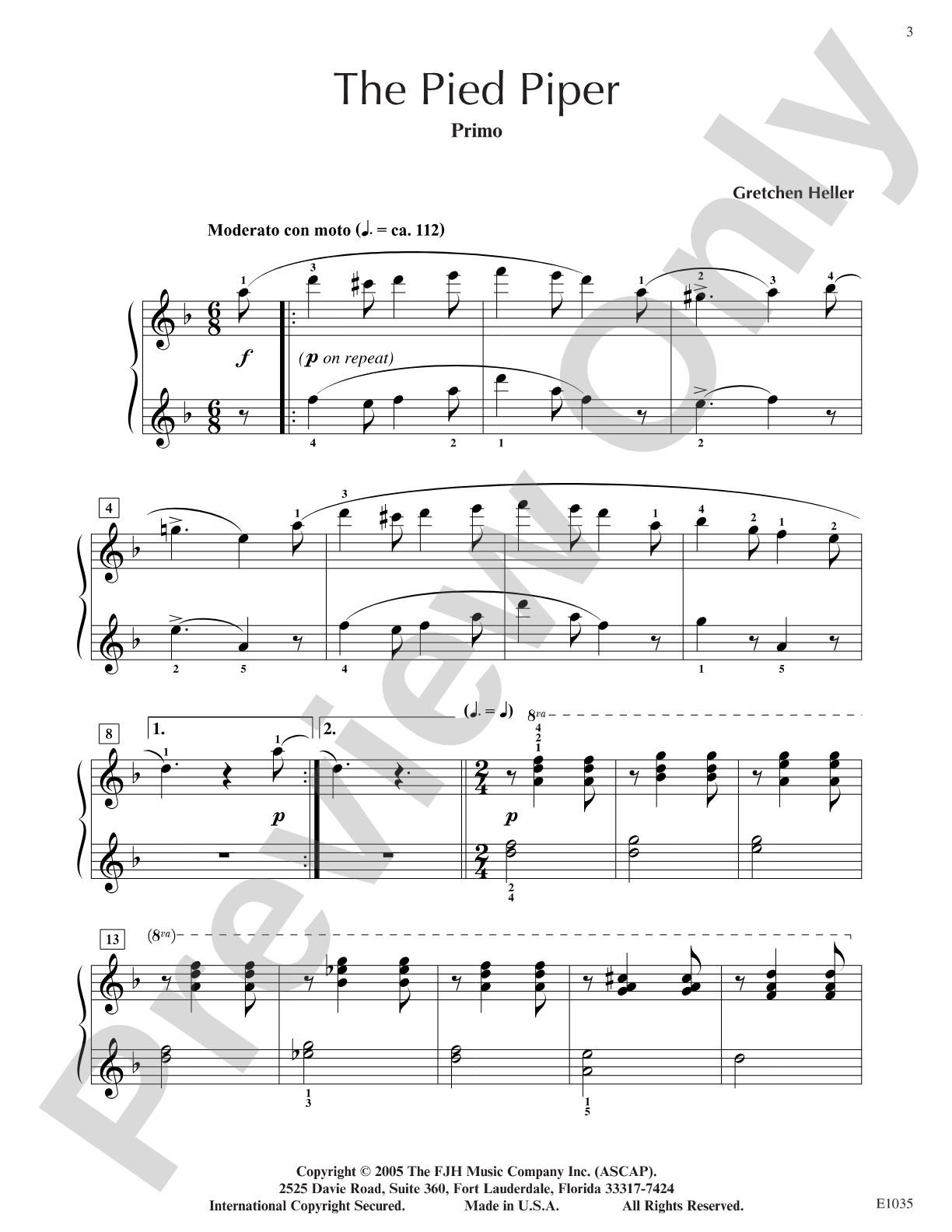
An intermediate duet for one piano, four hands, this exciting piece is played in the key of D minor using 6/8 and 2/4 time. The primo and secondo take turns with the melody and includes a surprise ending that’s harmonically in a somewhat blues-style.

The Pied Piper: Piano isn't in MakeMusic Cloud just yet...but it could be. Let us know you'd like to see it, and you'll help shape what comes next. In the meantime, start a free trial and dive into thousands of interactive titles your students can play along with today.

Sample Audio
No sample audio found.
Sample Video
Additional Details
Series: The FJH Piano Ensemble Series
Publisher: The FJH Music Company, Inc.
SKU: 98-DE1035

More about this title

Why we love this

The metric shifts between 6/8 and 2/4 keep both players engaged and alert, preventing the piece from feeling like a routine duet. The trading of melodic material builds natural ensemble awareness, and that blues-inflected harmonic surprise at the end gives students something genuinely fresh to discover in a piece at this level.

What to expect

Playful and narrative, like the legendary piper leading listeners on an unpredictable journey. The piece maintains forward momentum through its rhythmic shifts, then pulls the rug out harmonically at the end with a sly wink.

Who it's for

Intermediate pianists ready to handle metric variety and comfortable with shared melodic responsibility in a four-hand setting. This works especially well for student pairs who need to strengthen their ensemble listening skills without tackling advanced technique.

How to get the most out of it

  • Work the metric transitions separately before playing them at tempo. Mark the beat clearly during the 6/8 sections to avoid letting the compound meter blur into straight eighth notes.
  • Balance the melody handoff between primo and secondo carefully. The player without the tune should provide a supporting accompaniment that's rhythmically tight but tonally recessed.
  • Lean into the blues harmony at the ending. It's the payoff for the piece, so let it breathe slightly and color it with more deliberate pedaling than the D minor opening.

How to use it

Pair this with other character pieces or folk-inspired works to create a standalone piano recital section. It's light enough to serve as a palate cleanser between heavier repertoire, yet substantial enough that audiences take it seriously.

Skills your students will build

  • Reading and performing in 6/8 and 2/4 time signatures within a single piece
  • Balancing melody and accompaniment roles in a duet context
  • Transitioning between metric signatures without losing ensemble cohesion
  • Interpreting blues-influenced harmonic language in a tonal context

You May Also Like