
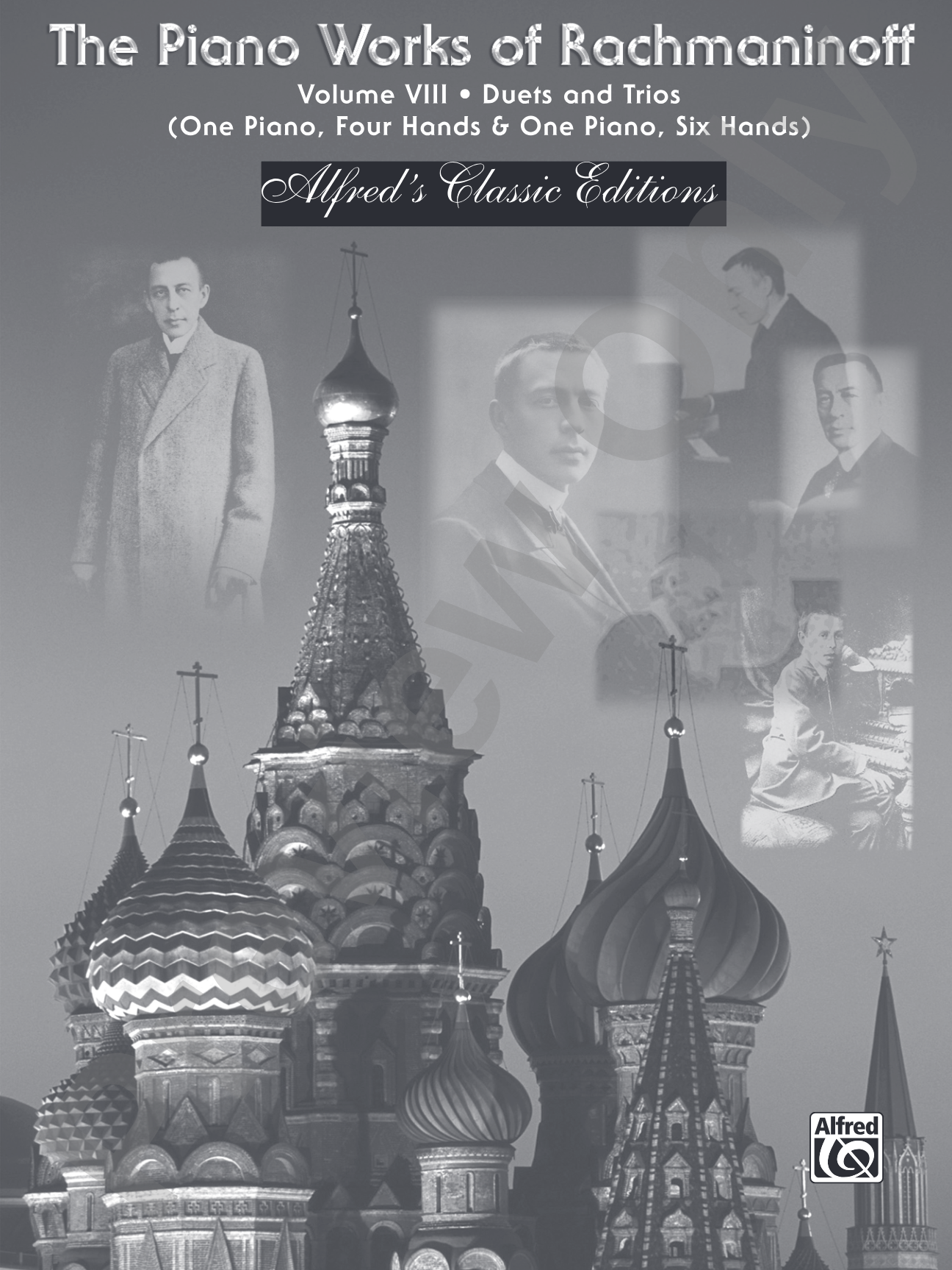
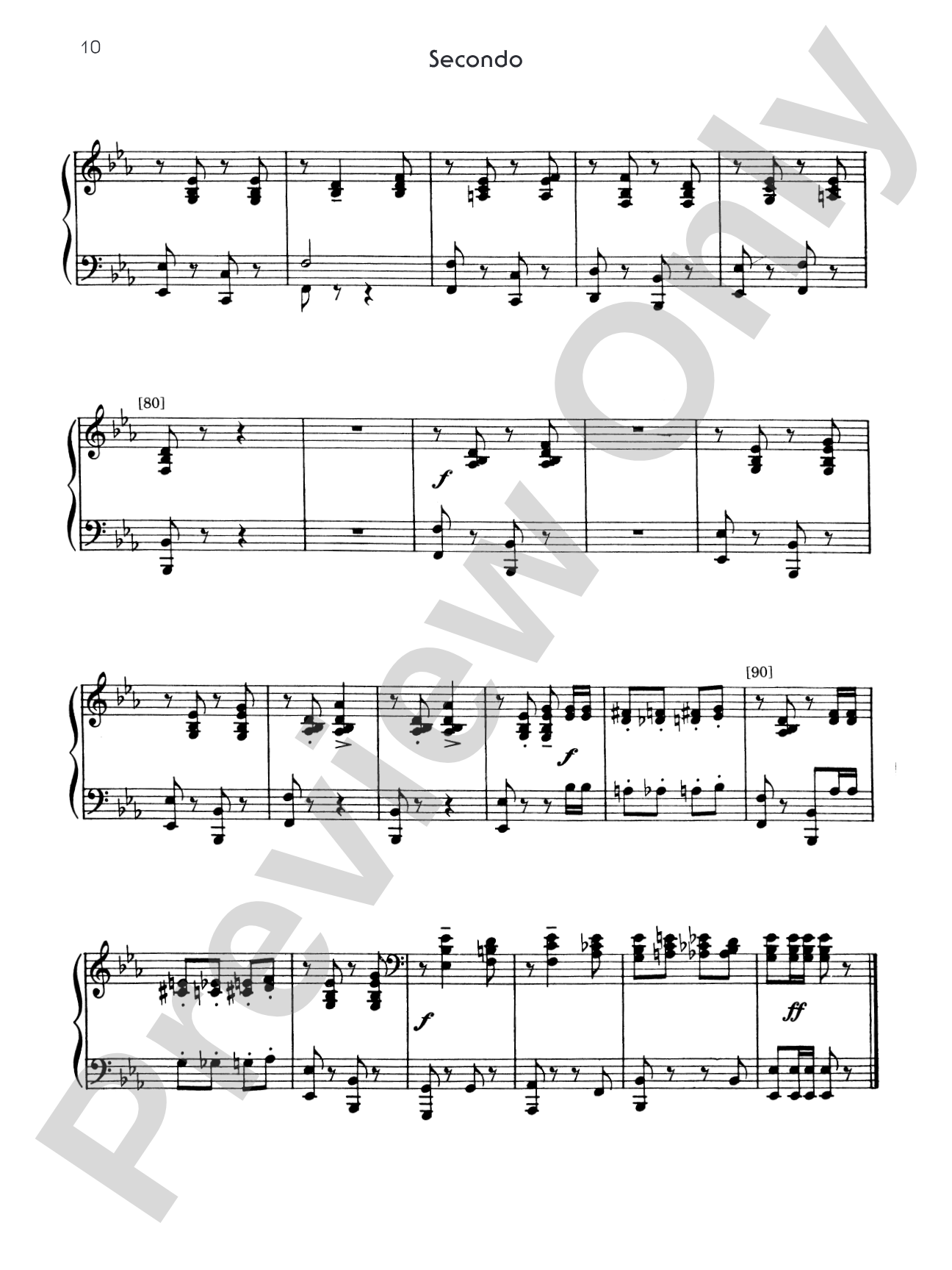
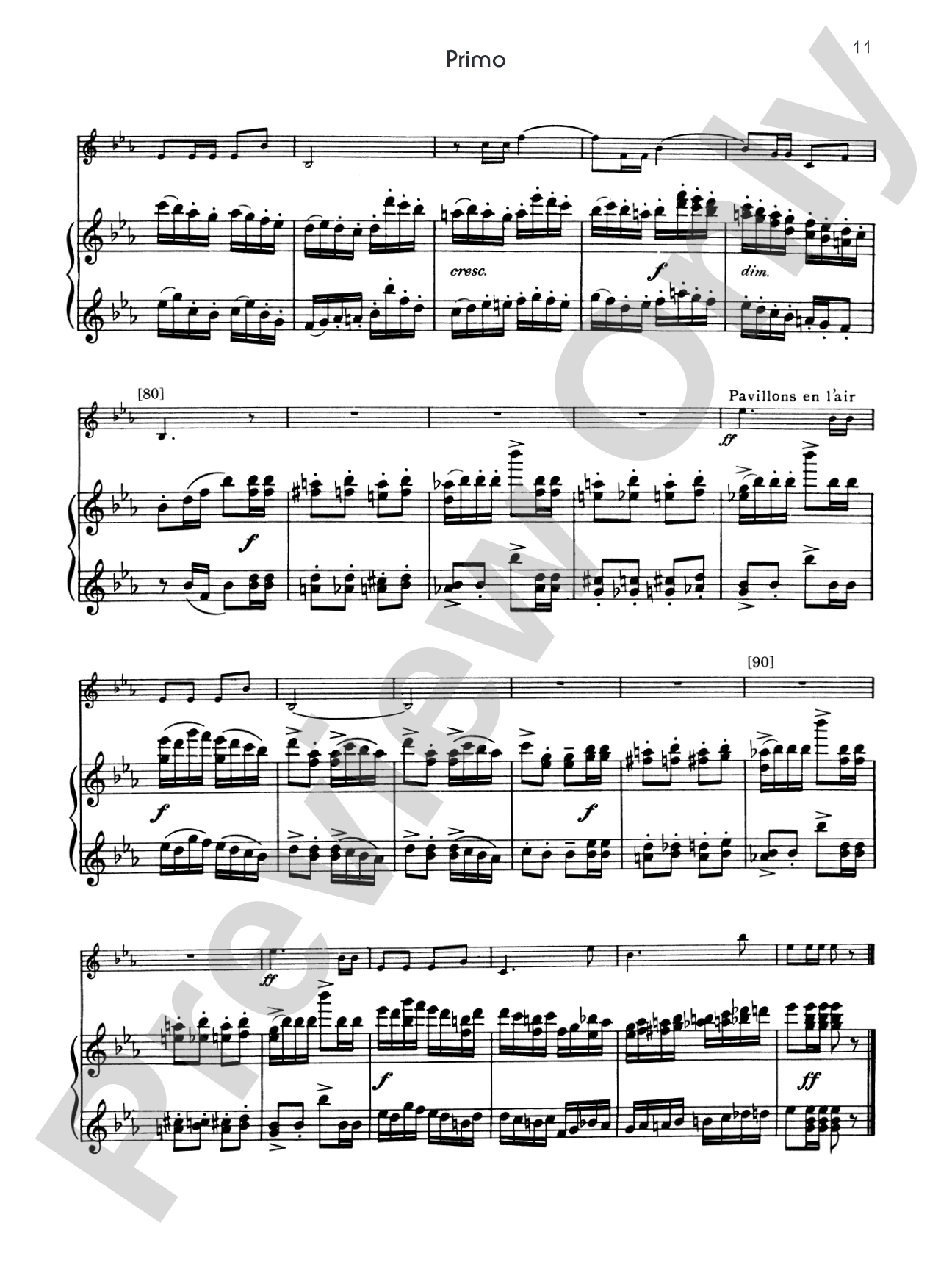
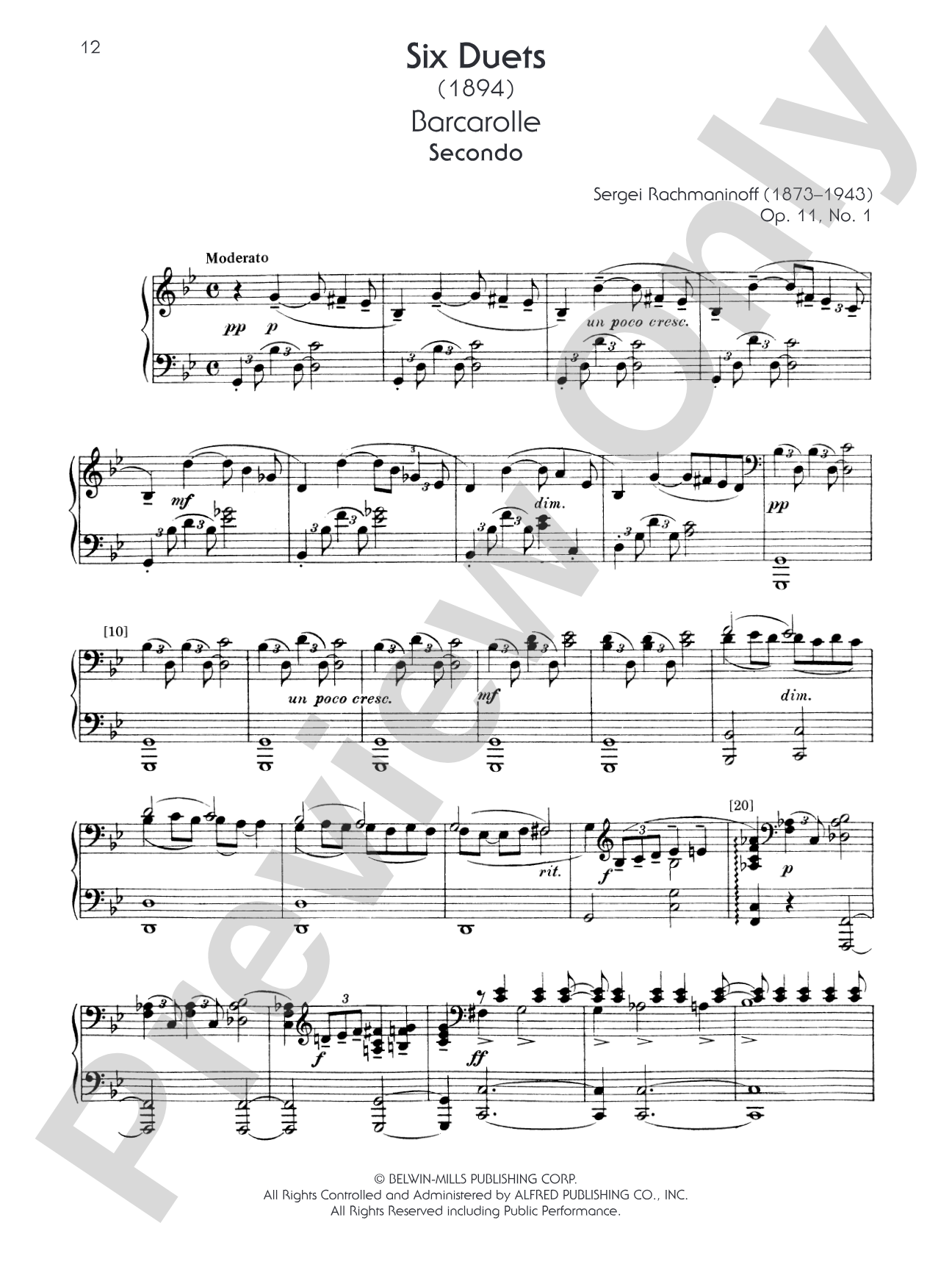
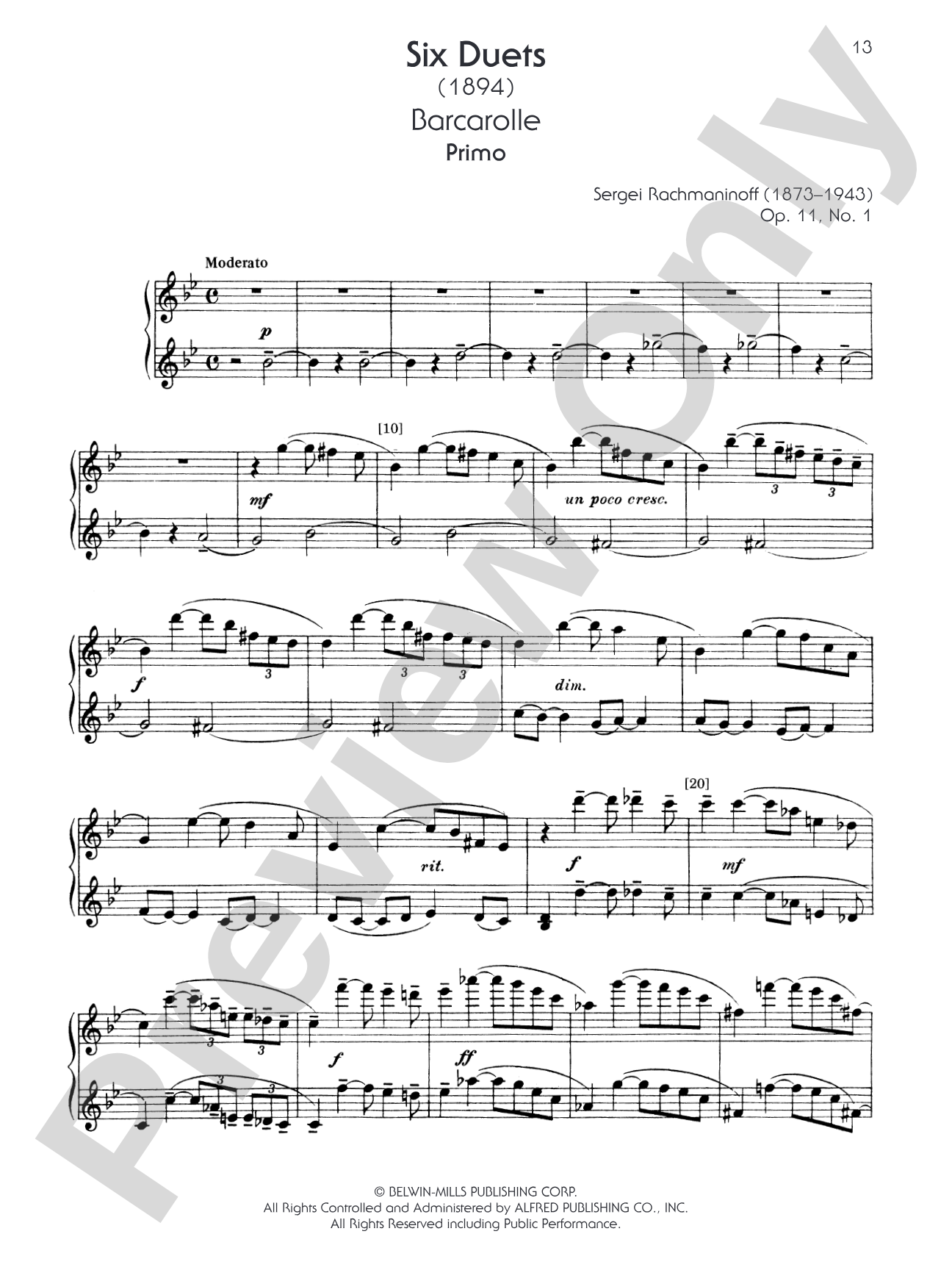
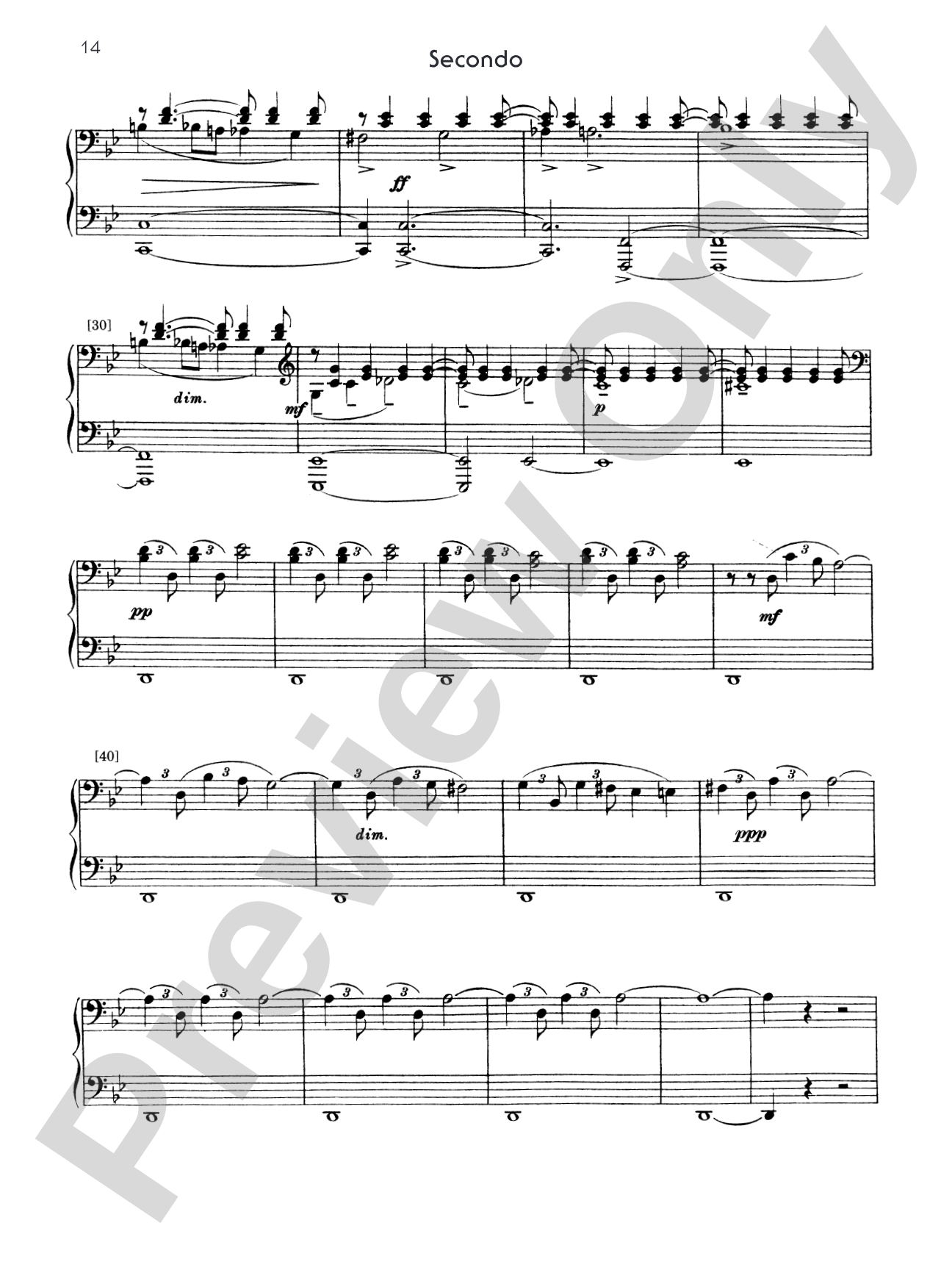
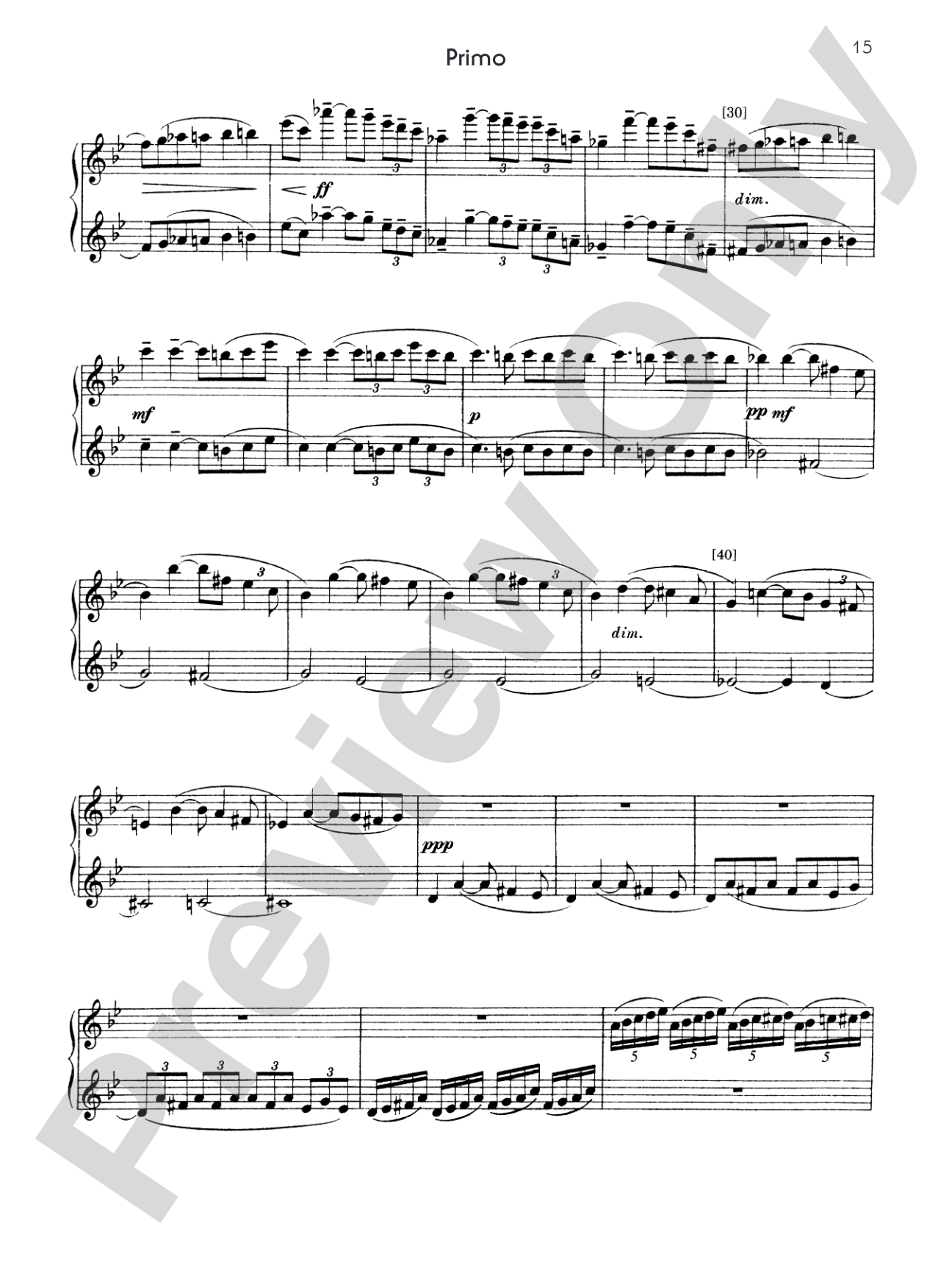
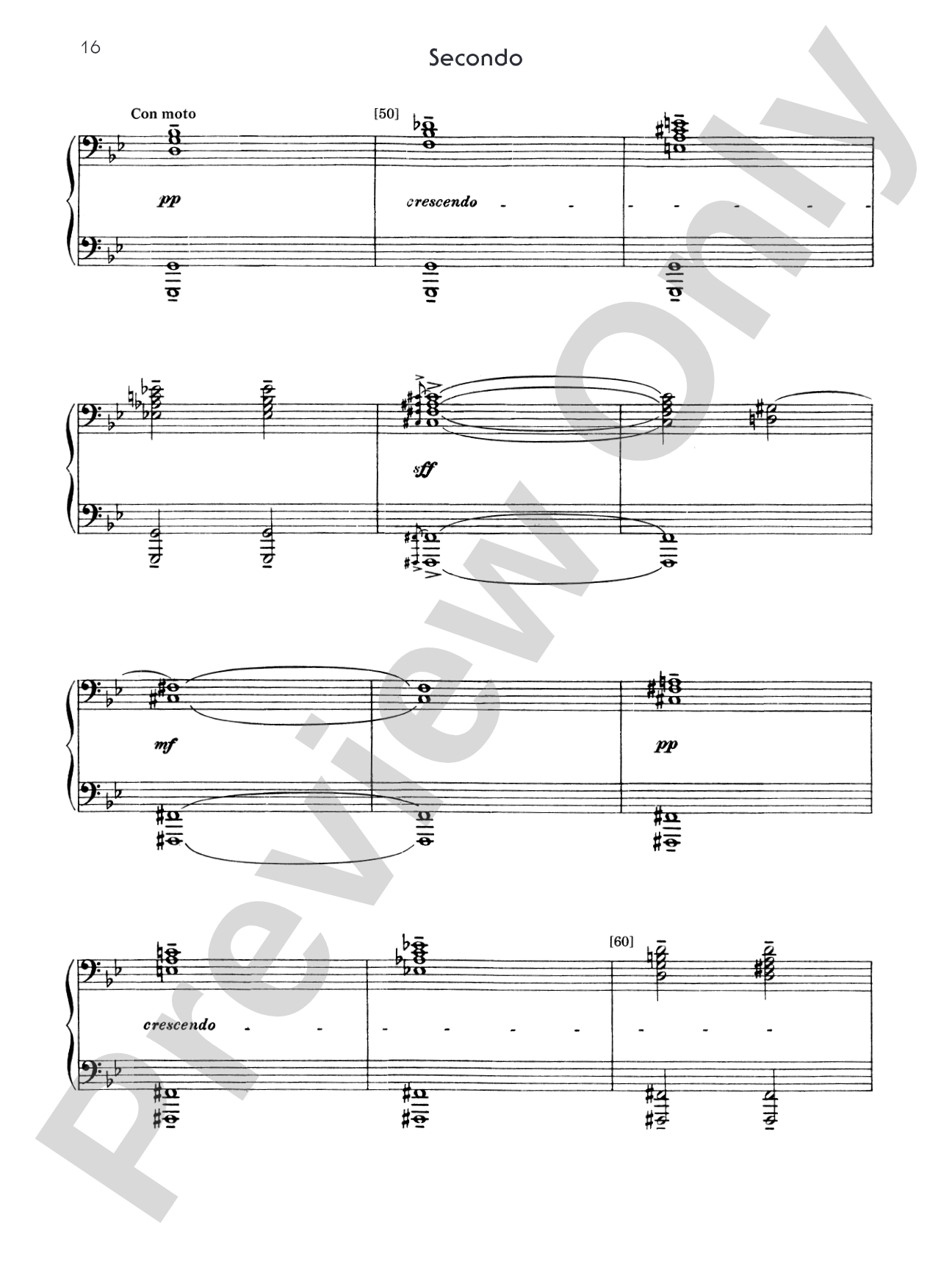
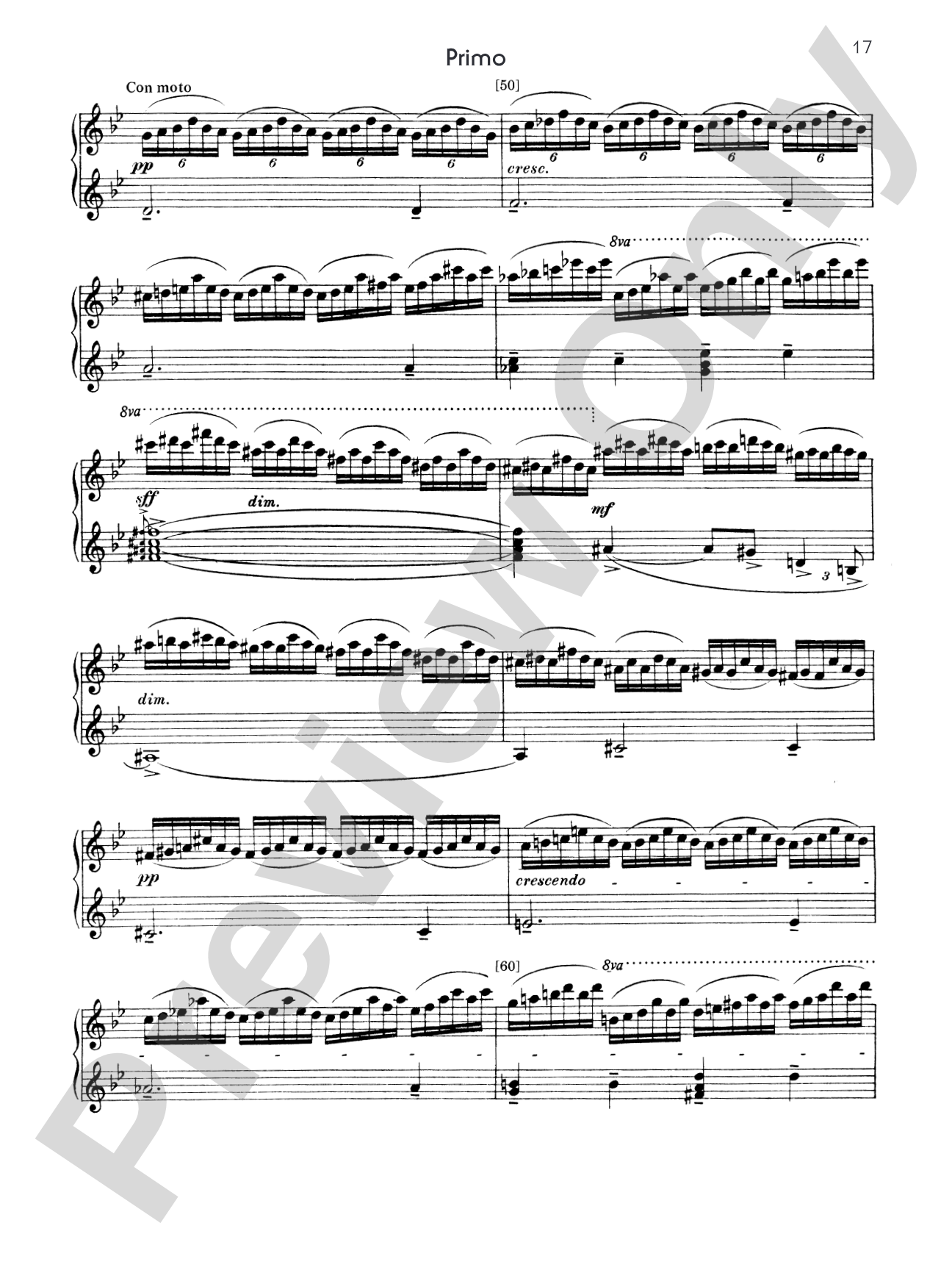
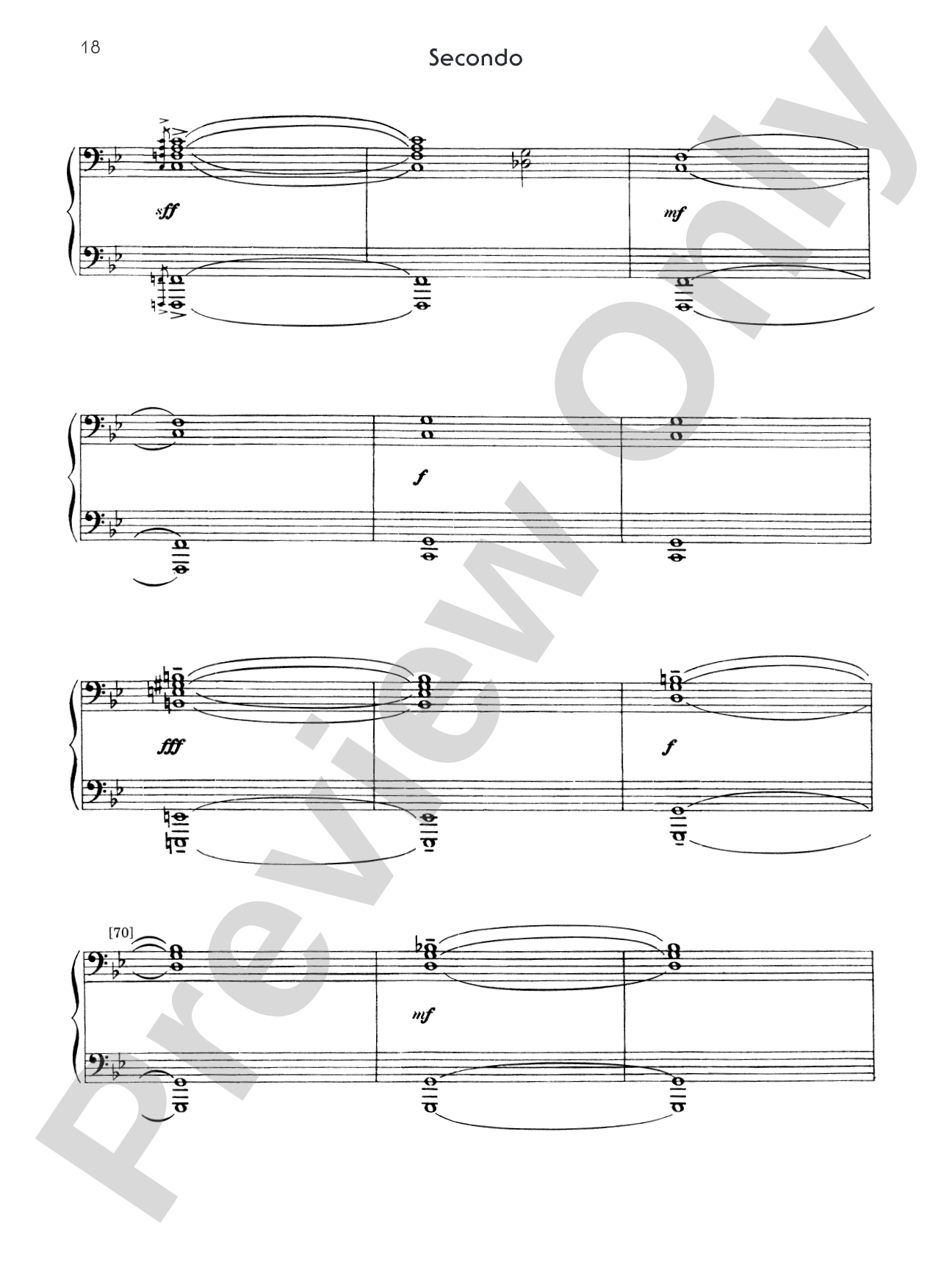
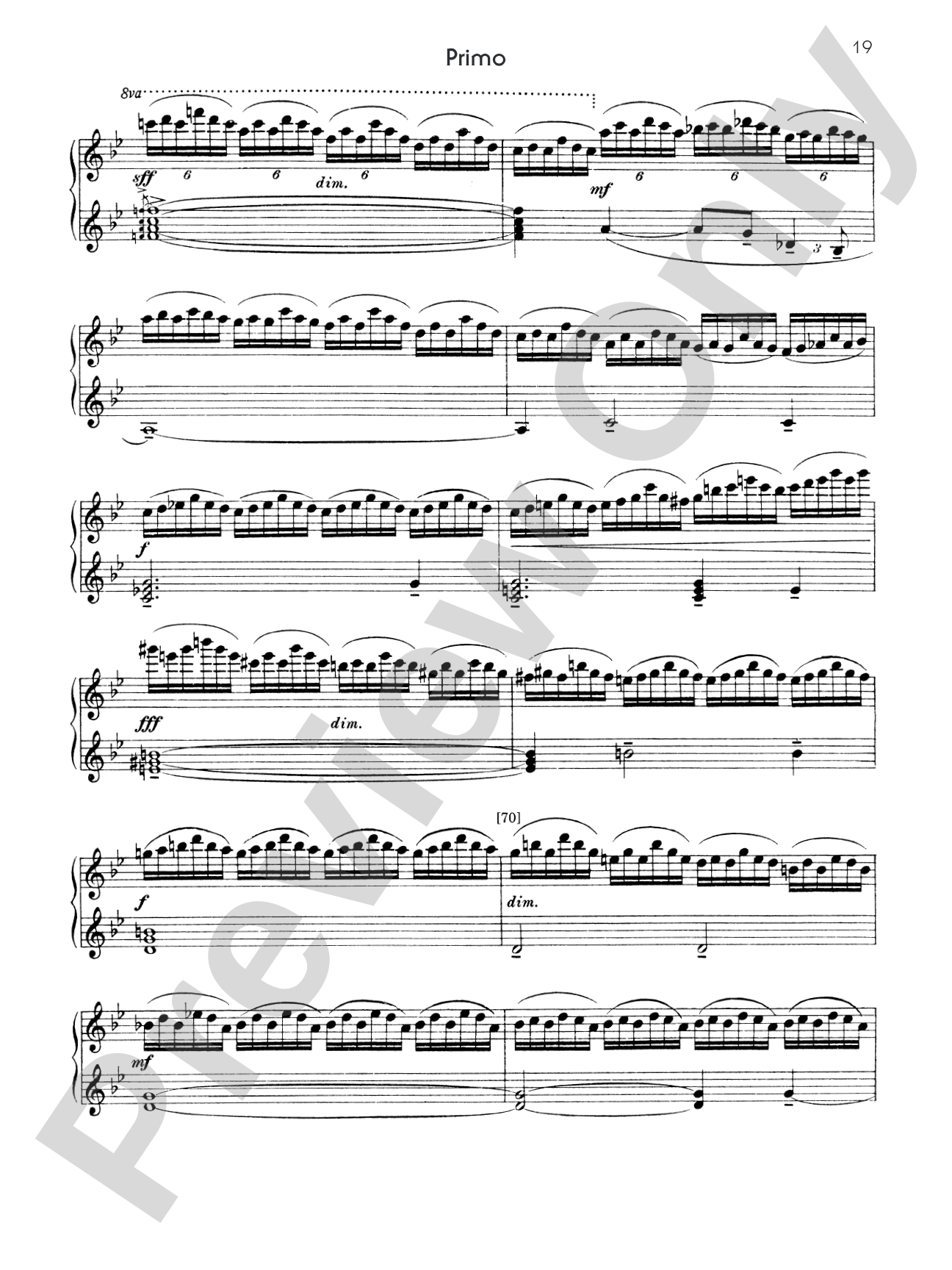
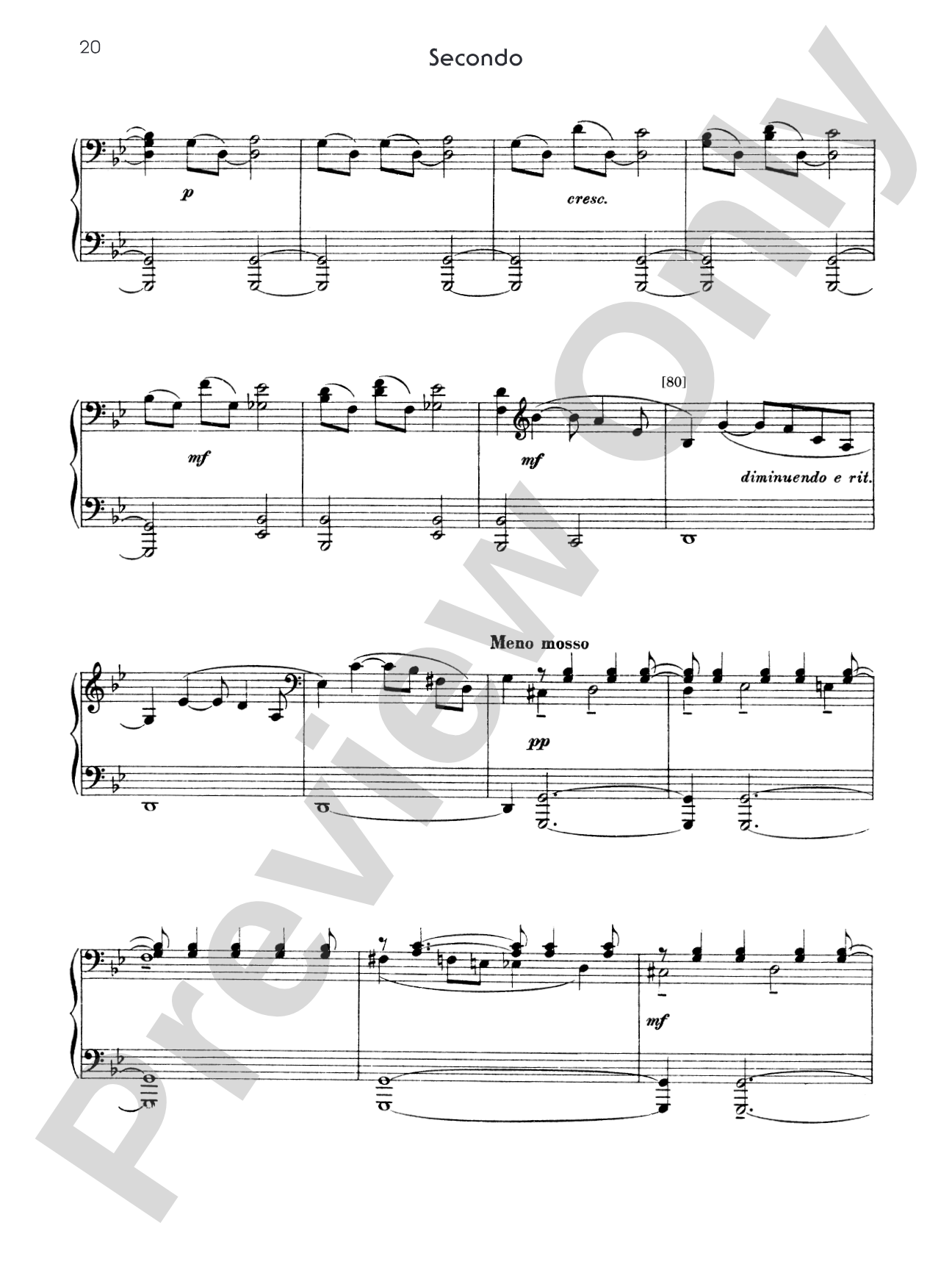

The Piano Works of Rachmaninoff, Volume VIII: Works for One Piano/Four Hands and One Piano/Six Hands: Piano
By Sergei Rachmaninoff
Level: Late Intermediate / Advanced
Item: 00-PB-0000639
$12.95
Pickup currently not available
Related Items
The Piano Works of Rachmaninoff, Volume VIII: Works for One Piano/Four Hands and One Piano/Six Hands: Piano Duet (1 Piano, 4 Hands) Book |
$12.95
|
View |
Description
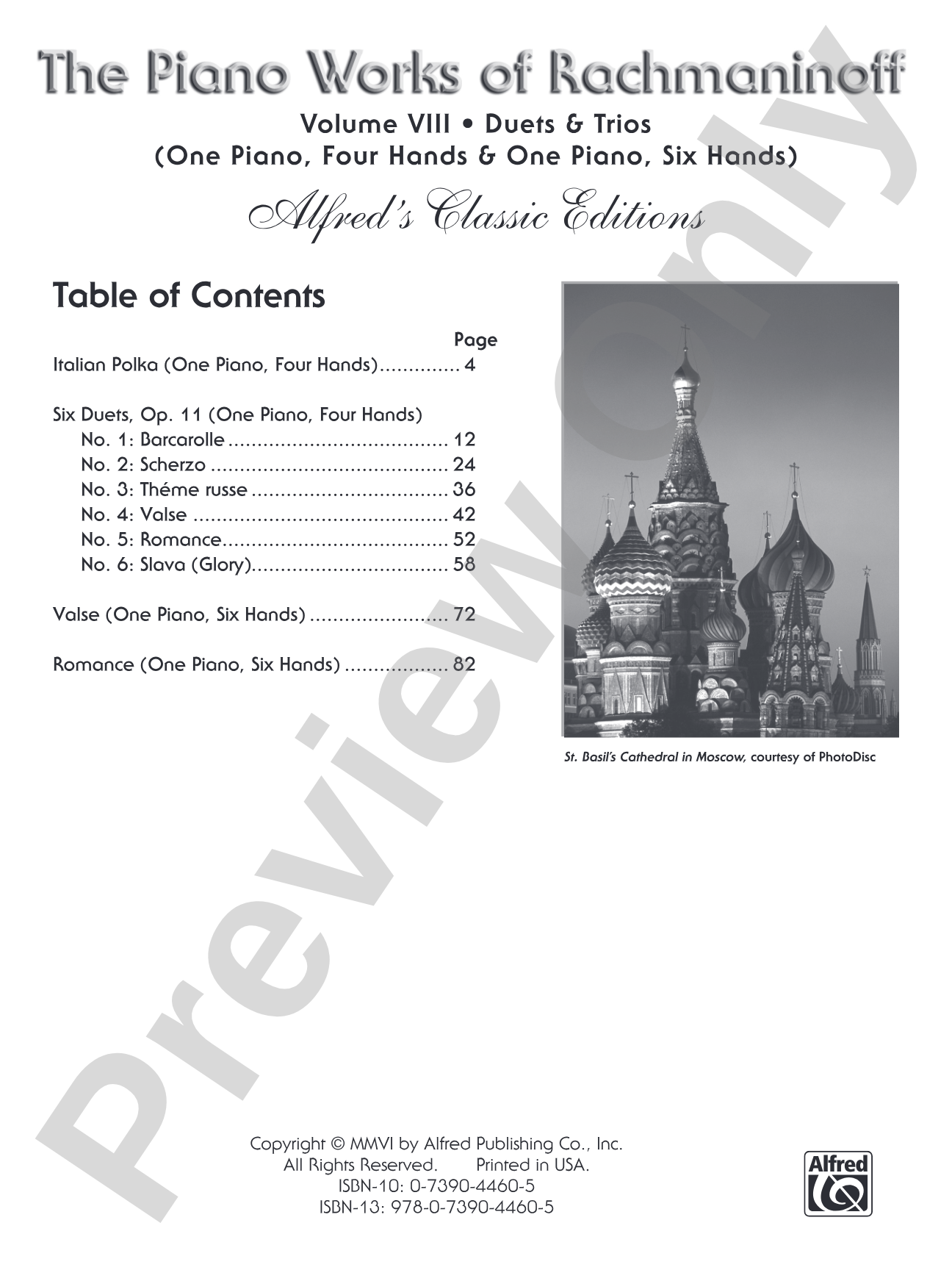
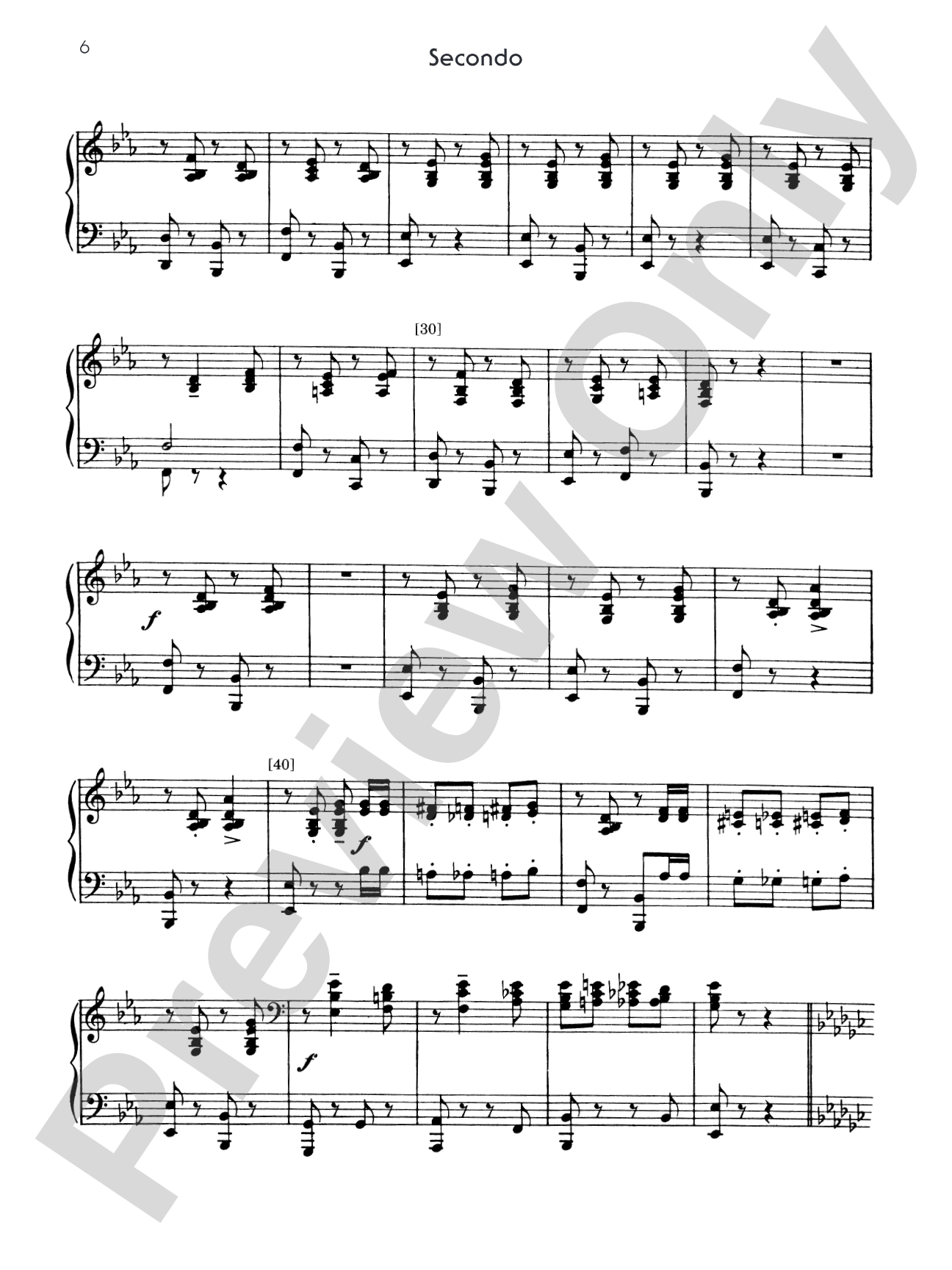
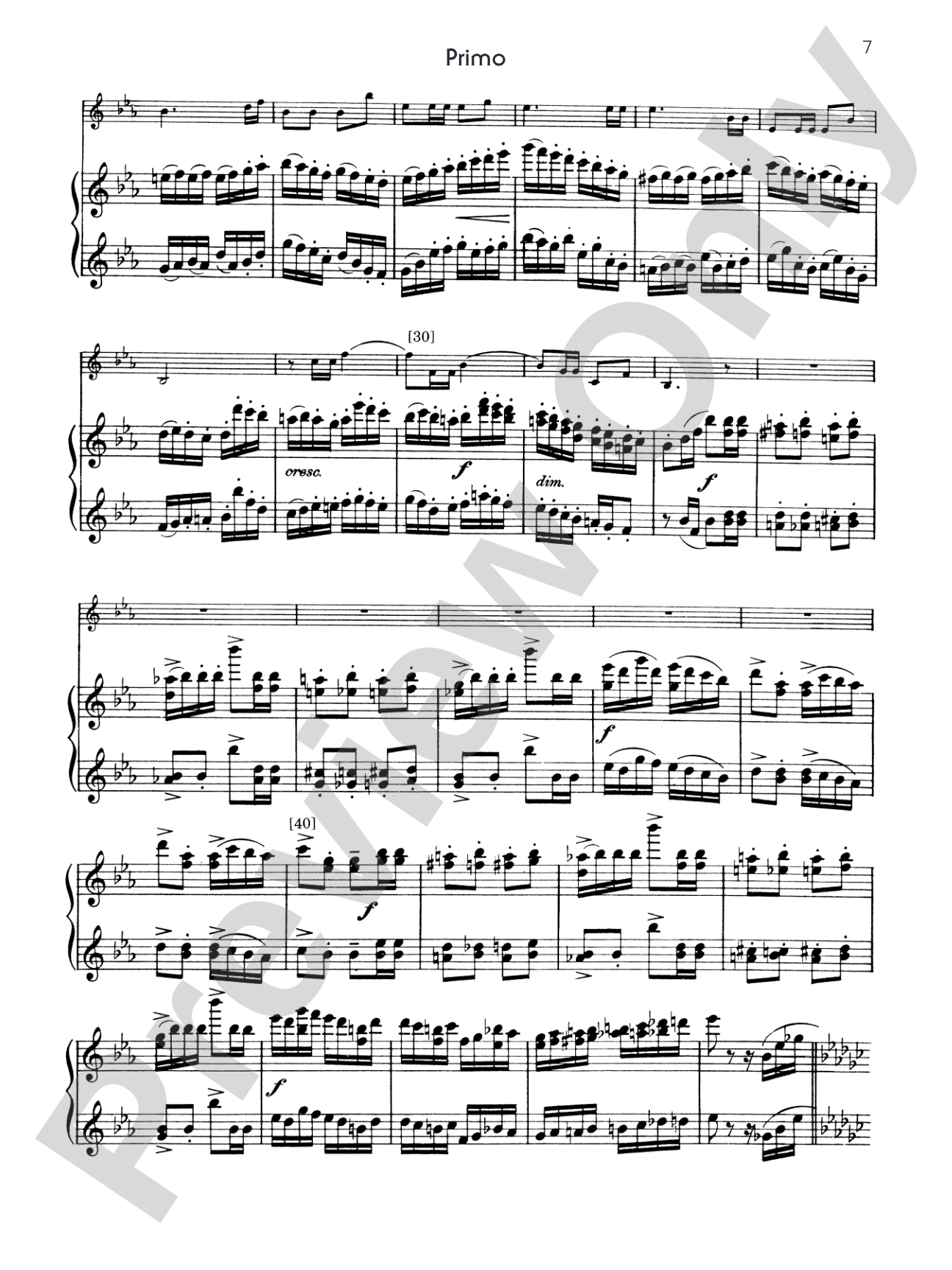
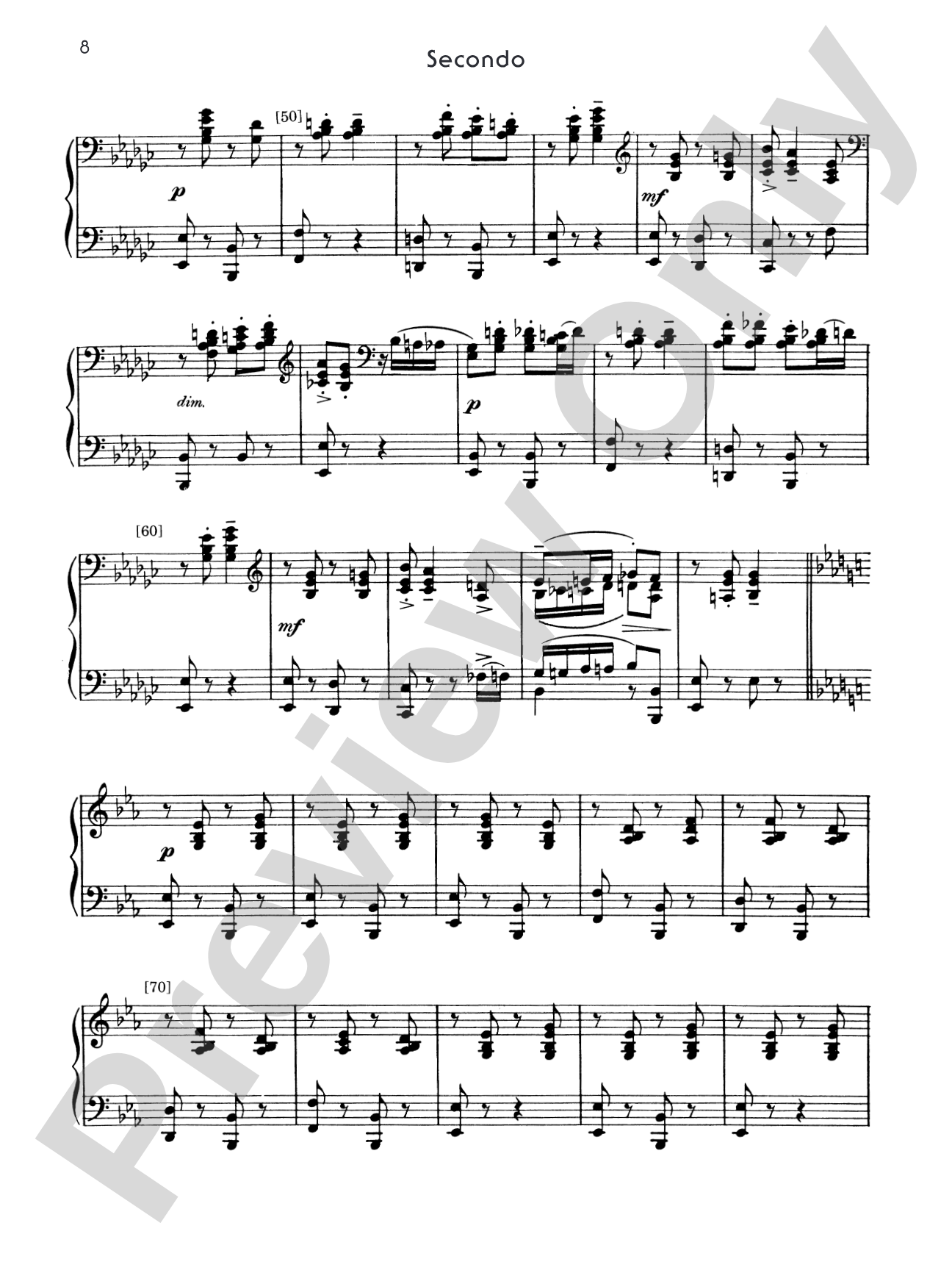
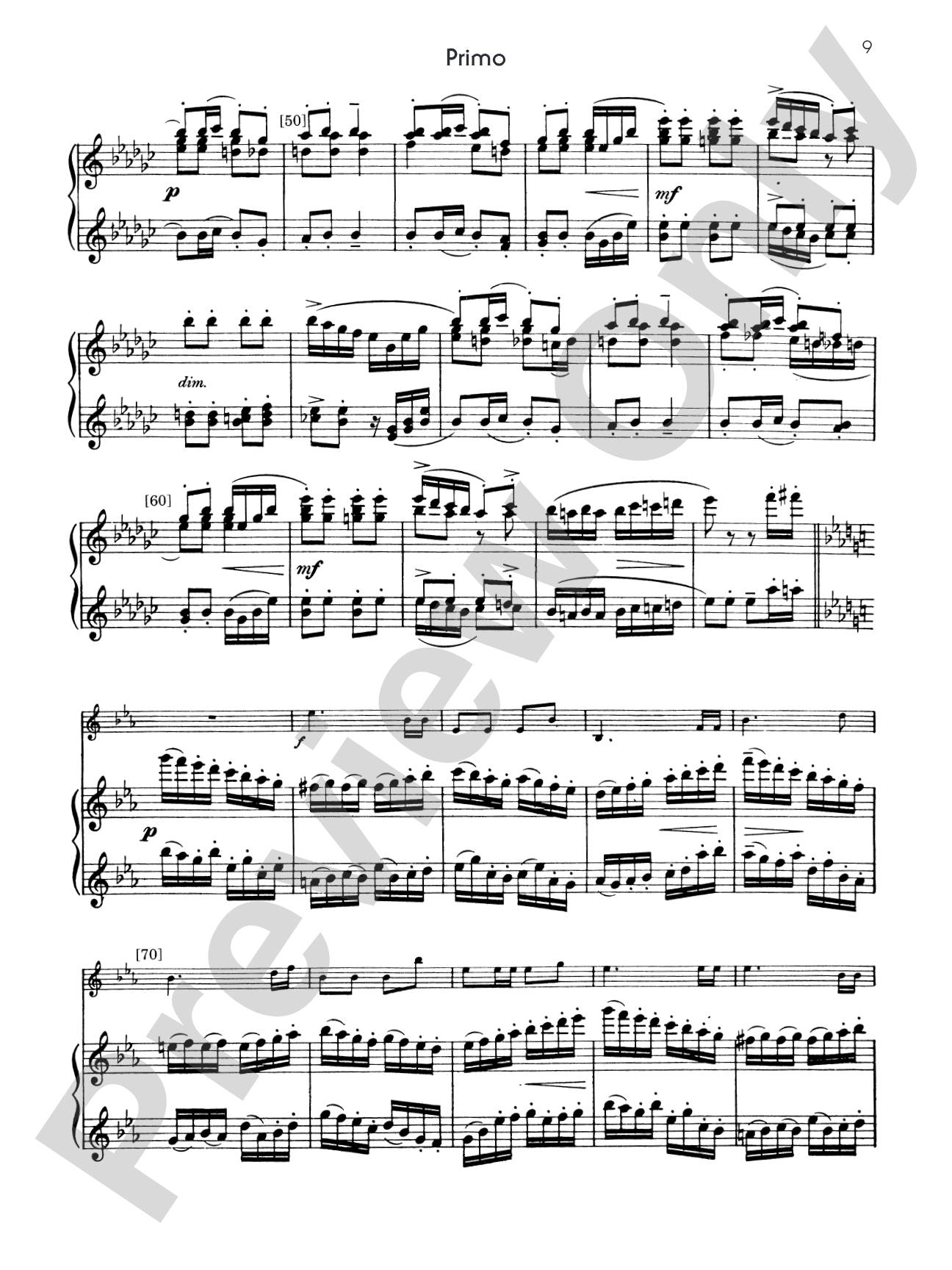
This historic reference edition contains 9 works by Sergei Rachmaninoff for piano duet and piano trio. Contents: Italian Polka (One Piano, Four Hands) * Six Duets, Op. 11 (One Piano, Four Hands) * Valse (One Piano, Six Hands) * Romance (One Piano, Six Hands). This edition replaces the former Belwin Edition (EL03500). A Federation Festivals 2020-2024 selection.


The Piano Works of Rachmaninoff, Volume VIII: Works for One Piano/Four Hands and One Piano/Six Hands: Piano isn't in MakeMusic Cloud just yet...but it could be. Let us know you'd like to see it, and you'll help shape what comes next. In the meantime, start a free trial and dive into thousands of interactive titles your students can play along with today.
Request This Title
Tell us you want it.
Start Your Free Trial
Explore everything that's ready to play right now.
Sample Audio
No sample audio found.
Sample Video
No sample videos found.
Additional Details
Series:
Alfred's Classic Editions
Publisher:
Alfred Music
Page Count:
96
SKU:
00-PB-0000639
More about this title
About the Composer: Sergei Rachmaninoff
Sergei Rachmaninoff (1873-1943) was a Russian composer and pianist whose gift for melody remains unmatched in the early twentieth century. His piano writing, shaped by his own virtuosic abilities at the keyboard, demands both technical brilliance and profound emotional depth from performers.
Rachmaninoff's chamber works reveal a different side of his compositional voice. Rather than the grand, sweeping gestures of his concertos, these duets and trios are intimate in scale but no less sophisticated. They showcase his ability to weave two or three independent melodic lines into a unified whole, creating music that feels both conversational and carefully crafted.
Why we love this
This collection pairs some of Rachmaninoff's most lyrical writing with the genuine challenge of ensemble coordination. The Six Duets, Op. 11 especially offer that rare combination of approachability and substance, students can play real music at this level without feeling like they're studying technique exercises. Programming these works signals to your audience that your students have moved into serious repertoire.
What to expect
These pieces shimmer with Rachmaninoff's characteristic lyricism. Melodies bloom and intertwine across the keyboard; even the lighter pieces like the Italian Polka carry a certain bittersweet elegance. Playing through this collection feels like a conversation in music, where two or three voices develop ideas together rather than compete.
Who it's for
Late intermediate to advanced pianists ready to explore Rachmaninoff beyond solo repertoire. Duet teams and trios will find works that demand musical maturity and ensemble sensitivity without requiring virtuosic display.
How to get the most out of it
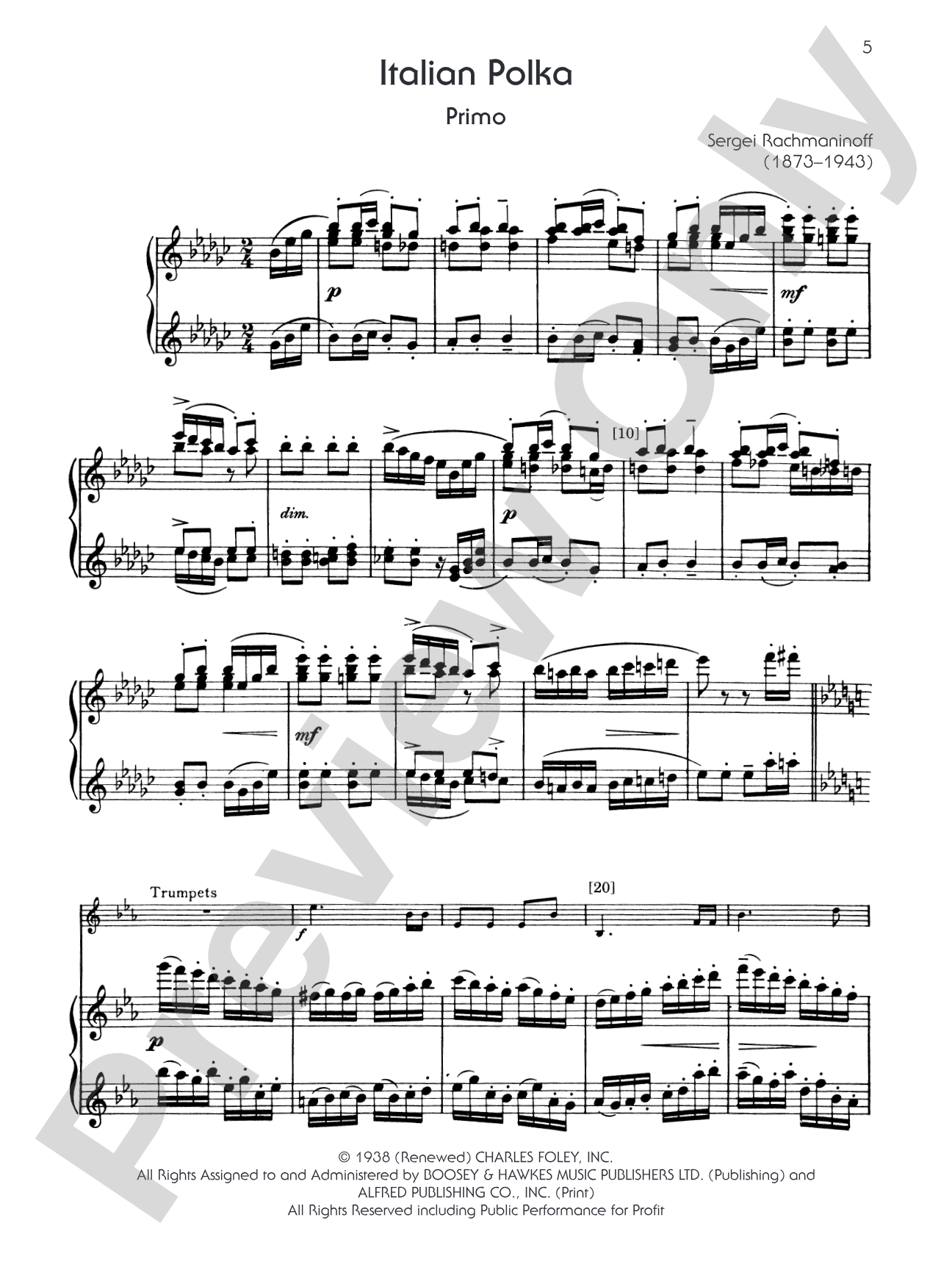
- Balance the melodic lines carefully in the Four-Hands pieces; Rachmaninoff often distributes the primary theme between primo and secondo, and equal partnership matters more than volume.
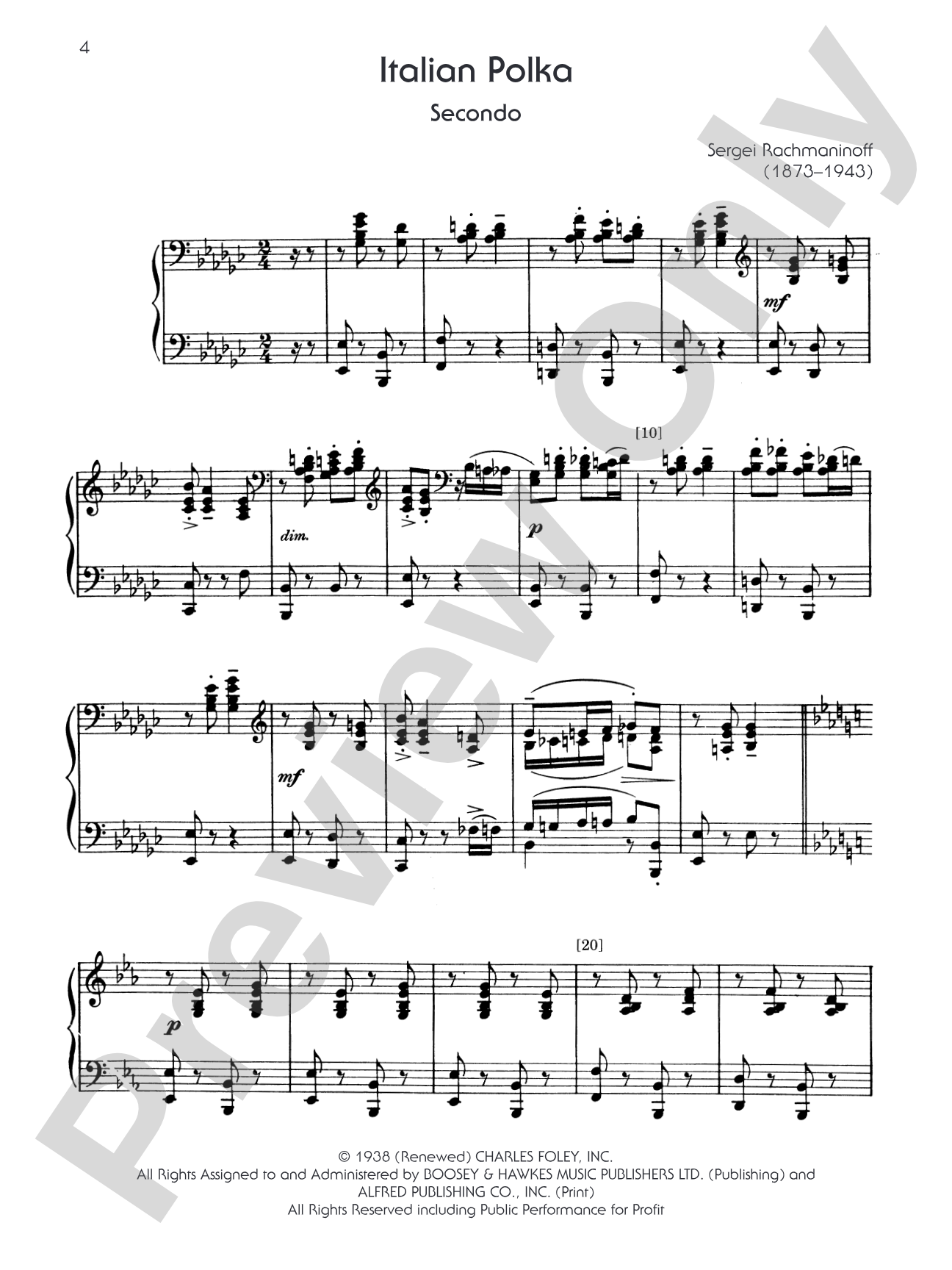
- Practice the Italian Polka with attention to rhythmic precision. The dance character can dissolve if the accompanying figures lose their snap.
- In the Six-Hands works, establish a clear rehearsal plan for how the three voices relate to one another. Record yourselves regularly to hear what blend actually emerges.
- The Romance calls for sustained legato and careful control of rubato. Resist the impulse to rush; let the harmonic language breathe.
How to use it
Consider pairing the Italian Polka and the Op. 11 duets as a suite within a larger recital, allowing the audience to hear how Rachmaninoff's voice evolves across these shorter forms. The Six-Hands works make striking chamber music program entries when you have intermediate students ready for modest ensemble responsibilities. This edition also fits naturally into a Rachmaninoff-focused concert or into a "Piano Works Across the Century" programming approach.
Skills your students will build
- Coordinating independent melodic lines as an ensemble
- Reading and executing Rachmaninoff's harmonic language
- Managing rubato and expressive timing in a duet context
- Balancing multiple voices across the keyboard without one hand overwhelming another
- Sustaining lyrical phrasing across longer musical lines