
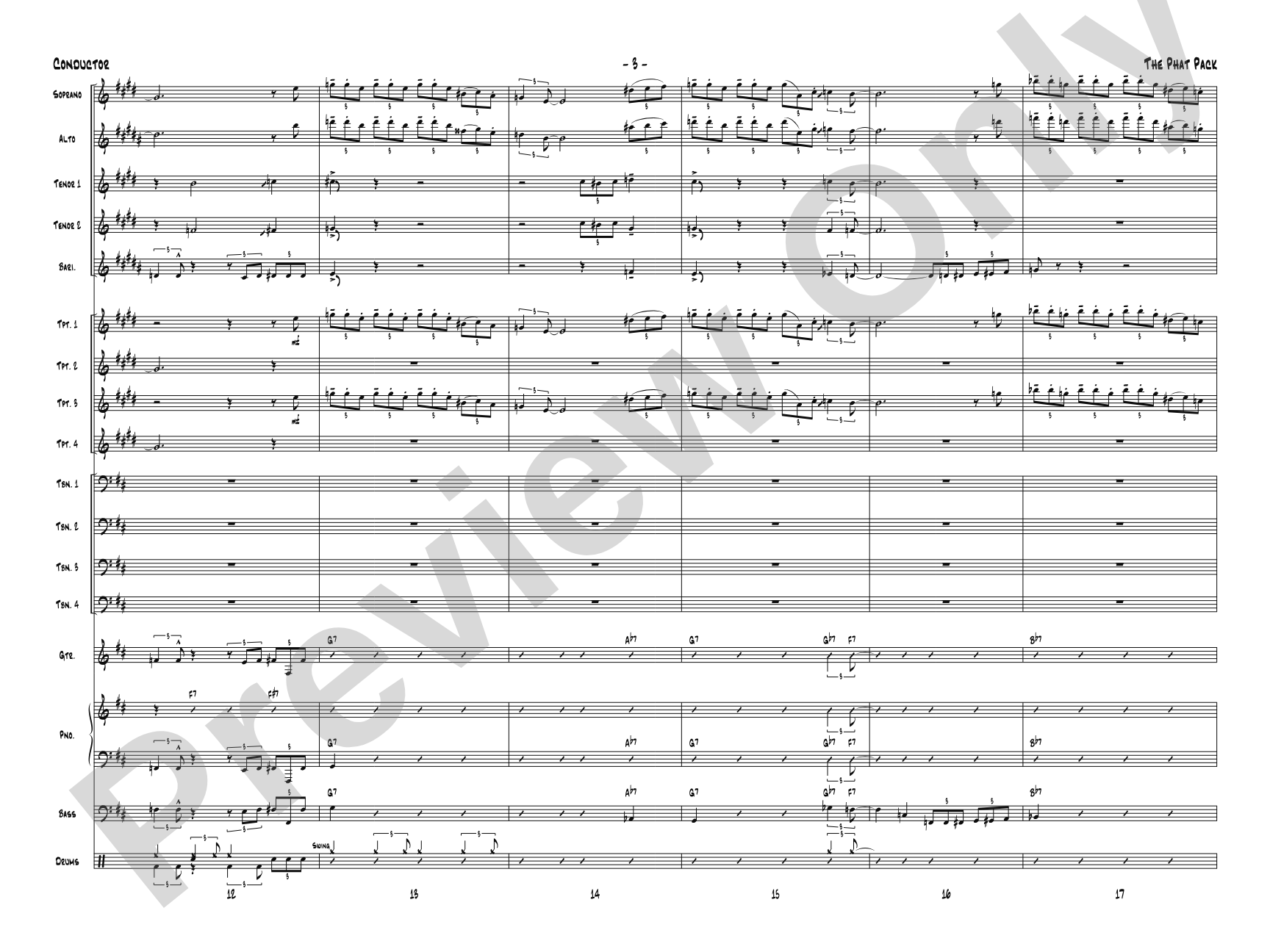
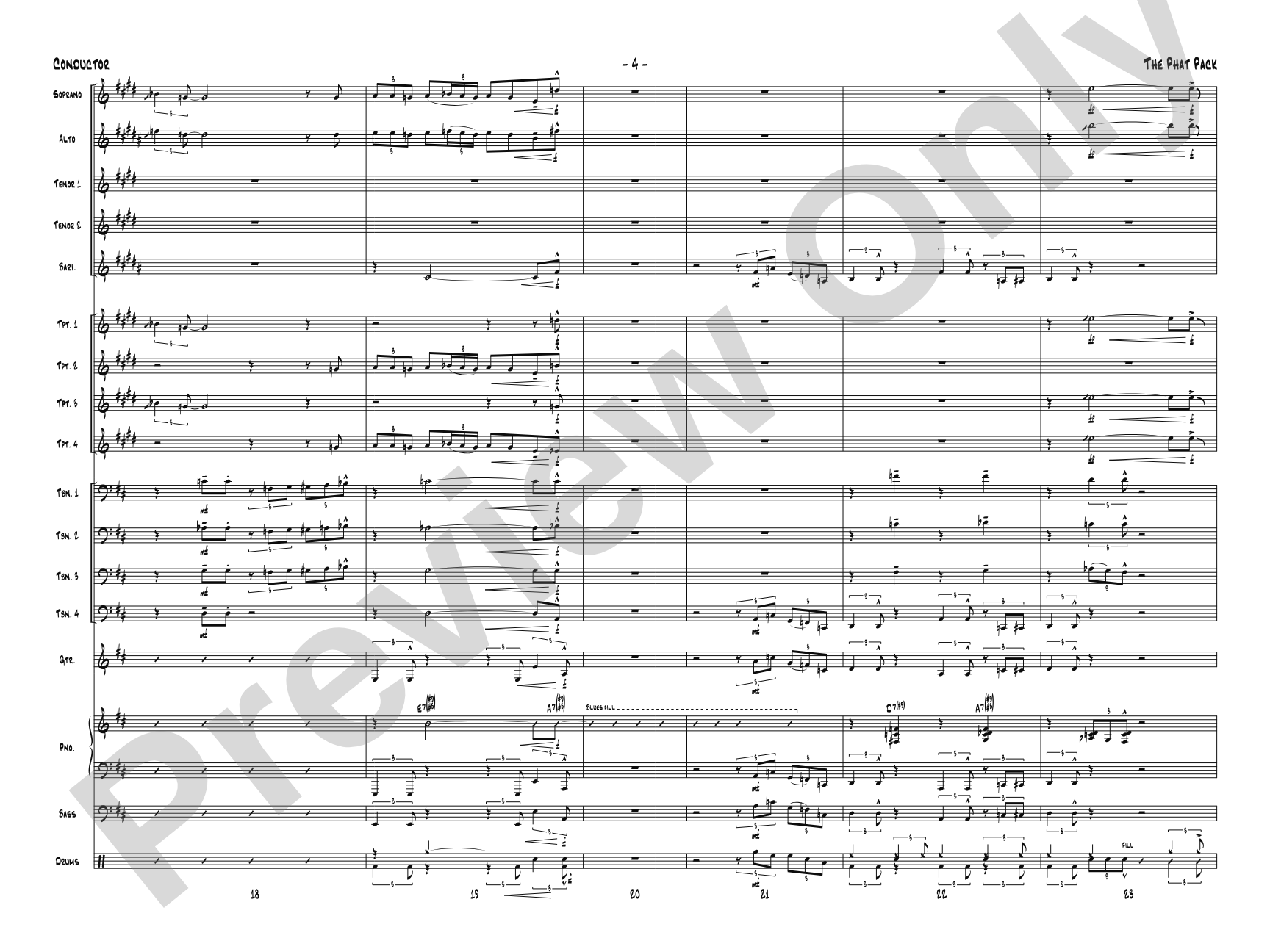
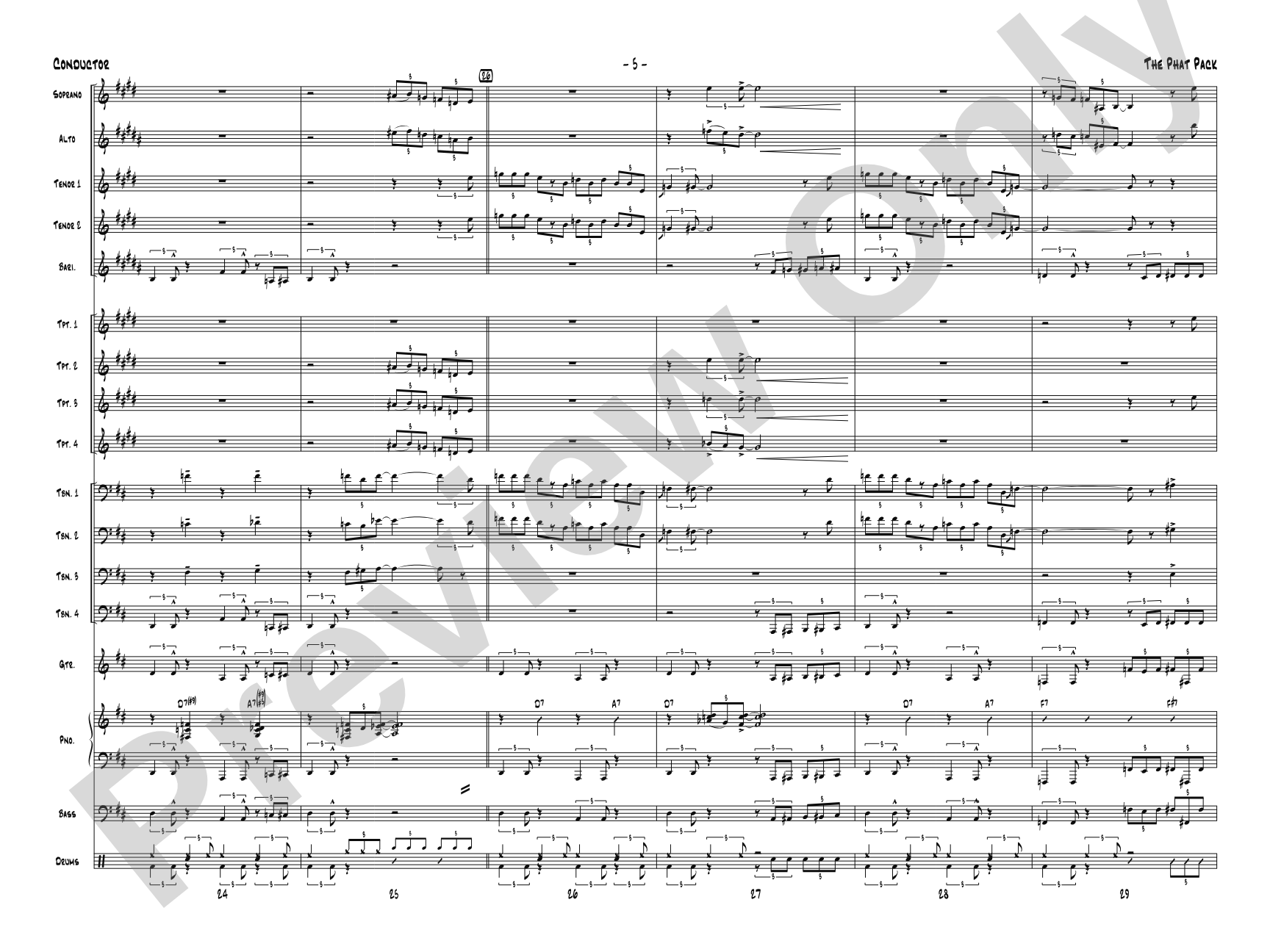
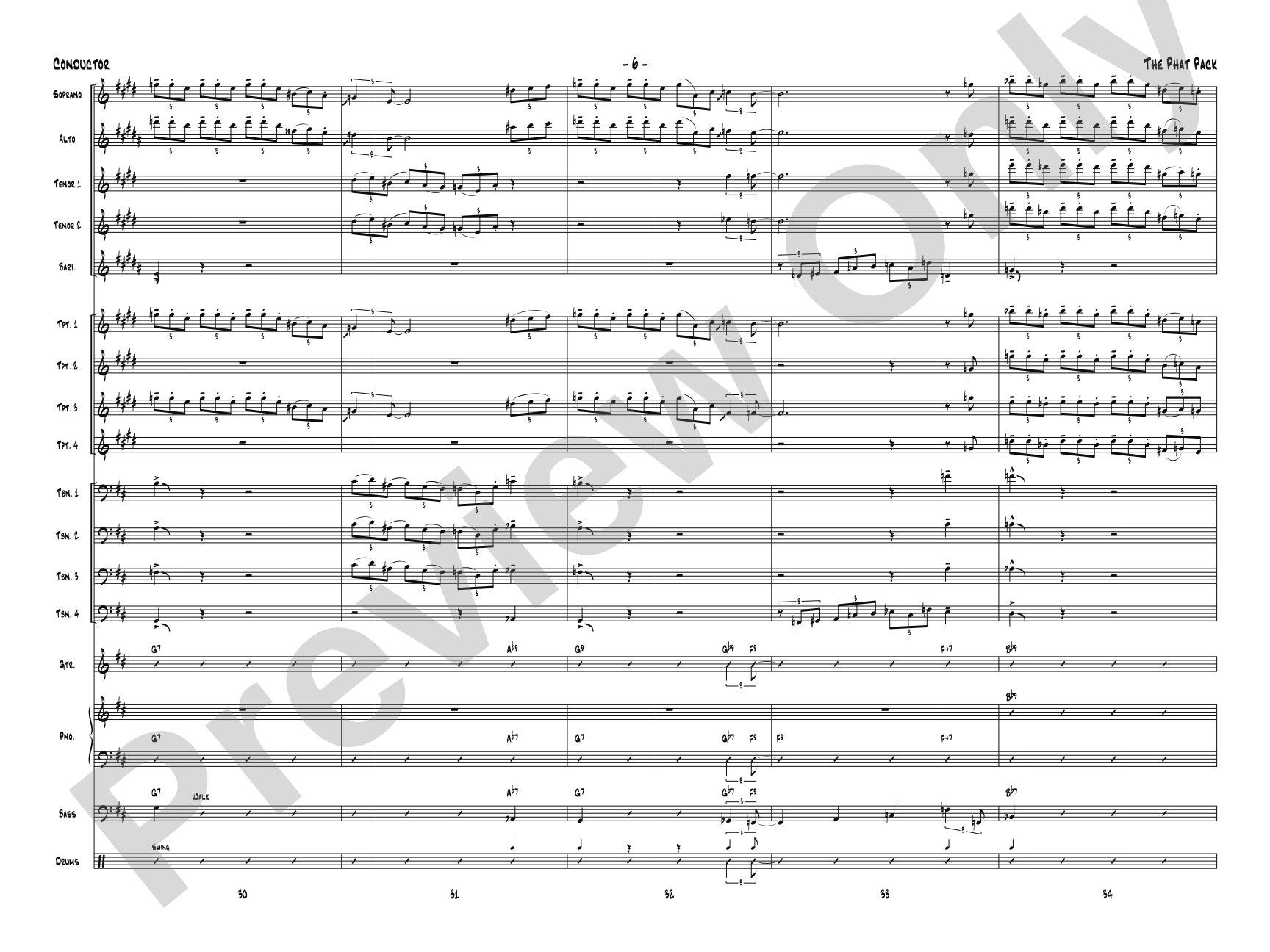
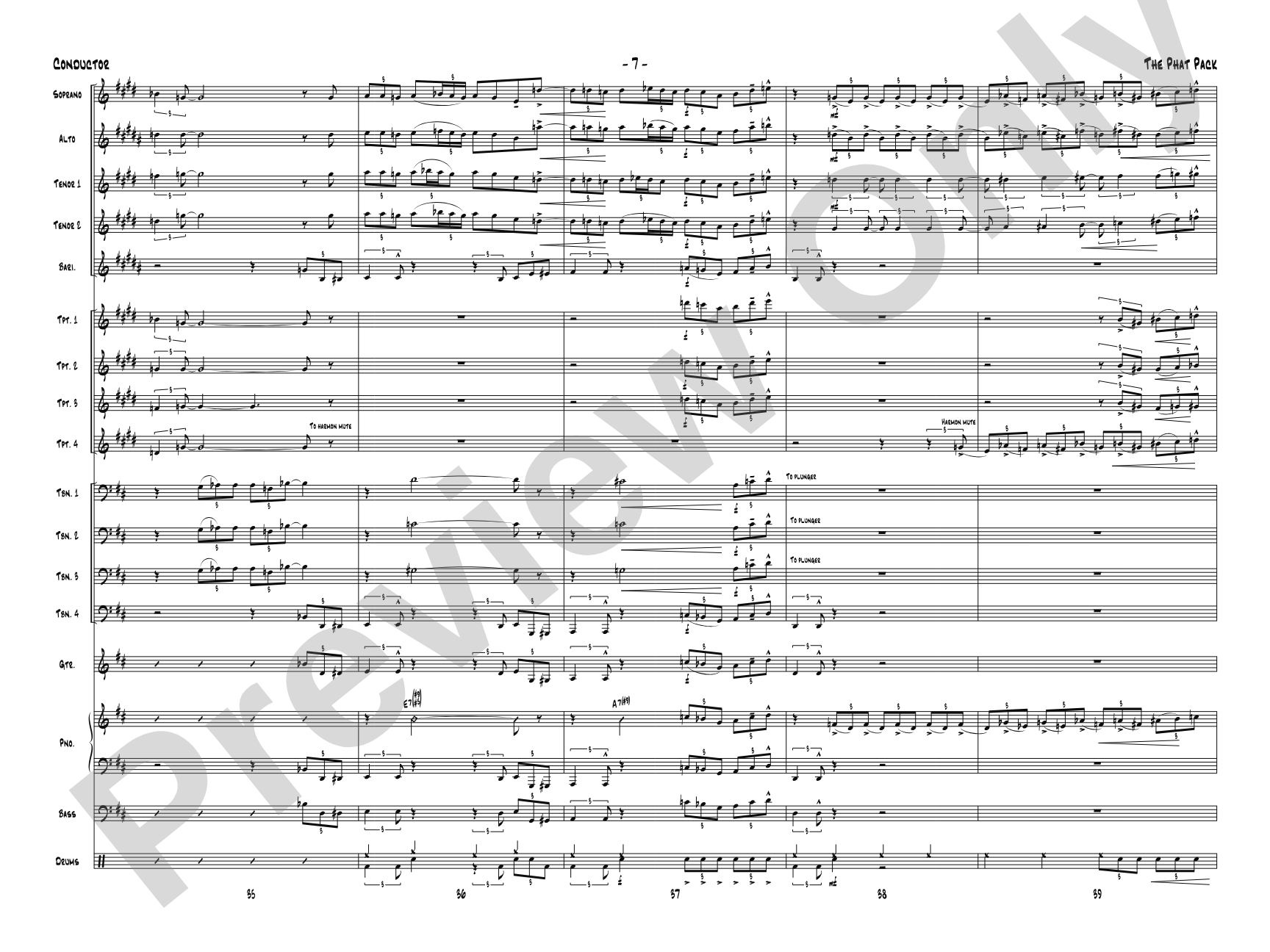
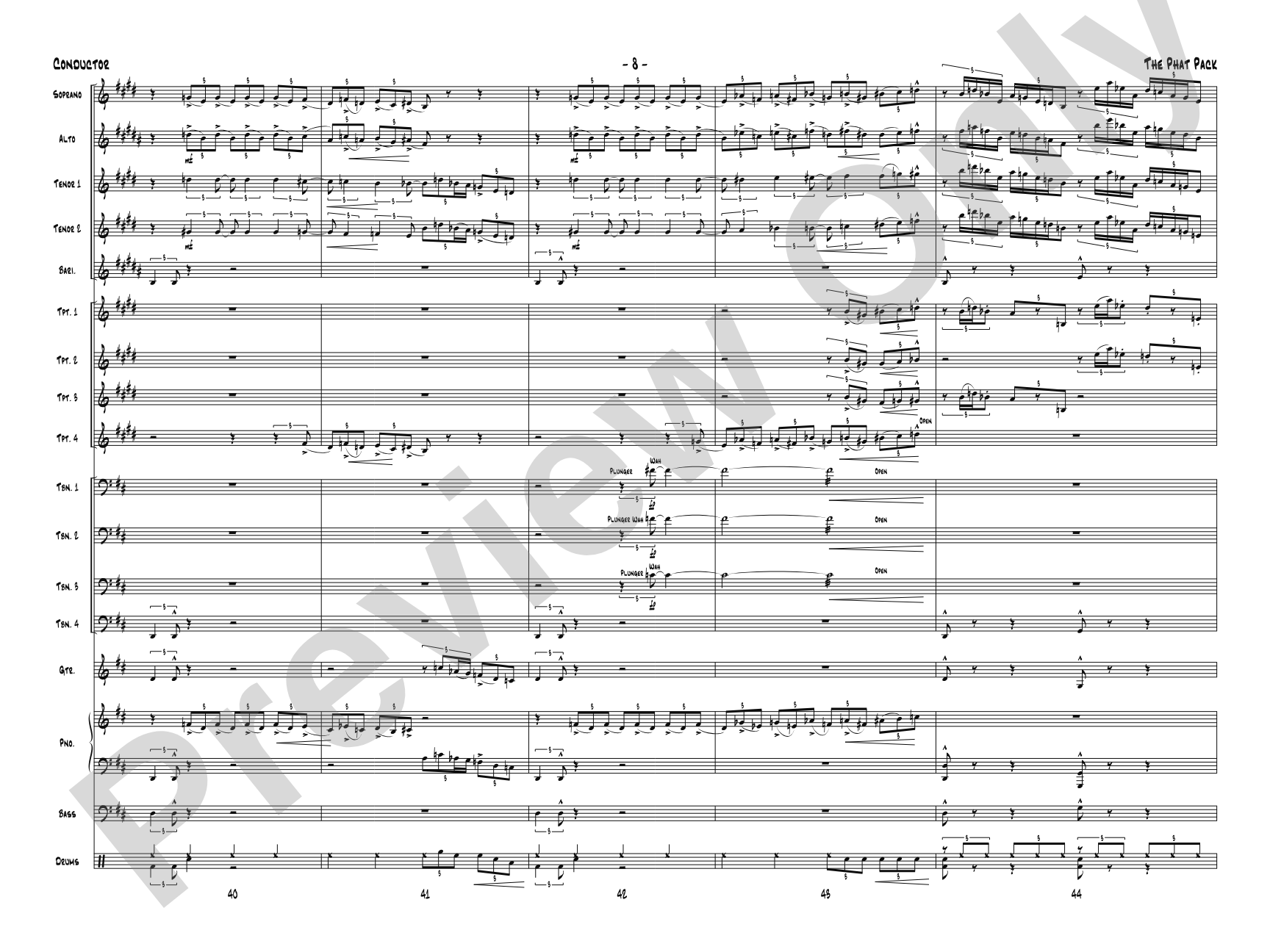
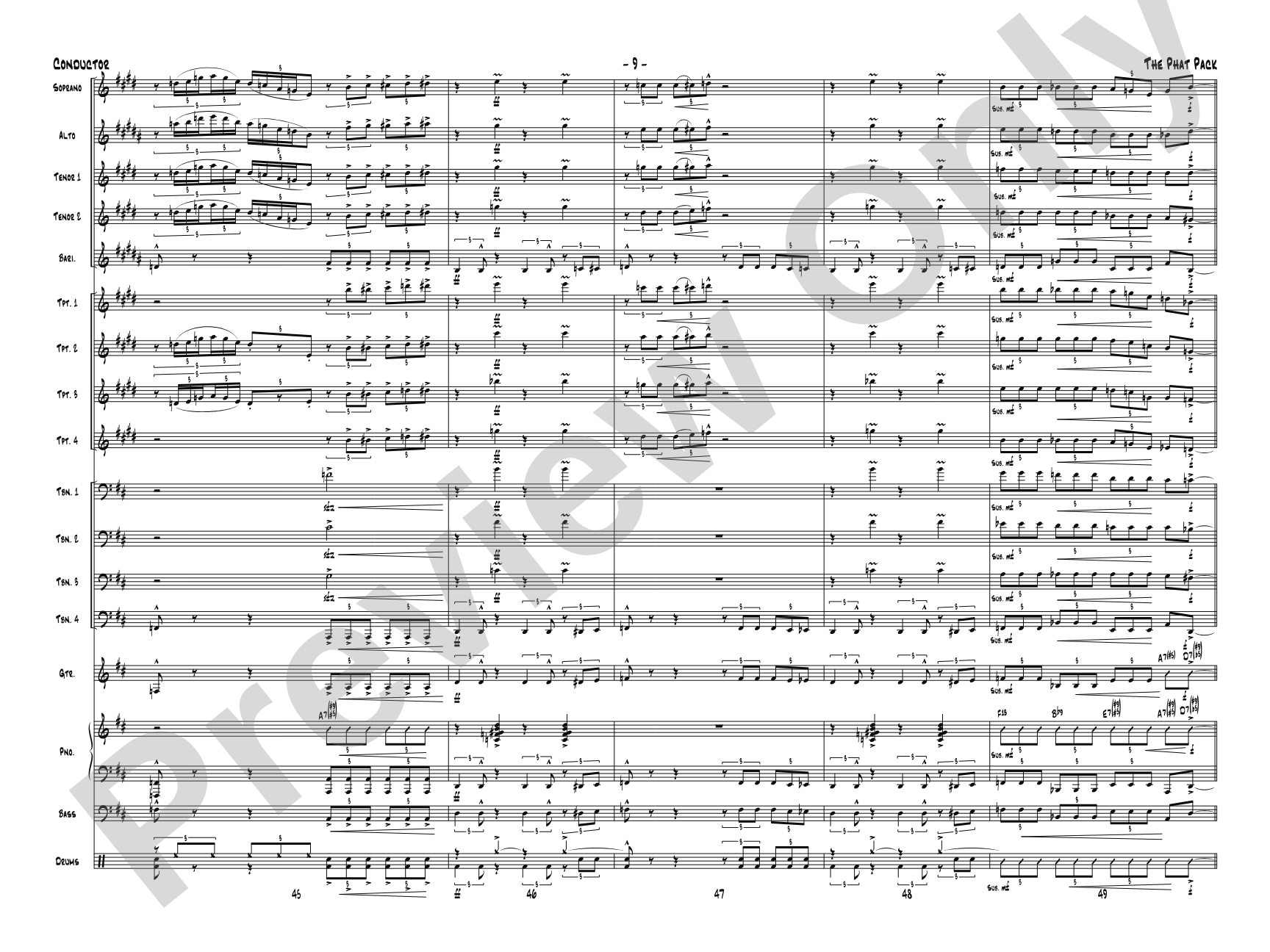
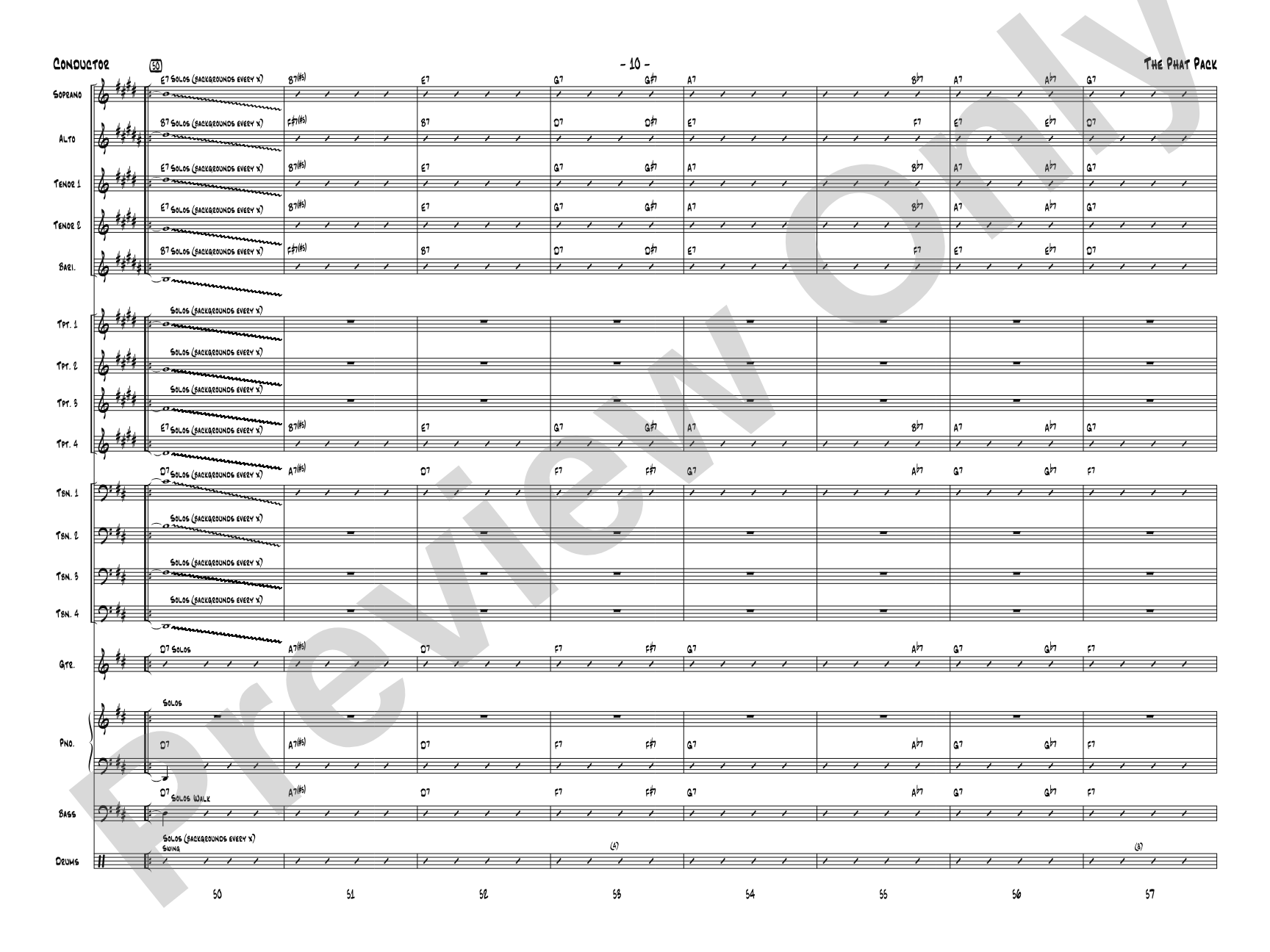
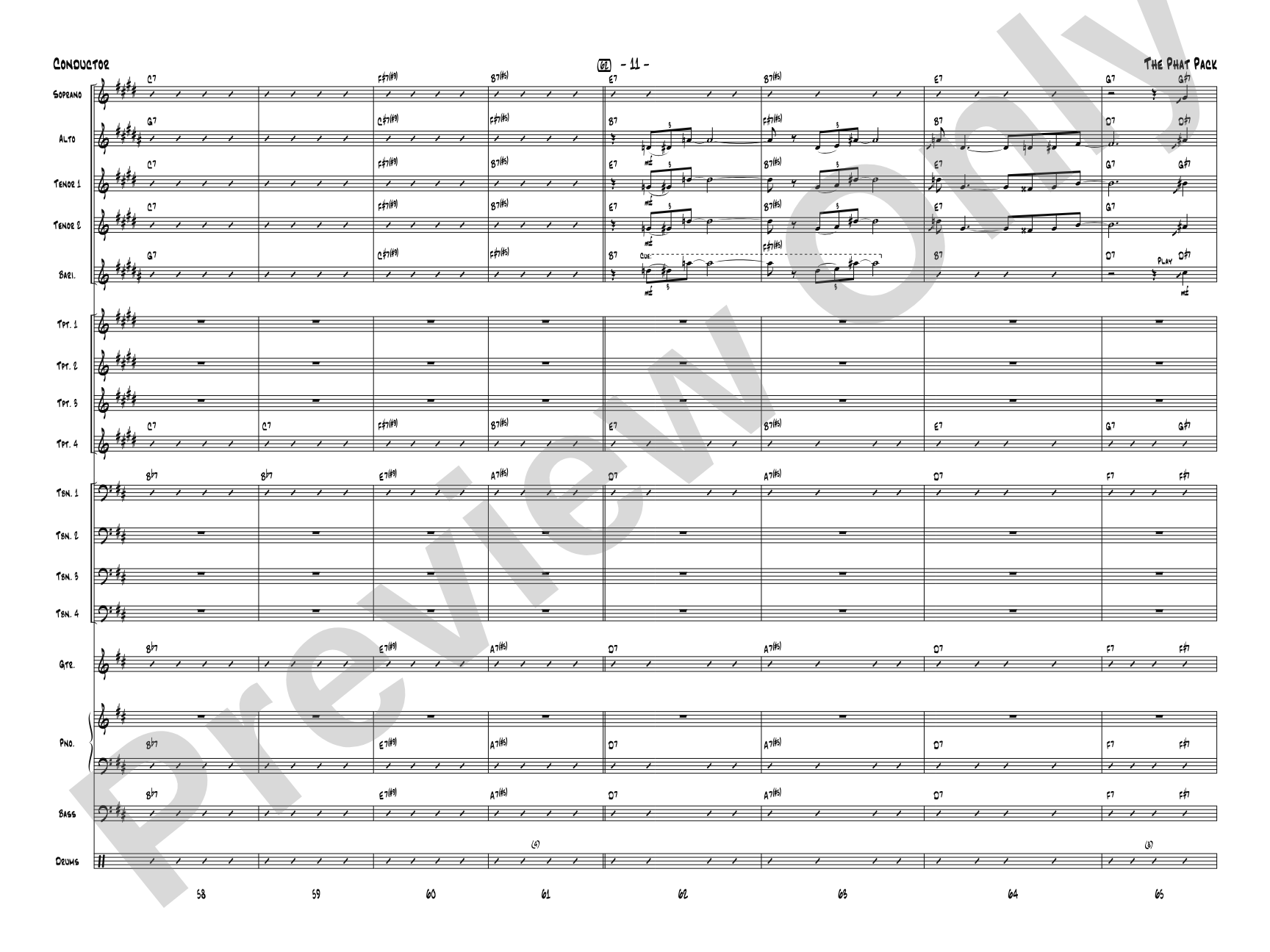
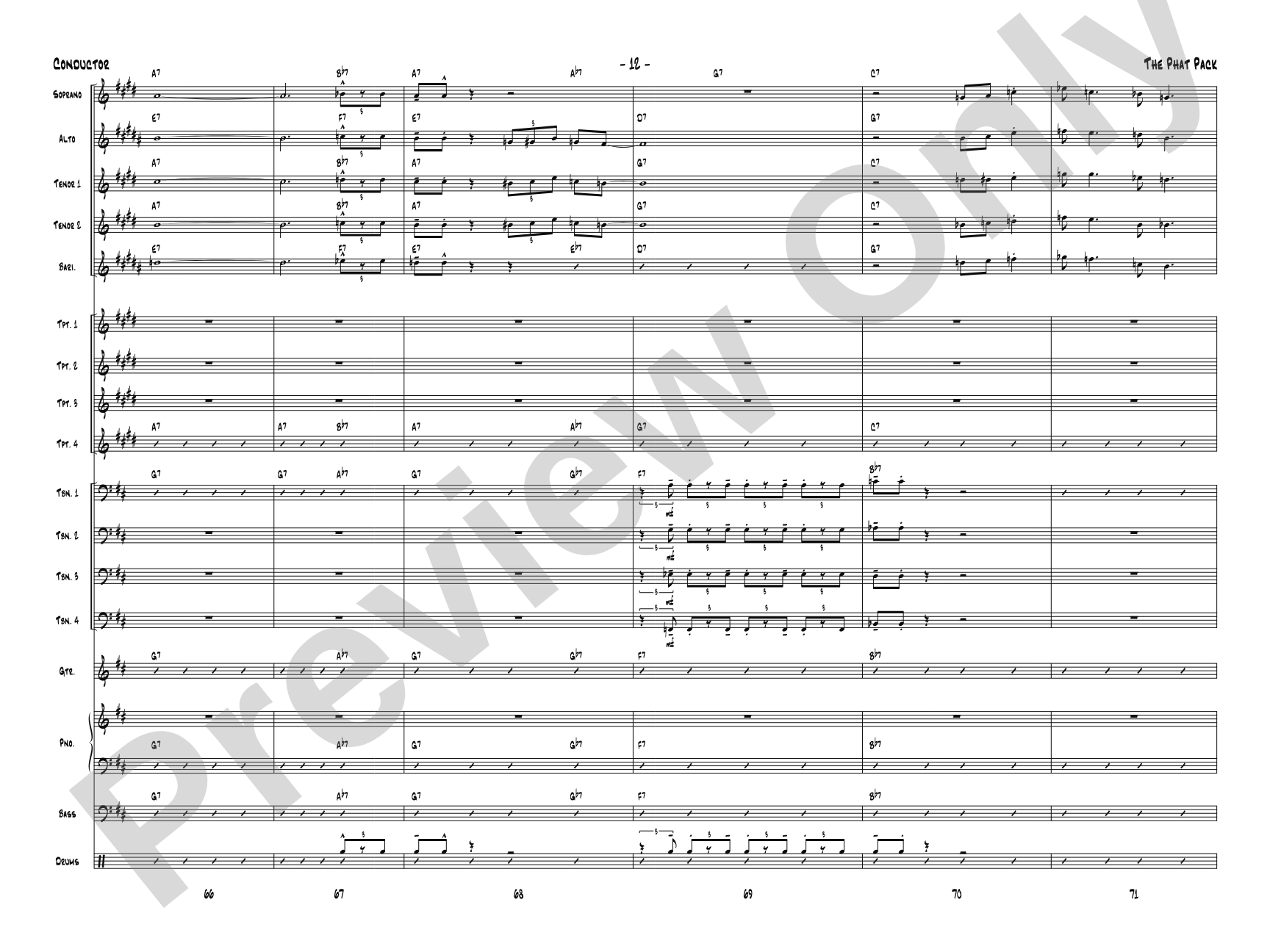
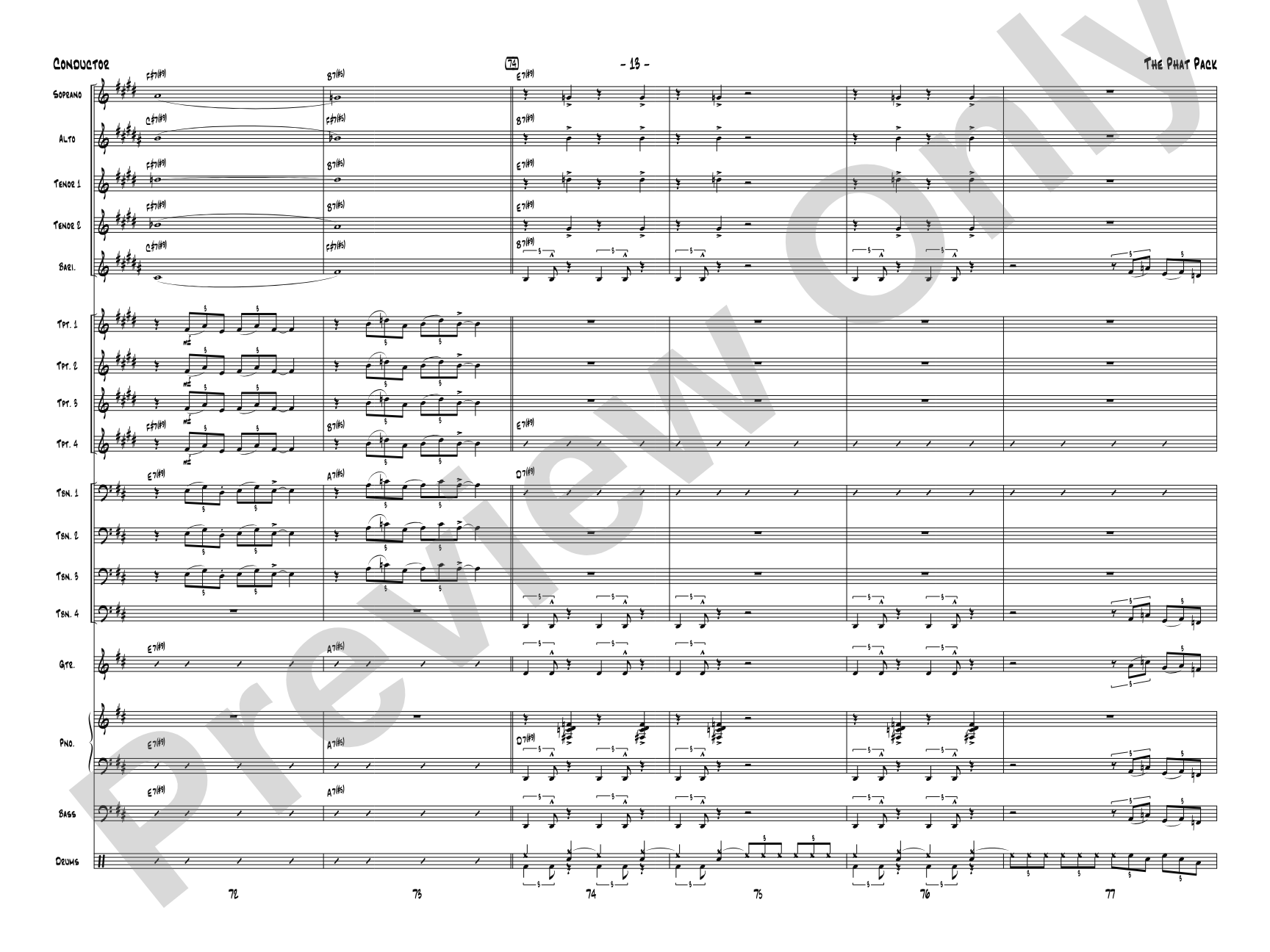
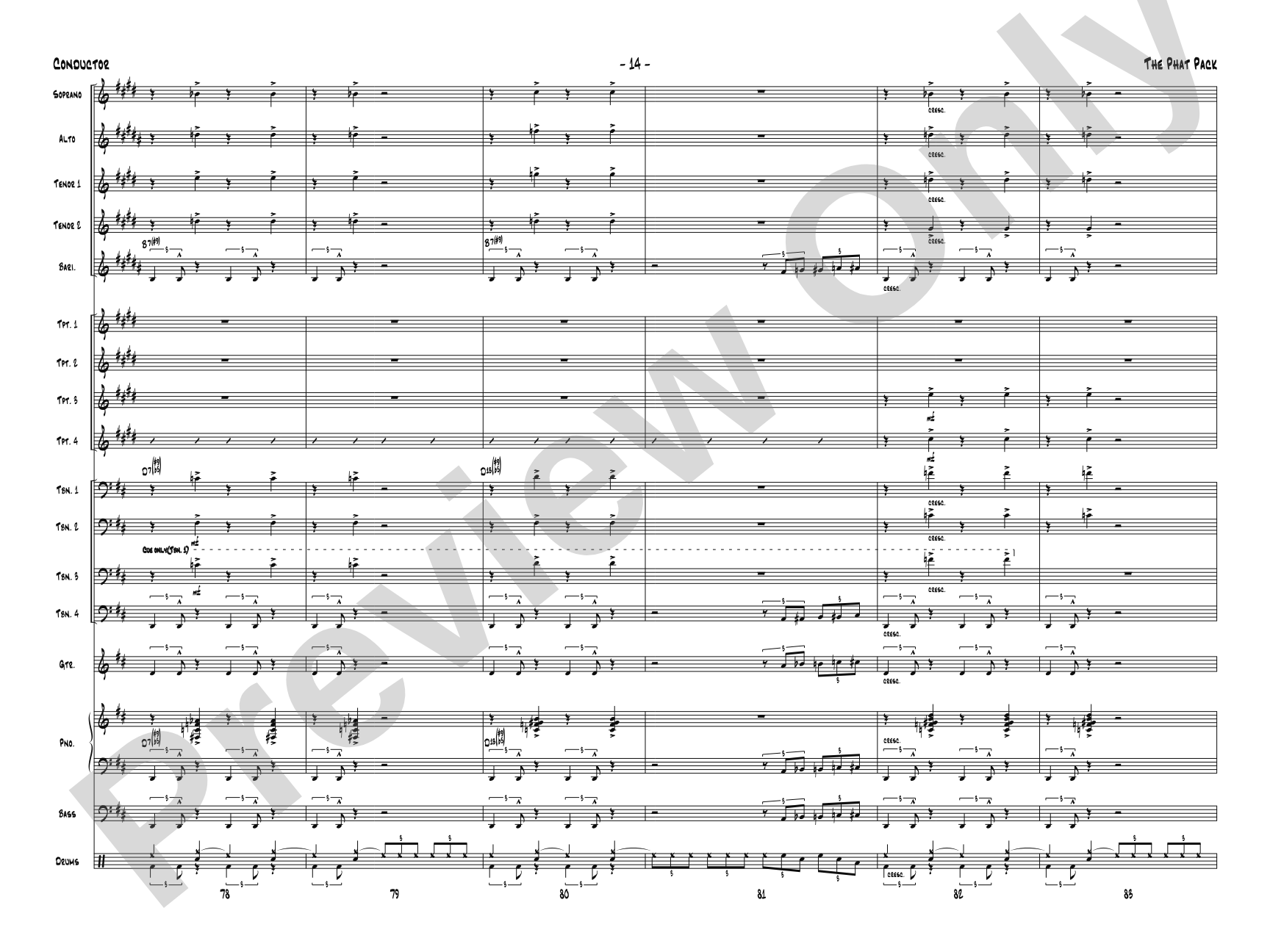
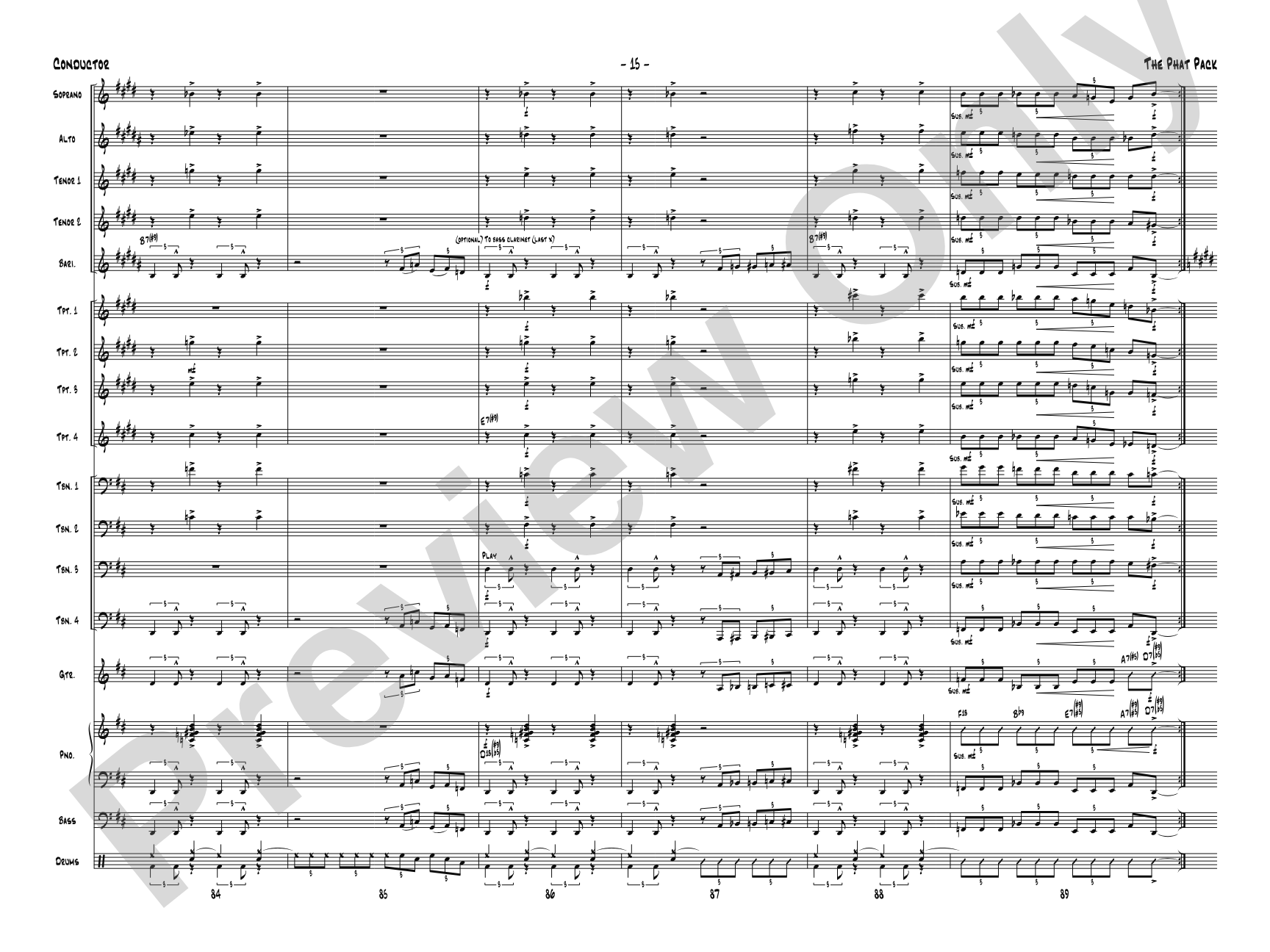
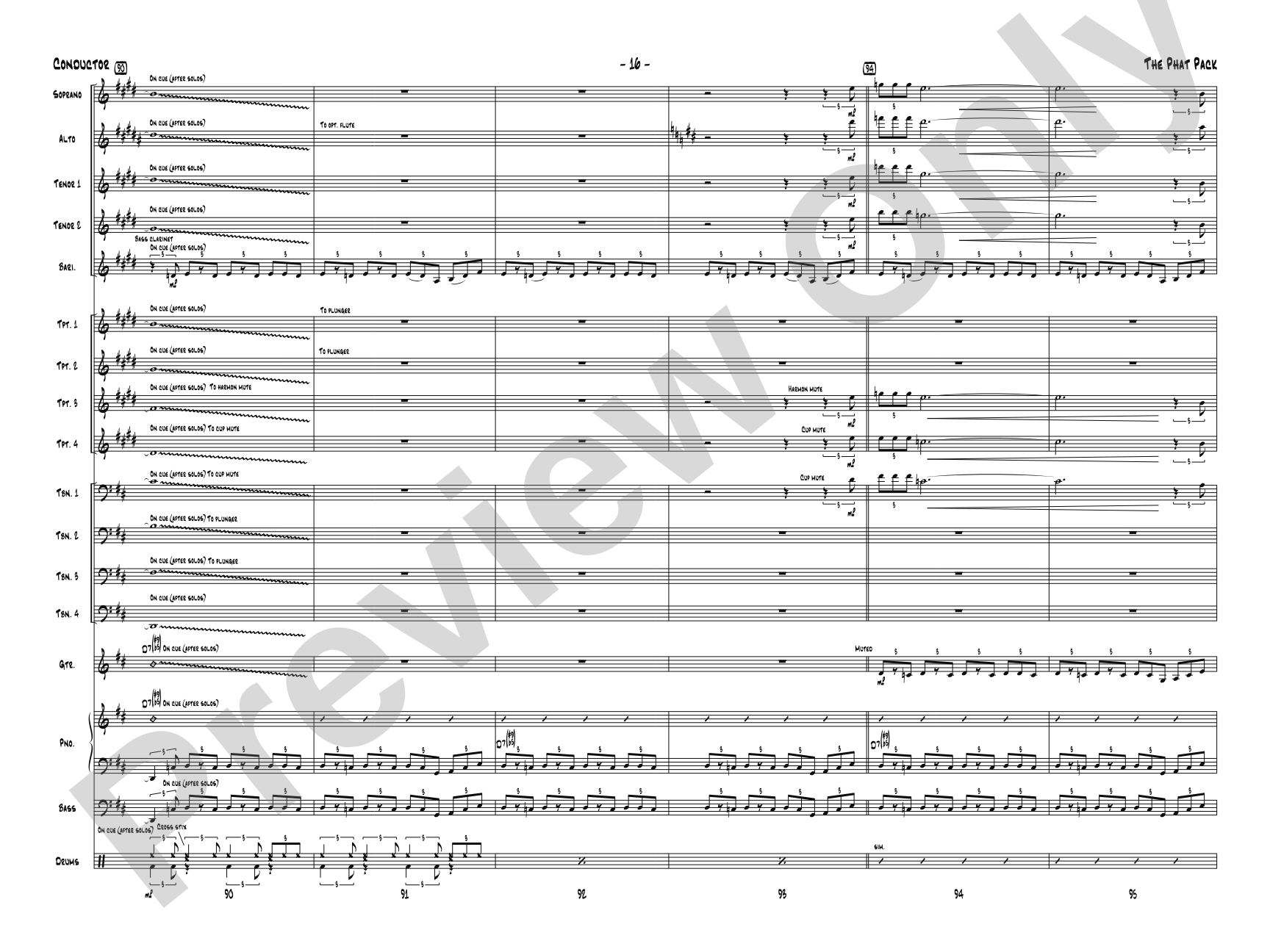
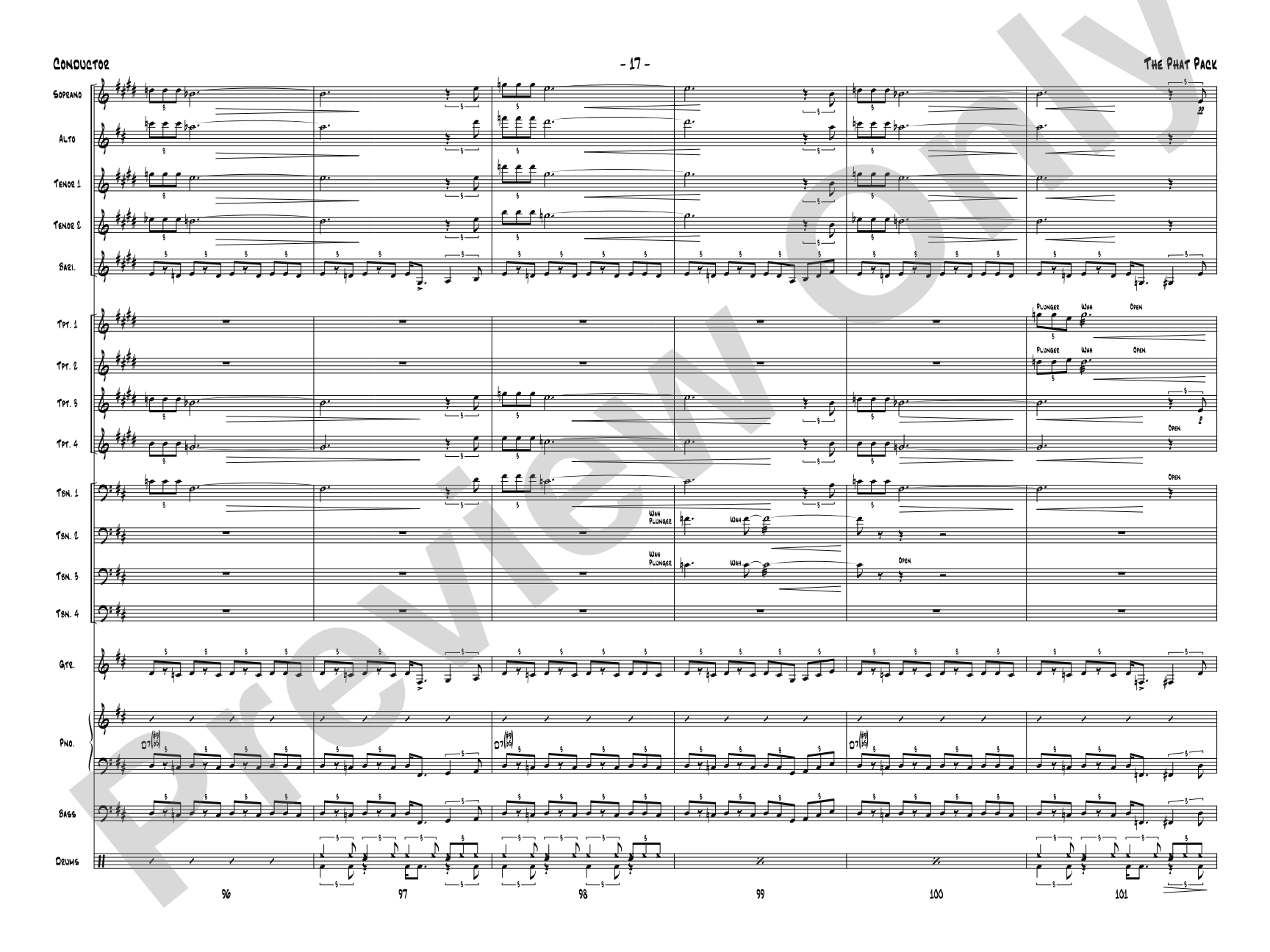
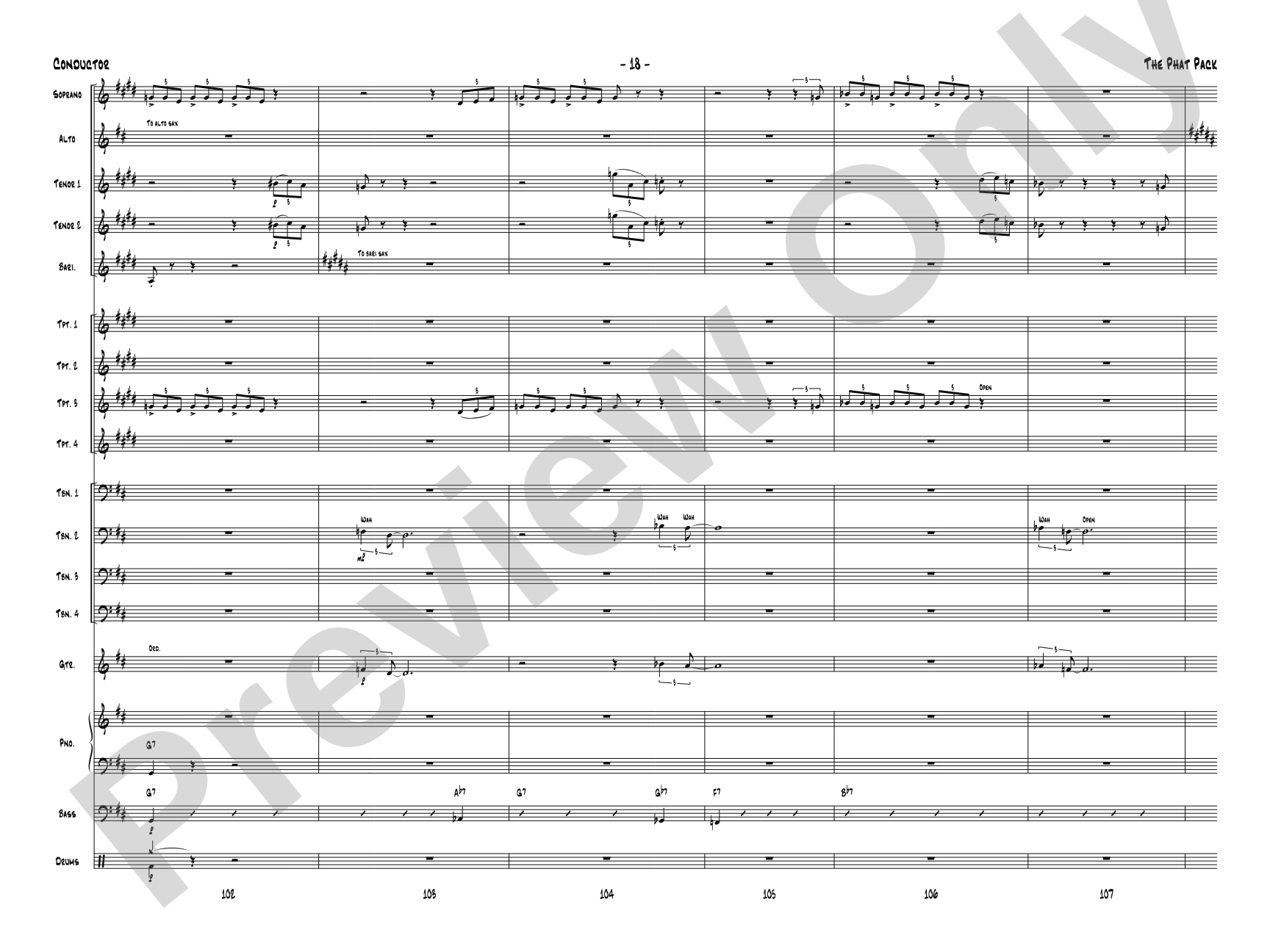
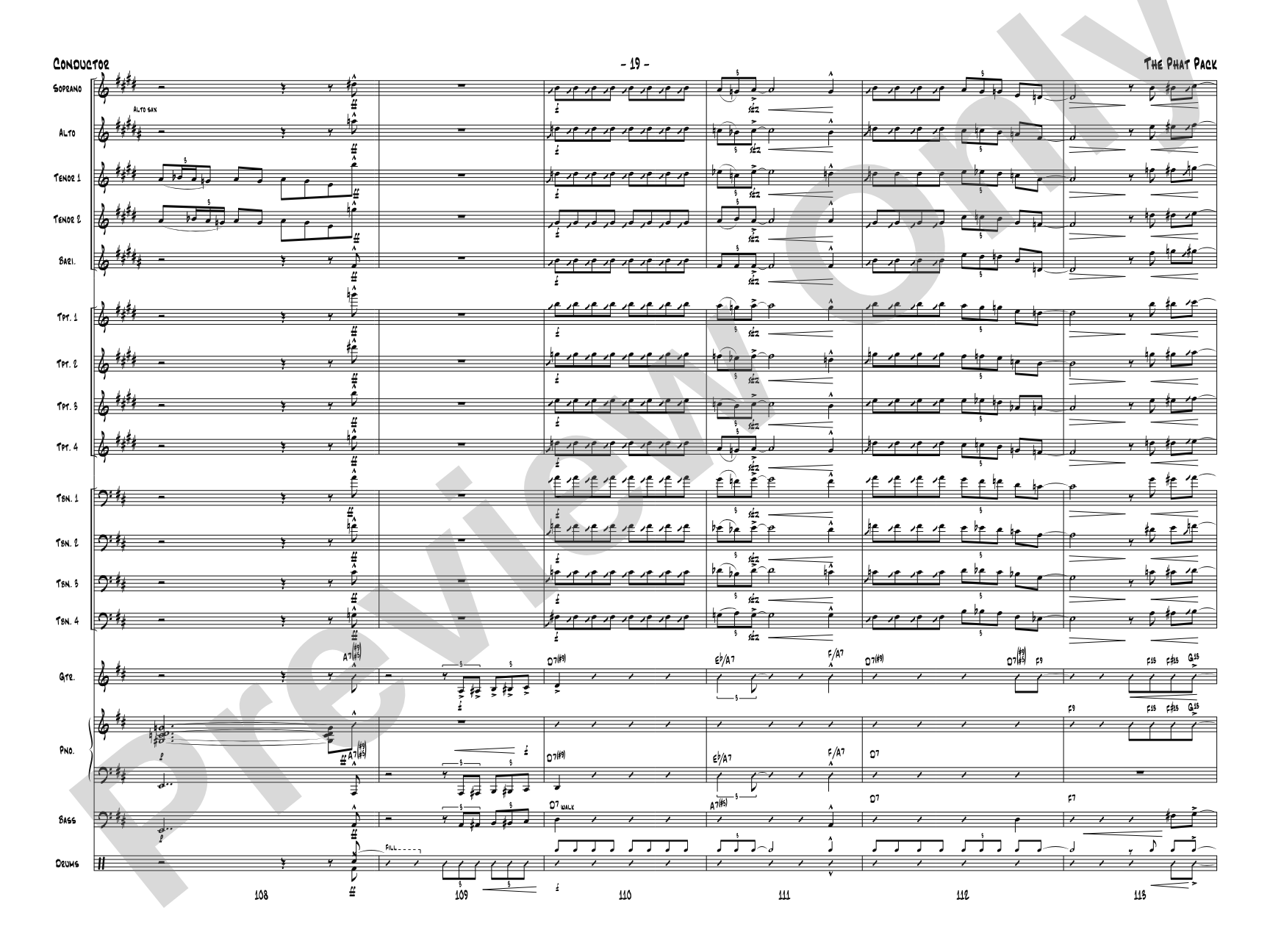
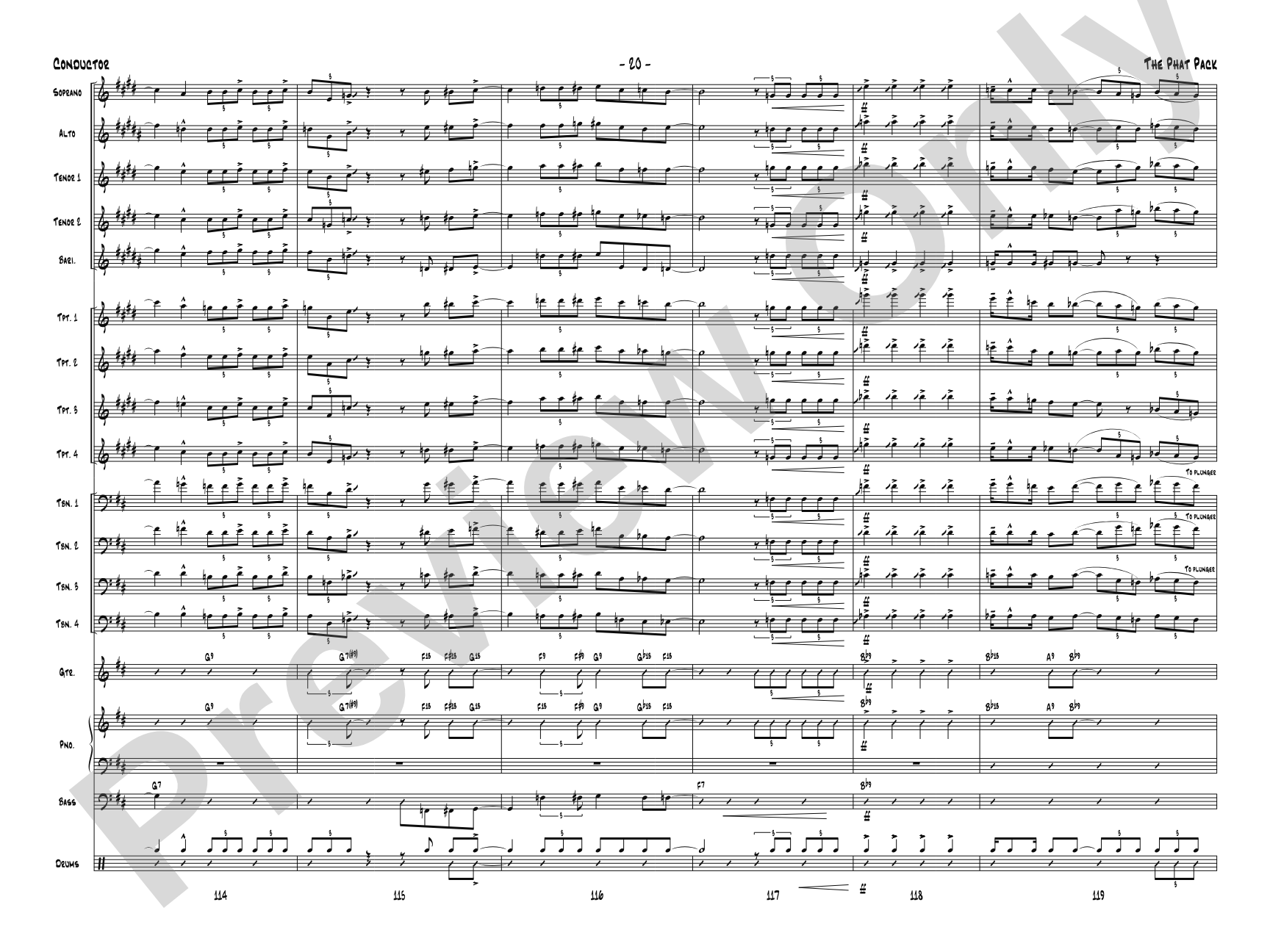
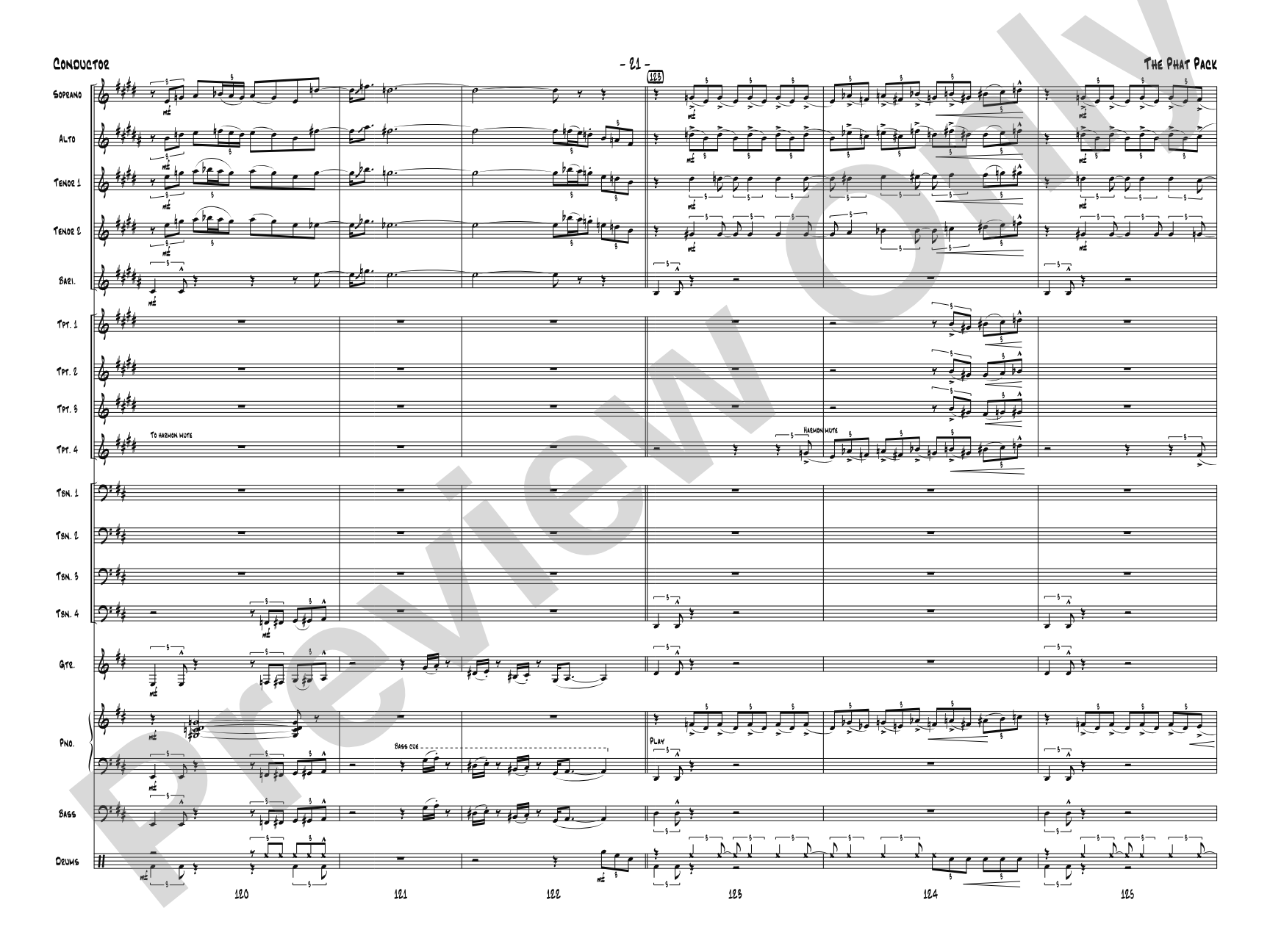
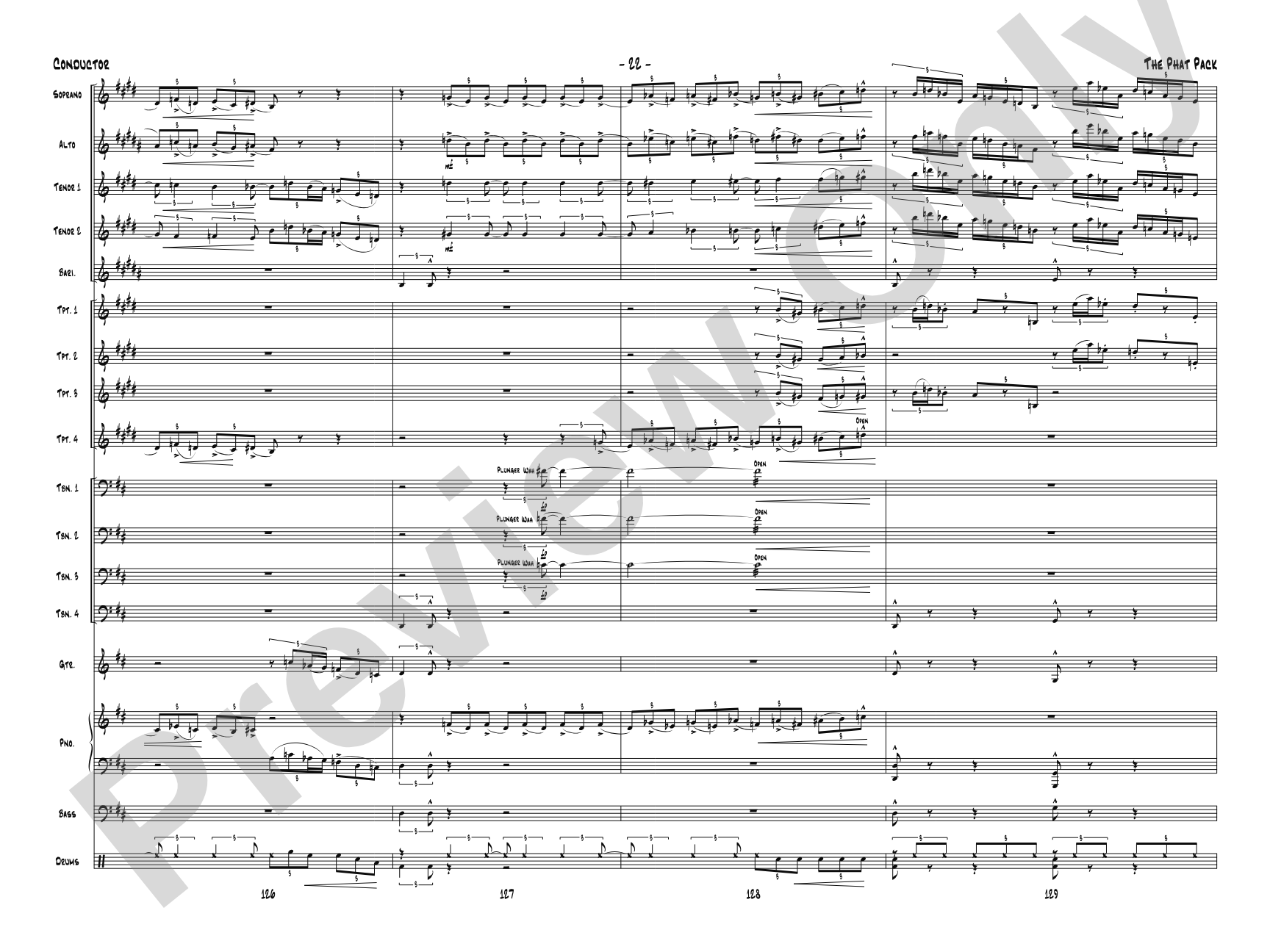

The Phat Pack: Jazz Ensemble Conductor Score & Parts
By Gordon Goodwin
Item: 00-PK-0006875

$65.00
Pickup currently not available
Buy Extra Parts (Digital PDF Download)
| Product | Price | Quantity |
|---|---|---|
| The Phat Pack: Score | $11.00 | |
| The Phat Pack: B-flat Soprano Saxophone | $3.00 | |
| The Phat Pack: E-flat Alto Saxophone | $3.00 | |
| The Phat Pack: B-flat Tenor Saxophone | $3.00 | |
| The Phat Pack: 2nd B-flat Tenor Saxophone | $3.00 | |
| The Phat Pack: E-flat Baritone Saxophone | $3.00 | |
| The Phat Pack: 1st B-flat Trumpet | $3.00 | |
| The Phat Pack: 2nd B-flat Trumpet | $3.00 | |
| The Phat Pack: 3rd B-flat Trumpet | $3.00 | |
| The Phat Pack: 4th B-flat Trumpet | $3.00 | |
| The Phat Pack: 1st Trombone | $3.00 | |
| The Phat Pack: 2nd Trombone | $3.00 | |
| The Phat Pack: 3rd Trombone | $3.00 | |
| The Phat Pack: Bass Trombone | $3.00 | |
| The Phat Pack: Guitar Chords | $3.00 | |
| The Phat Pack: Guitar | $3.00 | |
| The Phat Pack: Piano Accompaniment | $3.00 | |
| The Phat Pack: String Bass | $3.00 | |
| The Phat Pack: Drums | $3.00 |
Parts Added to Cart!
Related Items
The Phat Pack: Jazz Ensemble Conductor Score |
$11.00
|
View |
Description
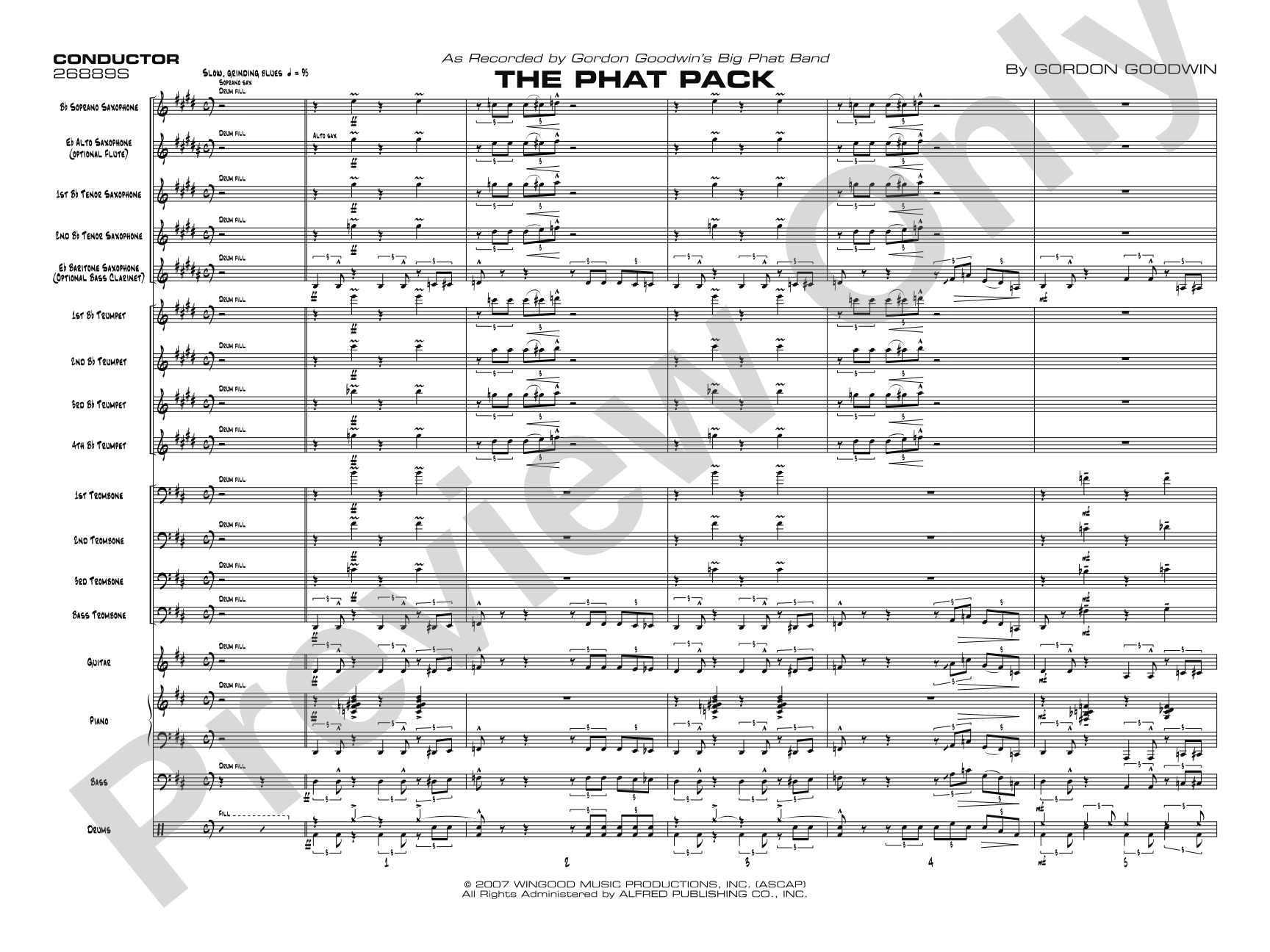
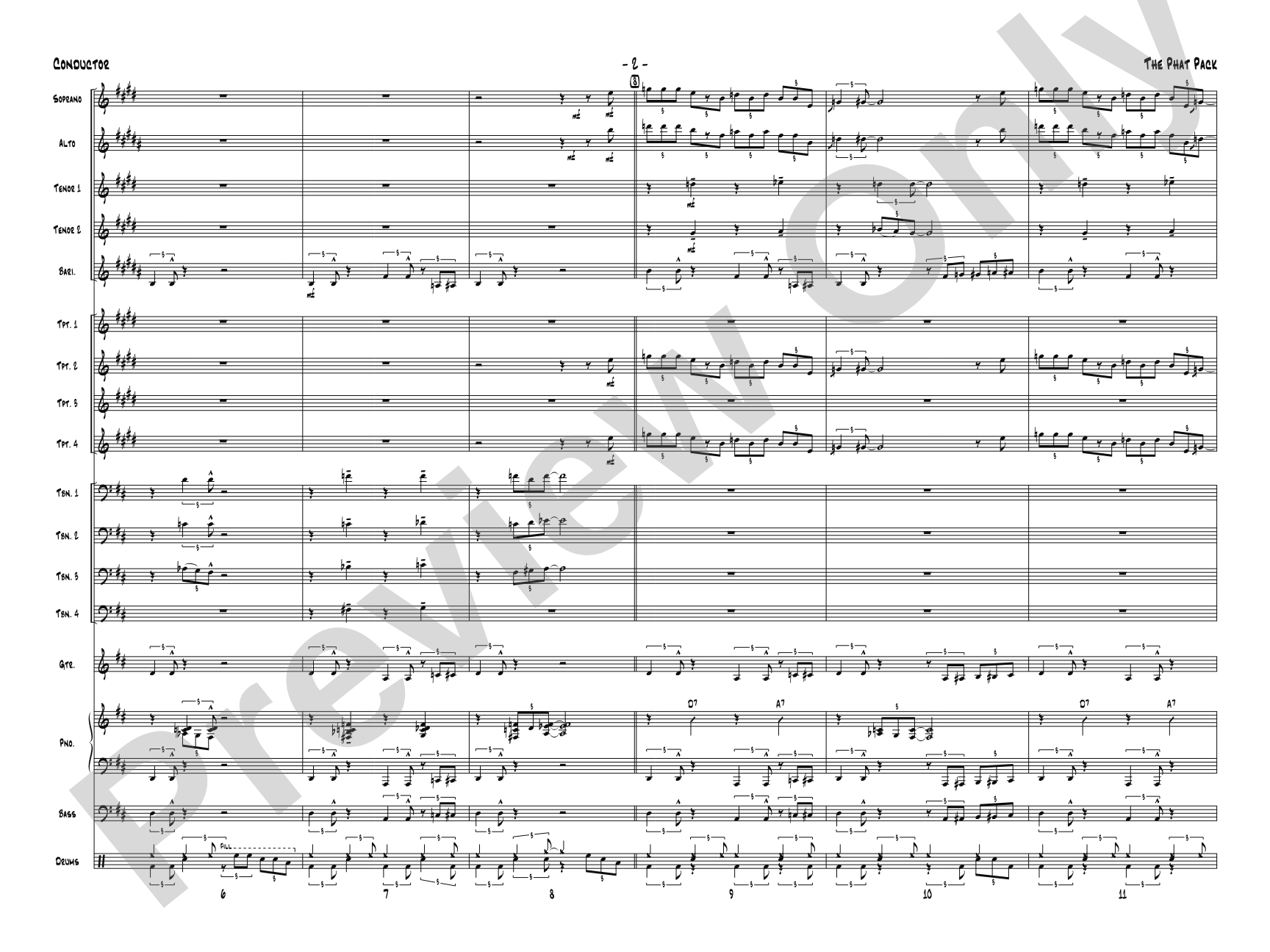
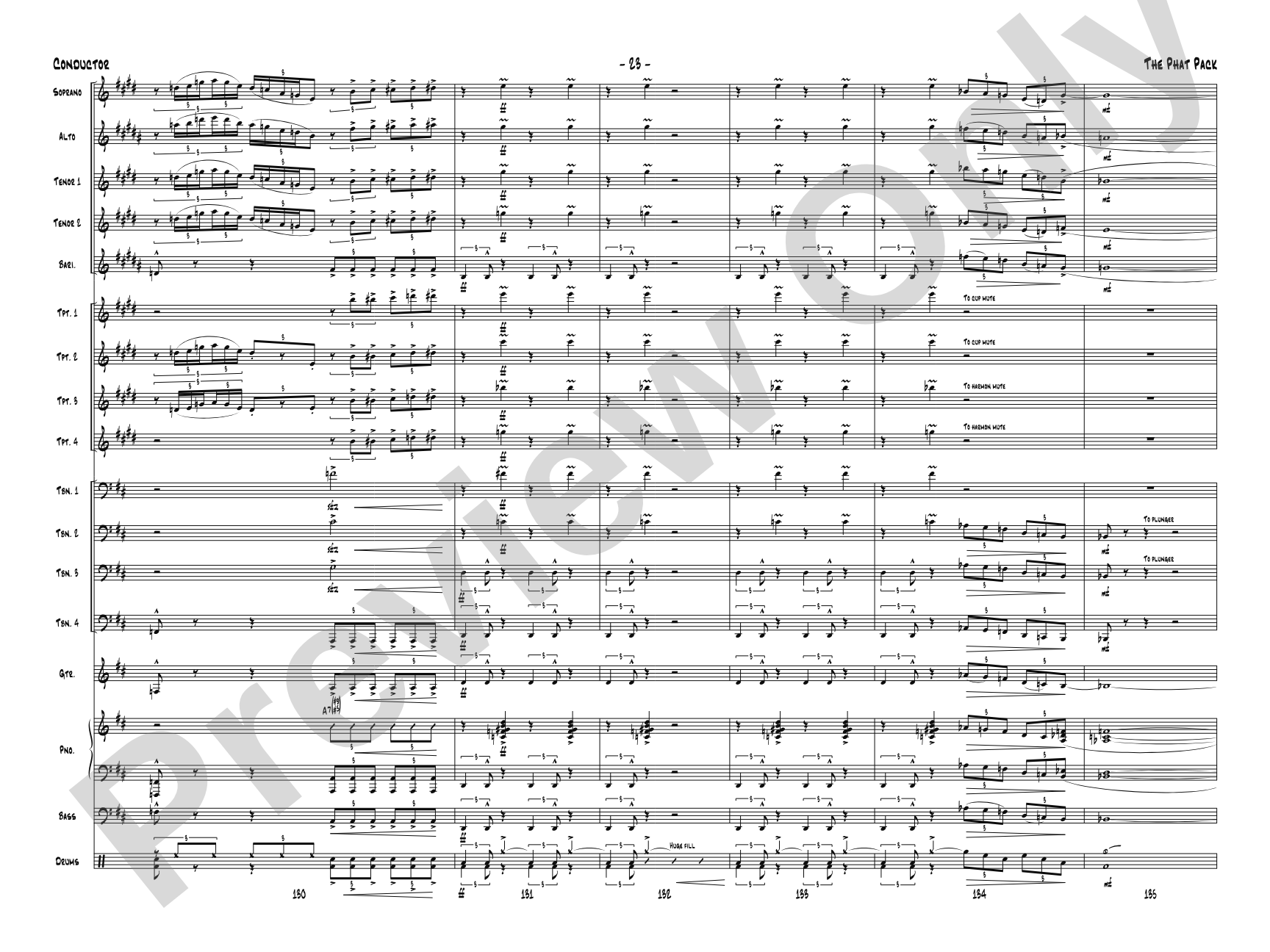
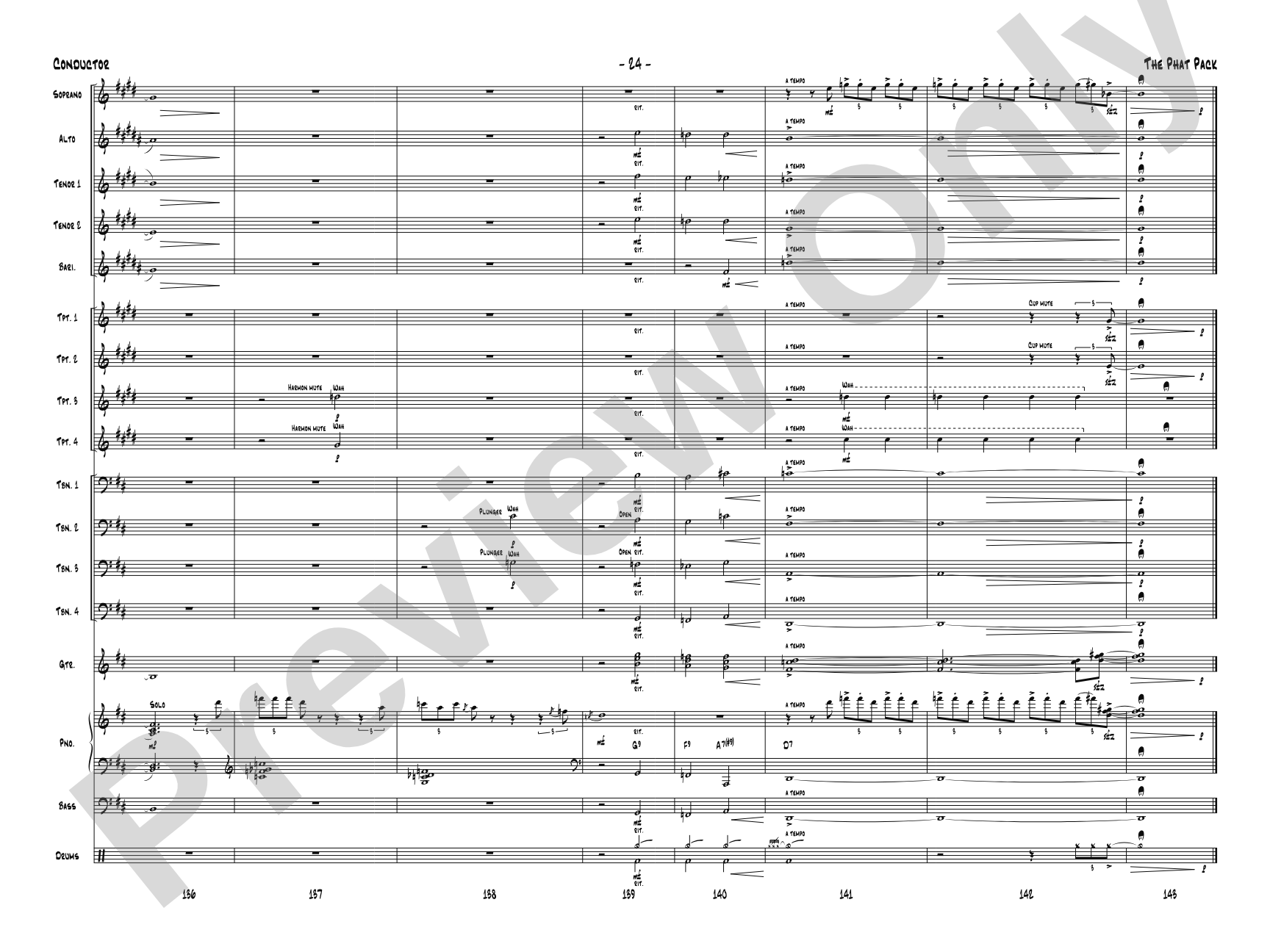
Slow and bluesy! The title chart as recorded on Gordon Goodwin's newest CD, The Phat Pack. Things to enjoy: it's kind of greasy, it's full of twists and turns, calls for brass plunger mutes and optional bass clarinet for bari sax, and the lead trumpet range goes up to written E with a few G's. There is solo space for all saxes, trumpet 4 and trombone 1. Show stopping! This title is available in MakeMusic Cloud.


Don't just read it, hear it, play along with it, and watch your students grow with it. In MakeMusic Cloud, The Phat Pack: Jazz Ensemble Conductor Score & Parts comes alive with professional accompaniment, adjustable tempo, and built-in practice tools that turn solo practice into real progress.
Open in the Player
Jump straight in and assign it today.
Start Your Free Trial
Open this title and explore the full library in minutes.
Sample Audio
1
Audio File
--:--
0:00
0:00
Sample Video
No sample videos found.
Additional Details
Series:
Gordon Goodwin Series
Publisher:
Alfred Music
Page Count:
84
SKU:
00-PK-0006875
More about this title
About the Composer: Gordon Goodwin

Gordon Goodwin began composing full orchestrations at age five, writing complete pieces rather than fragments. By thirteen, he had already written his first big band chart, Hang Loose, a feat that established him as a prodigy in the jazz world. His work in film and television composition has earned three Emmy Awards and multiple Grammy nominations, with orchestrations heard in Bad Boys II, Con Air, Gone in 60 Seconds, Star Trek: Nemesis, and many others.
Beyond Hollywood, Goodwin has written for an extraordinary roster of vocalists including Christina Aguilera, Ray Charles, and Sarah Vaughn, while conducting major symphony orchestras across North America and Europe. Since founding Gordon Goodwin's Big Phat Band in 2000, he has positioned himself as one of jazz's most prolific and celebrated voices, with Grammy-nominated recordings that continue to set the standard for contemporary big band writing.
Why we love this
Goodwin's writing here is greasy, inventive, and built for showmanship. The combination of bluesy feel, unexpected twists, plunger mutes, and extensive solo space for nearly every section means your ensemble gets to shine individually while locked into a groovy collective sound. It's the kind of title that keeps audiences engaged and gives your players real ownership of the music.
What to expect
Slow and sultry with a sneaky undercurrent of funk. The piece breathes with a bluesy swagger, full of unexpected harmonic turns and instrumental color shifts that keep both players and listeners slightly off balance, in the best way. It's slinky, grounded, and unapologetically fun.
Who it's for
Intermediate to advanced jazz ensembles ready to tackle sophisticated harmonies, extended solos, and real ensemble blend. Directors seeking a crowd-pleasing title that delivers both musicianship and entertainment value will find a strong showcase here.
How to get the most out of it
- Balance the plunger mute sound across the brass section so the effect lands as a cohesive sonic choice, not a scattered texture. If some players are newer to mute technique, spend time establishing consistent articulation and mute angle during sectionals.
- Shape the solo passages with clear harmonic landmarks. Each saxophonist, fourth trumpet, and first trombone should hear the chord changes as a springboard, not a constraint, and the rhythm section must lock in tight to support their exploration.
- Mark the lead trumpet register demands early. The written E and G passages require either careful management of endurance or strategic doubling; plan your rehearsal strategy based on your section's ability.
- Let the rhythm section drive the greasy pocket. This arrangement lives or dies by how deliberately the comping sits against the walking bass line, so prioritize the band's ability to breathe together and follow the drummers' time.
How to use it
Program this as the centerpiece of a jazz concert or pops show where you want to demonstrate your ensemble's sophistication and individual voices. The solo opportunities make it work equally well as a feature moment for experienced soloists or as a learning ground for players stepping into the spotlight for the first time.
Skills your students will build
- Navigating extended harmonic changes over a blues foundation
- Executing plunger mute technique and tone control with brass
- Balancing solo voice over ensemble texture
- Responding to rhythmic twists and tempo variations
- Building pocket and groove as a section