
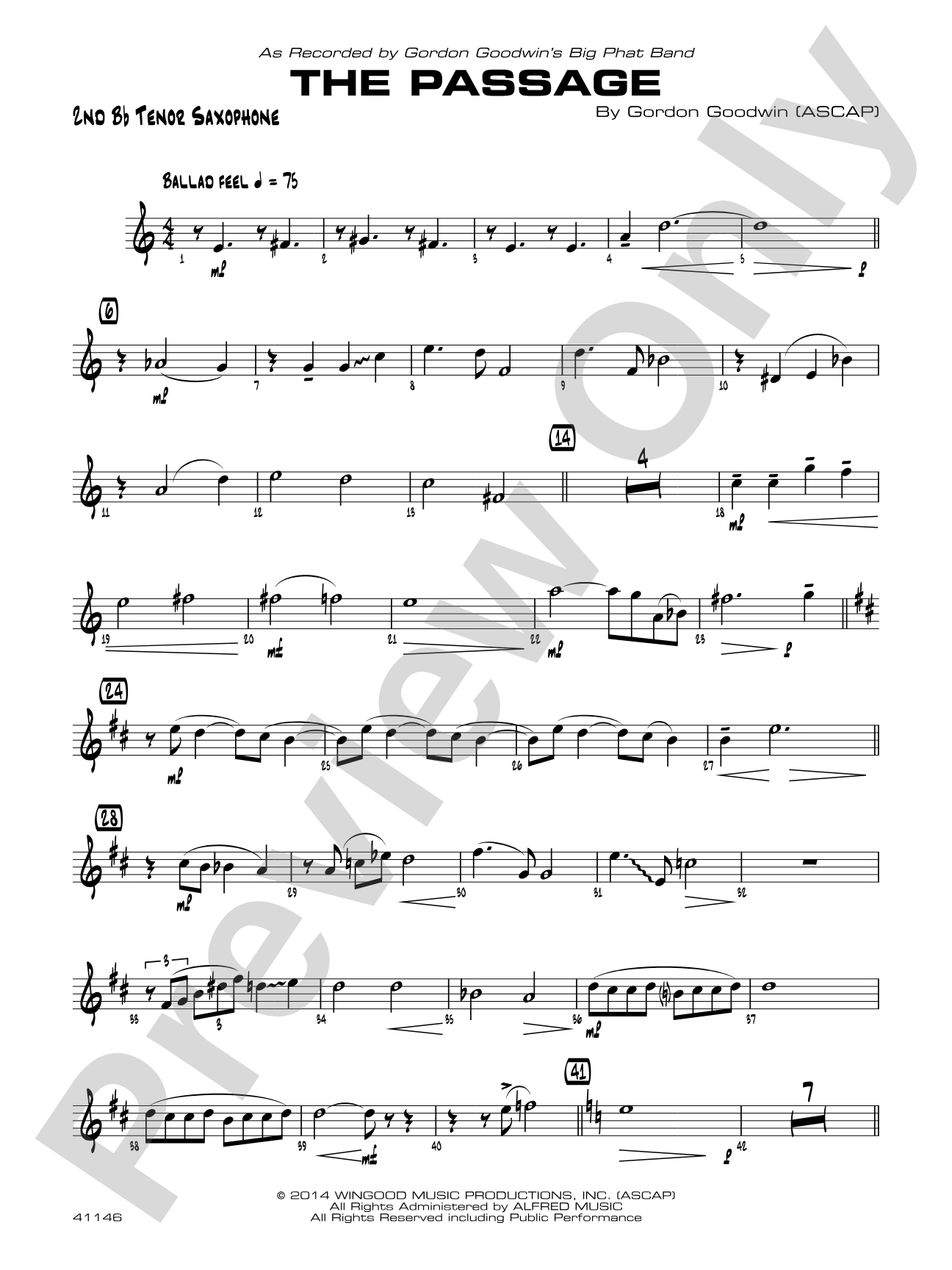

The Passage: 2nd B-flat Tenor Saxophone
By Gordon Goodwin
Grade: 6 (Professional / Very Advanced)
Item: 00-PC-0016282_TX2
$3.00
Pickup currently not available
Description
A luscious alto sax ballad at 74 BPM. A lyrical vehicle with rich harmony and textures, soaring ensemble figures, and a soli with saxes (alto 2 opt flute), trumpet 2, guitar, and piano. A brilliant chart! (2:25) This title is available in MakeMusic Cloud.


Don't just read it, hear it, play along with it, and watch your students grow with it. In MakeMusic Cloud, The Passage: 2nd B-flat Tenor Saxophone comes alive with professional accompaniment, adjustable tempo, and built-in practice tools that turn solo practice into real progress.
Open in the Player
Jump straight in and assign it today.
Start Your Free Trial
Open this title and explore the full library in minutes.
Sample Audio
1
Audio File
--:--
0:00
0:00
Sample Video
No sample videos found.
Additional Details
Series:
Gordon Goodwin Series
Publisher:
Alfred Music
Page Count:
78
SKU:
00-PC-0016282_TX2
More about this title
About the Composer: Gordon Goodwin
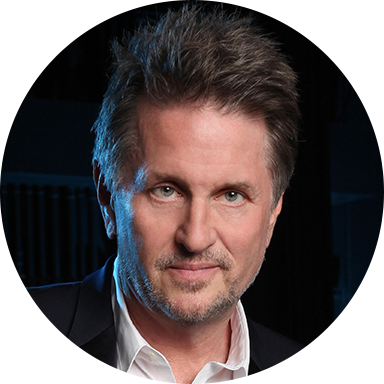
Gordon Goodwin began composing at age five, transcribing complete pieces rather than fragments or individual melodies. His first big band arrangement, Hang Loose, appeared when he was just thirteen, signaling the arrival of an exceptional voice in jazz orchestration. This early prolific gift caught the attention of film and television professionals, launching a career that has earned him three Emmy Awards and multiple Grammy nominations.
Goodwin's work spans Hollywood's biggest films (Bad Boys II, Con Air, Enemy of the State, Remember the Titans, Star Trek: Nemesis) and partnerships with world-class artists including Christina Aguilera, Quincy Jones, Ray Charles, and Sarah Vaughn. As founder and leader of Gordon Goodwin's Big Phat Band since 2000, he continues to push the boundaries of large ensemble jazz writing. His albums have consistently drawn Grammy recognition, cementing his place among contemporary jazz's most accomplished arrangers and bandleaders.
Why we love this
Goodwin's ballad writing is sophisticated without becoming precious; The Passage gives your ensemble space to breathe while maintaining forward momentum through its rich harmonic language. The soli section (featuring alto 2 with optional flute, trumpet 2, guitar, and piano) creates a natural focal point that lets soloists shine without abandoning the lush ensemble texture, making it as rewarding for your section players as for your feature soloists.
What to expect
Lush and conversational, like overhearing an intimate jazz moment in a dimly lit room. The alto sax voice sits at the heart of warm, sophisticated harmonies that never feel overwritten; instead, every note seems to belong. This is Goodwin's sensibility as a film composer meeting his big band instincts, creating something both emotionally open and polished.
Who it's for
This chart belongs in the book of experienced jazz ensembles (high school advanced groups and college/professional ensembles). Players need solid harmonic awareness, controlled ballad tone, and the ability to blend within complex voicings; the Grade 6 designation reflects the ensemble maturity and solo facility required, not just technical facility.
How to get the most out of it
- The 74 BPM tempo invites legit phrasing; treat this as a ballad that breathes with genuine lyrical intention rather than rushing toward resolution. Lock the rhythm section's pocket before rehearsing the full ensemble.
- Balance the alto sax melody against the rich harmonic backdrop. This isn't a feature solo drowning in the texture; the writing supports the voice clearly, so allow the melody to sing with confidence while the ensemble provides warm color.
- Shape the ensemble figures with a conductor's beat that mirrors the elastic, conversational quality of modern jazz ballad phrasing. Goodwin's orchestrations reward subtle dynamic choices and ensemble cohesion.
- The soli section benefits from focused solo preparation before full ensemble rehearsal. Each soloist should understand their role within the texture, not as a break-out moment but as a natural extension of the ensemble's voice.
How to use it
Program The Passage alongside uptempo Goodwin charts to showcase the full range of his ensemble writing, or use it as the centerpiece of a ballad set that highlights your ensemble's maturity and sonic control. It lands naturally in a concert that celebrates modern jazz composition and gives audiences (and your soloists) a moment of genuine lyrical beauty.
Skills your students will build
- Sustaining legit ballad phrasing at a slow tempo without rushing
- Reading and executing complex jazz harmonies across the full ensemble
- Balancing a featured voice against rich harmonic accompaniment
- Ensemble blend and balance in close-voiced voicings
- Solo preparation and performance within a composed soli section
- Responding to a conductor's beat in free, conversational jazz time