The Party's Over (From "Bells Are Ringing") Sheet Music Preview

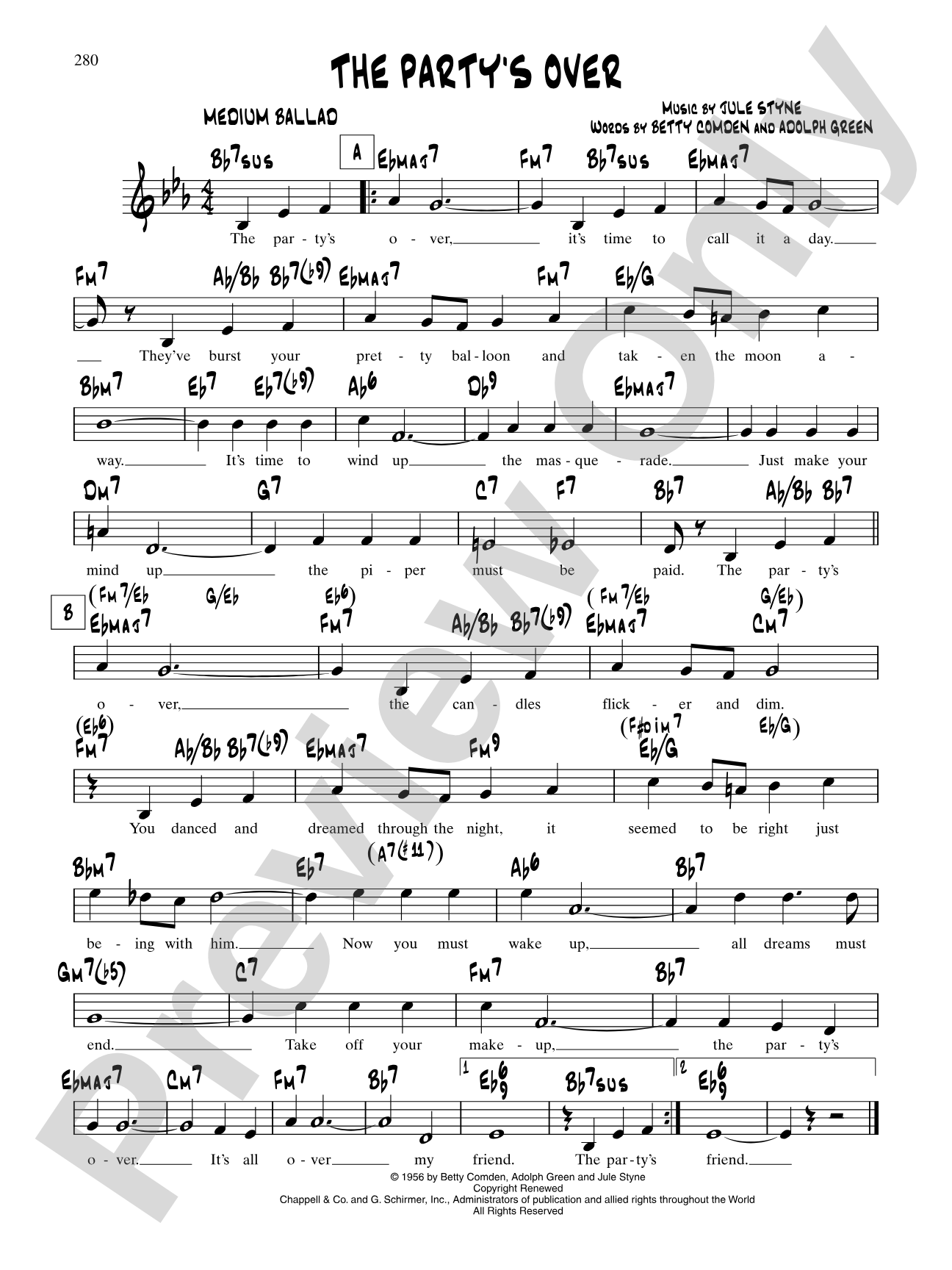
The Party's Over (From "Bells Are Ringing"): Lead Sheet

Betty Comden and Adolph Green

Item: 00-PSL-000233

Digital Download
$1.99

One moment…

Description
The team of Comden and Green -- the longest-running creative partnership in theater history -- collaborated with the best of musicians to produce their hit shows, such as Applause, Wonderful Town, and The Will Rogers Follies. Two sections of photos are included with 20 all-time popular tunes from Comden and Green.

The Party's Over (From "Bells Are Ringing"): Lead Sheet isn't in MakeMusic Cloud just yet...but it could be. Let us know you'd like to see it, and you'll help shape what comes next. In the meantime, start a free trial and dive into thousands of interactive titles your students can play along with today.

Sample Audio
No sample audio found.
Sample Video
Additional Details
Publisher: Alfred Music
Page Count: 96
SKU: 00-PSL-000233

More about this title

About the Artist: Betty Comden

Betty Comden was one half of the legendary songwriting partnership Comden and Green, whose careers spanned over six decades and redefined the American musical theater songbook. Working alongside Adolph Green, she crafted lyrics and libretti for some of Broadway's most enduring hits, from On the Town (1944) to The Will Rogers Follies (1991), earning multiple Tony Awards and an Academy Award nomination along the way.

Comden's gift was her ability to write lyrics that served both the character and the comedy, lines that were witty without overshadowing the melody. Her work with composer Jule Styne on shows like Bells Are Ringing and Wonderful Town established a standard for character-driven musical theater that influenced generations of theater songwriters. Her influence extends beyond Broadway into jazz standards and American popular song.

Why we love this

This collection brings together two decades of Comden and Green's best work in one accessible resource, making it ideal for jazz vocalists and pianists building a standards repertoire. The lead sheet format gives you the freedom to interpret these songs with your own phrasing and arrangement choices, while the photos and context provide performers with the dramatic story behind each tune. You get genuine Broadway craft here, not novelty songs, which means every tune rewards careful listening and meaningful interpretation.

What to expect

Elegant, witty, and deeply human. These melodies have the warmth of mid-century Broadway, where humor and heartbreak lived in the same measure. The lyrics carry the urbane sophistication of New York theater at its peak, full of clever rhymes and character specificity that make each song feel like a scene unto itself.

Who it's for

Jazz and standards vocalists building their repertoire with songs that have genuine theatrical weight and sophistication. Pianists and keyboard players accompanying singers in recital, lesson, or jazz contexts will find the chords and melody well-suited to improvisation and arrangement. Theater students and music directors preparing performers for auditions or concert programming also benefit from having these Comden and Green standards in one place.

How to get the most out of it

  • Pay attention to the lyrical phrasing marked on the lead sheet; these rhythmic choices were written by theater professionals who understood how words and melody interact. Honor the scansion even if it feels unusual at first.
  • Use the chord symbols as a foundation, not a limitation. Lead sheets invite reharmonization, so explore substitutions that complement your voice type or your pianist's style.
  • Listen to original recordings to understand the character context of each song. Knowing whether your character is lovesick, triumphant, or comedic shapes how you'll inflect the melody and phrasing.
  • Work with your accompanist to find the right tempo for your interpretation. These songs were written to serve a scene, not to sit at a metronomic beat, so flexibility in tempo and rubato can bring out the song's dramatic life.

How to use it

Program these standards in a jazz vocal recital or standards showcase, where the theatrical lineage of each tune adds depth to your set list. They also serve beautifully in a Broadway revue or cabaret-style concert, especially when you pair them with other composers to show the range of mid-century musical theater. For lesson studios, these songs give intermediate and advanced vocalists a bridge between art song and jazz repertoire.

Skills your students will build

  • Reading lead sheets and interpreting chord symbols
  • Phrasing lyrical melodies with attention to text and scansion
  • Understanding theatrical context and character intention in song interpretation
  • Improvising and reharmonizing over standard changes
  • Collaborating with accompanists on tempo, dynamics, and interpretive choices

You May Also Like