

The Owl, the Wind, and the Moon: 2-Part Choral Octavo
Words and music by Mark Burrows
Item: 00-PO-0007451

$2.40
Minimum order quantity: 20 copies
Pickup currently not available
Description
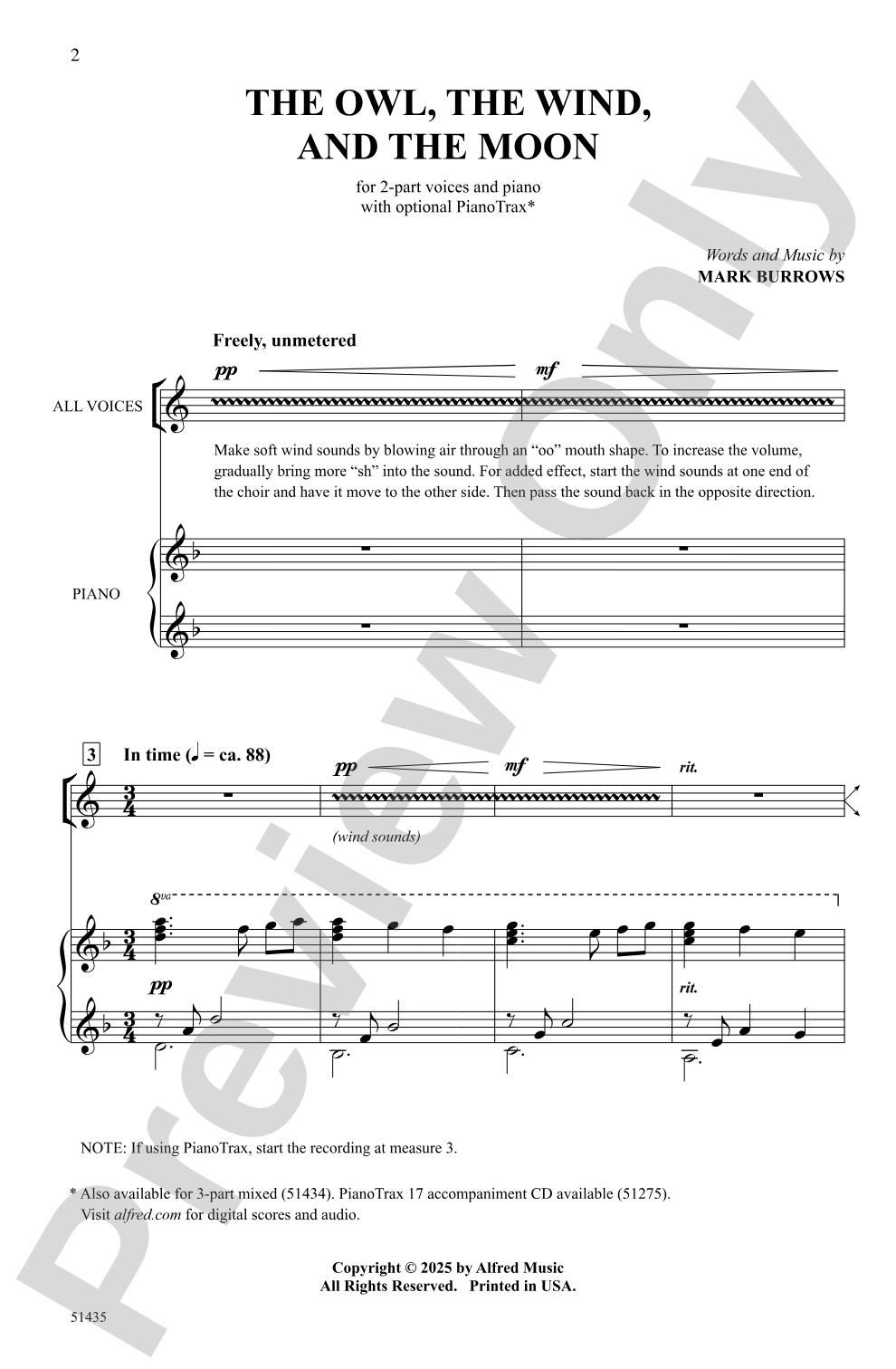
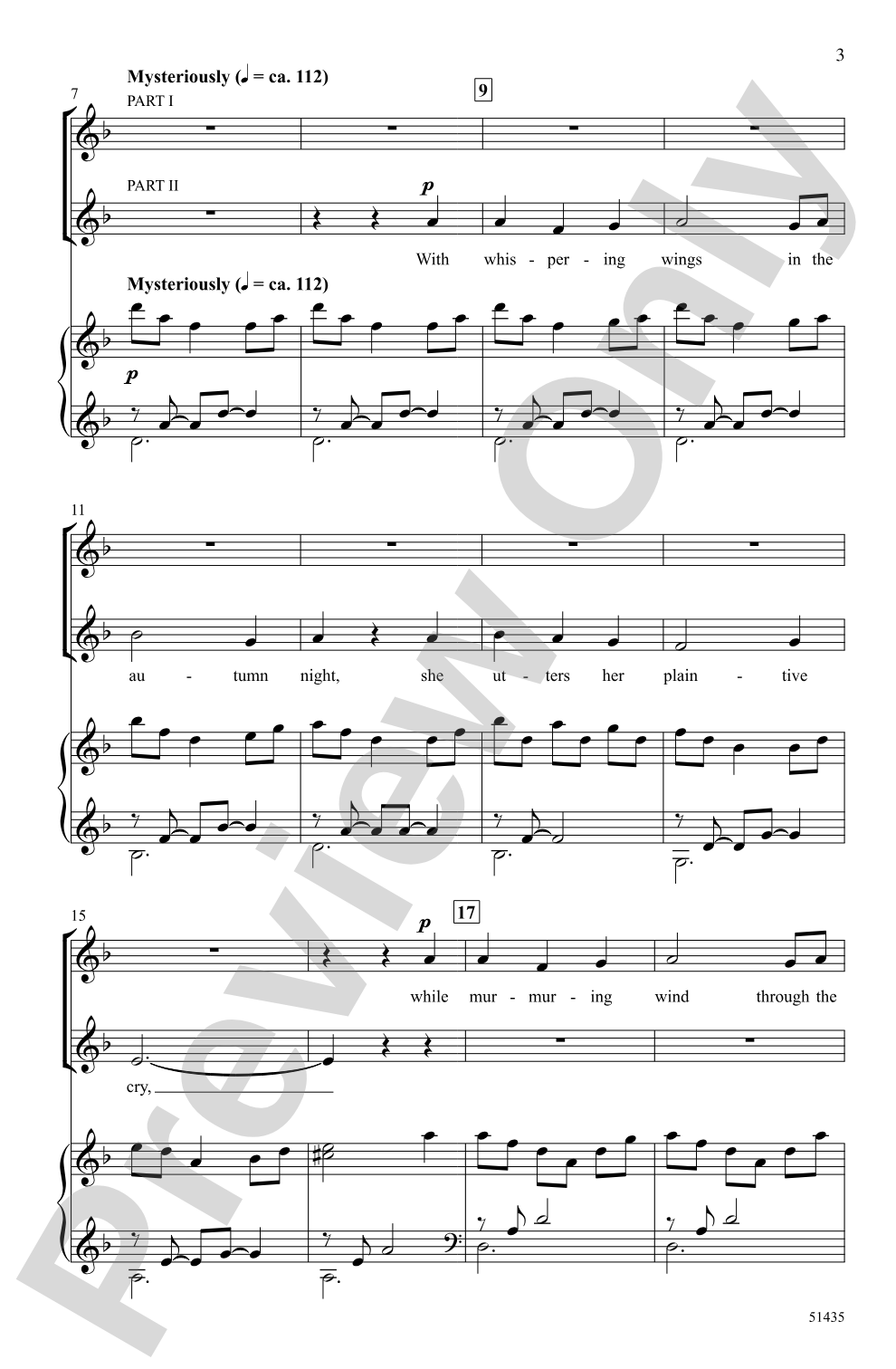
Three nighttime characters emerge one at a time to "weave their nocturnal tune" in this imaginative autumnal original. Singers become storytellers with a creative text, musical word painting, dramatic dynamics, and even sound effects---the song begins and ends by imitating the whispering wind. Program a mysterious, magical moment this fall or any time of year!


Don't just read it, hear it, play along with it, and watch your students grow with it. In MakeMusic Cloud, The Owl, the Wind, and the Moon: 2-Part Choral Octavo comes alive with professional accompaniment, adjustable tempo, and built-in practice tools that turn solo practice into real progress.
Open in the Player
Jump straight in and assign it today.
Start Your Free Trial
Open this title and explore the full library in minutes.
Sample Audio
1
Audio File
--:--
0:00
0:00
Sample Video
Additional Details
Series:
Alfred Choral Designs
Publisher:
Alfred Music
Page Count:
12
SKU:
00-PO-0007451
More about this title
About the Composer: Mark Burrows
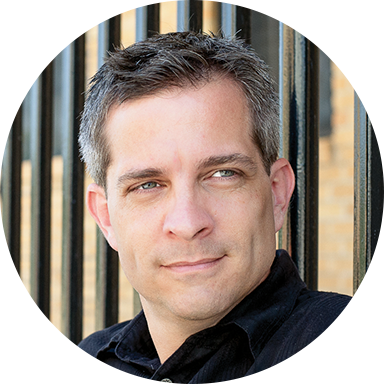
Mark Burrows has built a career composing works that appeal to ensembles at every level, from children's choirs to adult festival groups. His music appears regularly on state and festival programming lists, and he receives multiple commissions annually. He holds degrees in music education from Southern Methodist University and conducting from Texas Christian University, and currently serves as Director of Children's Ministries at FUMC in Fort Worth, where he lives with his family.
Why we love this
Burrows crafts a piece that transforms singers into active storytellers rather than passive readers. The combination of word painting, sound effects, and dramatic range gives young choirs genuine dramatic material to work with, and the autumnal theme makes it an obvious choice for fall programming without feeling forced or Halloween-specific.
What to expect
Mysterious and theatrical, with a sense of wonder that unfolds as each character enters the nocturnal scene. The piece balances intimacy (the whispering wind framing) with dramatic moments, creating an atmospheric soundscape that feels both autumnal and timeless.
Who it's for
Middle school and high school choirs seeking concert repertoire that engages singers dramatically without requiring extensive vocal maturity. It works equally well for festival performance or standalone concert programming, and the imaginative text appeals to singers who enjoy storytelling through music.
How to get the most out of it
- Begin rehearsals by experimenting with the wind sound effects separately. Have singers discover how breath control and mouth shapes create variety in the whispering texture, then integrate those discoveries into the full piece.
- Balance the individual character entrances (owl, wind, moon) so each voice part stands out distinctly when introduced. This clarity helps the narrative unfold for your audience.
- Use dynamic contrast deliberately. The dramatic range is a feature, not an obstacle; lean into it to heighten the nocturnal mood and hold attention through the piece.
- Rehearse the ending wind effects in unison first, then layer the parts gradually. This ensures the return to whispering feels cohesive and magical rather than chaotic.
How to use it
Open a fall concert with this piece to set a magical tone immediately, or place it mid-program as a moment of contrast and imagination. The Halloween association is present but subtle enough that it works beautifully in October or November programming focused on seasonal themes.
Skills your students will build
- Word painting and musical imagery (interpreting descriptive text through vocal color and dynamics)
- Layered ensemble singing with multiple simultaneous elements (characters, background texture)
- Dramatic vocal technique and dynamic control
- Sound effect creation and precision (sustained whispering, timbral variation)
- Narrative interpretation and expressive performance