The Owl And The Pussycat Sheet Music Preview

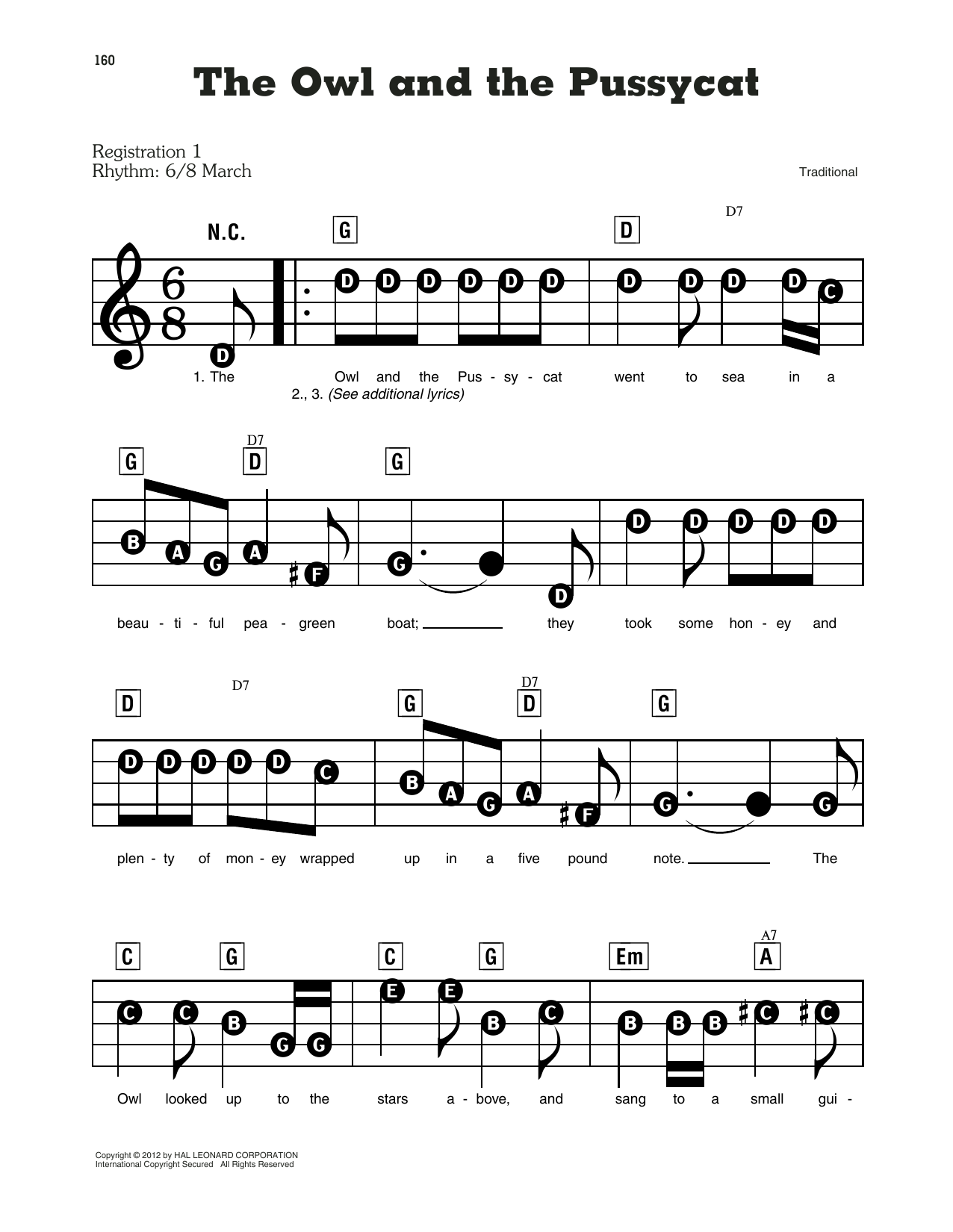
The Owl And The Pussycat: E-Z Play Today

Item: 35-DS00506248

Digital Download
$4.99
Description

The Owl And The Pussycat: E-Z Play Today isn't in MakeMusic Cloud just yet...but it could be. Let us know you'd like to see it, and you'll help shape what comes next. In the meantime, start a free trial and dive into thousands of interactive titles your students can play along with today.

Sample Audio
No sample audio found.
Sample Video
Additional Details
Publisher: Hal Leonard
Page Count: 2
SKU: 35-DS00506248

More about this title

Why we love this

E-Z Play Today arrangements strip away unnecessary complexity while keeping the charm intact, making this a reliable choice for young pianists who need accessible music that doesn't feel dumbed down. The two-page format respects short attention spans without sacrificing a complete musical thought.

What to expect

Playful and gentle, like watching children's book illustrations come to life. The music captures the lighthearted absurdity of Edward Lear's beloved poem without getting in the way of the story itself.

Who it's for

Early elementary pianists ready to play something recognizable and fun, or teachers seeking brief repertoire for studio recitals and informal performances. It works equally well as a standalone piece or paired with other nursery rhyme adaptations.

How to get the most out of it

  • Keep the tempo conversational and unhurried; this poem's narrative unfolds best when listeners can follow the story without rushing through the text.
  • Balance melody and accompaniment so the right hand sings clearly, especially if you're reading the lyrics aloud alongside playing.
  • Lean into the whimsy by using dynamic contrast between verses; let quieter moments build anticipation for the next section.

How to use it

Perfect for end-of-year studio recitals where you want variety in tempo and mood, or as an encore that leaves audiences smiling. It also serves as confidence-building repertoire for students intimidated by longer classical pieces.

Skills your students will build

  • Reading simple melodies in treble clef with basic accompaniment patterns
  • Coordinating hands with different rhythmic responsibilities
  • Sustaining musical phrasing across a complete short form
  • Connecting text to music (if performing with narration)

You May Also Like