The Nutcracker March: E-flat Baritone Saxophone Sheet Music Preview

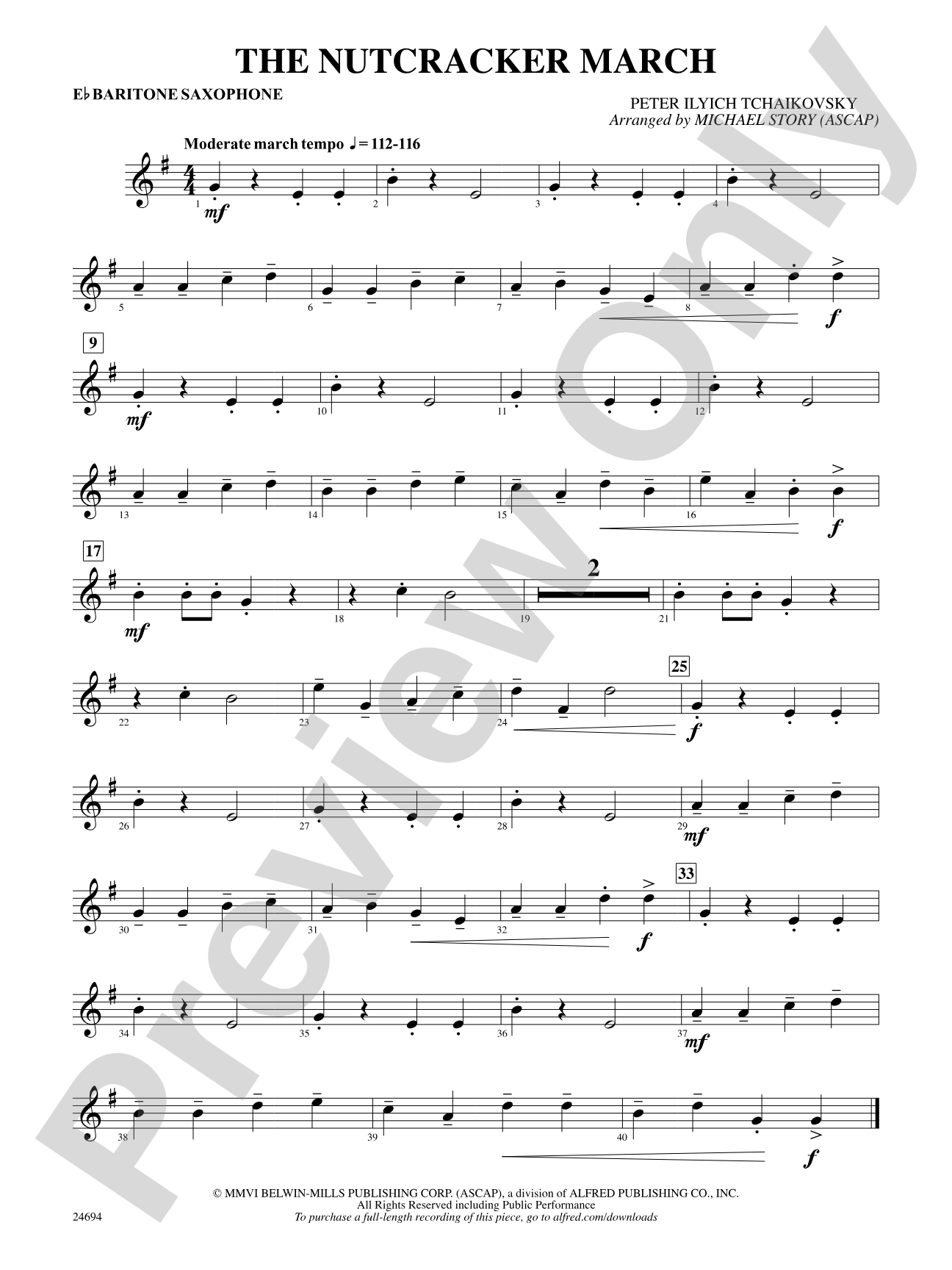
The Nutcracker March: E-flat Baritone Saxophone

By Peter Ilyich Tchaikovsky / arr. Michael Story

Grade: 0.5 (Very Easy)

Item: 00-PC-0000856_BTX

Digital Download
$3.00
Description
Michael Story has expertly scored this Tchaikovsky classic march for your beginners. You can be sure the original intent of this masterpiece is retained for the musical pleasure of your students and audiences alike. Classy and classic, this arrangement is sure to fill your performance needs with style.

Don't just read it, hear it, play along with it, and watch your students grow with it. In MakeMusic Cloud, The Nutcracker March: E-flat Baritone Saxophone comes alive with professional accompaniment, adjustable tempo, and built-in practice tools that turn solo practice into real progress.

Sample Audio
0:00
0:00
Sample Video
Additional Details
Series: Belwin Very Beginning Band
Publisher: Alfred Music
Page Count: 130
SKU: 00-PC-0000856_BTX

More about this title

About the Composer: Peter Ilyich Tchaikovsky

Peter Ilyich Tchaikovsky (1840-1893) stands as one of the most performed composers in the concert world, known for his gift for melody and orchestral color. His ballets—Swan Lake, Sleeping Beauty, and The Nutcracker—remain cornerstones of both dance and instrumental music, treasured for their accessibility and emotional directness.

The Nutcracker, premiered in St. Petersburg in 1891, has become inseparable from the holiday season. Tchaikovsky's original march from Act I captures the pageantry and childlike wonder of the Christmas celebration, making it an ideal gateway into classical music for young audiences and student musicians alike.

Why we love this

Michael Story's arrangement captures all the festive grandeur of Tchaikovsky's original without overwhelming your newest musicians. At Grade 0.5, this sits perfectly at the beginning of the band year when students are still solidifying fundamental technique; the march's steady pulse and straightforward voicing let them focus on blend and balance rather than complex rhythmic or harmonic demands. Programming this early in the season builds confidence and connects young musicians to repertoire they've likely heard before, creating that satisfying moment when they recognize a masterwork they're performing.

What to expect

Stately and celebratory, this march evokes the pageantry of a winter palace, all pomp and cheer. The melody unfolds with Tchaikovsky's signature warmth, inviting students into a world of classical elegance that feels both grand and entirely within their reach.

Who it's for

This arrangement is built for beginning concert bands, particularly groups in their first or second semester. It works beautifully for holiday concerts, winter festivals, or as a confidence-building opener in any mixed-level festival program.

How to get the most out of it

  • Maintain a steady, confident tempo throughout. Young bands often drag this march; a crisp walking pace (around quarter note = 120) keeps the energy bright and prevents the piece from feeling sluggish.
  • Balance the melody between flute and clarinet parts so neither overshadows the other. Blend matters more than individual prominence at this level.
  • Shape the march with gentle dynamic swells rather than sudden changes. Younger students respond well to gradual crescendos and diminuendos that let them hear their own contribution to the sound.
  • Encourage consistent articulation across all parts. Uniform tonguing on eighth notes creates the crisp, processional character this march demands.

How to use it

This belongs on a holiday concert early in the season, perhaps as your opening number to set a festive tone before moving into other seasonal selections. It also serves as a perfect wind-down piece after more technically demanding repertoire, showing audiences what your students are capable of playing while celebrating a beloved classical work.

Skills your students will build

  • Reading and executing steady quarter-note and eighth-note rhythms in march style
  • Maintaining consistent tempo with a conductor
  • Blending simple melody with harmonic support across sections
  • Producing clear, articulated tonguing on sustained passages
  • Responding to dynamic shapes and phrasing instruction

You May Also Like