
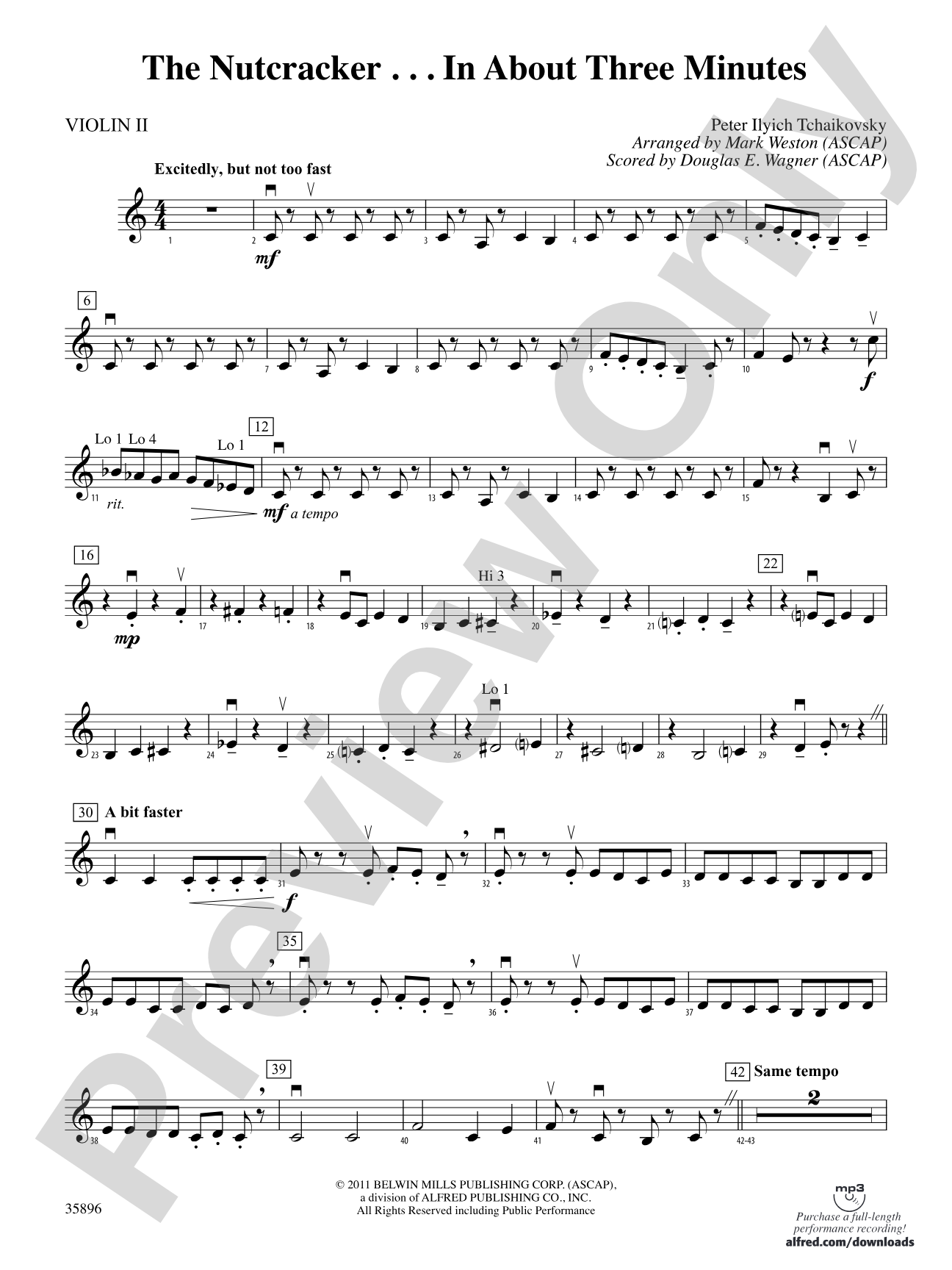

The Nutcracker... In About Three Minutes: 2nd Violin
By Peter Ilyich Tchaikovsky / arr. Mark Weston, scored by Douglas E. Wagner
Grade: 2.5
Item: 00-PC-0014980_VN2
$7.99
Pickup currently not available
Description
Highlights from Tchaikovsky's immortal holiday classic are presented in a tightly woven medley with younger players in mind. Full of the color and pageantry presented in the ballet itself, five popular movements brilliantly set the stage, including: Overture (M. 2), Dance of the Sugar Plum Fairy (M. 16), Russian Dance: Trepak (M. 30), Dance of the Reed Flutes (M. 42), and Waltz of the Flowers (M. 59). Here's a tour de force that your students will really enjoy working on, and a guaranteed audience pleaser for your December concerts.


Don't just read it, hear it, play along with it, and watch your students grow with it. In MakeMusic Cloud, The Nutcracker... In About Three Minutes: 2nd Violin comes alive with professional accompaniment, adjustable tempo, and built-in practice tools that turn solo practice into real progress.
Open in the Player
Jump straight in and assign it today.
Start Your Free Trial
Open this title and explore the full library in minutes.
Sample Audio
1
Audio File
--:--
0:00
0:00
Sample Video
Additional Details
Series:
Belwin Beginning String Orchestra
Publisher:
Alfred Music
Page Count:
144
SKU:
00-PC-0014980_VN2
Instrumentation:
strings w/ vln 3
More about this title
About the Composer: Peter Ilyich Tchaikovsky
Peter Ilyich Tchaikovsky (1840-1893) was a Russian Romantic composer whose gift for melody and orchestration made him one of the most performed classical composers worldwide. His ballets, particularly Swan Lake, The Sleeping Beauty, and The Nutcracker, revolutionized dance music and remain cornerstones of both ballet and concert repertoire. Tchaikovsky's ability to blend folk idioms with sophisticated harmonic language created works that appeal equally to trained musicians and general audiences.
For string orchestra programs, Tchaikovsky's music offers an ideal entry point into the Romantic era. His melodies sing naturally on strings, his rhythmic vitality engages younger players, and his orchestrations demonstrate how limited forces can produce rich, colorful sound. Teachers and conductors return to his work repeatedly because it combines musical substance with genuine student and audience appeal.
Why we love this
Weston and Wagner have captured the essential magic of The Nutcracker while respecting the abilities of developing string players. The medley structure moves briskly enough to hold attention yet gives each movement room to breathe, and the orchestration sits comfortably under the fingers without sacrificing the ballet's signature color and pageantry. Your students will recognize these moments immediately, and audiences will leave smiling.
What to expect
Stepping into a snow-globe world of waltzing snowflakes, dancing plum fairies, and galloping Cossacks. The music sparkles with orchestral color and rhythmic vitality, moving from delicate crystalline passages to robust folk dances, then settling into the sweeping grandeur of the final waltz. It feels celebratory and complete, like a miniature ballet unfolding right in the concert hall.
Who it's for
String orchestra conductors working with Grade 2.5 ensembles who want a holiday repertoire piece that challenges players musically without overwhelming them technically. This arrangement is equally suited to concert closers, winter assemblies, and young musicians eager to explore recognizable Romantic masterworks.
How to get the most out of it
- Shape the Overture's opening with clear dynamic contrast between the staccato figures and sustained passages; younger players often rush through shorter note values when excited.
- Bring out the delicate articulation in Dance of the Sugar Plum Fairy by emphasizing the interplay between first and second violins rather than treating it as a single melody.
- Lock the rhythmic energy of Trepak through consistent bow contact; this movement's drive depends on ensemble precision, not speed.
- Let the reed flute melody soar in the upper voices while the lower strings provide transparent accompaniment; resist the urge to thicken the texture.
How to use it
This is a natural fit for December concerts, particularly as an encore or closing piece that sends audiences home in good spirits. You might also program it alongside other orchestral highlights or shorter works to create a themed concert that explores Romantic orchestration. The tight medley format makes it ideal for pops-style programming or community holiday events where runtime matters.
Skills your students will build
- Executing staccato and legato articulations cleanly in succession
- Maintaining ensemble intonation through key changes across five movements
- Reading third violin parts with independent rhythmic and melodic material
- Responding to varied tempo and dynamic markings within a single piece
- Shaping long lines while supporting ensemble texture