
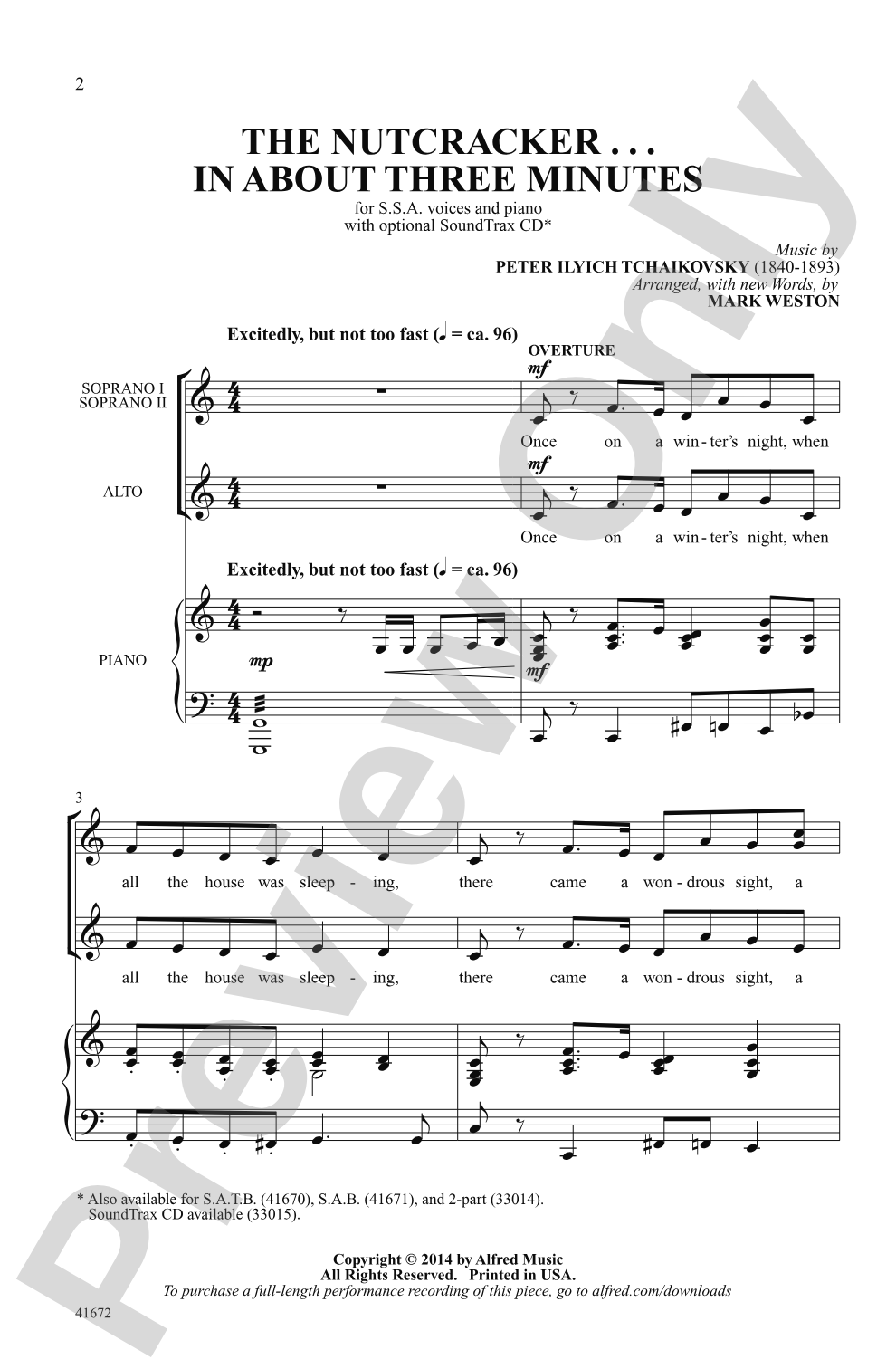
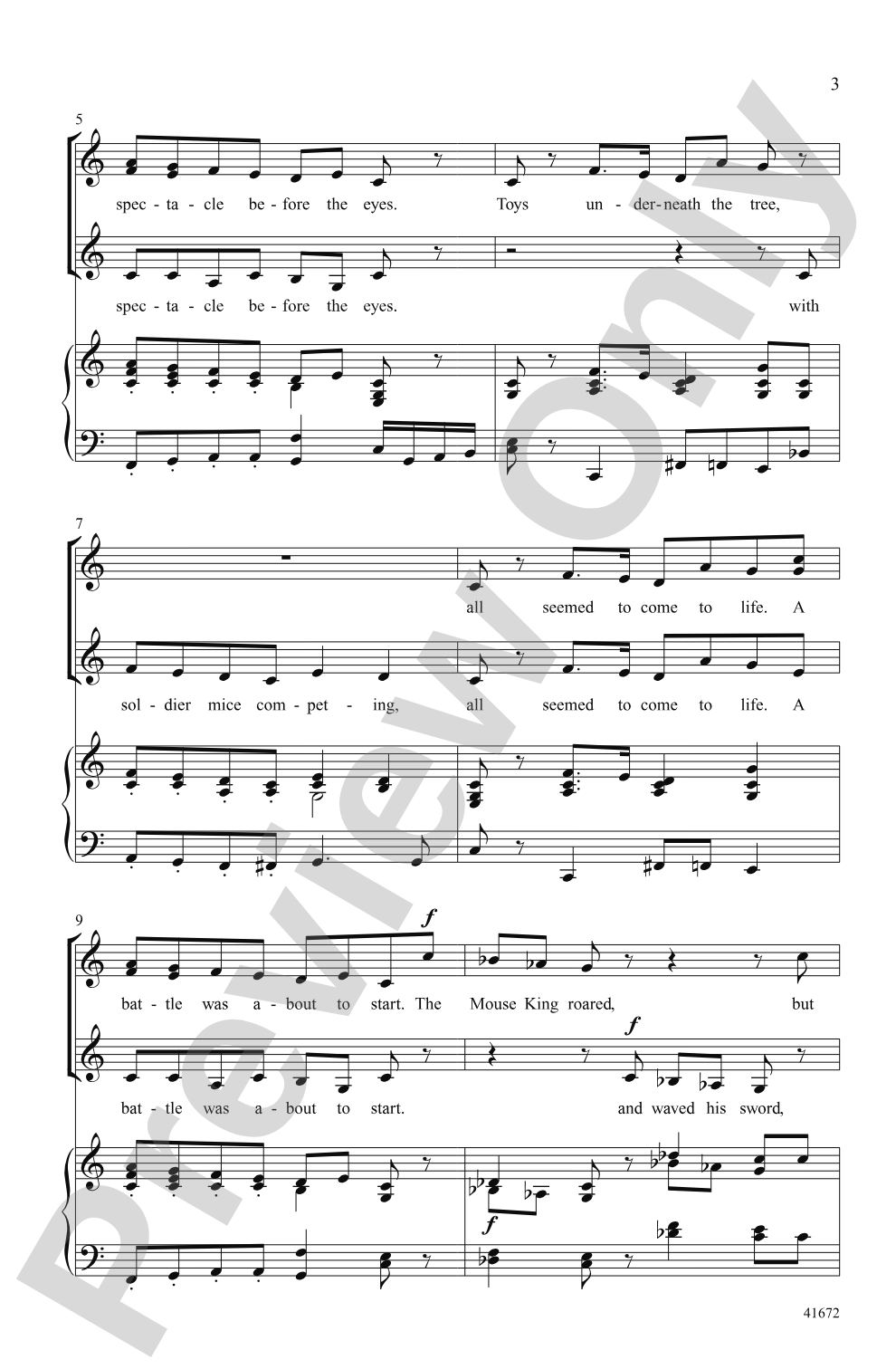
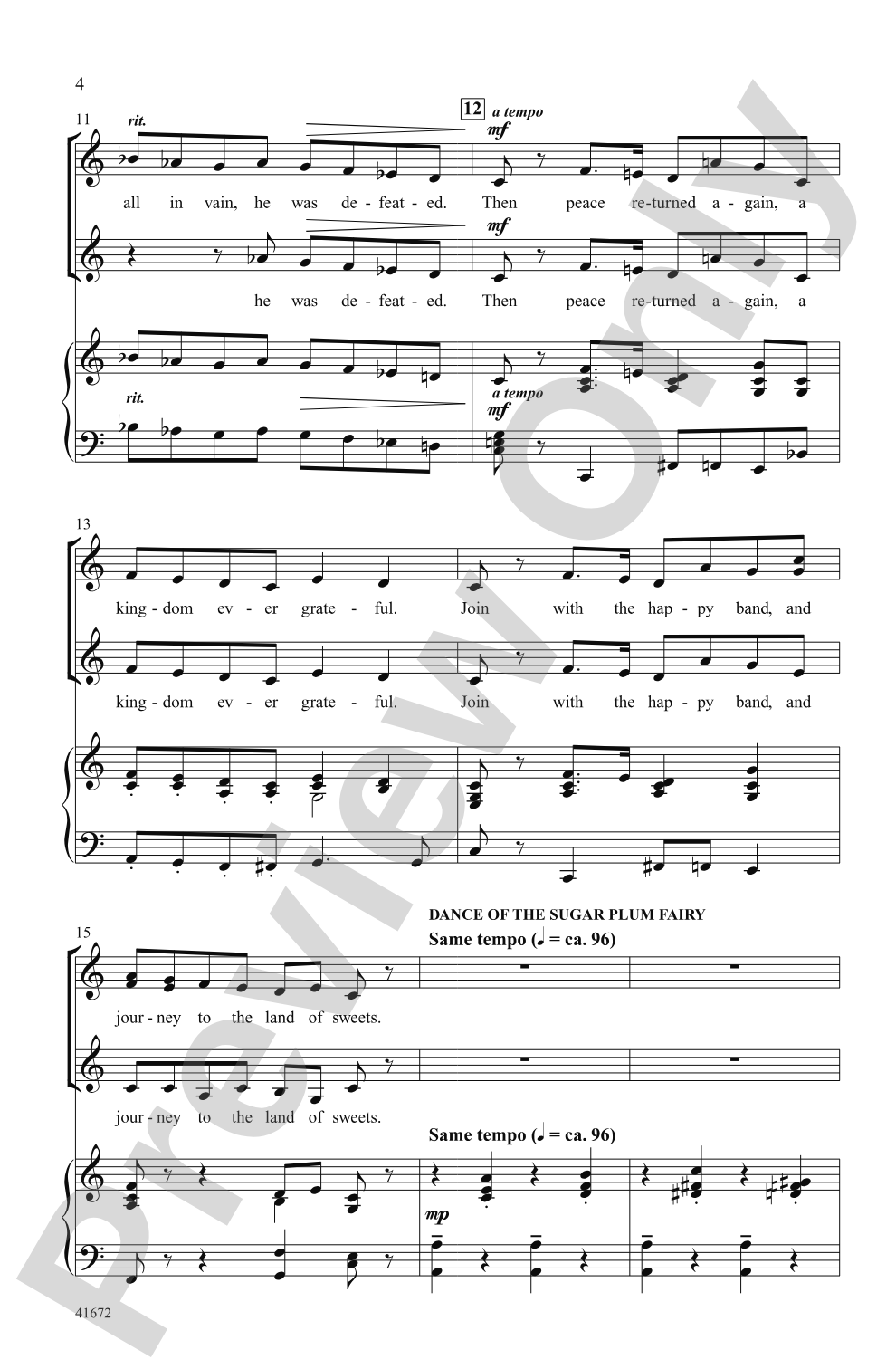

The Nutcracker... In About Three Minutes: SSA Choral Octavo
Music by Peter Ilyich Tchaikovsky / arr., with new words, by Mark Weston
Item: 00-PO-0001865
$1.95
Minimum order quantity: 20 copies
Pickup currently not available
Related Items
The Nutcracker... In About Three Minutes: SoundTrax Digital Audio Download |
$27.99
|
View | |
The Nutcracker... In About Three Minutes: SATB Choral Octavo |
$1.95
|
View | |
The Nutcracker... In About Three Minutes: SAB Choral Octavo |
$1.95
|
View | |
The Nutcracker...In About Three Minutes: 2-Part Choral Octavo |
$2.20
|
View | |
The Nutcracker... In About Three Minutes: SATB Choral Octavo |
$1.95
|
View | |
The Nutcracker... In About Three Minutes: SAB Choral Octavo |
$1.95
|
View | |
The Nutcracker... In About Three Minutes: SSA Choral Octavo |
$1.95
|
View | |
The Nutcracker... In About Three Minutes: 2-Part Choral Octavo |
$2.20
|
View | |
The Nutcracker... In About Three Minutes: Choral Octavo SoundTrax CD |
$27.99
|
View |
Description
The title says it all. It's the story of the ballet, set to the music of the ballet, and it only takes . . . (you guessed it) . . . three minutes to perform. Terrific!


The Nutcracker... In About Three Minutes: SSA Choral Octavo isn't in MakeMusic Cloud just yet...but it could be. Let us know you'd like to see it, and you'll help shape what comes next. In the meantime, start a free trial and dive into thousands of interactive titles your students can play along with today.
Request This Title
Tell us you want it.
Start Your Free Trial
Explore everything that's ready to play right now.
Sample Audio
1
Audio File
--:--
0:00
0:00
Sample Video
No sample videos found.
Additional Details
Series:
Alfred Choral Designs
Publisher:
Alfred Music
Page Count:
16
SKU:
00-PO-0001865
More about this title
About the Composer: Peter Ilyich Tchaikovsky
Peter Ilyich Tchaikovsky (1840-1893) was a Russian composer who shaped the Romantic era through his gift for memorable melody and emotional directness. His ballets—Swan Lake, Sleeping Beauty, and The Nutcracker—remain cornerstones of both dance and concert music, performed thousands of times annually worldwide. Tchaikovsky's gift was his ability to write music that felt both sophisticated and immediately accessible, a quality that has made his work beloved in concert halls and, now, in choral arrangements that bring his narratives to life for singers.
Why we love this
Mark Weston's arrangement solves a real programming challenge: you want The Nutcracker's magic and recognition value, but you need something that fits a realistic rehearsal timeline and performance slot. This three-minute setting captures the story's journey while using Tchaikovsky's most recognizable themes, giving young singers the joy of performing a world-famous ballet without the commitment of a full-length work.
What to expect
Familiar and enchanting. You'll hear Tchaikovsky's signature melodic gift—the iconic March, the delicate dance rhythms, the sense of wonder—woven into a brisk, energetic arc. It feels less like a medley and more like a story told in fast-forward, retaining the ballet's magic while maintaining forward momentum.
Who it's for
Middle and high school SSA choirs looking for holiday or winter concert material with genuine musical substance. Directors seeking a crowd-pleasing work that requires reasonable rehearsal time and keeps singers engaged with a coherent story.
How to get the most out of it
- Anchor the rhythmic foundation in the accompaniment; SSA texture means singers rely heavily on the piano part to track harmonic movement across fast-paced key changes.
- Shape the sectional transitions clearly so the narrative arc (Clara's journey through the Nutcracker's world) registers even in shortened form. Each thematic shift should feel like a new scene.
- Balance the soprano line; Weston's arrangement often places the melody in the upper voice, so ensure it projects without drowning out the harmonic support from altos and second sopranos.
How to use it
Program this as an opening number or finale for a winter concert to establish immediate audience connection and set a festive tone. It pairs well alongside other shorter seasonal pieces or as a bridge between a cappella carols and larger choral works, giving your concert shape and variety.
Skills your students will build
- Managing rapid tempo and articulation in Romantic-era melodic writing
- Tracking harmonic movement in SSA texture across key modulations
- Balancing melody and harmony in four-part writing with limited voice parts
- Maintaining rhythmic precision and ensemble alignment in a narrative-driven arrangement