
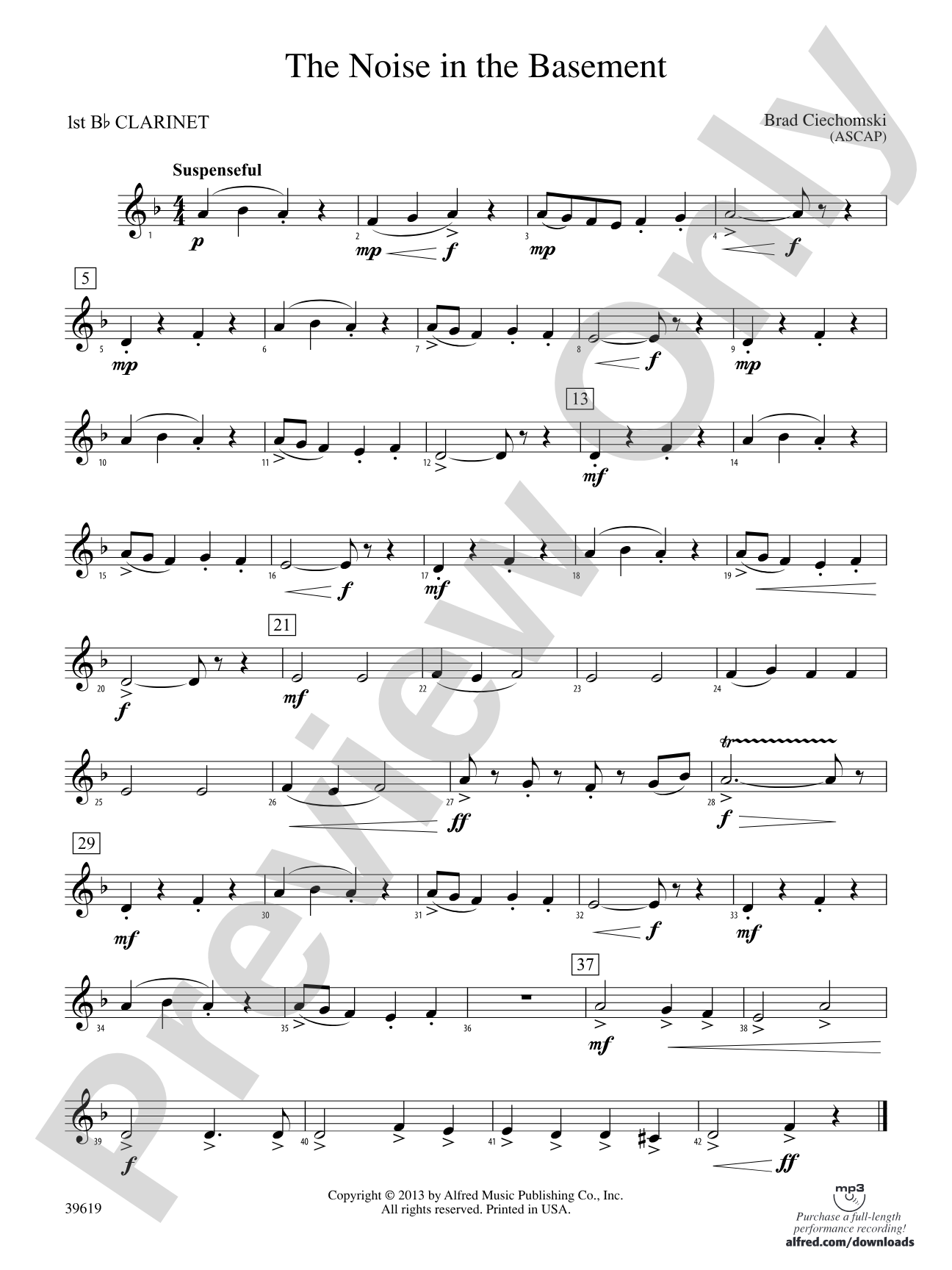

The Noise in the Basement: 1st B-flat Clarinet
By Brad Ciechomski
Grade: 1.5 (Easy)
Item: 00-PC-0015893_C1
$3.00
Pickup currently not available
Description
This piece is a soundtrack for those times children find themselves alone in the basement. Noises seem to appear from all kinds of places that make imaginations run wild. Have fun creating your "trip to the basement" with your band! (1:25) This title is available in MakeMusic Cloud.


Don't just read it, hear it, play along with it, and watch your students grow with it. In MakeMusic Cloud, The Noise in the Basement: 1st B-flat Clarinet comes alive with professional accompaniment, adjustable tempo, and built-in practice tools that turn solo practice into real progress.
Open in the Player
Jump straight in and assign it today.
Start Your Free Trial
Open this title and explore the full library in minutes.
Sample Audio
1
Audio File
--:--
0:00
0:00
Sample Video
No sample videos found.
Additional Details
Series:
Alfred Debut Series
Publisher:
Alfred Music
Page Count:
122
SKU:
00-PC-0015893_C1
More about this title
About the Composer: Brad Ciechomski

Brad Ciechomski serves as Director of Bands at Harrison Middle School in Yarmouth, Maine, where he has shaped the music program into a thriving ensemble hub featuring four concert bands and three jazz ensembles. His contributions to music education earned him recognition as the 2005-2006 Teacher of the Year and selection as one of 51 recipients of the 2008 American Star of Teaching award. He studied composition with Andrew Boysen Jr. at the University of New Hampshire, where he earned both bachelor's and master's degrees.
As a composer, Ciechomski has received commissions from bands spanning elementary through college levels and has premiered works at MENC's national convention. Beyond the classroom, he maintains an active presence throughout New England as a clinician, adjudicator, and guest conductor at district and state festivals. His work as a freelance drummer has connected him with jazz luminaries including Clark Terry, Mel Tormé, Bob Mintzer, Wayne Bergeron, and others, grounding his compositional voice in both the concert and jazz traditions.
Why we love this
Ciechomski captures the theatrical thrill of childhood imagination with orchestration that feels playful rather than cheap. The piece builds atmosphere through instrumental color and rhythmic unpredictability, giving young players something genuinely engaging to shape while keeping the technical demands accessible. It's the kind of work that makes students want to come to rehearsal.
What to expect
The piece inhabits that delicious space between suspenseful and silly. Creeping minor-key passages and unexpected instrumental combinations create an atmosphere of make-believe dread, while the overall context remains fun and imaginative. There's genuine musicality in the orchestration, but the sensibility is firmly rooted in the playful, unsettling world of childhood adventures.
Who it's for
This work suits middle school concert bands seeking repertoire that sparks student engagement without overwhelming developing musicians. It pairs particularly well with ensembles looking for Halloween programming or general concert material that demonstrates how compositional craft and storytelling coexist at the youngest levels.
How to get the most out of it
- Lean into the dynamic contrast. The quiet, creepy passages will land only if the ensemble commits fully to soft playing; the sudden outbursts need real punch to create the theatrical payoff.
- Shape the phrasing to match the narrative arc. Think of it as a soundtrack where musical events tell the story, not just accompany it. Let the orchestra breathe through the scary bits.
- Keep the tempo steady during the rhythmic sections so the audience can follow the building tension. Any hesitation in the beat will undercut the dramatic effect.
- Encourage the section leaders to listen across the band for textural clarity. With Grade 1.5 players, you'll need to balance the various foundational layers without conducting every entrance.
How to use it
Program this as a concert opener or closer to set a thematic tone and energize your audience. Its brief runtime (1:25) makes it an ideal counterbalance to longer, more serious works in a concert program, or it can anchor a Halloween concert alongside other seasonal selections.
Skills your students will build
- Controlling dynamic range from very soft to full volume
- Listening for textural balance when multiple instrumental lines create the musical narrative
- Following and executing tempo through rhythmic sections with precision
- Responding to sudden changes in articulation and character
- Understanding how orchestration and tone color convey dramatic intent