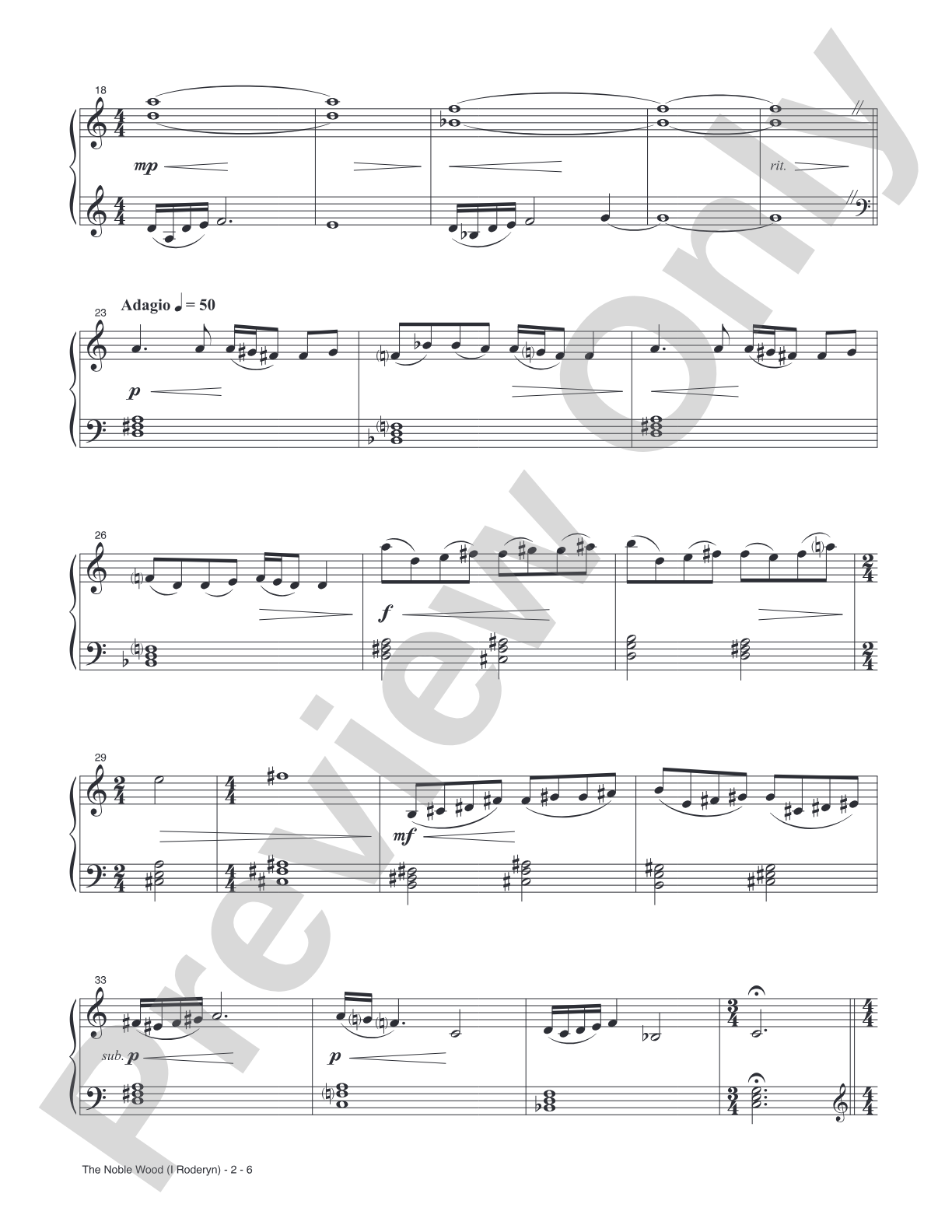
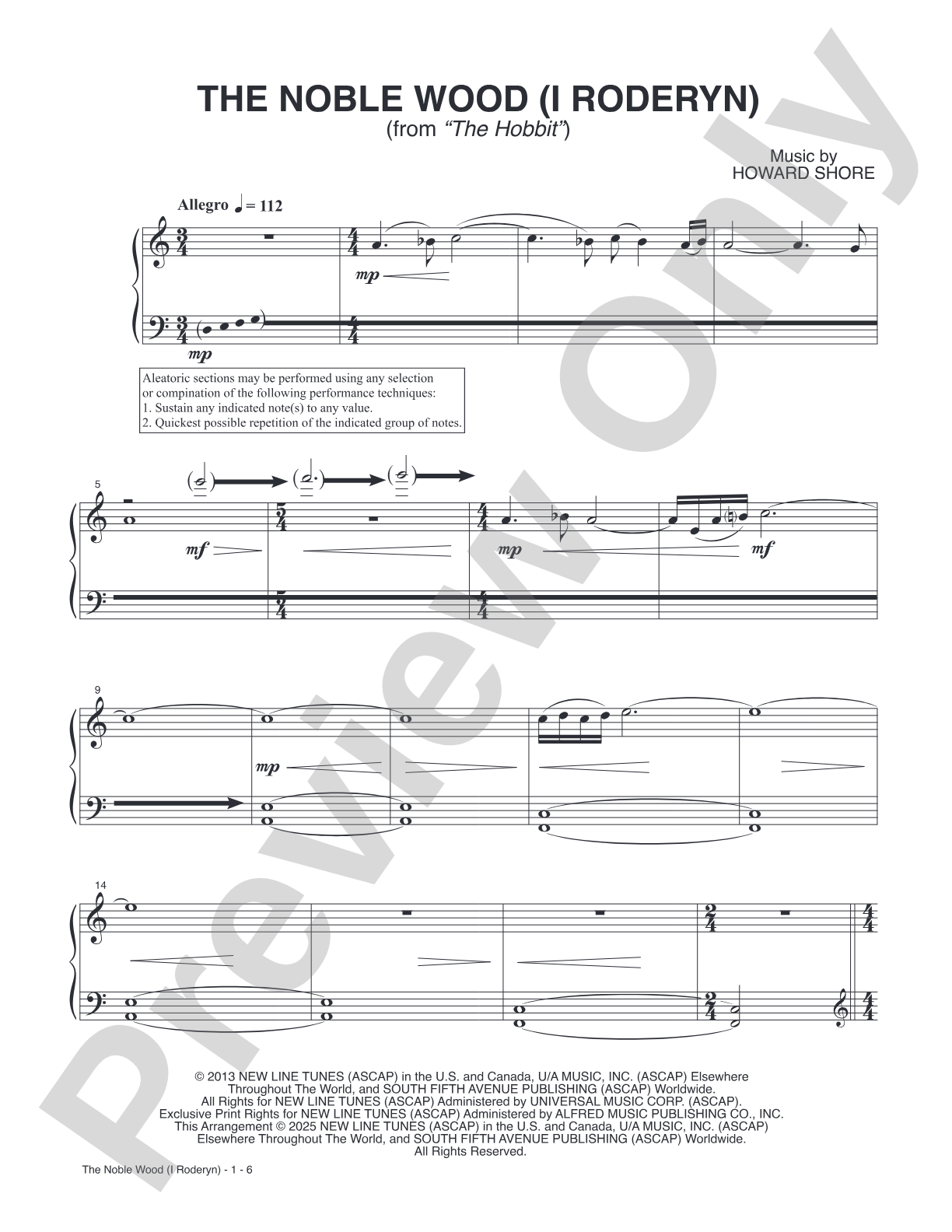
The Noble Wood (I Roderyn) (from <i>"The Hobbit"</i>) Sheet Music Preview

The Noble Wood (I Roderyn) (from "The Hobbit"): Easy Piano

(from "The Hobbit")

Music by Howard Shore

Item: 00-PS-0017697

Digital Download
$5.99

One moment…

Description
New music from The Hobbit! To retain the character of Howard Shore's original orchestration of The Noble Wood (I Roderyn), this score reduction splits into three staffs occasionally as the piece progresses, allowing the player to choose which lines to highlight.

The Noble Wood (I Roderyn) (from "The Hobbit"): Easy Piano isn't in MakeMusic Cloud just yet...but it could be. Let us know you'd like to see it, and you'll help shape what comes next. In the meantime, start a free trial and dive into thousands of interactive titles your students can play along with today.

Sample Audio
No sample audio found.
Sample Video
Additional Details
Series: Digital Sheet Music - Piano Solo
SKU: 00-PS-0017697

More about this title

About the Composer: Howard Shore

Howard Shore is a film composer whose orchestral work has shaped the sound of modern cinema. His scores for the Middle-earth films demonstrate sophisticated harmonic language and the ability to write idiomatically for both orchestra and solo instruments, making his music a rich resource for teaching composition and arrangement across levels.

Why we love this

Shore's original orchestrations translate beautifully to the piano, and this score reduction respects that translation by letting players choose which orchestral colors to foreground. Students get to experience how a master film composer thinks about texture and layering, not just melody and harmony.

What to expect

Noble and reflective, with the sense of mystery and quiet grandeur that defines Middle-earth's quieter moments. The piece breathes with orchestral space even as a solo, inviting the player into the contemplative mood Shore creates.

Who it's for

Intermediate pianists who want to tackle film music with real harmonic and textural depth. This works equally well for students exploring contemporary composition or players building a repertoire of accessible transcriptions from major orchestral sources.

How to get the most out of it

  • When the staff splits into three systems, experiment with different voice combinations before settling on your interpretation. Playing all three lines gives you the orchestral density; dropping the middle voice creates transparency.
  • Listen to Shore's original recording while learning the piece so you internalize the character and pacing he intended. Film music often rides subtle tempo changes that aren't always notated explicitly.
  • Balance the melodic material against accompaniment carefully in the middle register, where orchestral themes often live. It's easy to let inner voices overwhelm the main line on a single instrument.

How to use it

Program this as a concert closer or standalone feature that showcases how film scores transfer to acoustic instruments. It's also an engaging way to introduce students to Shore's compositional voice before assigning larger ensemble arrangements of his work.

Skills your students will build

  • Managing multiple independent lines across three staves simultaneously
  • Translating orchestral texture and color to the piano
  • Interpreting expressive choices from a film score context
  • Voice independence and selective doubling

You May Also Like