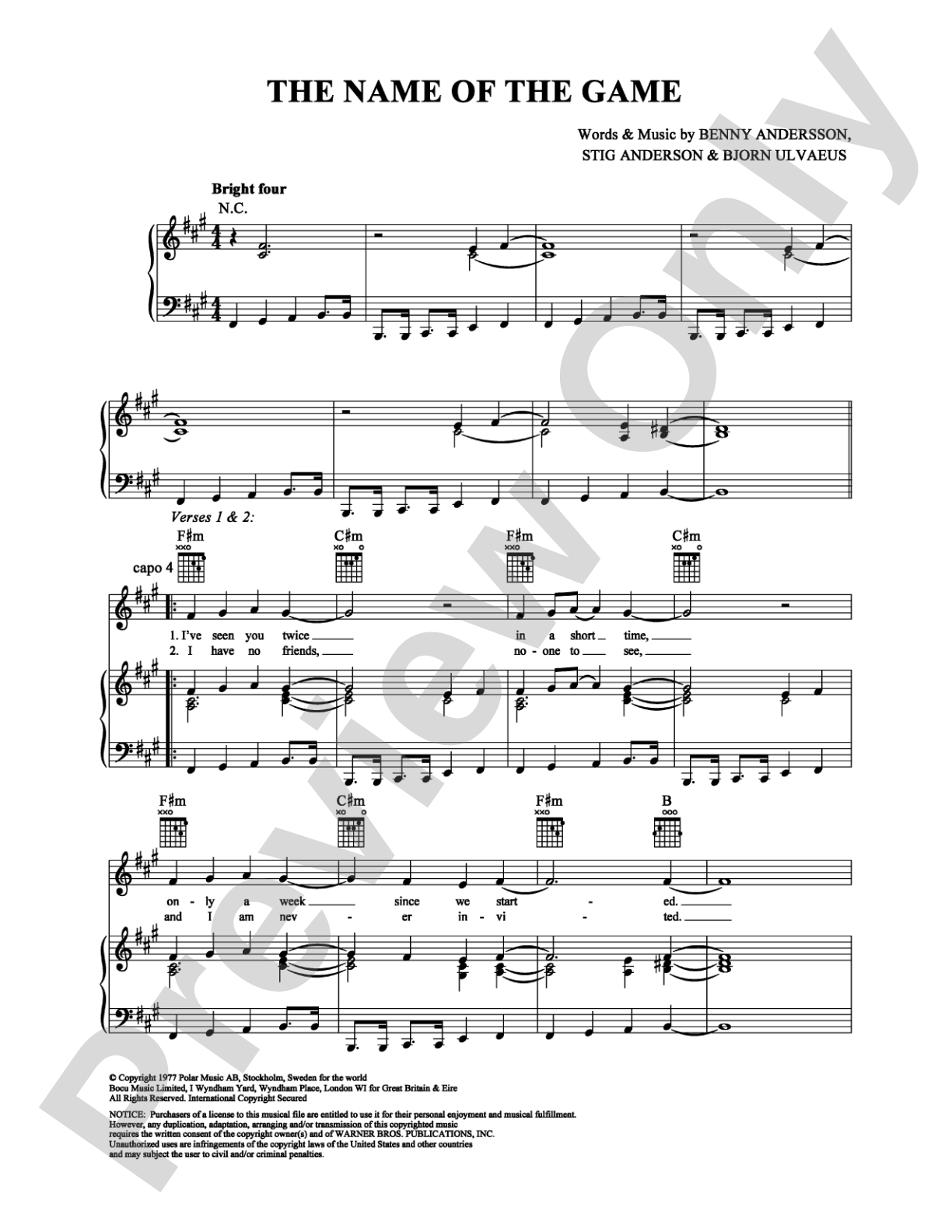
The Name of the Game: Piano/Vocal/Chords Digital Sheet Music

The Name of the Game: Piano/Vocal/Chords Digital Sheet Music

ABBA, Björn Ulvaeus, Benny Andersson, Stig Anderson

Item: 00-PS-0003463

Digital Download
$3.99
Description

The Name of the Game: Piano/Vocal/Chords Digital Sheet Music isn't in MakeMusic Cloud just yet...but it could be. Let us know you'd like to see it, and you'll help shape what comes next. In the meantime, start a free trial and dive into thousands of interactive titles your students can play along with today.

Sample Audio
No sample audio found.
Sample Video
Additional Details
SKU: 00-PS-0003463

More about this title

About the Artist: ABBA

ABBA emerged from Sweden in the 1970s to become one of the most commercially successful pop groups in history. Their distinctive blend of pop sensibility, sophisticated harmonies, and infectious melodies made them studio innovators and live performers who shaped the sound of an entire decade. The band's catalog remains a cornerstone of popular music education, offering accessible yet musically substantial material for singers and pianists at multiple levels.

Why we love this

This arrangement captures what makes ABBA endure in music education: melodic clarity married to harmonic interest. The piano/vocal/chords format gives singers room to dig into phrasing while pianists have enough harmonic substance to stay engaged. It's the kind of song that works equally well in a contemporary pop unit, a musical theater setting, or a student recital where you want material that feels current and rewarding.

What to expect

Warm, inviting, and instantly familiar. The song carries the hallmark ABBA sound: a hook that embeds itself in memory, clean harmonic progressions that feel both accessible and sophisticated, and an optimistic emotional core that appeals across age groups.

Who it's for

Singers preparing material for contemporary music settings, musical theater workshops, or solo recitals will find this arrangement immediately singable with enough harmonic support to feel substantial. Pianists can use it as a solo accompaniment piece or as a foundation for improvisation and reharmonization work.

How to get the most out of it

  • Balance the vocal melody against the piano part so the lyrics land clearly. ABBA's genius lies in singability, so avoid letting accompaniment details overshadow the tune.
  • Pay attention to the harmonic rhythm in the piano voicings. The movement between chords often suggests subtle shifts in energy that shape phrasing naturally.
  • Nail the rhythmic pocket. ABBA's grooves are deceptively precise; lock in with the accompaniment rather than laying back or pushing ahead.

How to use it

Include this in a pop or contemporary music concert alongside other songs from the 1970s-1980s, or feature it in a musical theater or cabaret-style program where audience recognition matters. It also works as a solo vehicle in a student recital when you want to program something with genuine commercial appeal.

Skills your students will build

  • Singing pop melody with clear diction and phrasing control
  • Reading piano/vocal score formatting and chord symbols
  • Understanding functional harmony in pop contexts
  • Coordinating vocal and piano entries for ensemble precision

You May Also Like