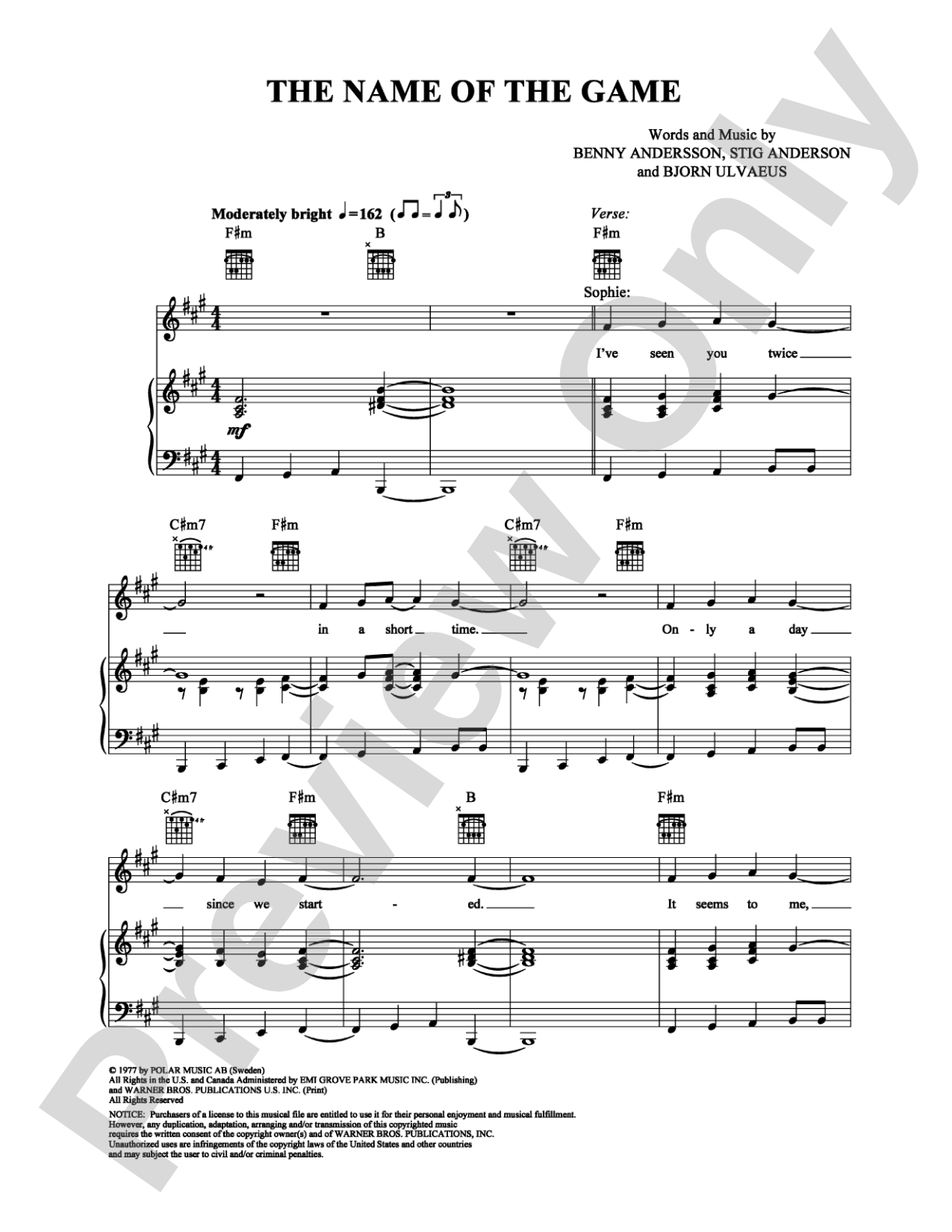
The Name of the Game: Piano/Vocal/Chords Digital Sheet Music

The Name of the Game: Piano/Vocal/Chords Digital Sheet Music

ABBA, Björn Ulvaeus, Benny Andersson, Stig Anderson

Item: 00-PS-0002377

Digital Download
$3.99
Description

The Name of the Game: Piano/Vocal/Chords Digital Sheet Music isn't in MakeMusic Cloud just yet...but it could be. Let us know you'd like to see it, and you'll help shape what comes next. In the meantime, start a free trial and dive into thousands of interactive titles your students can play along with today.

Sample Audio
No sample audio found.
Sample Video
Additional Details
SKU: 00-PS-0002377

More about this title

About the Artist: ABBA

ABBA emerged from Stockholm in the 1970s as one of the most commercially successful pop groups in music history. The band's distinctive sound balanced catchy melodies, tight vocal harmonies, and sophisticated production techniques that influenced pop songwriting for decades. Their material remains a staple in music education settings, particularly for teaching song arrangement, harmonic sophistication, and the craft of hit songwriting across multiple genres.

Why we love this

This arrangement captures the infectious pop-rock sensibility that made ABBA's catalog enduring classroom material. Piano/vocal/chords versions like this work beautifully for teaching song interpretation and arrangement adaptation, allowing singers and pianists to collaborate on a piece that rewards both technical precision and expressive phrasing.

What to expect

Bright, propulsive, and deeply satisfying. The song carries the unmistakable ABBA sheen: crystalline vocal harmonies layered over a driving rhythm section and keyboard hooks that burrow into your head. There's an uplifting quality to the track that makes it rewarding for both performers and listeners.

Who it's for

Piano/vocal/chords arrangements of ABBA songs work well for developing pianists accompanying singers in studio or small ensemble settings, as well as for singers preparing pop material with flexible accompaniment. This format is ideal for students learning to read lead sheets and understand the relationship between chord symbols and actual voicing choices.

How to get the most out of it

  • Anchor the groove in the piano accompaniment first; students often rush the rhythmic syncopations that define ABBA's pop sound, so locking the beat in the keyboard part steadies the entire performance.
  • Balance vocal clarity with the harmonic complexity underneath; ABBA's chords are rich and warrant space, but the vocal melody must remain the focal point.
  • Pay attention to dynamic shape across the song; ABBA structures build intensity gradually, and marking your climactic moments in rehearsal prevents flat delivery.
  • Experiment with chord voicings at the keyboard; the chords provided offer flexibility, allowing pianists to voice them in ways that suit the style and the room's acoustics.

How to use it

Include this in a pop/rock showcase or end-of-semester recital where your pianists and singers want material that feels contemporary and accessible without sacrificing musicianship. It also works as an engaging bridge between classical and popular music contexts in programs aimed at younger students or students new to formal music study.

Skills your students will build

  • Reading and interpreting lead sheet notation
  • Collaborative ensemble awareness between vocalist and accompanist
  • Understanding contemporary pop harmony and chord function
  • Phrasing and interpretation in pop/rock idioms
  • Rhythmic precision in syncopated accompaniment patterns
  • Keyboard voicing choices and chord realization

You May Also Like