The Music of Billy Strayhorn for Brass Quintet Cover Image

The Music of Billy Strayhorn for Brass Quintet: Brass Quintet Conductor Score

$5.00 USD
Sale price  $5.00 USD Regular price 
Skip to product information
The Music of Billy Strayhorn for Brass Quintet Cover Image

The Music of Billy Strayhorn for Brass Quintet: Brass Quintet Conductor Score

By Billy Strayhorn / arr. Zachary Smith

Grade: 3.5 (Medium)

Item: 00-41172S

$5.00
Shipped

One moment…

Description
Brass quintet instrumentation is two B-flat trumpets, French horn, trombone, and tuba. Featuring three Strayhorn compositions, "Raincheck," "Chelsea Bridge," and "Take the 'A' Train." Each piece can be performed individually or as a medley. Designed for jazz or legit players. (5:58)

The Music of Billy Strayhorn for Brass Quintet: Brass Quintet Conductor Score isn't in MakeMusic Cloud just yet...but it could be. Let us know you'd like to see it, and you'll help shape what comes next. In the meantime, start a free trial and dive into thousands of interactive titles your students can play along with today.

Sample Pages

Sample Audio
0:00
0:00
Sample Video
Additional Details
Series: Belwin Jazz Small Ensemble
Publisher: Alfred Music
Page Count: 12
UPC: 038081470870
SKU: 00-41172S

More about this title

About the Composer: Billy Strayhorn
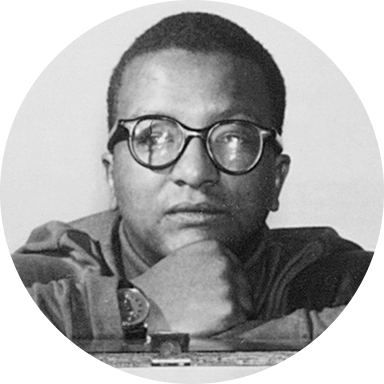
Billy Strayhorn

Billy Strayhorn (1915-1967) remains one of the most consequential yet underrecognized composers in American music history. Born in Dayton, Ohio, he began his partnership with Duke Ellington in 1939, a collaboration that would define both their legacies. Though Strayhorn lived openly as a gay Black man during an era of profound social constraint, he maintained a prolific compositional voice, creating some of jazz's most enduring standards.

Strayhorn's influence on the jazz repertoire runs deep and wide. His composition "Take the 'A' Train" became the Duke Ellington Orchestra's theme in the 1940s and remains one of the twentieth century's most recorded melodies. "Lush Life," written when he was just sixteen, stands as a harmonic and melodic masterwork that has challenged and inspired generations of jazz musicians, from Nat King Cole to John Coltrane. His works have been recorded by virtually every significant jazz artist of the past seventy years, even as his name often remained in the shadows of greater public recognition.

Why we love this

Strayhorn's three masterpieces sit perfectly at Grade 3.5, offering brass quintet conductors genuine jazz sophistication without requiring virtuosos. The arrangement captures the elegance and harmonic richness that make these songs standards while keeping the technical and ensemble demands accessible to accomplished high school or college players. Programming these pieces signals you're not settling for tourist jazz; you're presenting the real thing.

What to expect

These three pieces carry the urbane elegance and harmonic depth of the Ellington sound, transplanted into the intimate chamber setting of a brass quintet. "Raincheck" and "Chelsea Bridge" unfold with lyrical warmth and surprising harmonic turns, while "Take the 'A' Train" swings with the infectious charm that made it an era-defining melody. Together, they create a program that feels both conversational and substantial.

Who it's for

Brass quintet conductors seeking authoritative jazz repertoire that sounds sophisticated but remains achievable for Grade 3.5 ensembles. This works equally well for jazz-focused quintets and classically trained brass players ready to explore the jazz idiom with serious material.

How to get the most out of it

  • Balance the voicings carefully in the middle voices. The horn and trombone often carry harmonic weight that can disappear if the trumpets and tuba dominate the texture. Rehearse these voices as a unit before bringing in the full quintet.
  • Treat "Chelsea Bridge" as a ballad that breathes. Allow space between phrases and resist the urge to rush; the harmonic movement is lush enough to sustain attention without constant forward momentum.
  • In "Take the 'A' Train," lock the rhythmic foundation (trombone and tuba) so the trumpets and horn can float the melody and countermelody above it. The groove is essential to the piece's identity.
  • Consider the original context of these pieces as Ellington Orchestra standards. Listen to classic Duke Ellington recordings to hear how these songs sit in their original setting, then adapt that sensibility to your quintet's sound.

How to use it

Perform all three as a medley for a single, cohesive set, or select individual pieces to anchor different concert moments. "Take the 'A' Train" works beautifully as an opener or encore; "Chelsea Bridge" serves as a ballad centerpiece; "Raincheck" fits naturally between more classical works, adding color without jarring the program flow.

Skills your students will build

  • Reading jazz chord symbols and improvisation-friendly lead sheets
  • Voice leading in modal and chromatic harmonic contexts typical of Ellington-era jazz
  • Ensemble balance in jazz voicings, particularly managing horn and trombone as harmonic anchors
  • Phrasing and articulation in swing idiom, contrasted with ballad interpretation
  • Rhythmic cohesion in jazz rhythm section (trombone and tuba as functional partners)

You May Also Like