
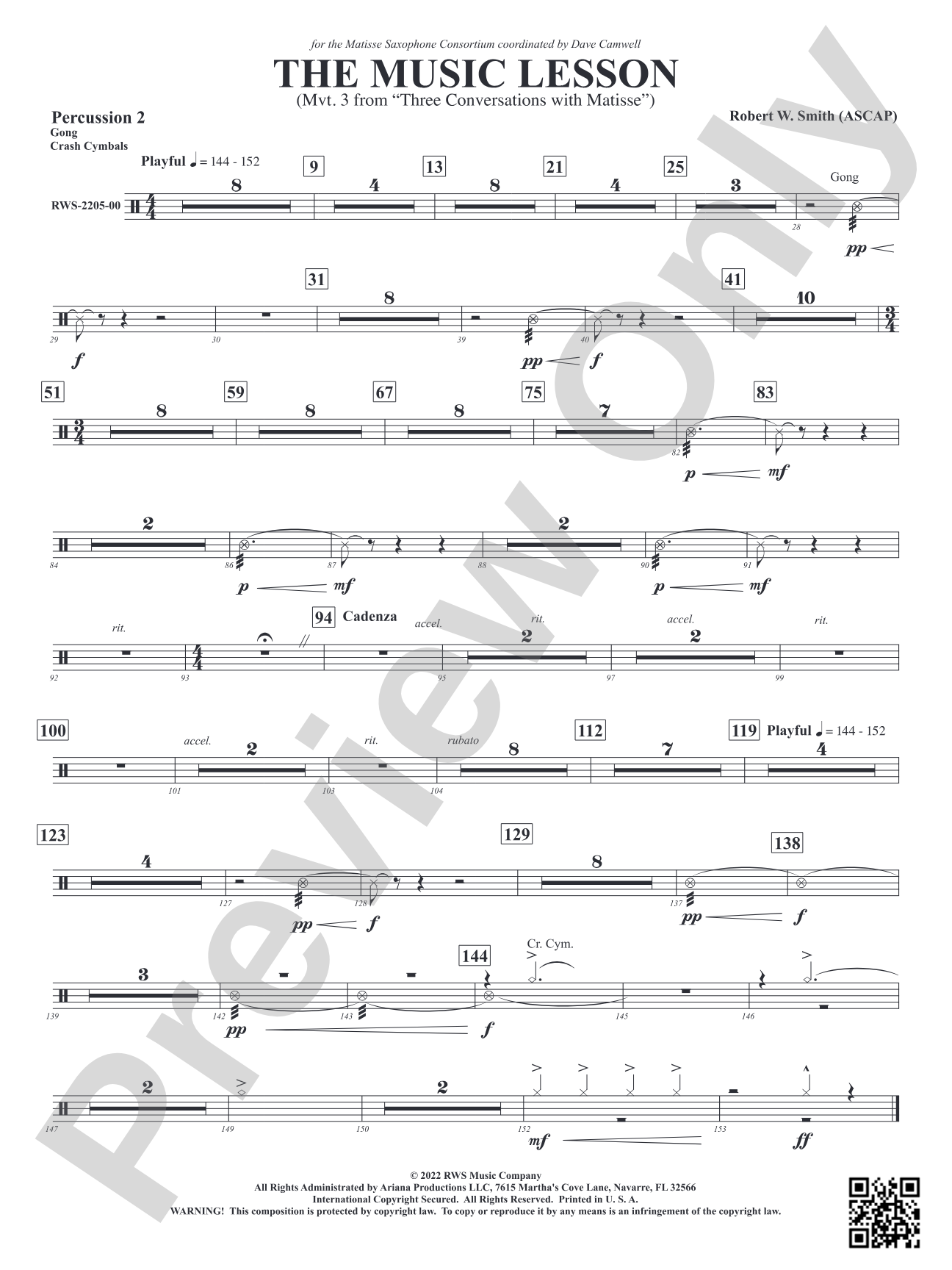

The Music Lesson - Mvt. 3 from Three Conversations with Matisse: 2nd Percussion
Mvt. 3 from Three Conversations with Matisse
By Robert W. Smith
Grade: 4.5
Item: 98-PC-RWS2205_PC2
$3.99
Pickup currently not available
Description
Inspired by the command and structure of two Henri Matisse paintings under the name "The Music Lesson", this powerful work for alto saxophone and band will become a staple of the repertoire. From the strict structure of the opening piano statement to the classically influenced melodic interplay with the saxophone, the piece moves through a flowing musical environment highlighted by a virtuosic cadenza. The recapitulation of the initial melodic line completes our music lesson and provides a strong conclusion to "Three Conversations With Matisse", a suite for alto saxophone and band.
Original Item#: RWS-2205-00


Original Item#: RWS-2205-00
The Music Lesson - Mvt. 3 from Three Conversations with Matisse: 2nd Percussion isn't in MakeMusic Cloud just yet...but it could be. Let us know you'd like to see it, and you'll help shape what comes next. In the meantime, start a free trial and dive into thousands of interactive titles your students can play along with today.
Request This Title
Tell us you want it.
Start Your Free Trial
Explore everything that's ready to play right now.
Sample Audio
1
Audio File
--:--
0:00
0:00
Sample Video
No sample videos found.
Additional Details
Series:
RWS - Symphony Band
Publisher:
RWS Music Company
SKU:
98-PC-RWS2205_PC2
More about this title
About the Composer: Robert W. Smith
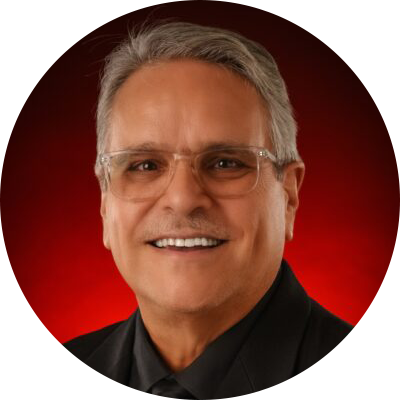
Robert W. Smith stands among America's most performed composers of concert and symphonic band music, with more than 400 published works to his credit. His education at Troy State University and the University of Miami grounded him in both pedagogy and composition, preparation that would define his entire career as a working composer and clinician.
Smith's original compositions have traveled across continents, from concert halls in Europe and Asia to major televised events including the Macy's Thanksgiving Day Parade, the Olympic Games, and Opening Day at Dodger Stadium. As both composer and conductor, he has led ensembles and taught clinics throughout North America, Japan, Australia, and Europe, bringing his deep understanding of what bands can achieve musically and technically to thousands of musicians.
Why we love this
Smith writes for what musicians can actually do at a given level, and this third movement demonstrates his gift for balancing technical demands with musical substance. The alto saxophone emerges as the emotional center of the work, but Smith never isolates the soloist; instead, the band becomes a full partner in the musical conversation, making this feel like ensemble playing rather than accompaniment. The virtuosic cadenza rewards a capable soloist while the structured opening and reflective recapitulation give every performer something dramatically satisfying to execute.
What to expect
The piece unfolds as a formal conversation between strict order and lyrical expression. The opening radiates a classical discipline that feels almost architectural, but once the saxophone enters, the music relaxes into conversation, building toward a moment of unguarded virtuosity. The return of the opening material arrives with new weight and understanding, as if both soloist and ensemble have learned something together.
Who it's for
This movement works well for bands with at least one capable alto saxophonist who can command the solo line with both technical fluency and musical maturity. Grade 4.5 ensembles should have solid fundamentals across all sections, particularly consistent intonation and blend in the mid-range winds where much of the band writing sits. Directors seeking a showcase piece that elevates the entire ensemble while featuring a strong soloist will find this work both musically rewarding and technically appropriate for upper-level high school or college bands.
How to get the most out of it
- Establish the opening piano statement with absolute clarity and stillness; this rigorous foundation is what the saxophone's entrance responds to, so resist any impulse to rush or soften these first measures.
- Balance the saxophone soloist within the band texture by thinking of the ensemble as responsive rather than supportive; the band should listen and react to what the soloist plays, creating genuine musical dialogue.
- Shape the cadenza as a moment of personal expression for your saxophonist, but anchor it rhythmically so the band's re-entry lands with precision and impact.
- Pay close attention to the recapitulation's pacing; this return of familiar material signals the conclusion, so bring a sense of inevitability and strength to these final statements.
How to use it
Consider this as the centerpiece of a concert featuring other works by Smith or as a standalone feature for a band with a strong saxophonist. Because it functions as the third movement of a larger suite, it also works beautifully on a program pairing it with the other two conversations, allowing audiences to hear how Smith developed his musical ideas across the full work. The piece suits both concert and festival contexts, where its combination of spectacle and substance will resonate with both judges and listeners.
Skills your students will build
- Balancing a featured soloist within ensemble texture
- Executing structured, classical forms with precision and pacing
- Responding musically to a saxophone soloist's expressive choices
- Managing dynamics across the full range of the band without losing cohesion
- Performing virtuosic passage work with accurate articulation and intonation