
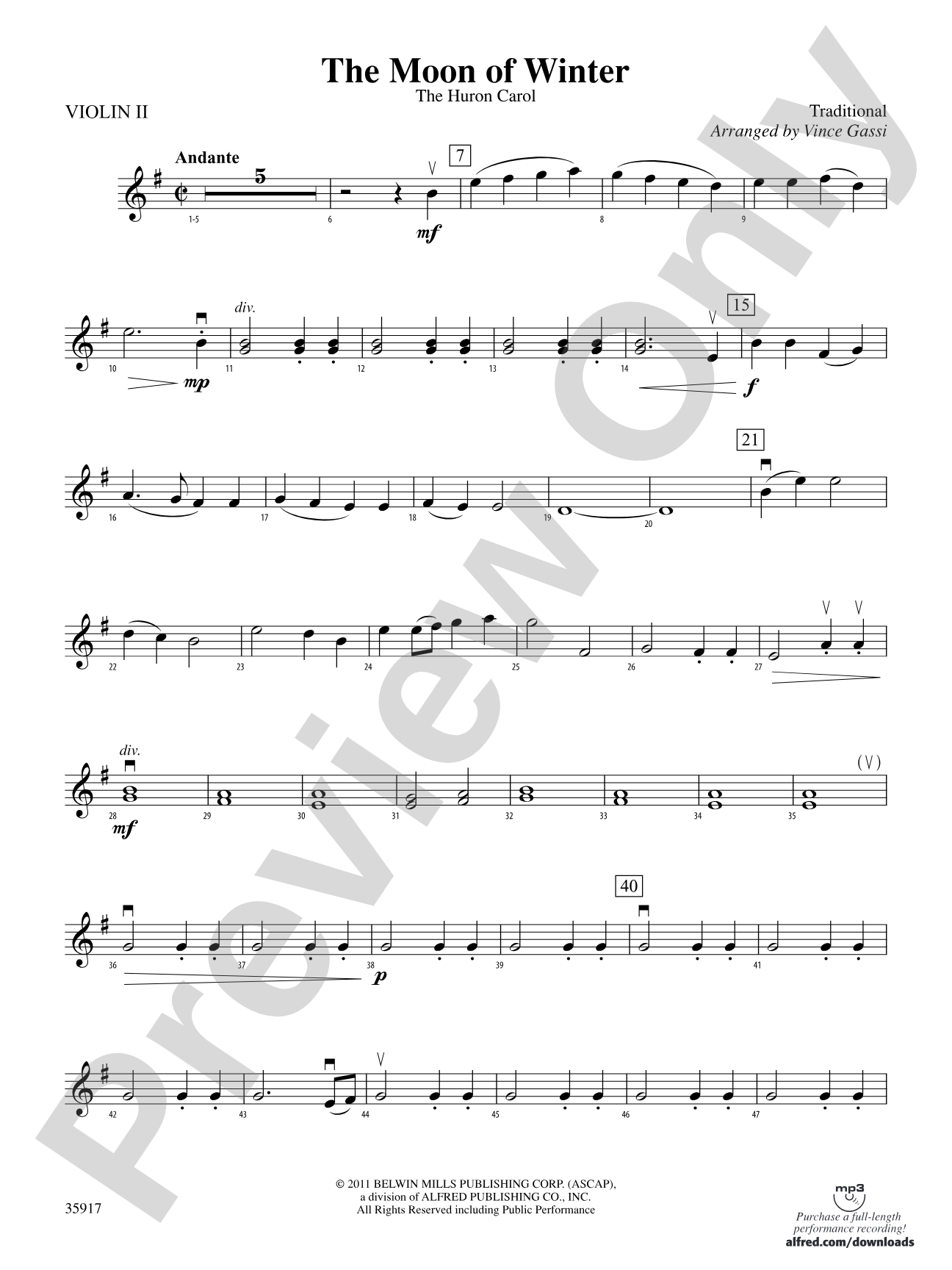

The Moon of Winter: 2nd Violin
Traditional / arr. Vince Gassi
Grade: 3
Item: 00-PC-0015001_VN2
$7.99
Pickup currently not available
Description
"The Huron Carol" is Canada's oldest Christmas carol written in 1643 by Jean de Brébeuf, a Jesuit missionary. The melody is from a traditional French folk song, "Une Jeune Pucelle" (A Young Maid). Intended as a gift and teaching aid to the Huron people, Brébeuf wrote the lyrics in their native language. The Moon of Winter is a powerful and moving adaptation of this carol for strings that will enhance your next Christmas concert, adding a sense of reverence and honor.


Don't just read it, hear it, play along with it, and watch your students grow with it. In MakeMusic Cloud, The Moon of Winter: 2nd Violin comes alive with professional accompaniment, adjustable tempo, and built-in practice tools that turn solo practice into real progress.
Open in the Player
Jump straight in and assign it today.
Start Your Free Trial
Open this title and explore the full library in minutes.
Sample Audio
1
Audio File
--:--
0:00
0:00
Sample Video
No sample videos found.
Additional Details
Series:
Belwin Intermediate String Orchestra
Publisher:
Alfred Music
Page Count:
76
SKU:
00-PC-0015001_VN2
Instrumentation:
strings w/ vln 3 and glockenspiel
More about this title
About the Arranger: Vince Gassi
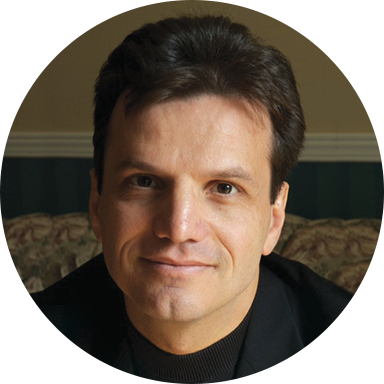
Vince Gassi has built a prolific career as a composer, arranger, and conductor since joining Alfred Music in 2006. With more than 100 published works to his name, he has developed a reputation for creating pieces that balance musical substance with student engagement. His education spans the University of Western Ontario, the Dick Grove School of Music in Los Angeles, and a Ph.D. from York University in Toronto, grounding his work in both classical training and contemporary arranging practice.
Over twenty-five years of classroom teaching at elementary and secondary levels inform Gassi's approach to instrumentation and difficulty. He is regularly invited as a guest conductor, adjudicator, and clinician across North America, and his seminars on arranging concepts and digital workflows for music directors have influenced how educators approach repertoire selection and performance preparation. His pieces appear frequently on concert programs and festival lists internationally, with performances documented across North America, Europe, and Japan.
Why we love this
Gassi's treatment of this 17th-century carol respects its historical and cultural weight while making it genuinely playable for Grade 3 orchestras. The addition of glockenspiel and the inclusion of a third violin part creates textural variety without overcomplicating the string writing, letting younger musicians experience the piece as a complete, polished work rather than a stripped-down version.
What to expect
The music carries a quiet dignity and hushed reverence, with the carol's gentle melody unfolding over warm string harmonies. There is a sense of both timelessness and intimacy, as though the Huron Carol is being sung from memory in a candlelit space, each voice part contributing to an atmosphere of contemplation rather than spectacle.
Who it's for
String orchestras in middle school and early high school programs seeking meaningful seasonal repertoire that honors both Indigenous and European musical heritage. Directors working with ensembles ready for Grade 3 complexity and programs aiming to program something beyond the standard Christmas fare.
How to get the most out of it
- Balance the melody between first and second violins so the carol's contour emerges clearly; the third violin and glockenspiel are textural companions, not harmonic necessities.
- Shape the phrasing in two- and four-bar units following the carol's natural hymn-like structure; resist rushing, as the reverent character depends on breath and space.
- Bring the glockenspiel into clarity during sustained passages in the lower strings, where it can shimmer without competing for attention.
- Use tuning time before rehearsal to ensure the ensemble agrees on vibrato frequency and intensity; consistency here lifts the entire piece's meditative quality.
How to use it
Pair this as a centerpiece for a winter concert's second half, where it can anchor a small group of seasonal pieces and create a tonal bridge to other sacred or folk-inspired works. The scale and reverent character also make it an effective ensemble closer, leaving the audience in a reflective rather than celebratory frame of mind.
Skills your students will build
- Sustained tone production and vibrato control in slower tempos
- Phrasing and shaping across longer melodic lines
- Balance between melody and harmonic accompaniment across multiple violin sections
- Sensitivity to historical and cultural context in musical interpretation
- Ensemble intonation in unison and simple harmony