
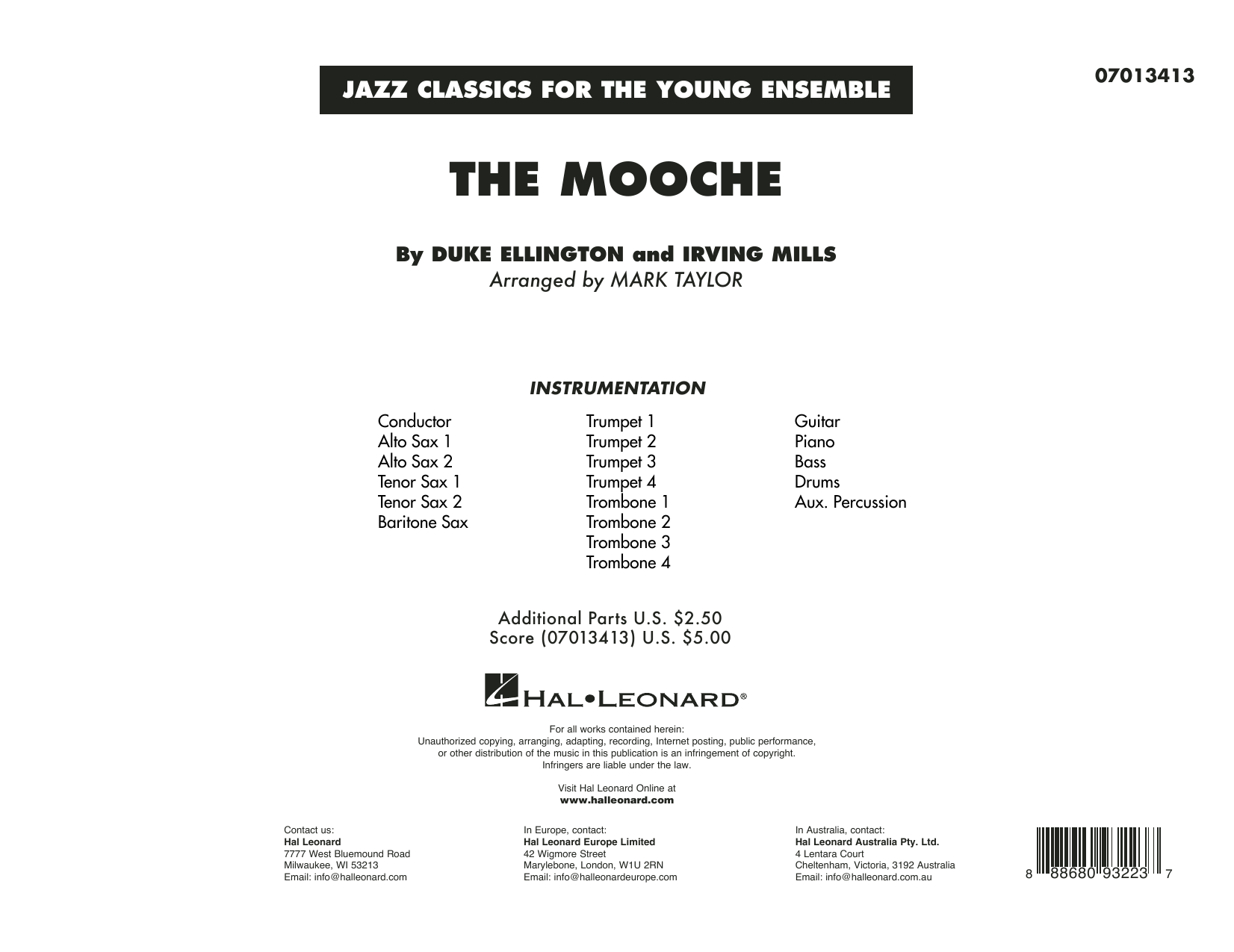

The Mooche (arr. Mark Taylor): Jazz Ensemble Conductor Score & Parts
As performed by Duke Ellington / Arranged by Mark Taylor
Grade: 3
Item: 35-PK00441275
$45.00
Pickup currently not available
Buy Extra Parts (Digital PDF Download)
Parts Added to Cart!
Description
Composed in 1928, Ellington's "The Mooche" was characterized as "jungle style" at the time thanks to the unique instrumentation and rhythmic style. Mark Taylor's outstanding version for younger players alternates between the Latin styles salsa and mambo, and features solo space for tenor sax and trombone. Unique and effective!


The Mooche (arr. Mark Taylor): Jazz Ensemble Conductor Score & Parts isn't in MakeMusic Cloud just yet...but it could be. Let us know you'd like to see it, and you'll help shape what comes next. In the meantime, start a free trial and dive into thousands of interactive titles your students can play along with today.
Request This Title
Tell us you want it.
Start Your Free Trial
Explore everything that's ready to play right now.
Sample Audio
No sample audio found.
Sample Video
No sample videos found.
Additional Details
Publisher:
Hal Leonard
SKU:
35-PK00441275
More about this title
About the Artist: Duke Ellington
Duke Ellington (1899-1974) stands as one of the most prolific composers in American music history, with a catalog spanning over one thousand compositions. His approach to orchestration fundamentally expanded what jazz ensembles could express, moving the idiom far beyond dance hall entertainment into concert halls and serious artistic consideration. Ellington's influence on music education remains significant; his works appear in curricula worldwide because they teach harmonic sophistication, instrumental color, and the power of compositional craft applied to improvisation.
Why we love this
Mark Taylor's arrangement captures the swagger and sophistication of Ellington's original while opening it up for younger ensembles. The alternation between salsa and mambo feels fresh and gives students a genuine reason to lock in their rhythmic precision, while the tenor sax and trombone features guarantee that your soloists get meaningful musical moments.
What to expect
The piece radiates the theatrical confidence of 1920s Ellington, with moments of genuine exotic allure that justify the "jungle style" label, even as it swings with playful irreverence. The alternating Latin grooves give it a sophisticated, cosmopolitan flavor that feels both historically informed and genuinely fun to play.
Who it's for
Jazz ensembles working at Grade 3 level who are ready to explore beyond swing and want to include Latin jazz styles in their repertoire. Directors seeking a high-quality arrangement that doesn't demand extensive improvisation experience from their students while still honoring Ellington's compositional voice.
How to get the most out of it
- Establish the groove early in rehearsals by isolating the rhythm section and nailing the distinction between the salsa and mambo feels. The contrast only works if each style sits solidly.
- Let your soloists hear recordings of the original to absorb the phrasing and attitude of Ellington-era jazz. Their solo sections benefit enormously from that historical reference.
- Balance the ensemble voicing so the horn lines cut through without overwhelming the rhythm section's harmonic foundation. Grade 3 arrangements sometimes need reminding about dynamics across sections.
- Pay attention to the Latin percussion and auxiliary percussion parts; they anchor the stylistic shifts and deserve rehearsal time on their own.
How to use it
Place this in a concert exploring jazz standards and their evolution, pairing it with other Ellington works or with contemporary Latin jazz pieces to show your students the breadth of the genre. It works particularly well as a spring concert feature after students have spent fall and winter developing foundational jazz vocabulary.
Skills your students will build
- Distinguishing and executing salsa and mambo rhythmic feels
- Comping and soloing in a jazz context with reduced improvisation demands
- Balancing ensemble voicing in a Grade 3 jazz arrangement
- Responding to Latin jazz percussion cues and stylistic markers
- Sectional awareness in a multi-style composition