The Moldau: Viola Sheet Music Preview

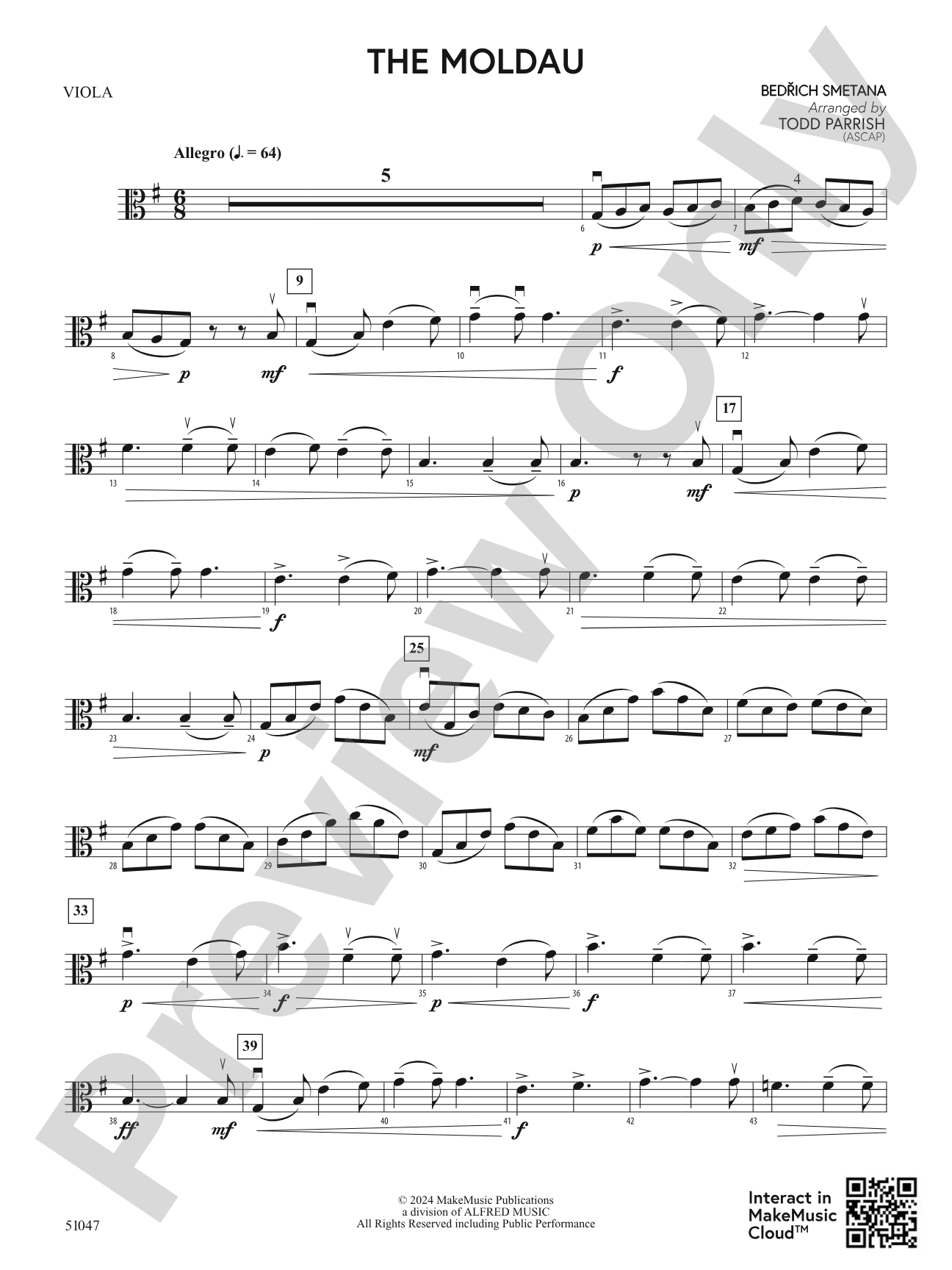
The Moldau: Viola

By Bedrich Smetana / arr. Todd Parrish

Grade: 2.5

Item: 00-PC-0019249_VA1

Digital Download
$3.00
Description
Like the original, this highly playable arrangement of Bedrich Smetana's masterwork The Moldau starts simply and builds gradually to a grand finish. Todd Parrish has taken great care to avoid any advanced, extended fingerings. Despite its pedagogical approach, this arrangement remains incredibly authentic to the original. (2:45)

Don't just read it, hear it, play along with it, and watch your students grow with it. In MakeMusic Cloud, The Moldau: Viola comes alive with professional accompaniment, adjustable tempo, and built-in practice tools that turn solo practice into real progress.

Sample Audio
0:00
0:00
Sample Video
Additional Details
Series: MakeMusic Intermediate Strings
Publisher: MakeMusic Publications
SKU: 00-PC-0019249_VA1

More about this title

About the Composer: Bedrich Smetana

Bedrich Smetana (1824-1884) stands as the founder of Czech musical nationalism. His symphonic poem The Moldau, the most celebrated movement from his cycle Má vlast (My Homeland), transformed a river into a musical journey that has become synonymous with Czech identity and pride.

Smetana's genius lay in his ability to capture landscape through orchestration and melody. The Moldau's enduring place in concert halls and educational programs worldwide reflects both its musical sophistication and its accessibility. For string players, it offers an entry point into the Romantic era's orchestral thinking without overwhelming technical demands.

Why we love this

This arrangement preserves the magic of Smetana's narrative arc while honoring what intermediate string orchestras can actually accomplish. Todd Parrish's restraint with fingerings means your students stay focused on musical shape, phrasing, and ensemble blend rather than fighting the page. It's a work that sounds far more sophisticated than its grade level suggests, perfect for building student confidence and concert-hall credibility.

What to expect

A river in motion: sometimes gentle and reflective, sometimes turbulent with energy, always flowing forward. The opening establishes quiet contemplation before landscapes shift—forests, peasant celebrations, moonlit rapids. By the climax, the entire orchestra moves as one force, building to a brilliant cascade of sound that resolves into peaceful acceptance.

Who it's for

String orchestras at the intermediate level (Grade 2.5) ready to tackle a masterwork with serious musical and historical weight. Directors seeking a piece that satisfies festival adjudicators, engages audiences, and challenges students musically without technical complexity. This arrangement also suits programs balancing pedagogical growth with the desire to program literature rather than exercises.

How to get the most out of it

  • Shape the opening theme gently; let the clarinet-like melody float above sustained viola and cello foundation before the river's energy increases
  • Balance inner voices carefully during the build to the climax. Second violins and violas carry crucial harmonic motion that keeps momentum alive
  • Use the natural dynamic arc Smetana composed rather than adding your own. The piece itself guides you from whisper to grandeur if the ensemble trusts it
  • Prepare the transition points with clear conducting. The shift from one section to the next should feel inevitable, not rushed

How to use it

Program this as a centerpiece of a concert celebrating a single composer or exploring Romantic nationalism across cultures. It works equally well as the anchor of a spring concert or as a festival selection that demonstrates your ensemble's growth through the year. The 2:45 duration makes it an ideal pairing with shorter works, leaving room for contrasting pieces without overloading the program.

Skills your students will build

  • Following longer musical narratives through dynamic and textural development
  • Balancing melody with harmonic accompaniment across multiple string voices
  • Responding to conductor gestures for subtle transitions between musical sections
  • Ensemble intonation across sustained harmonic passages
  • Phrasing and shaping that spans multiple measures rather than phrase-to-phrase thinking

You May Also Like