The Mill Sheet Music Preview

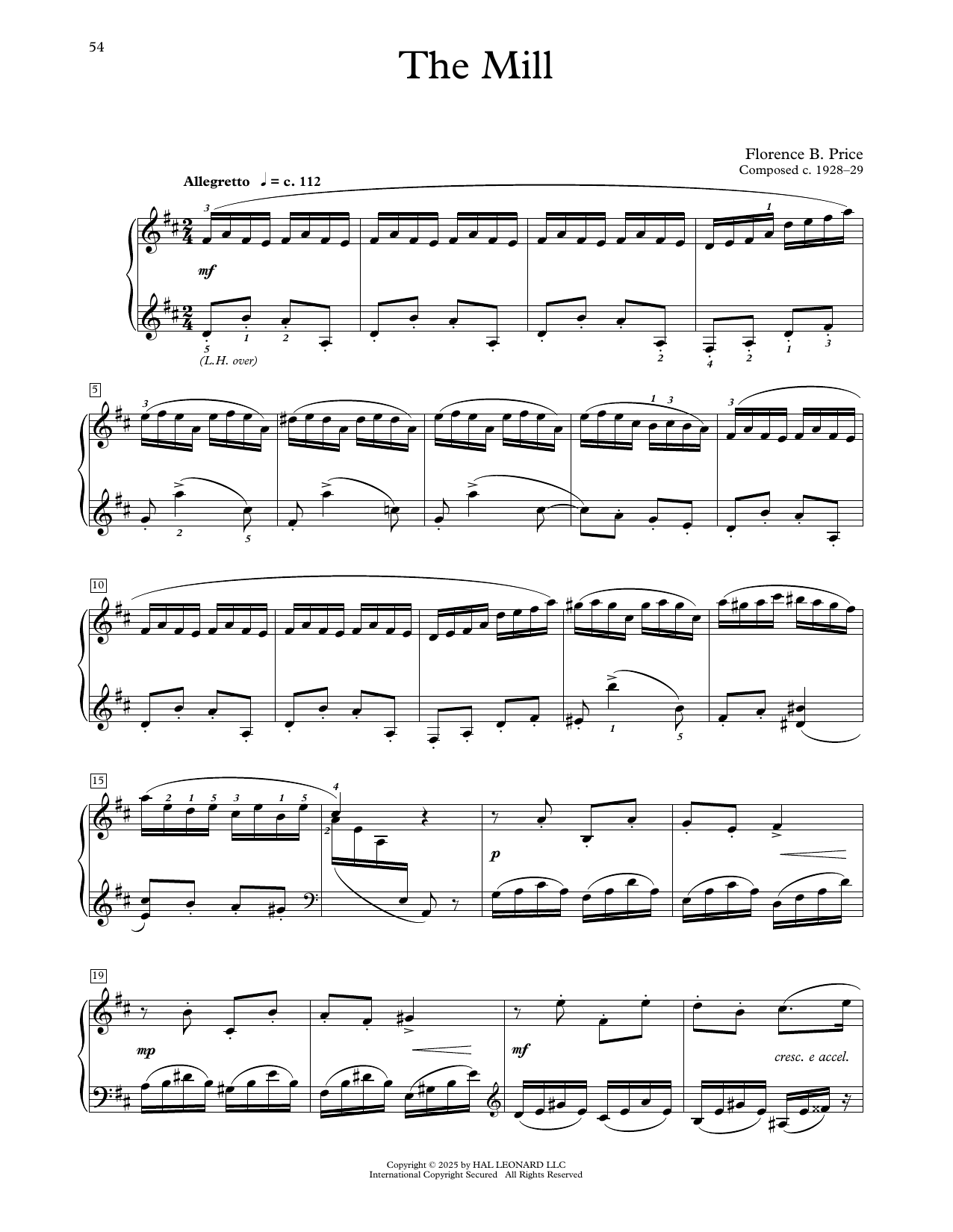
The Mill: Educational Piano

By Florence Price / Edited by Michael Clark

Item: 35-DS01576377

Digital Download
$4.99
Description

Discover MakeMusic Cloud: thousands of interactive titles your students can play along with today.

Sample Audio
No sample audio found.
Sample Video
Additional Details
Publisher: Hal Leonard
Page Count: 4
SKU: 35-DS01576377

More about this title

About the Composer: Florence Price

Florence Price (1887–1953) was the first Black woman to have a symphony performed by a major American orchestra. A pianist and composer of remarkable versatility, she wrote across multiple genres: symphonies, concertos, chamber works, and art songs that drew on spirituals, blues, and classical forms. Her piano works balance technical rigor with accessibility, making them essential repertoire for students learning both American classical music and the history of composers working against significant institutional barriers.

Why we love this

Price's pedagogical piano works sit at the intersection of serious musicianship and genuine teachability. The Mill captures her gift for clear harmonic language and memorable melodic writing without sacrificing compositional integrity, making it rewarding for students who need pieces that sound accomplished but remain within their technical grasp.

What to expect

Contemplative and grounded, with the quiet dignity of rural American landscape. The piece unfolds like observation rather than declaration, inviting the listener into a moment of stillness.

Who it's for

Intermediate students ready to explore American classical composers beyond the European canon. The Mill works well for students developing interpretive maturity and for programs seeking repertoire that enriches both musicianship and historical knowledge.

How to get the most out of it

  • Shape the melodic line with subtle dynamic contours rather than heavy accent marks; Price's writing speaks through voice leading, not blunt gesture.
  • Attend to the harmonic rhythm beneath the surface melody. Price often shifts harmonic support in ways that propel phrases forward if you listen beyond the top note.
  • Keep the tempo steady and unhurried. The character of the piece lives in its reflection and stillness, not in rushing toward cadences.

How to use it

Pair this with other Price piano works or spirituals arranged for piano to build a recital set that centers her contributions to American music. It also serves well in educational concerts exploring composers of color or works inspired by nature and labor.

Skills your students will build

  • Lyrical pedaling and sustain without muddying texture
  • Harmonic awareness beyond the melody line
  • Interpretive decision-making from minimal markings
  • Understanding American classical music and its sources

You May Also Like