
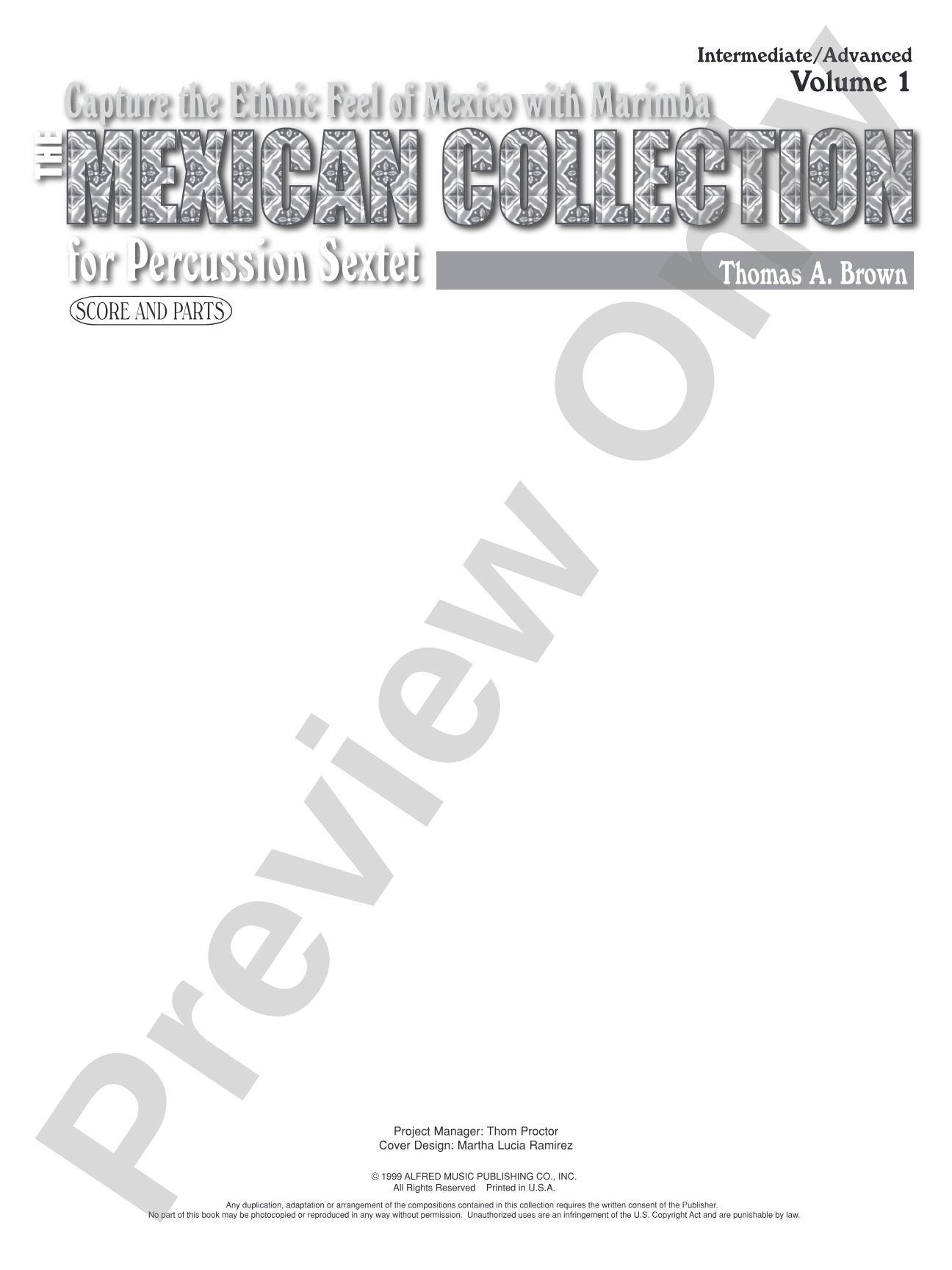
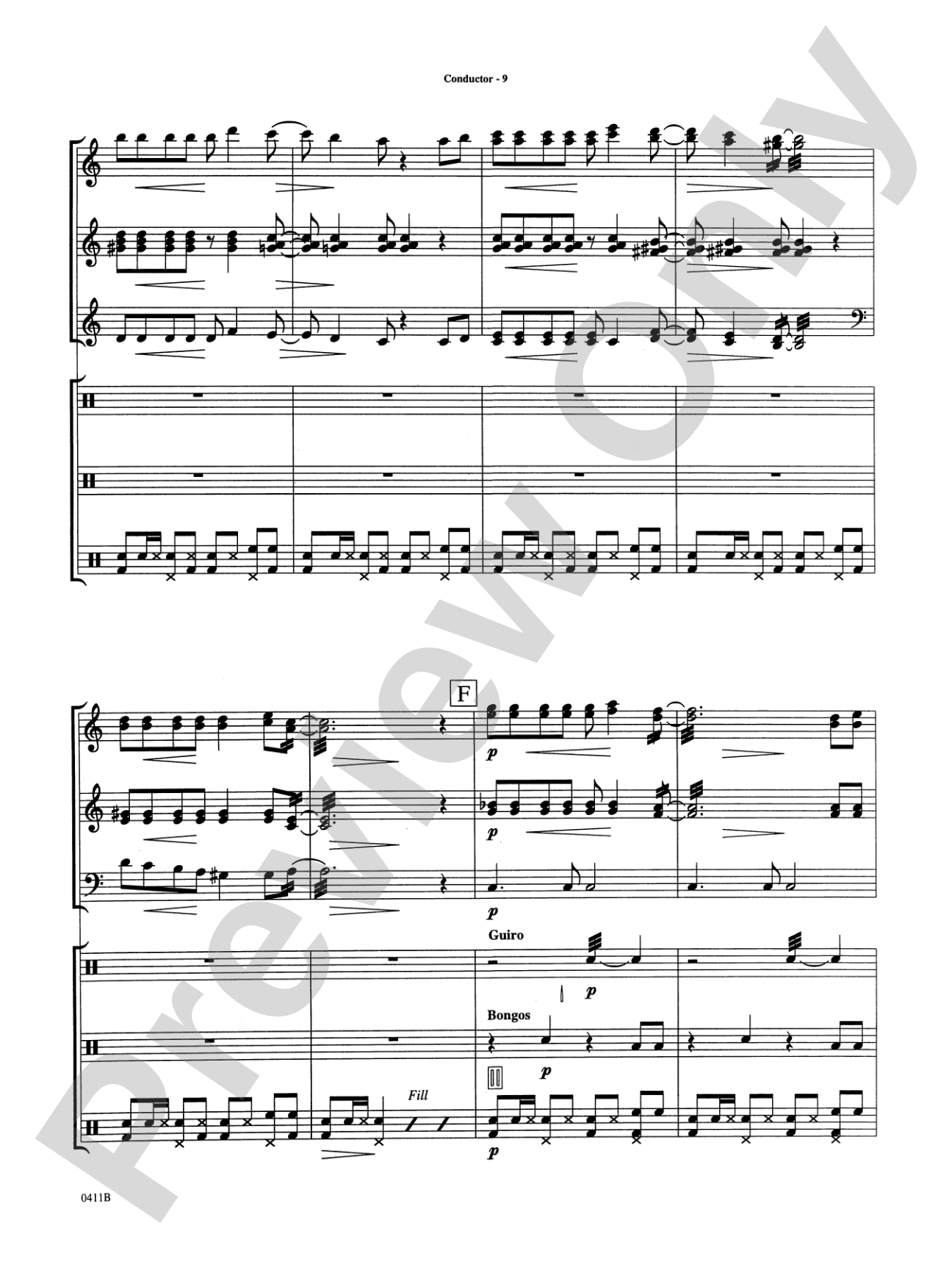
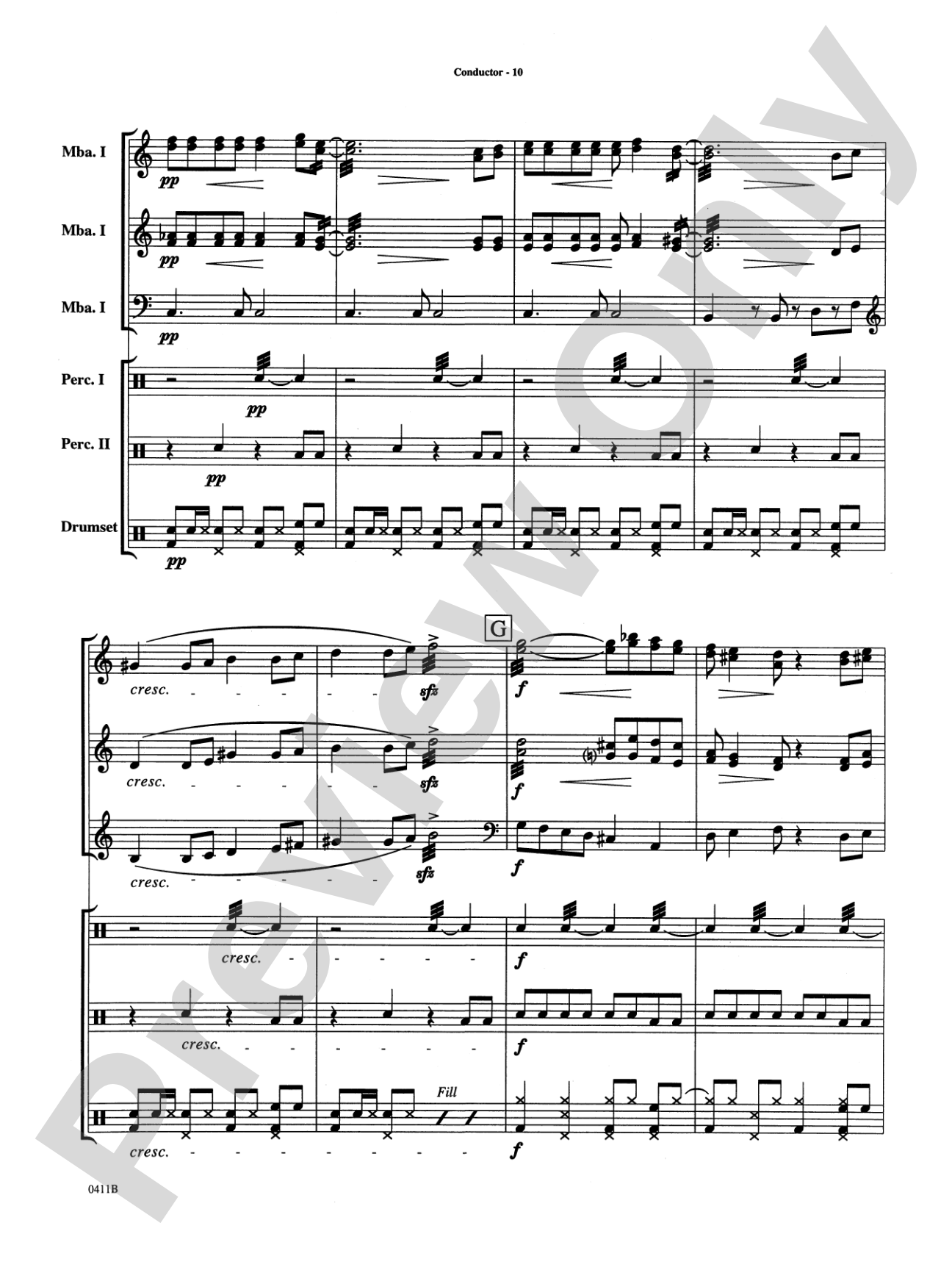
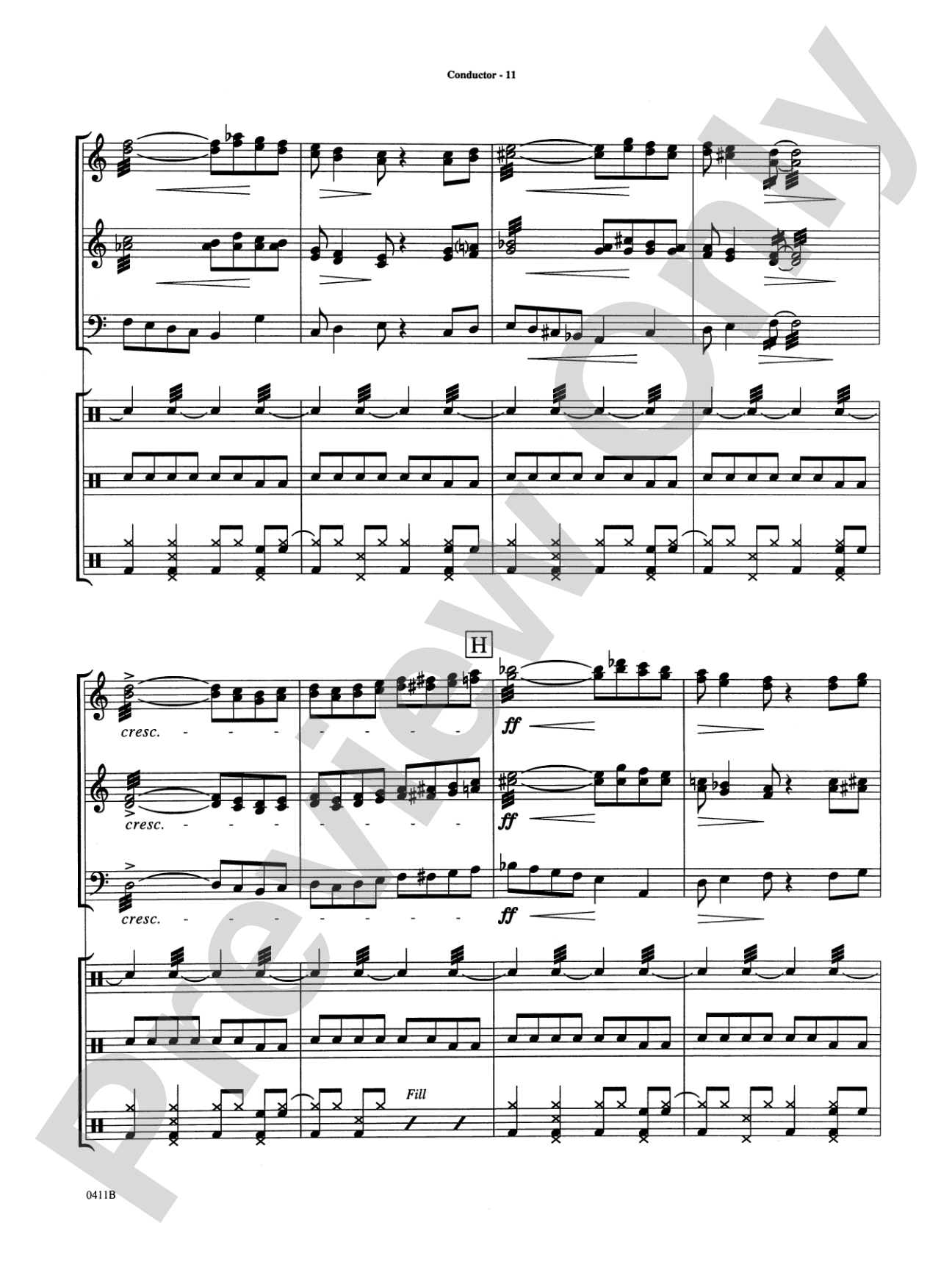
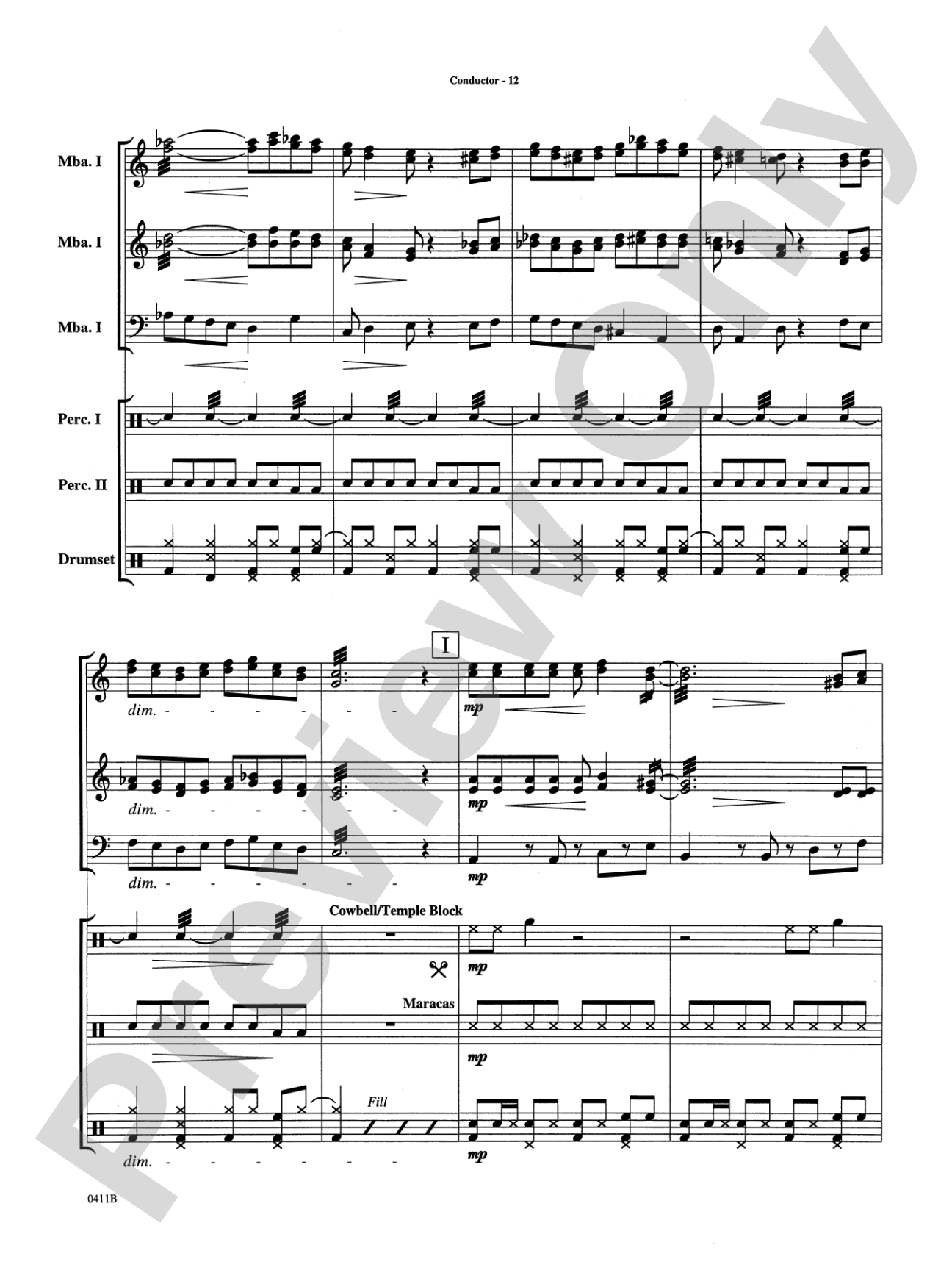
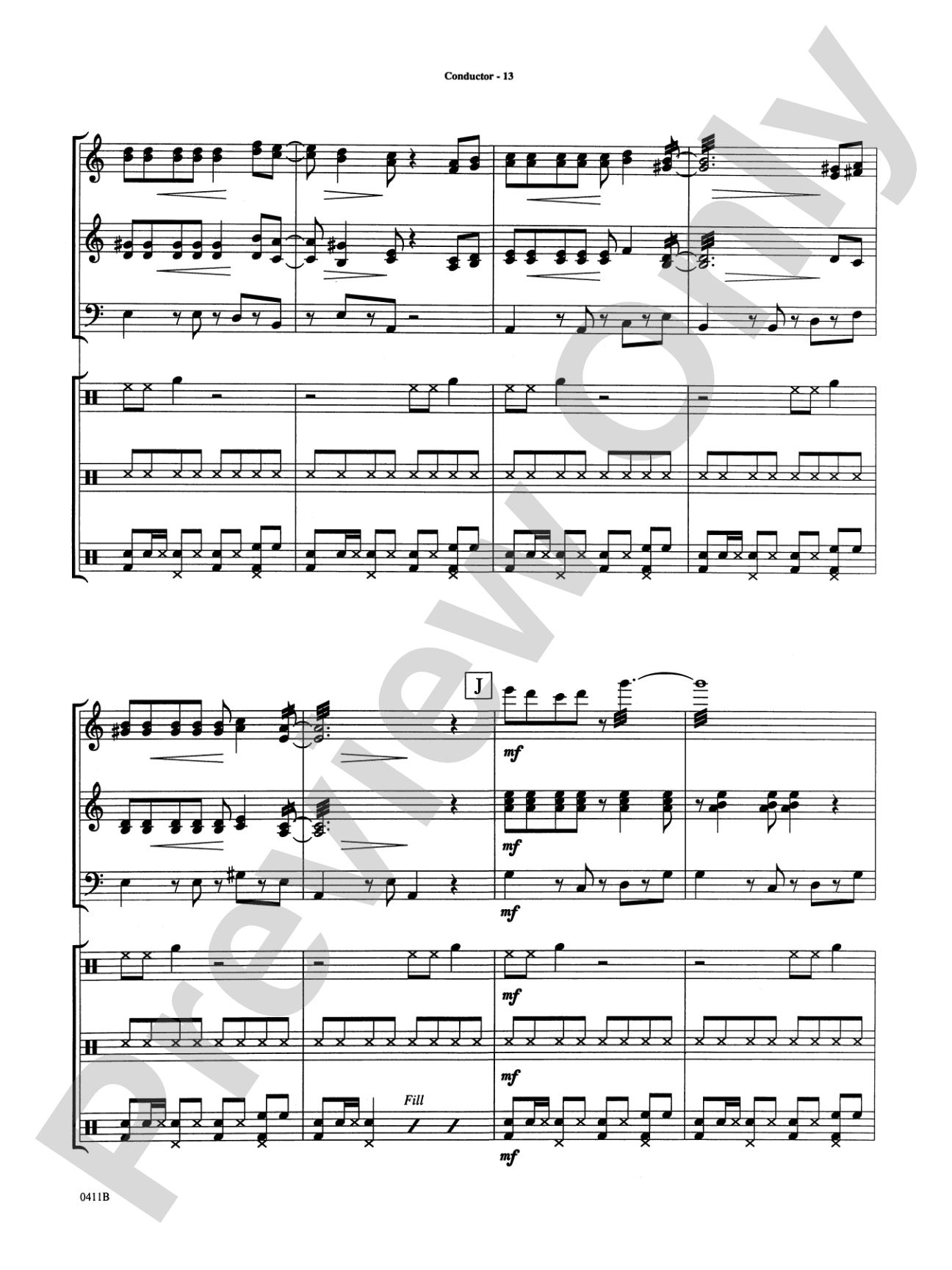
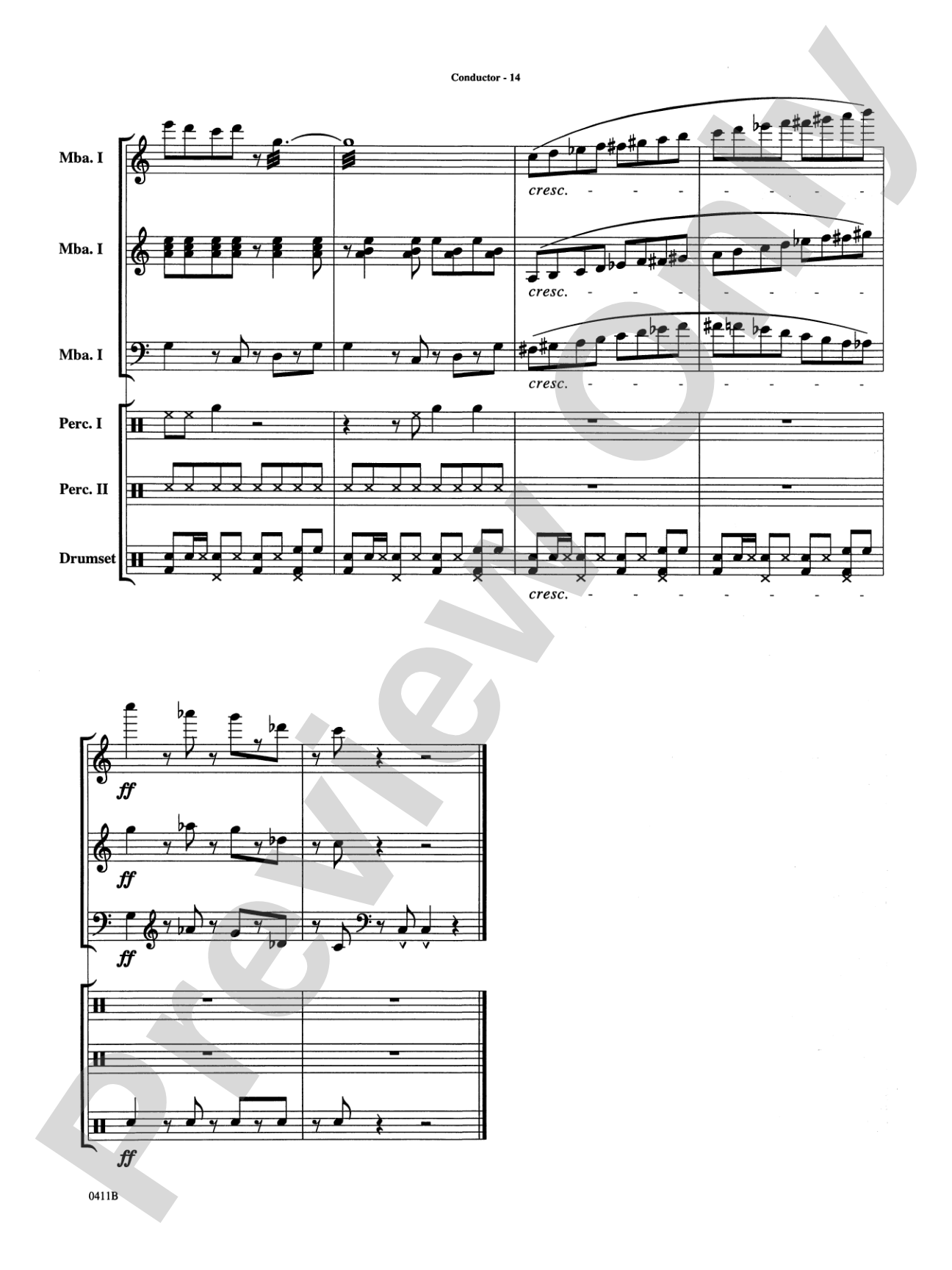
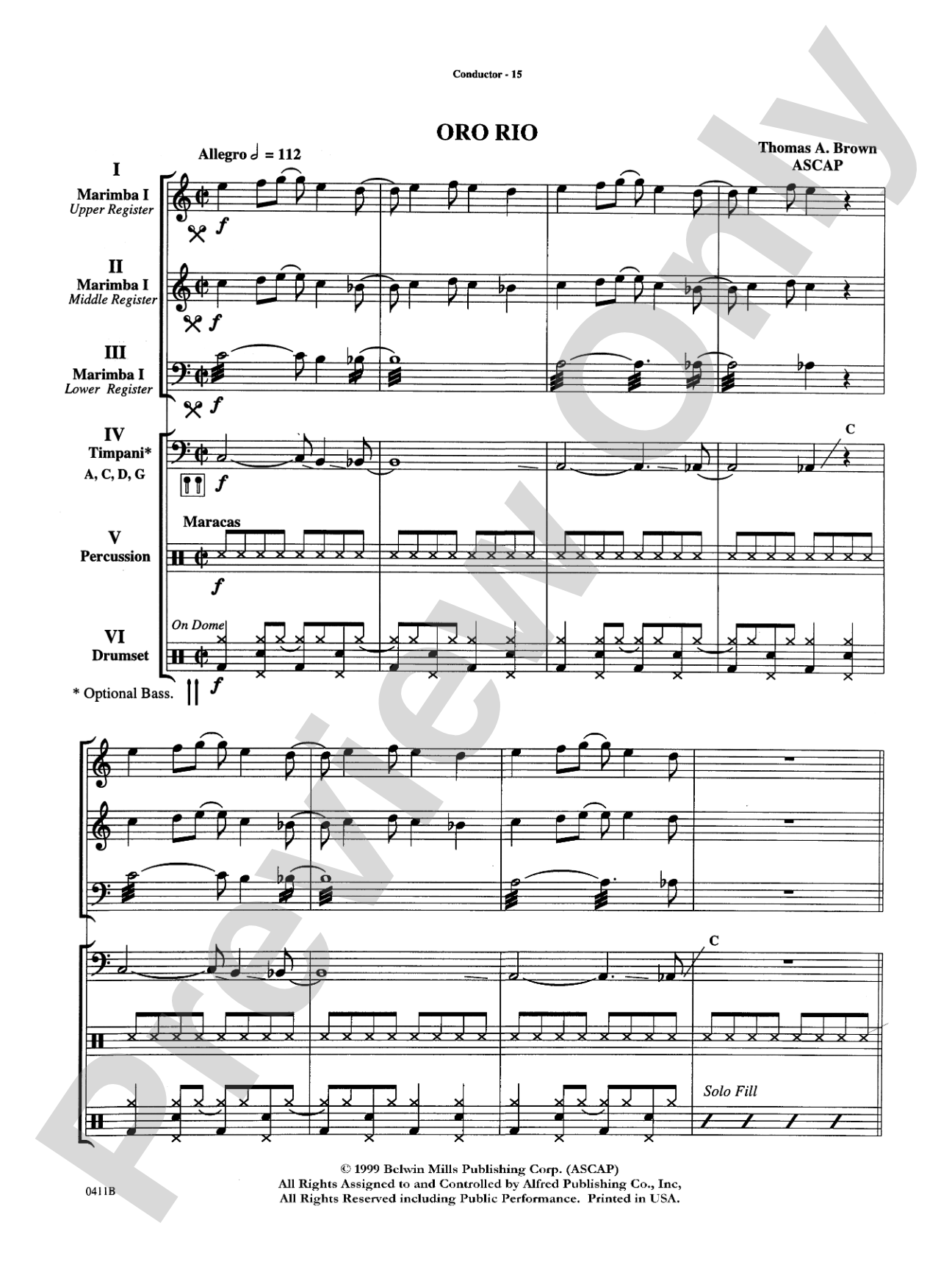
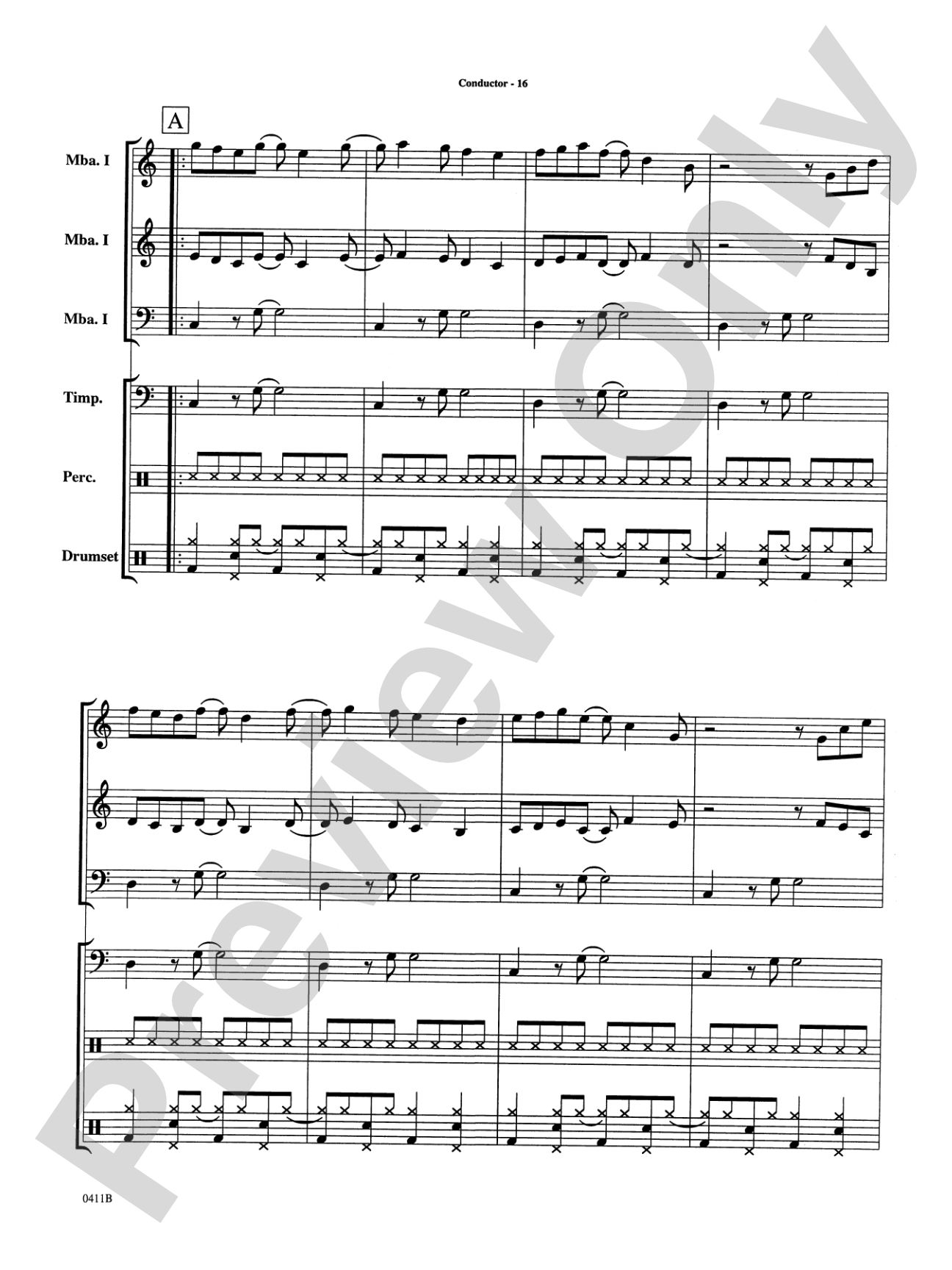
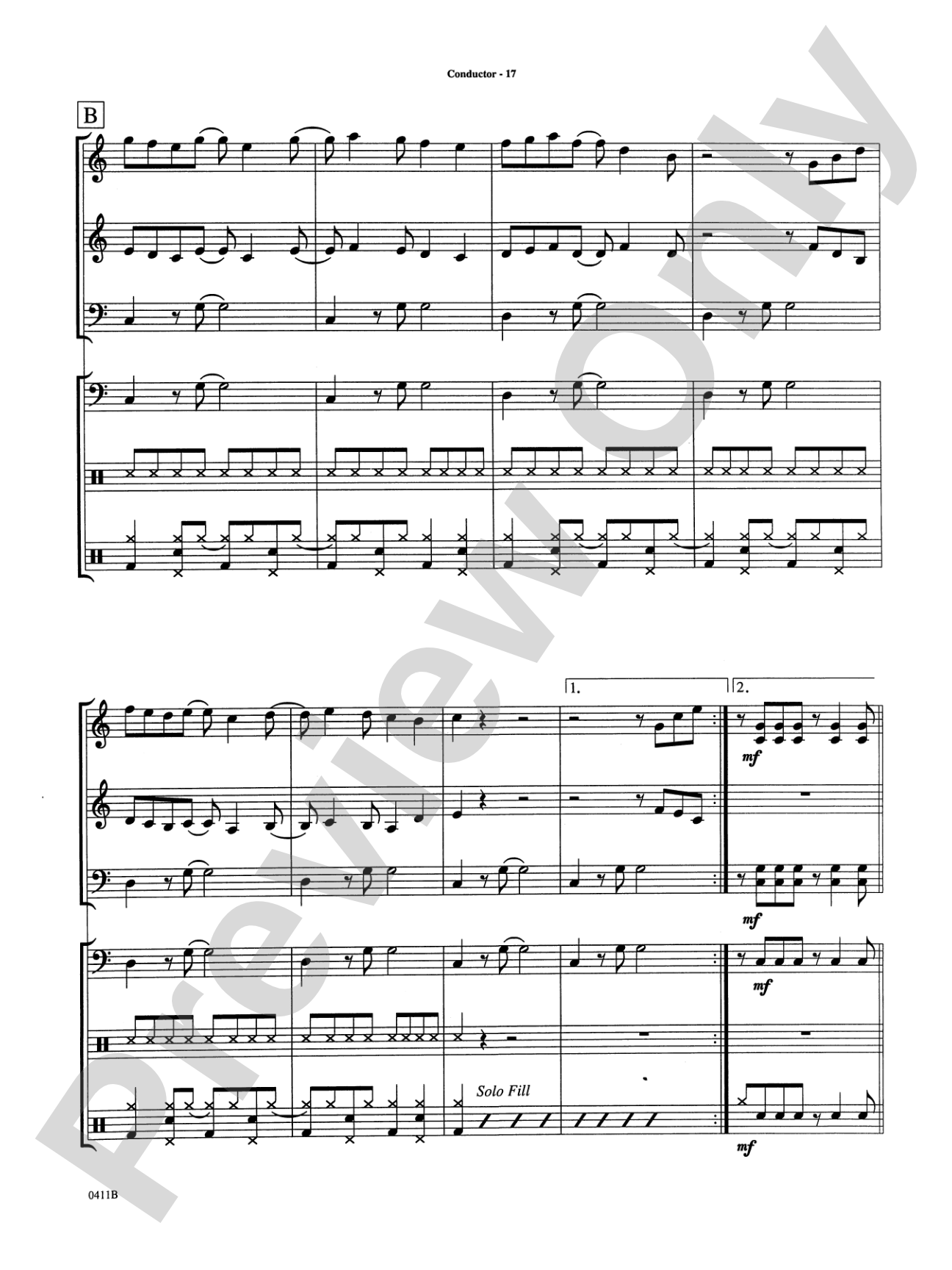
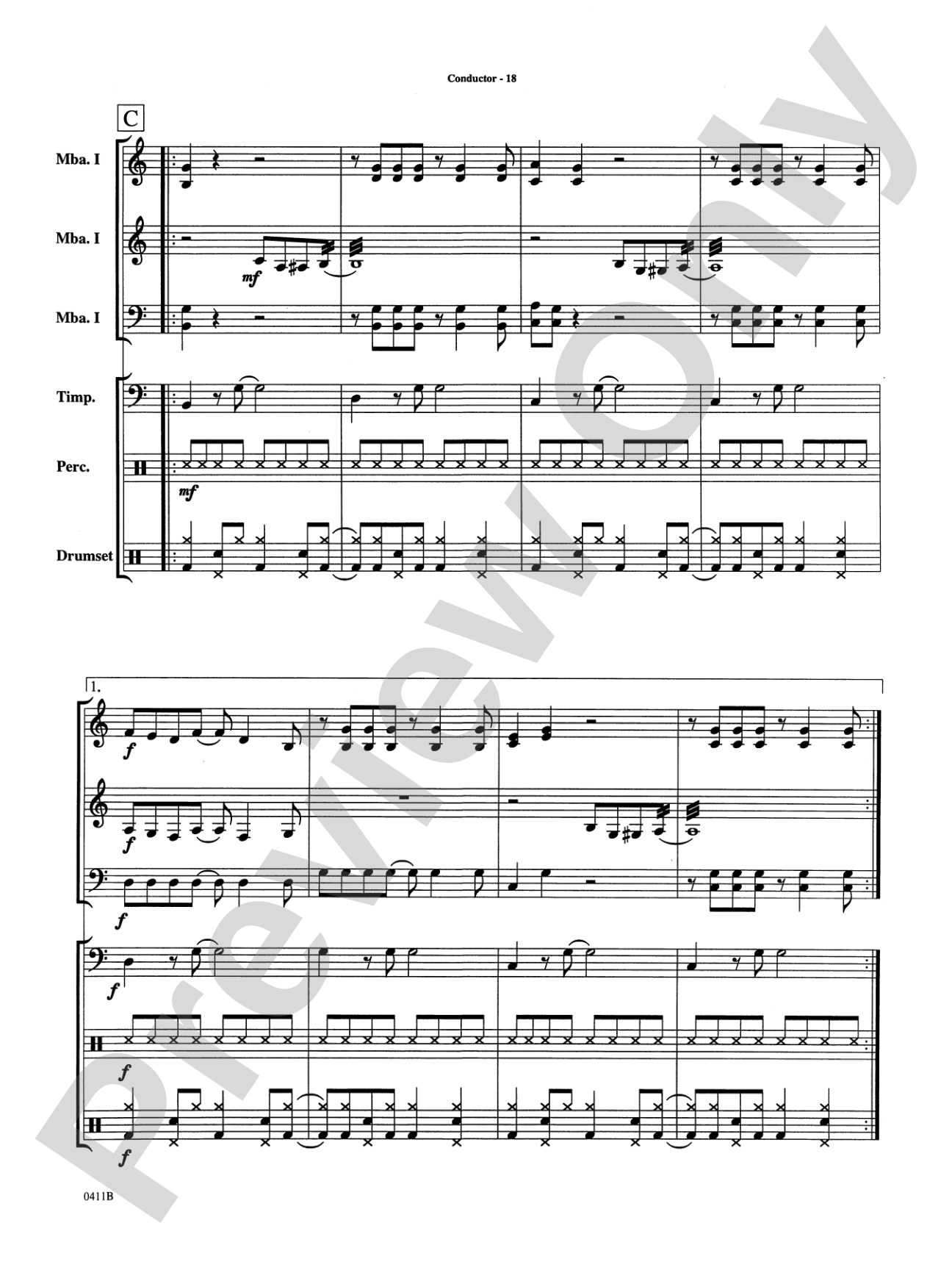
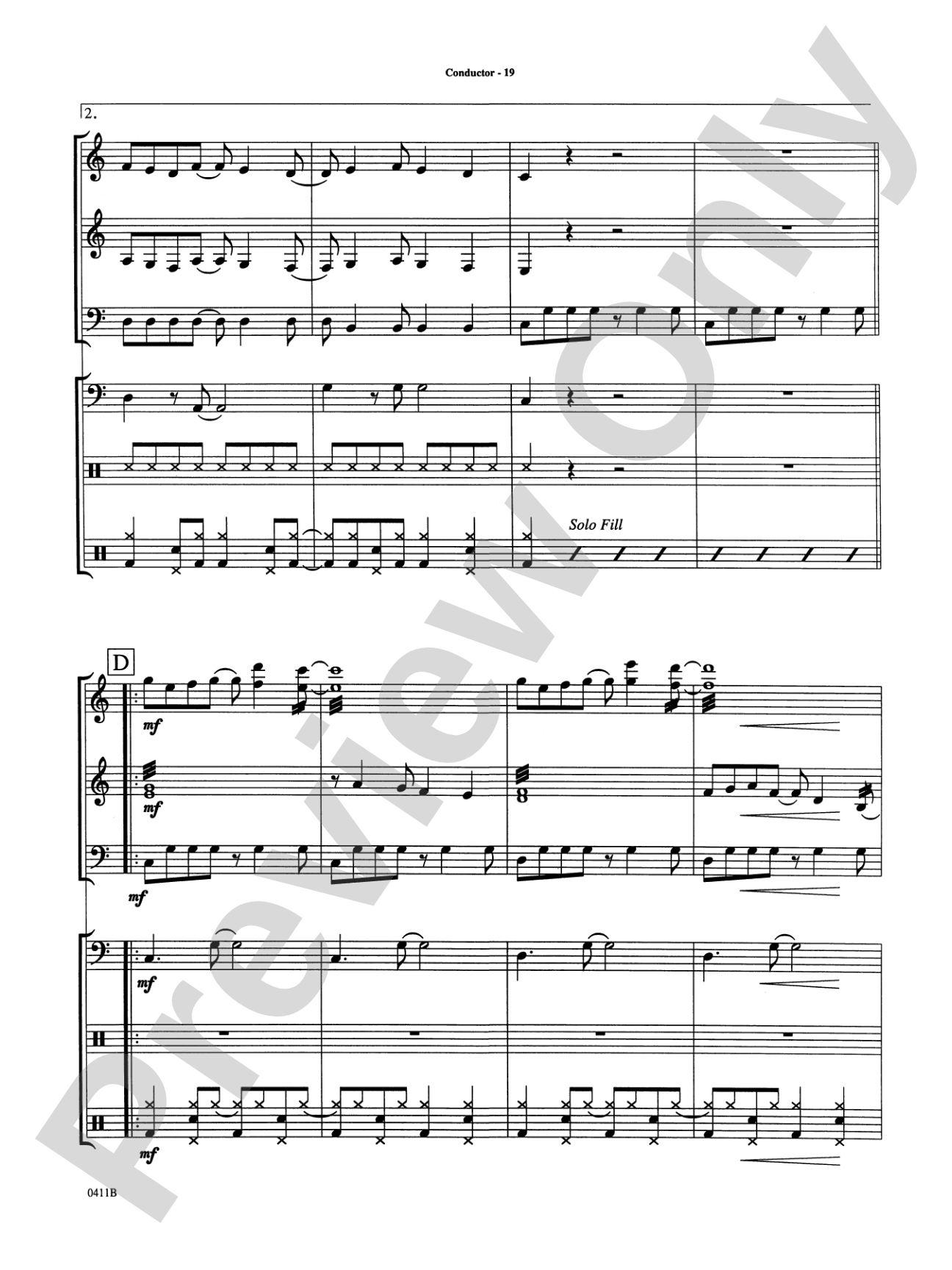
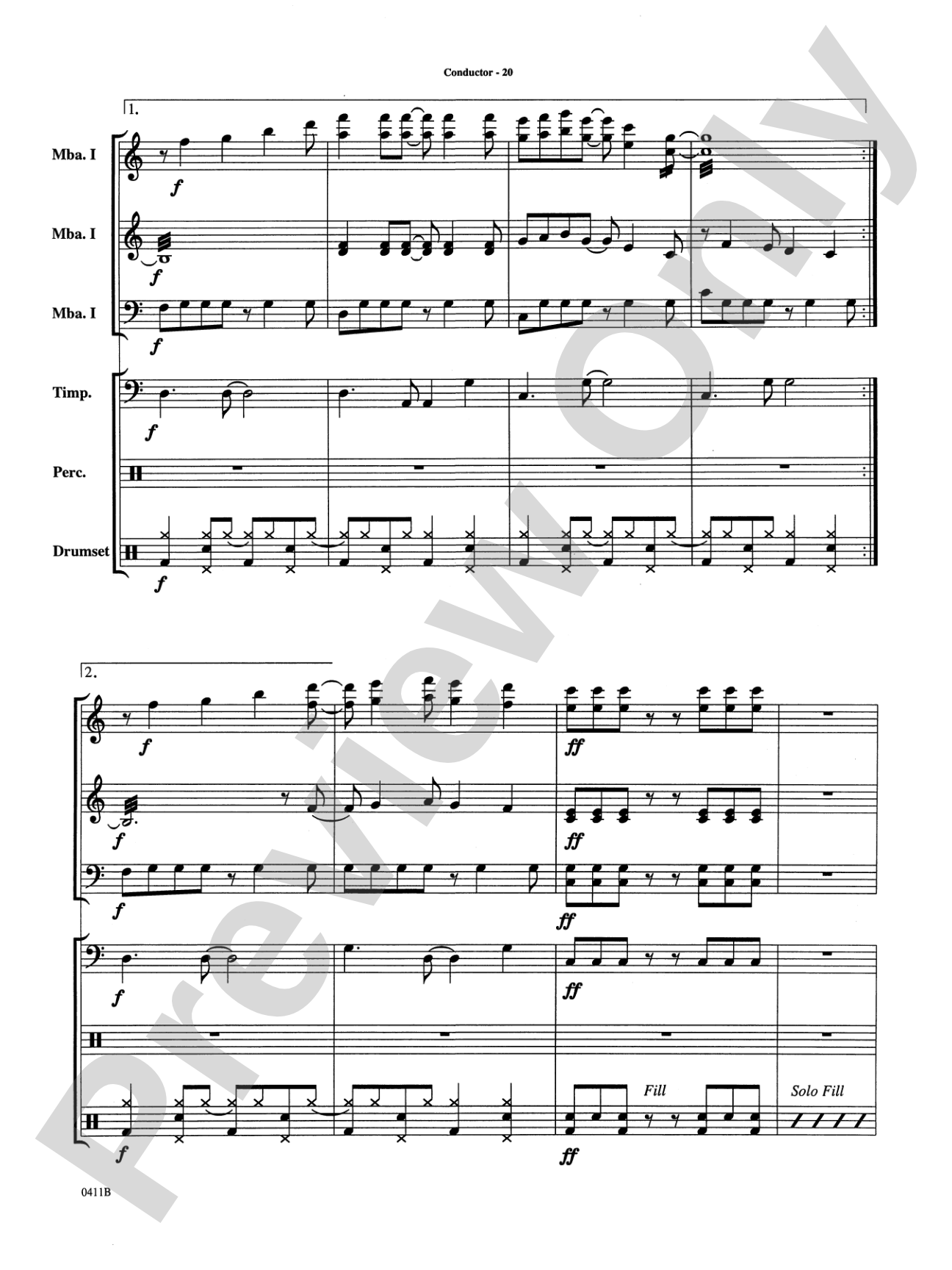
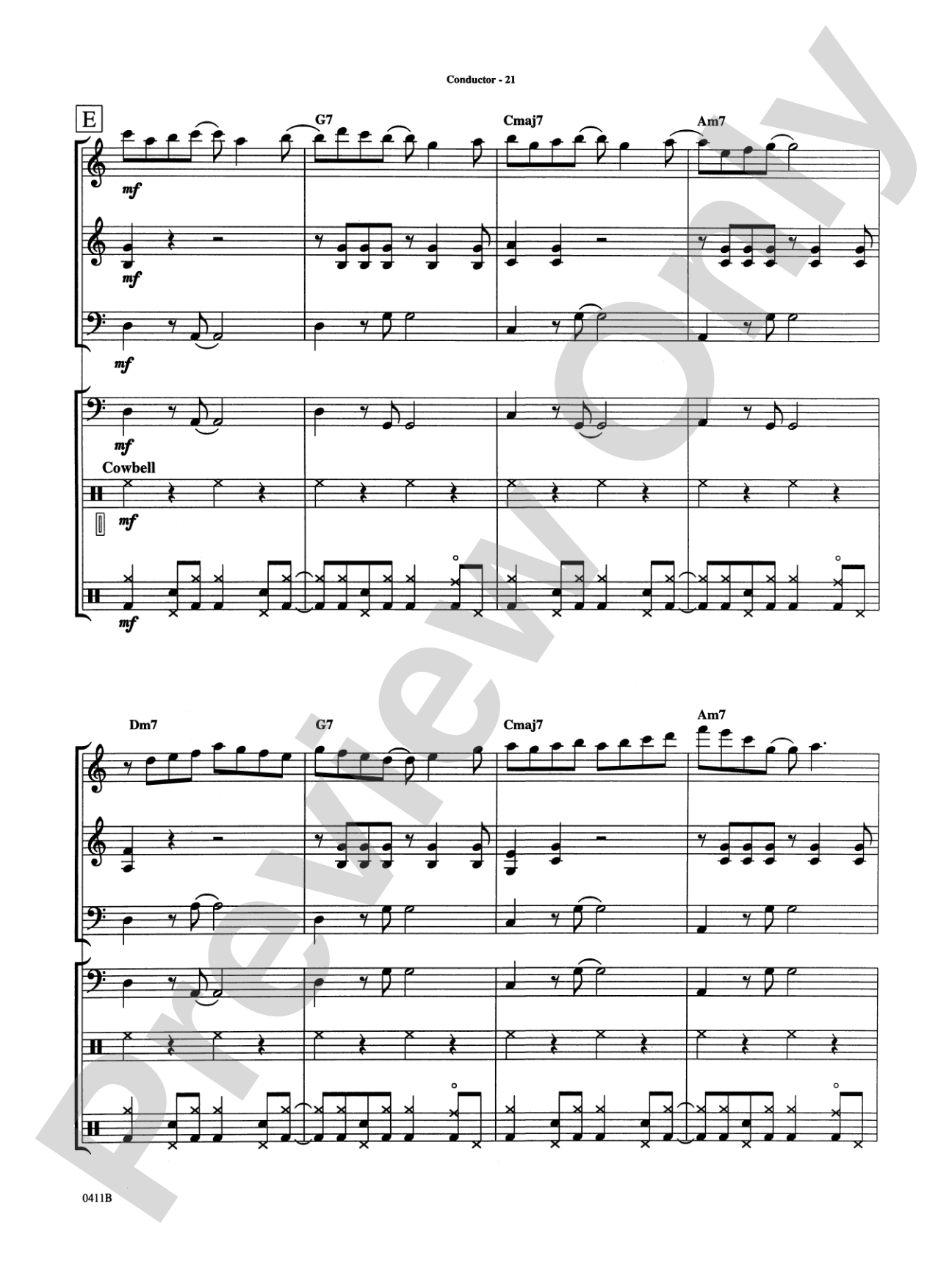
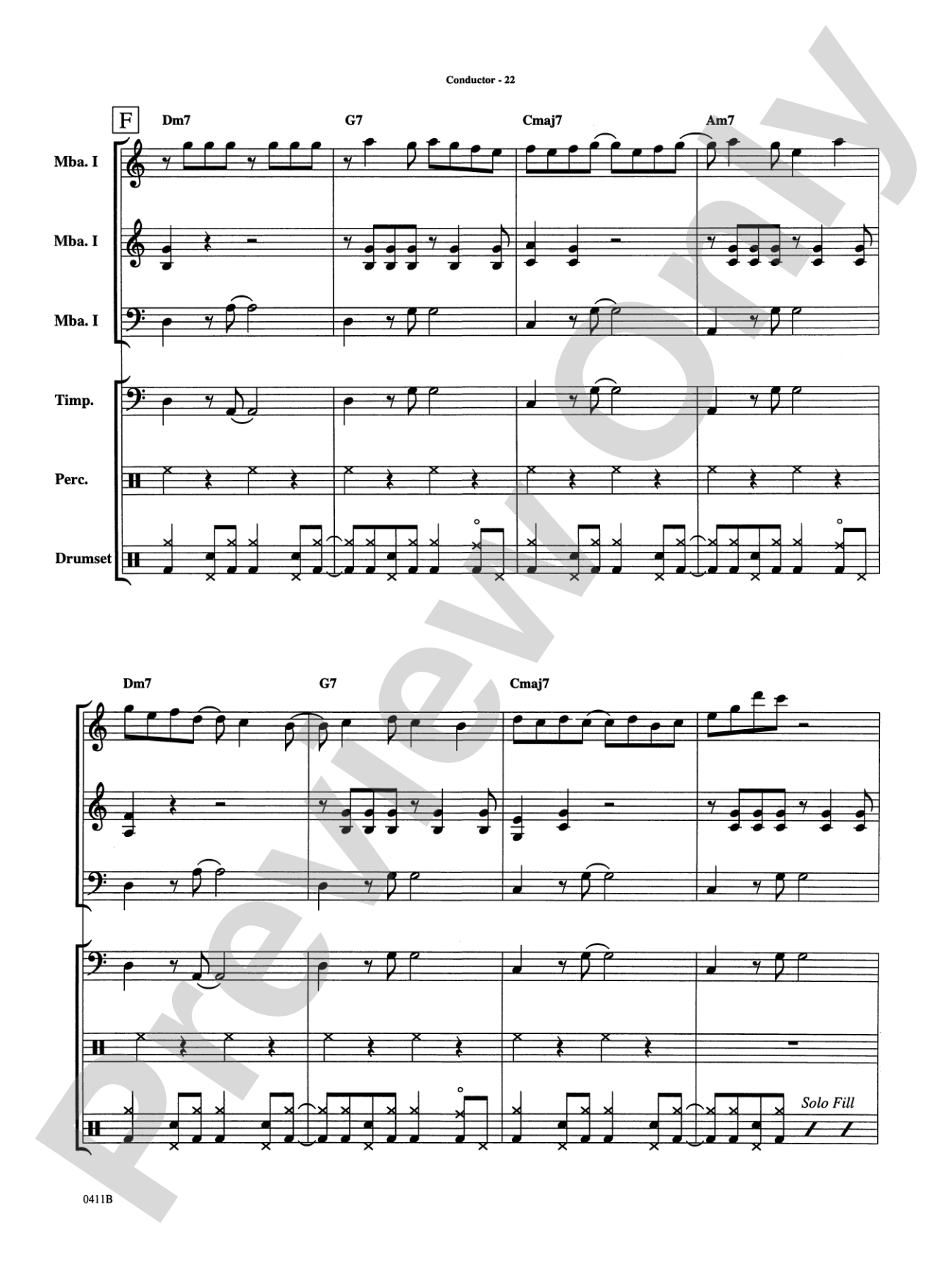
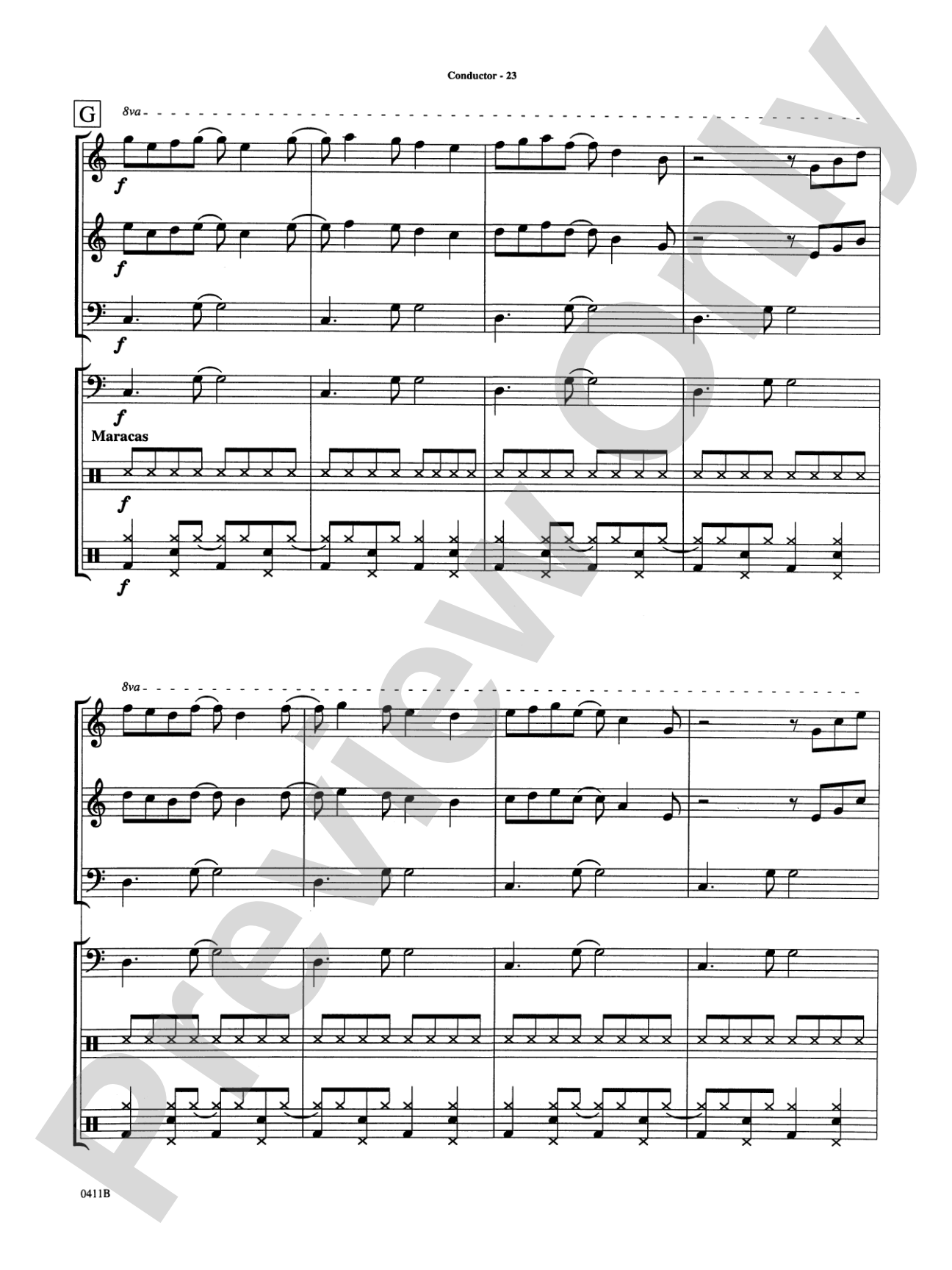
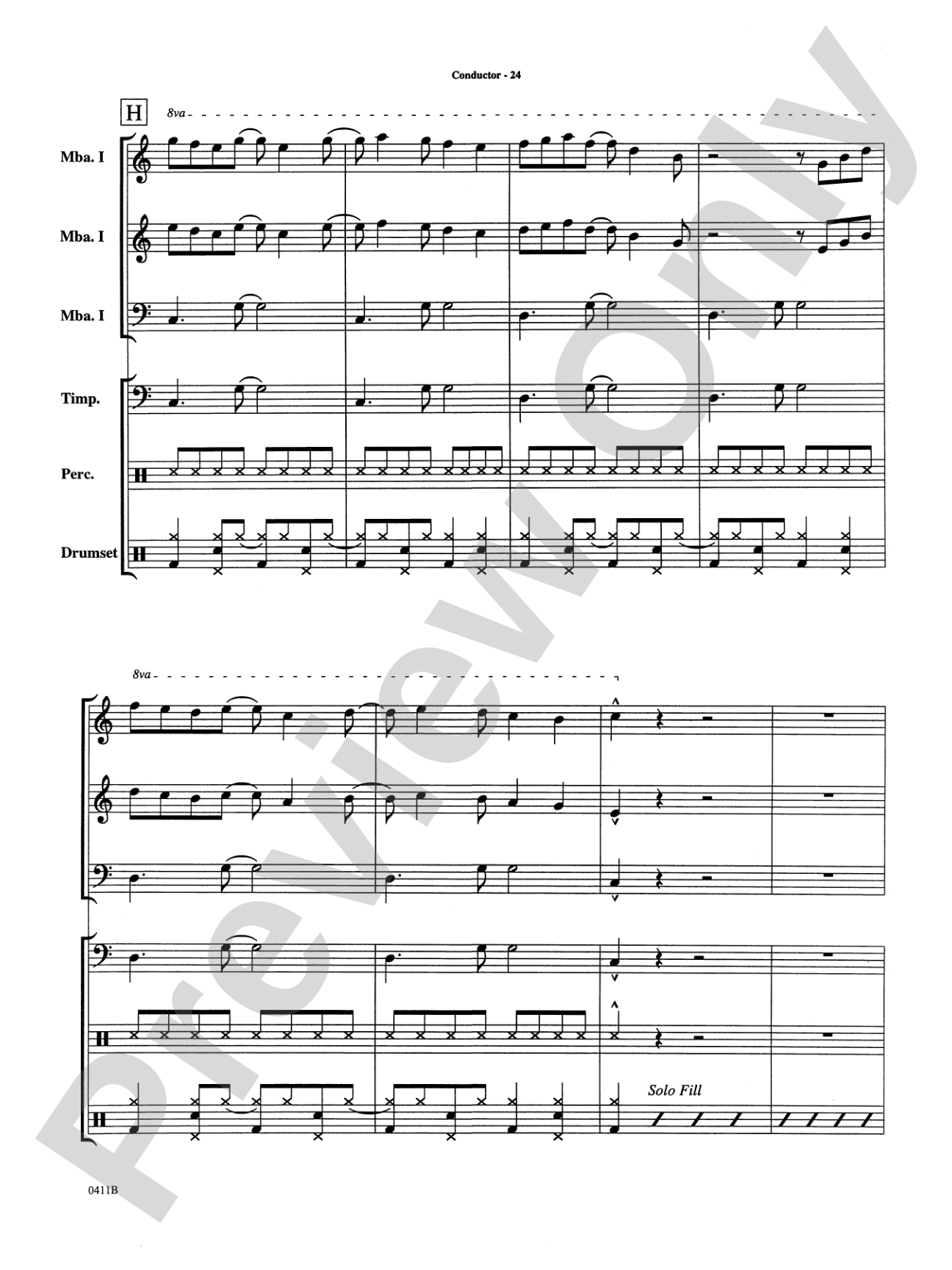
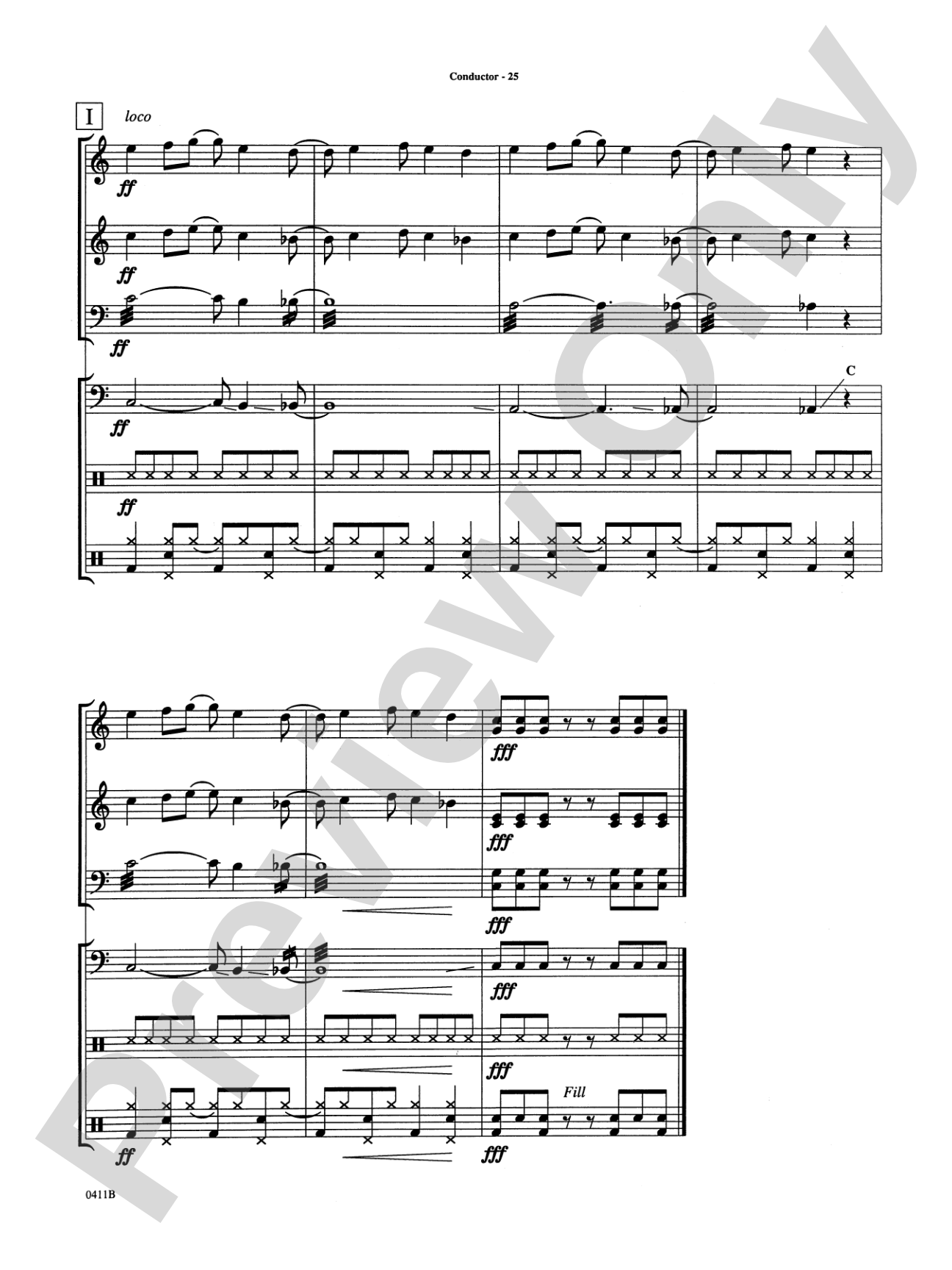
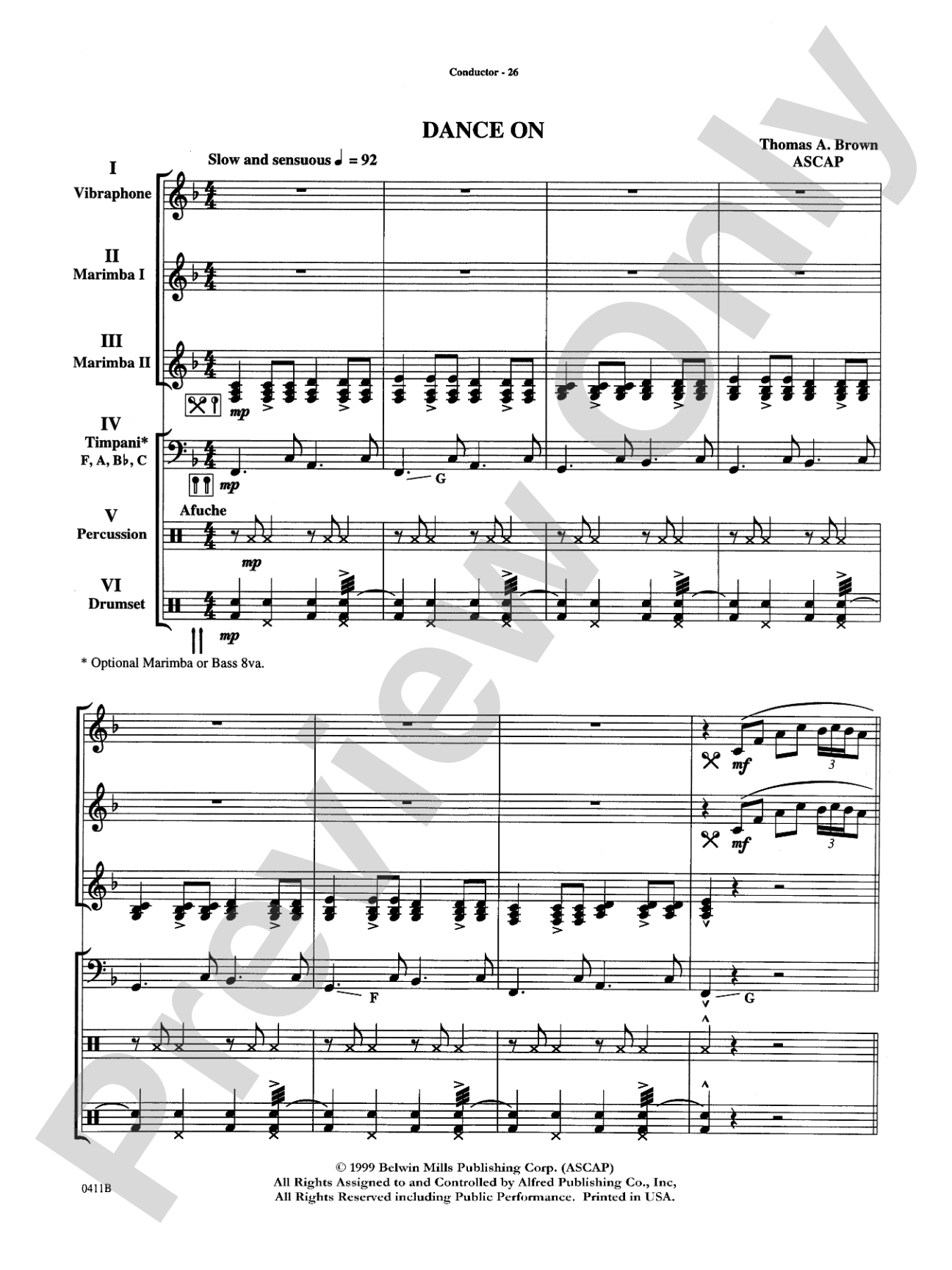
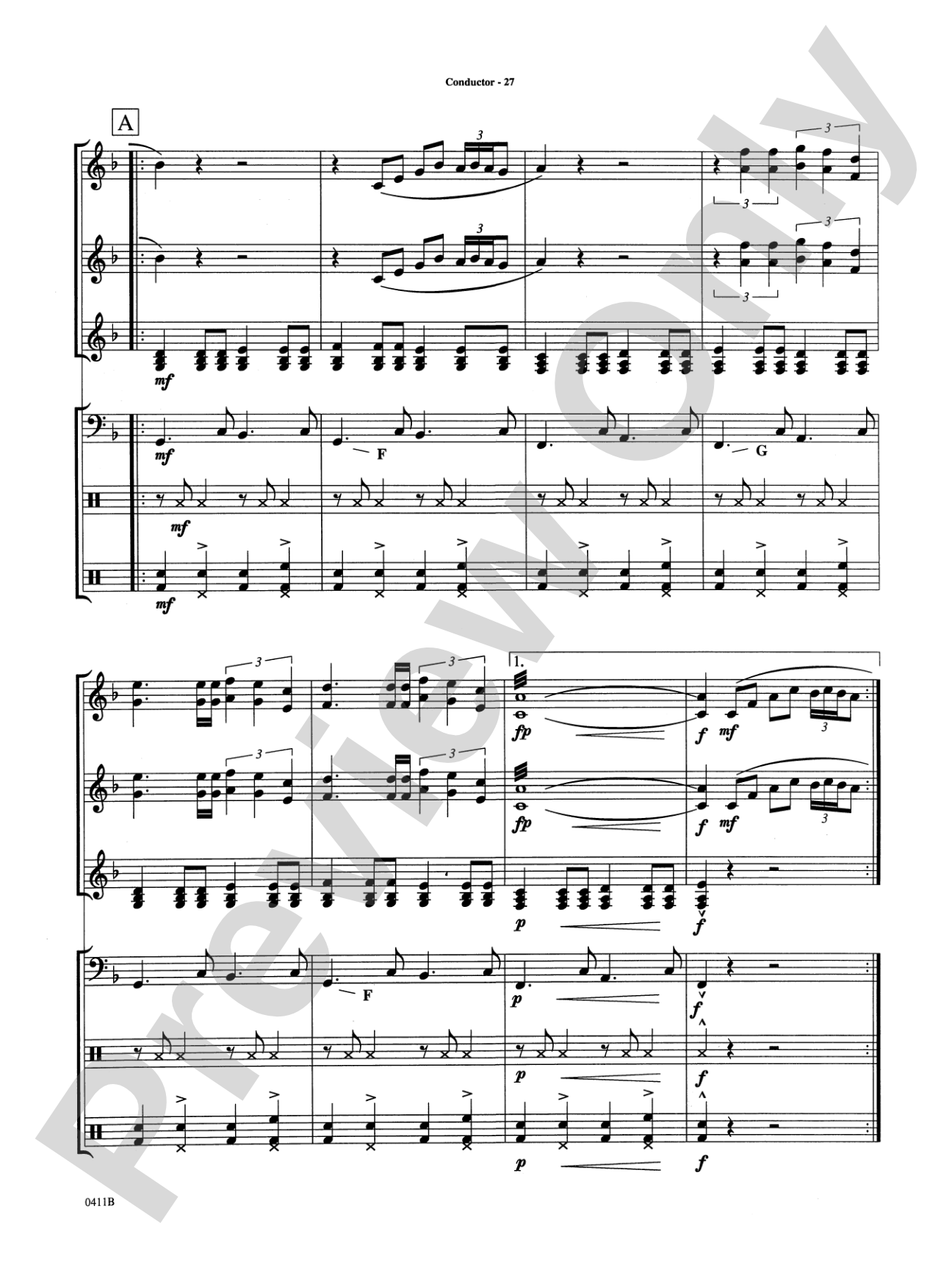
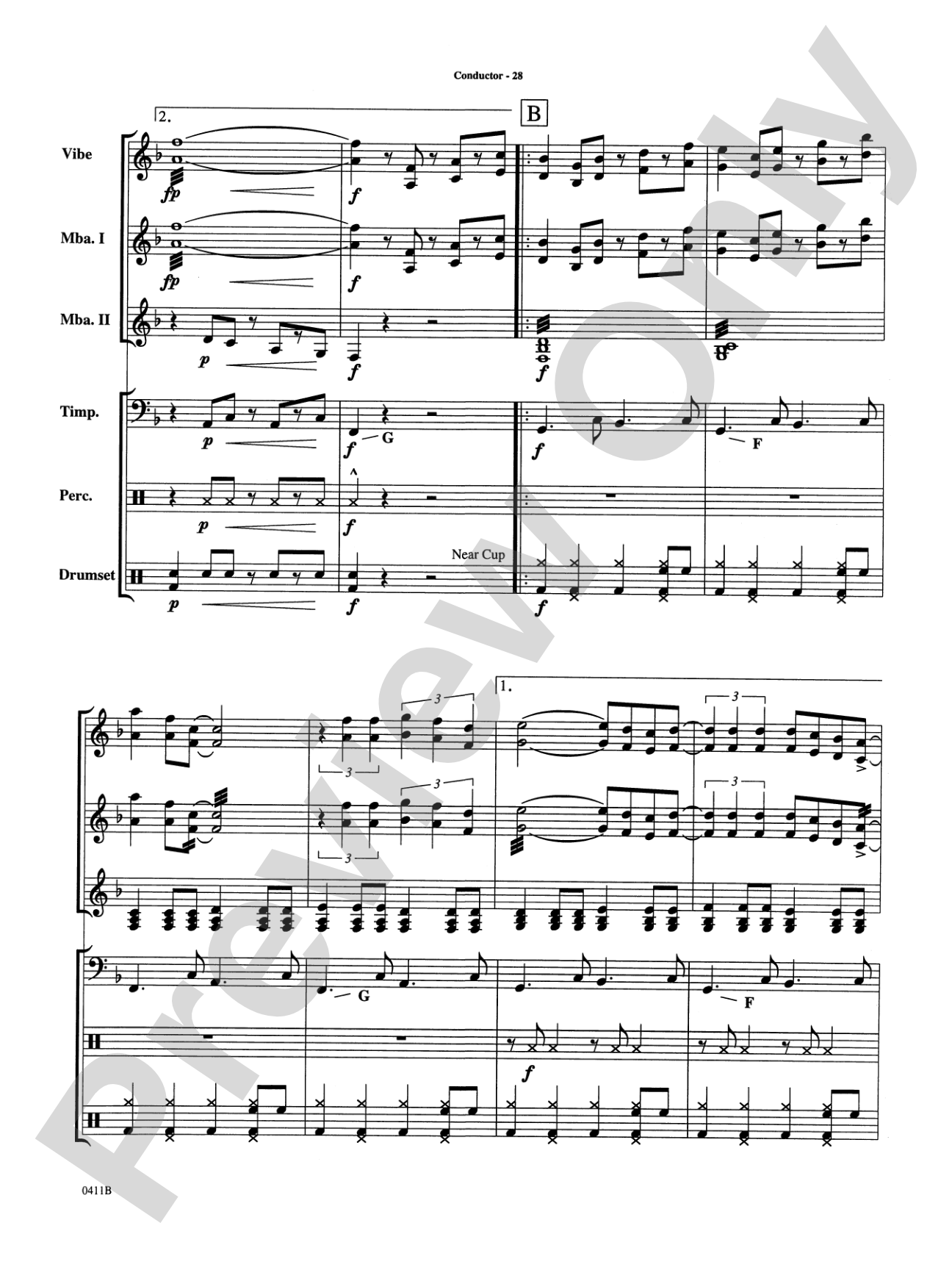
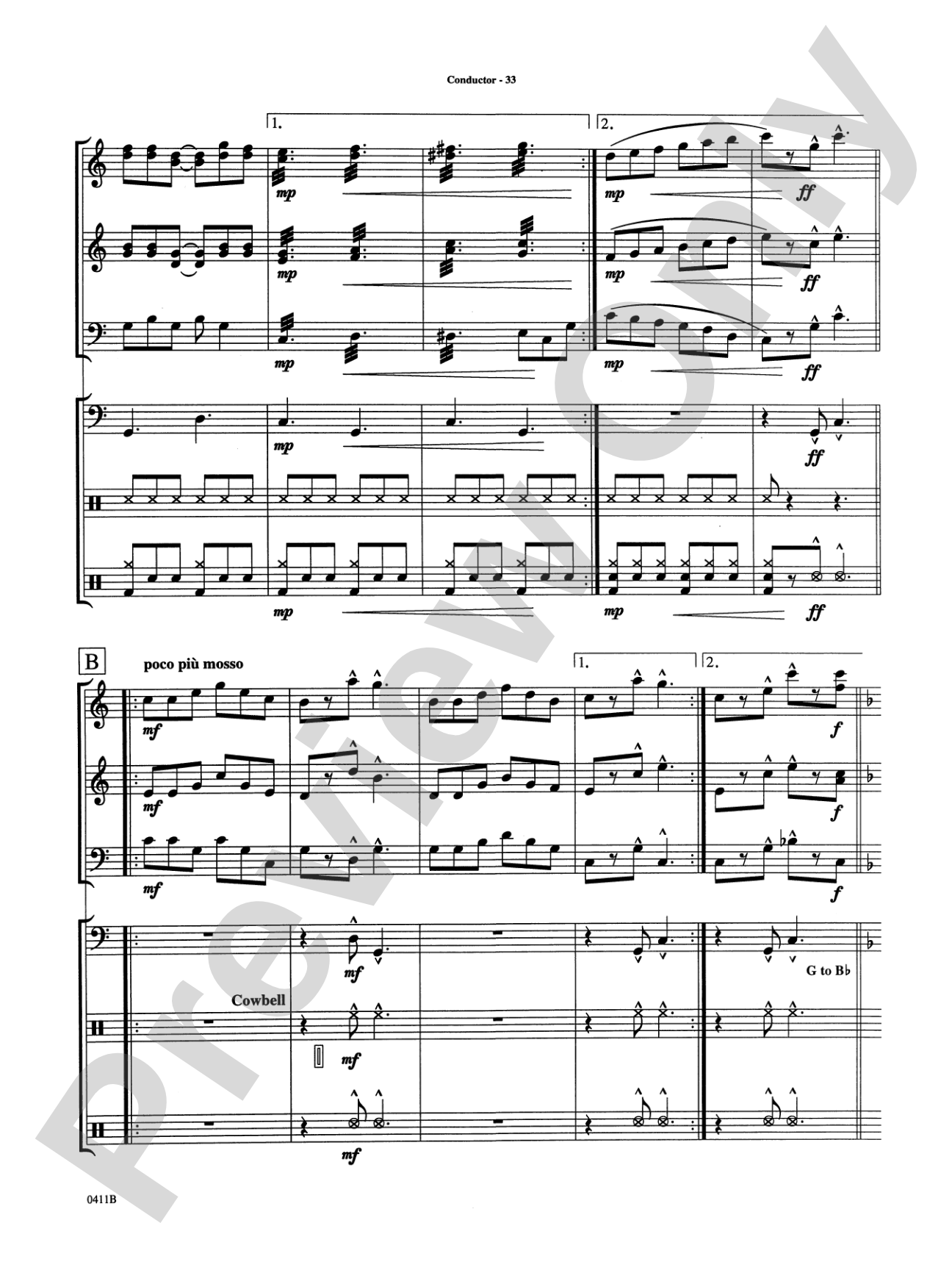
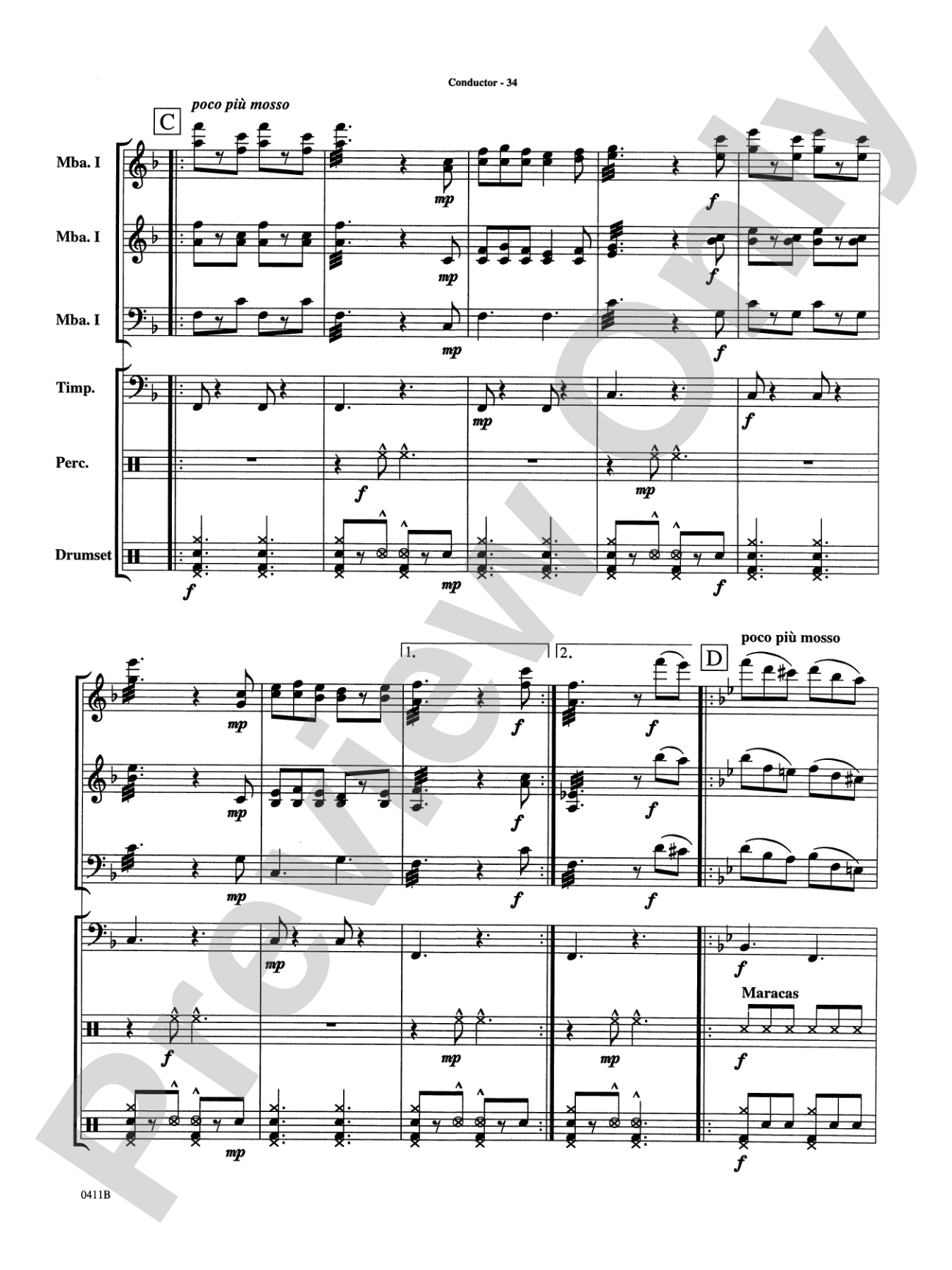
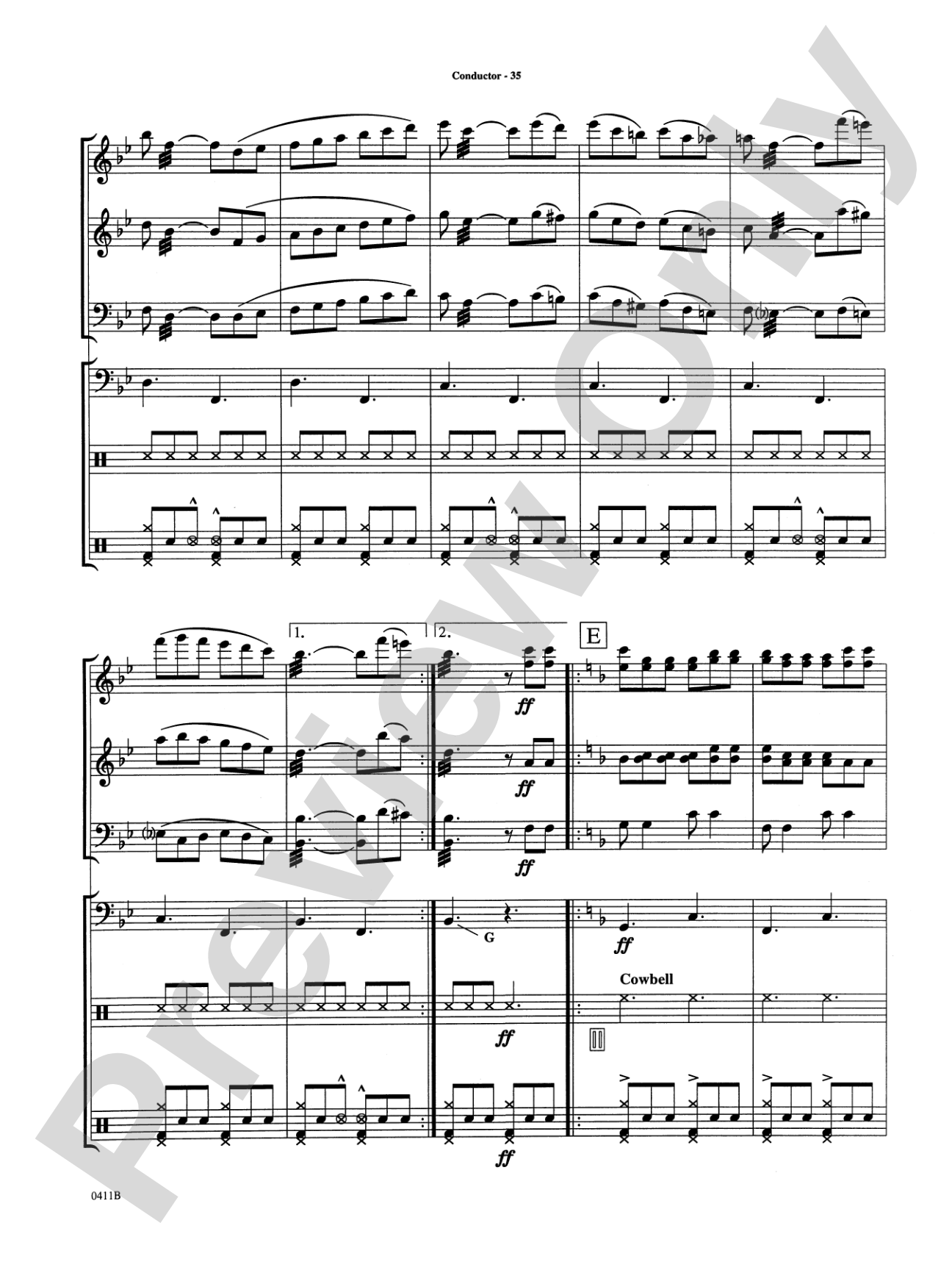
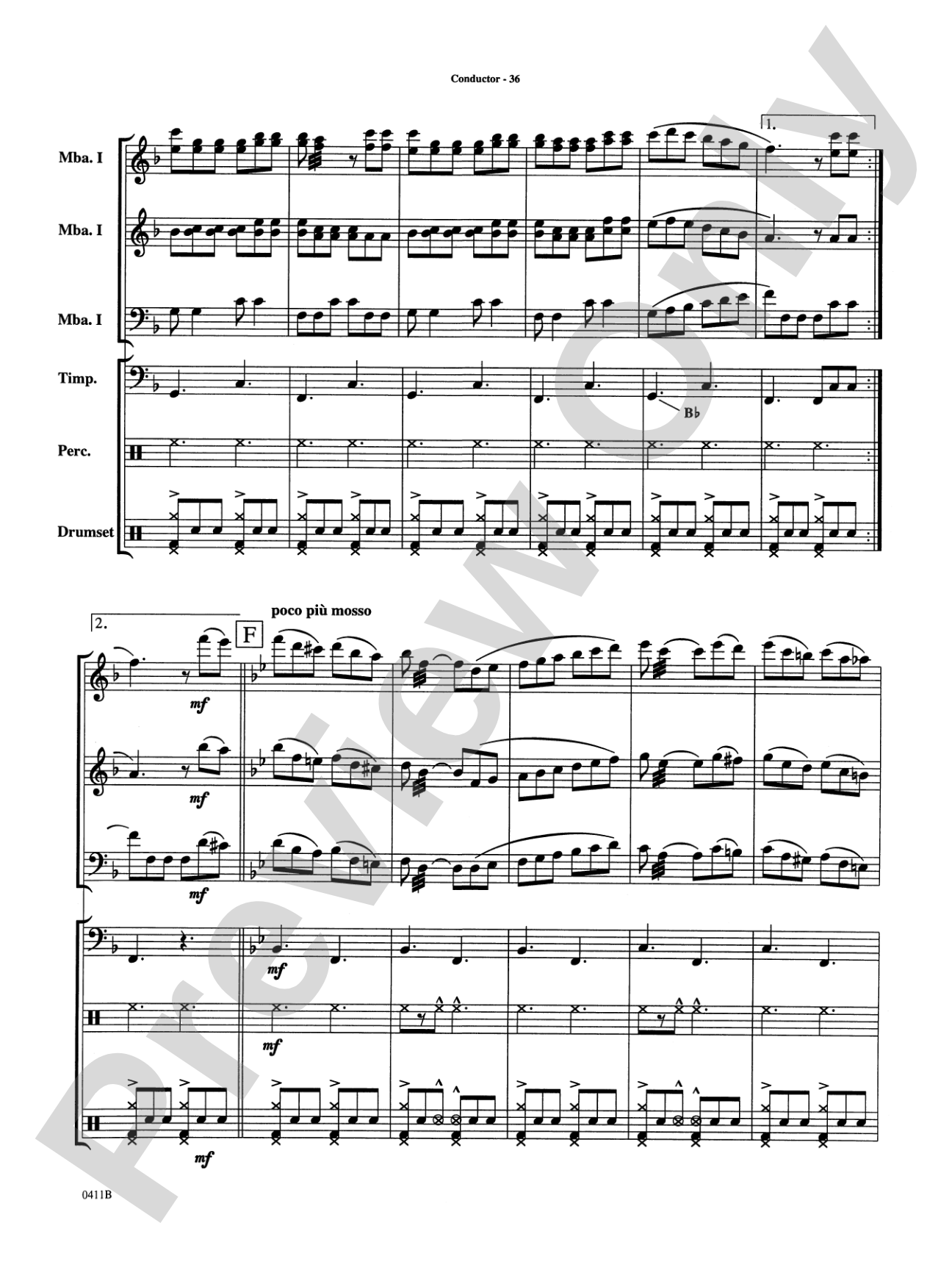
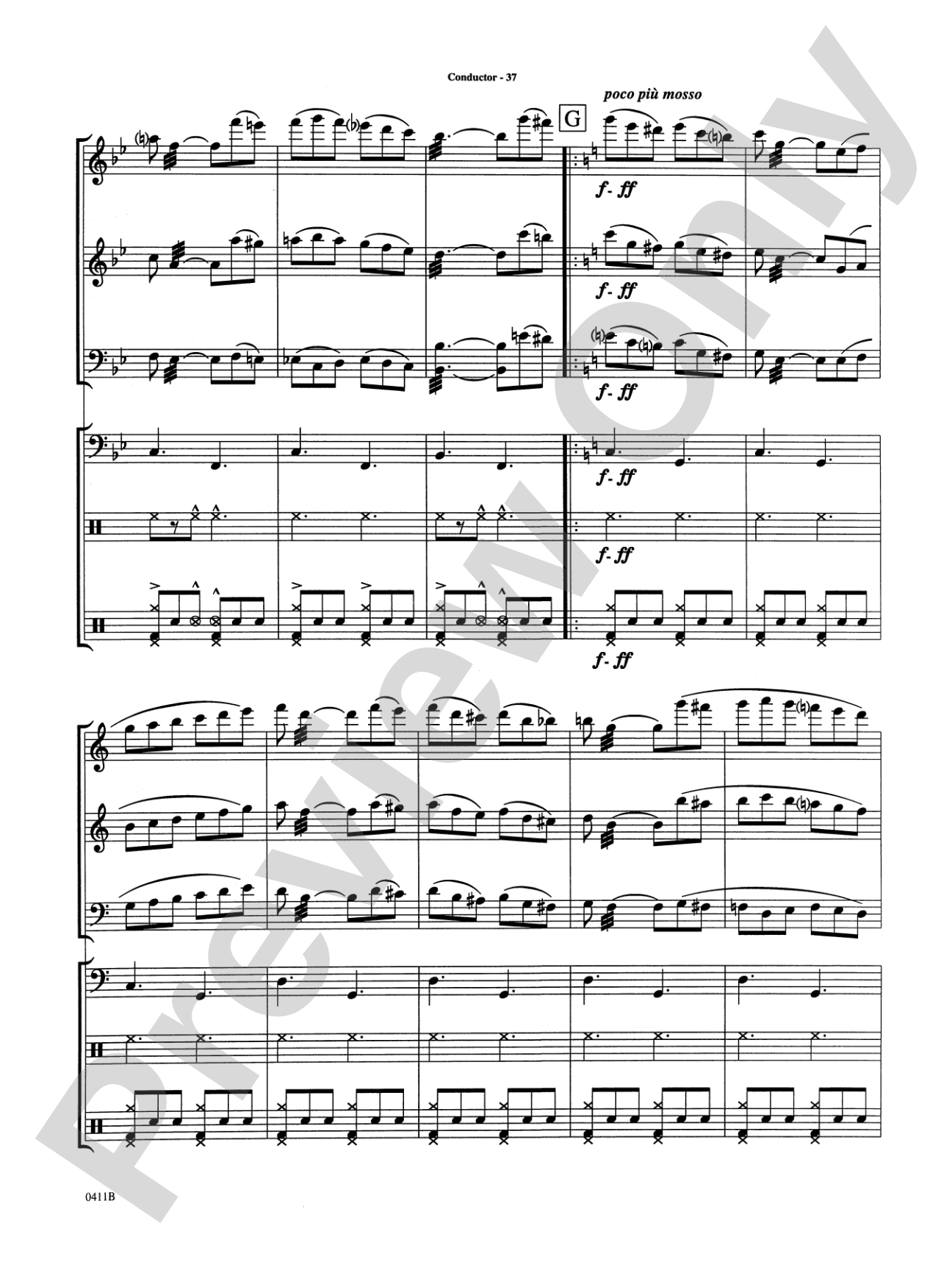
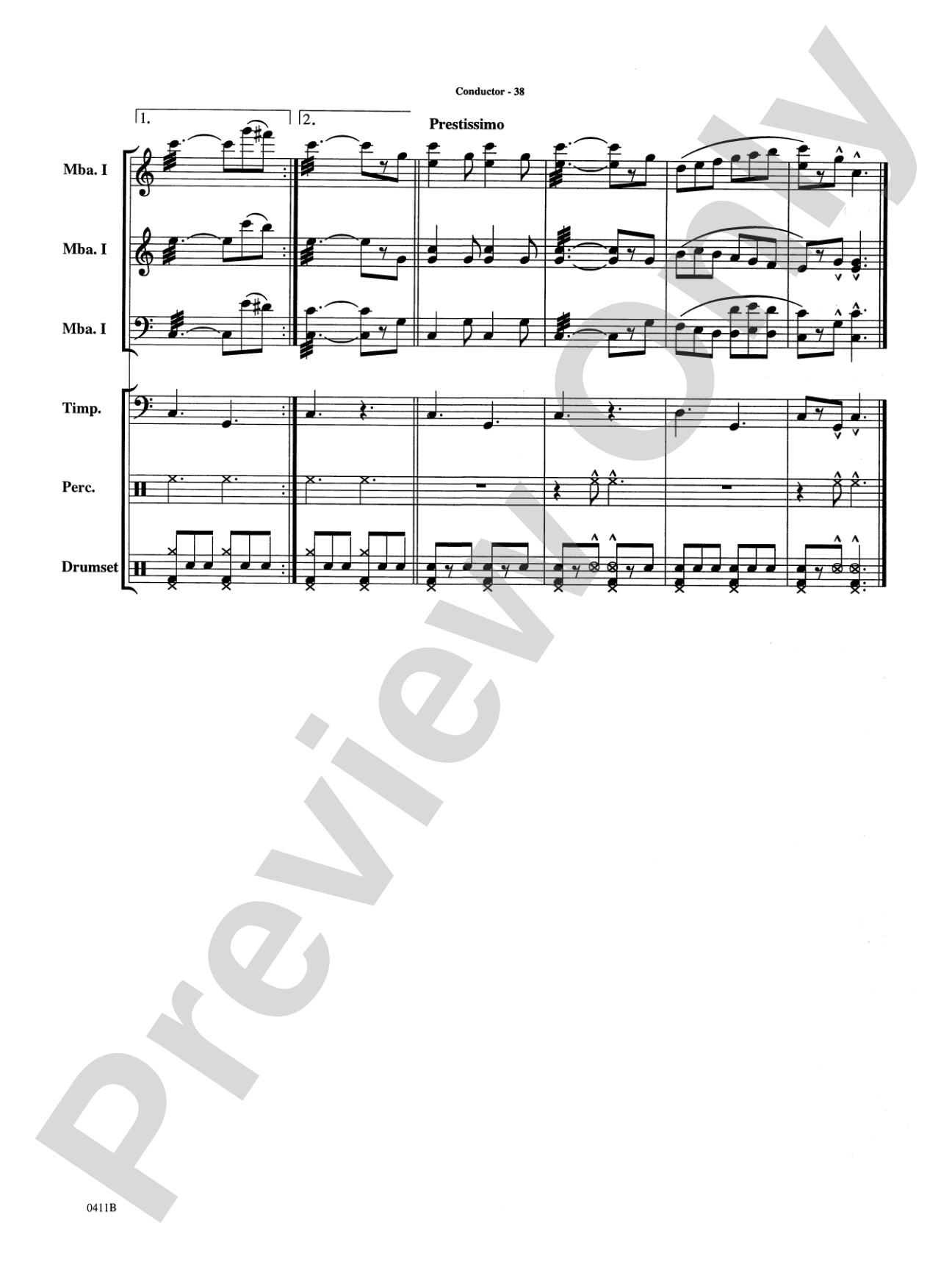
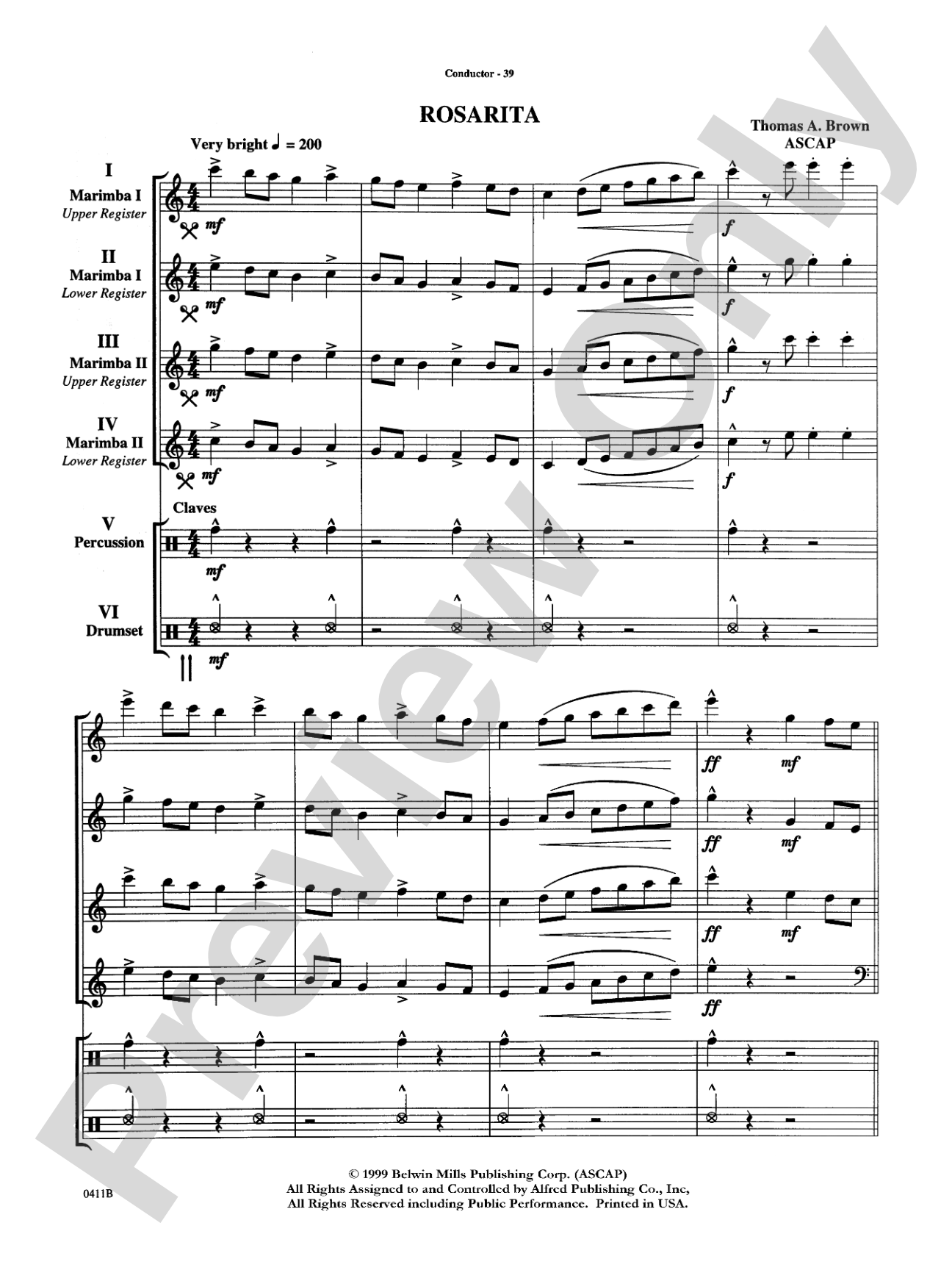
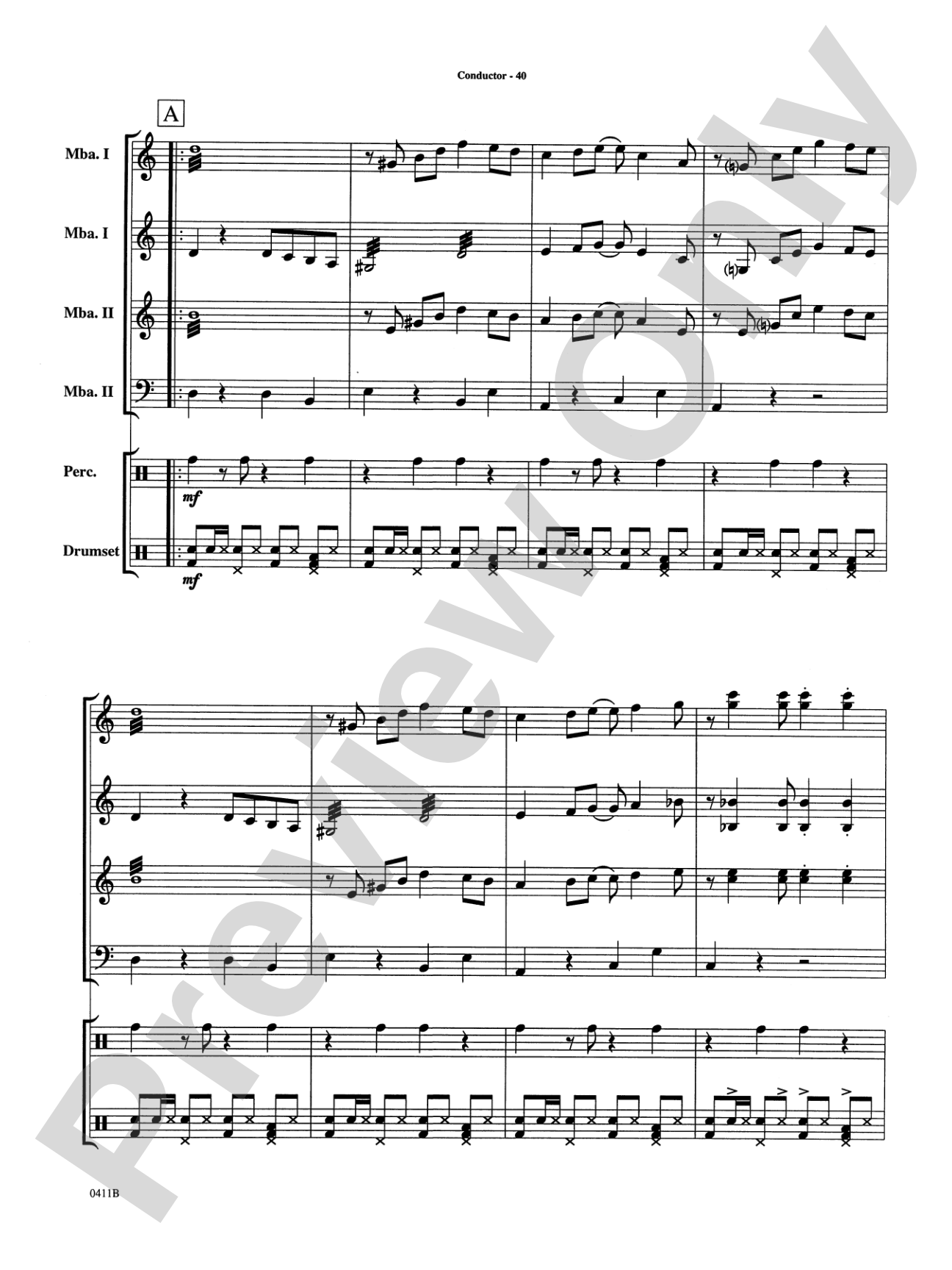
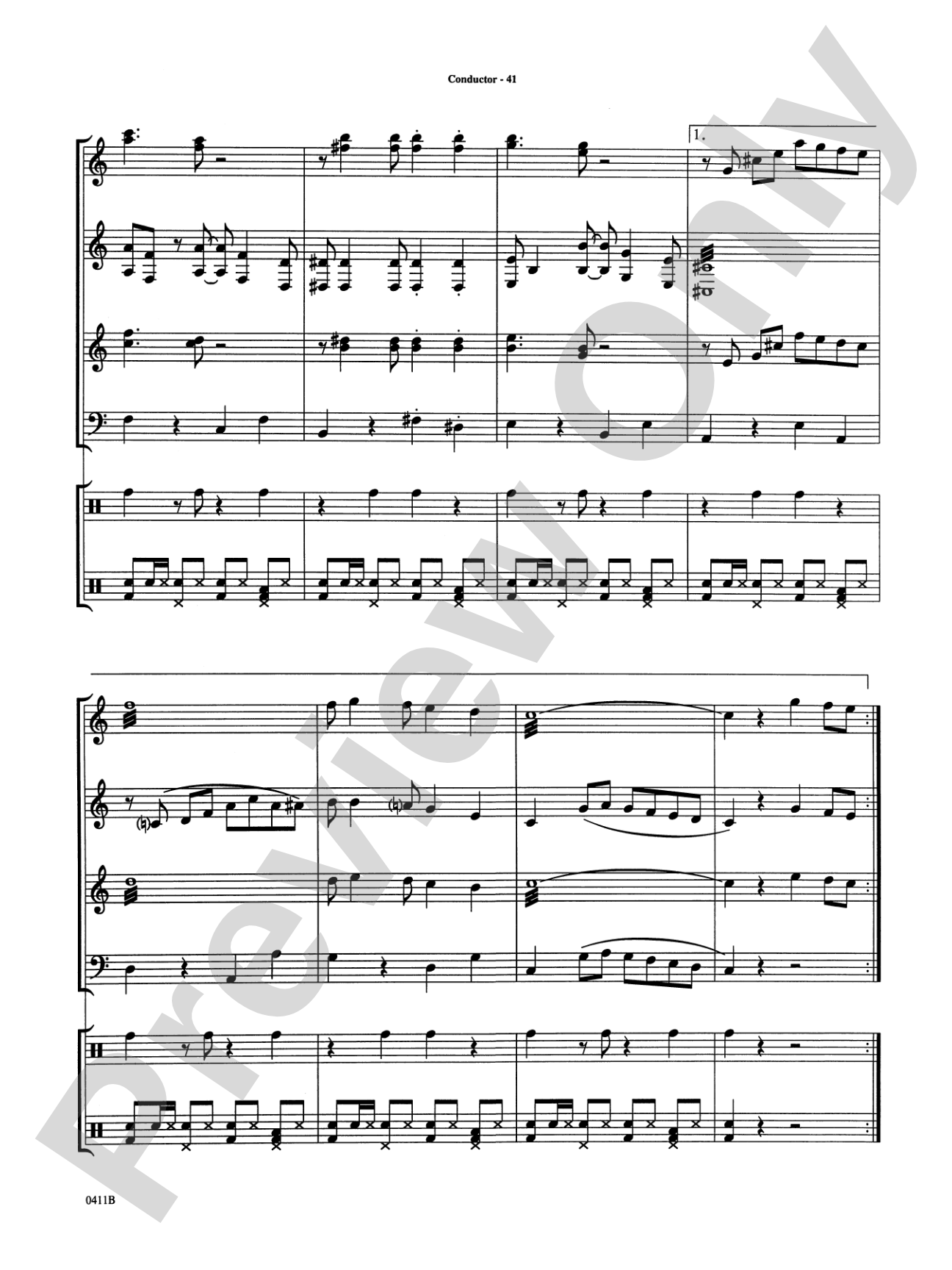
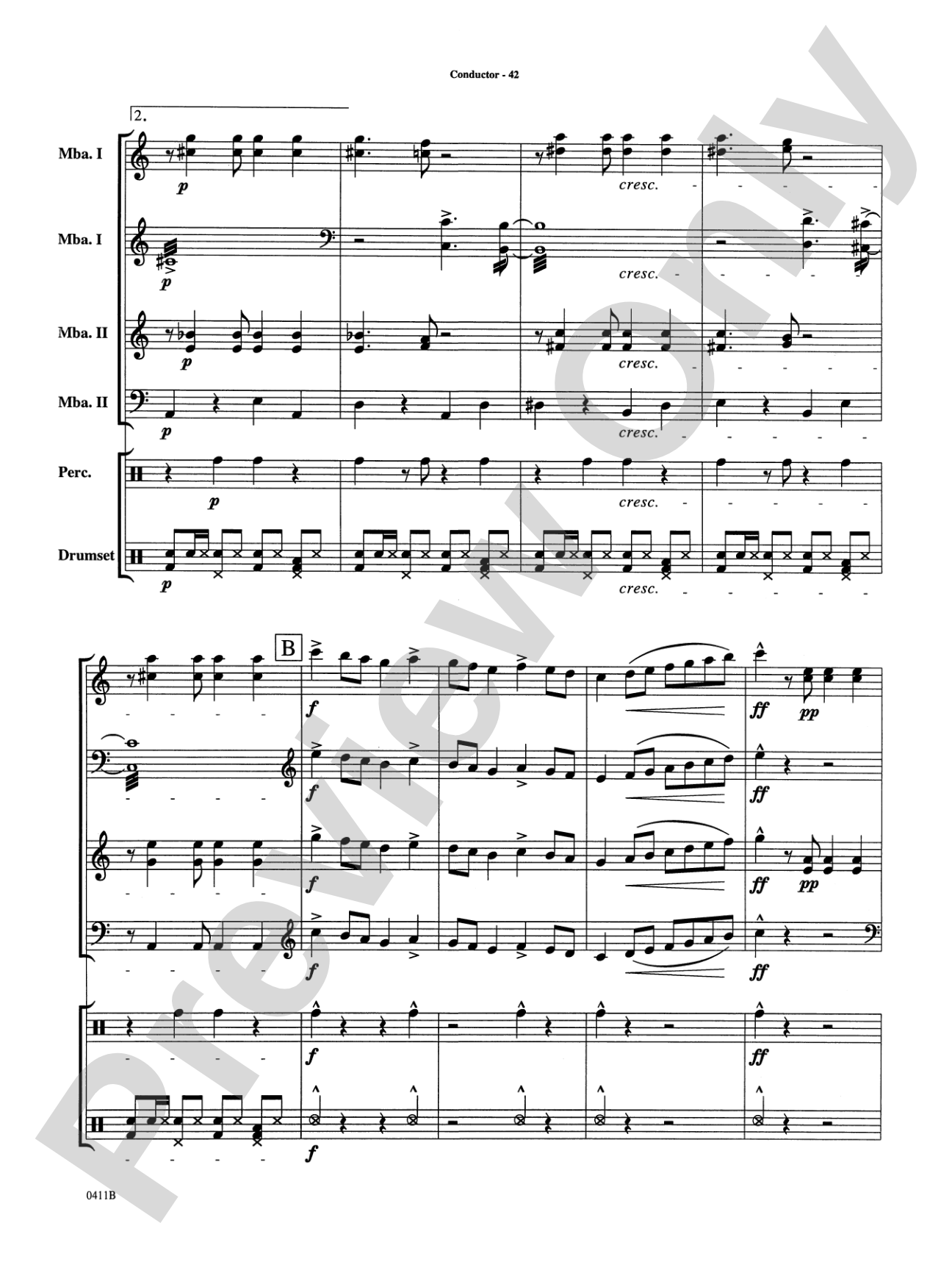
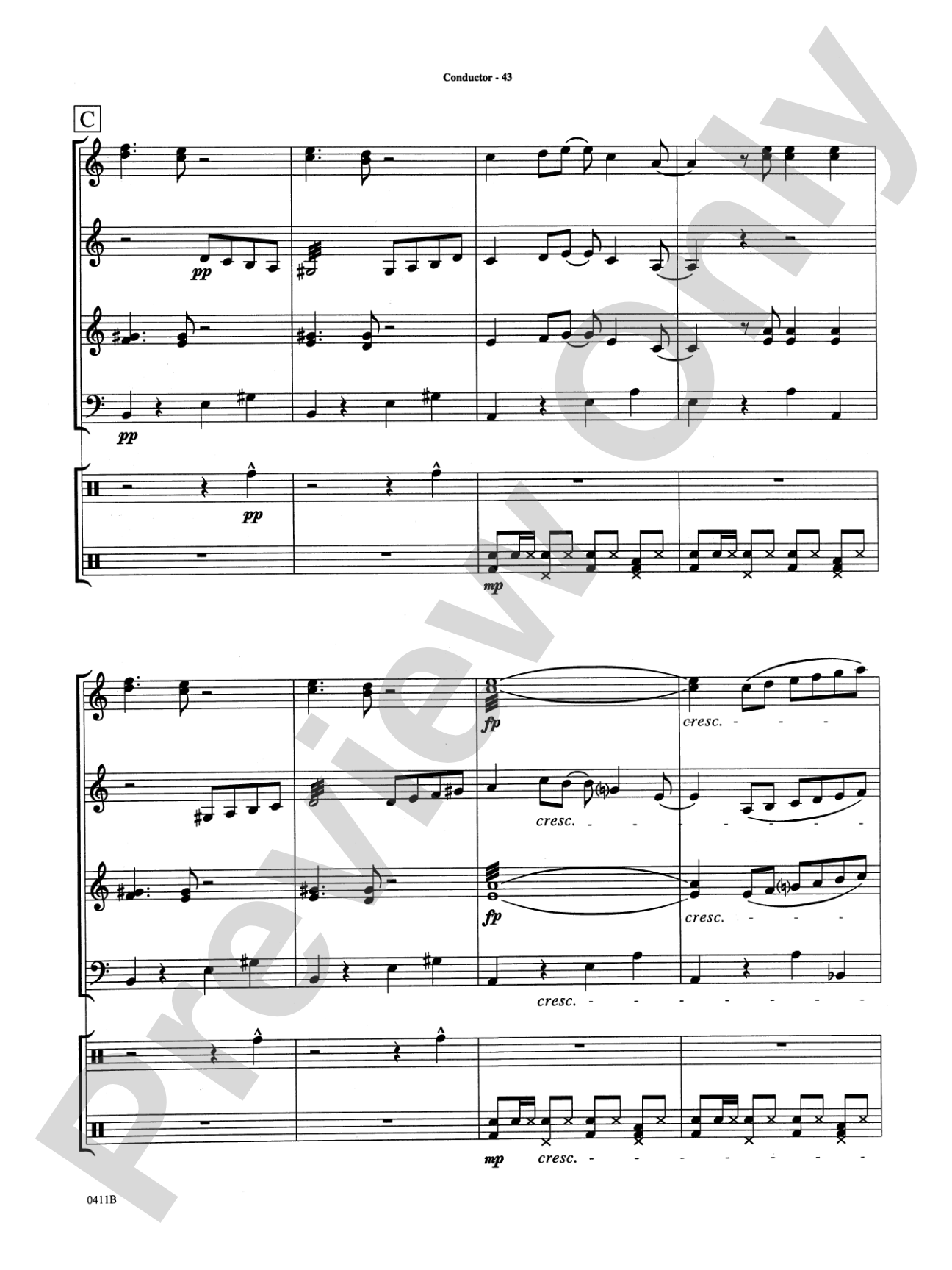
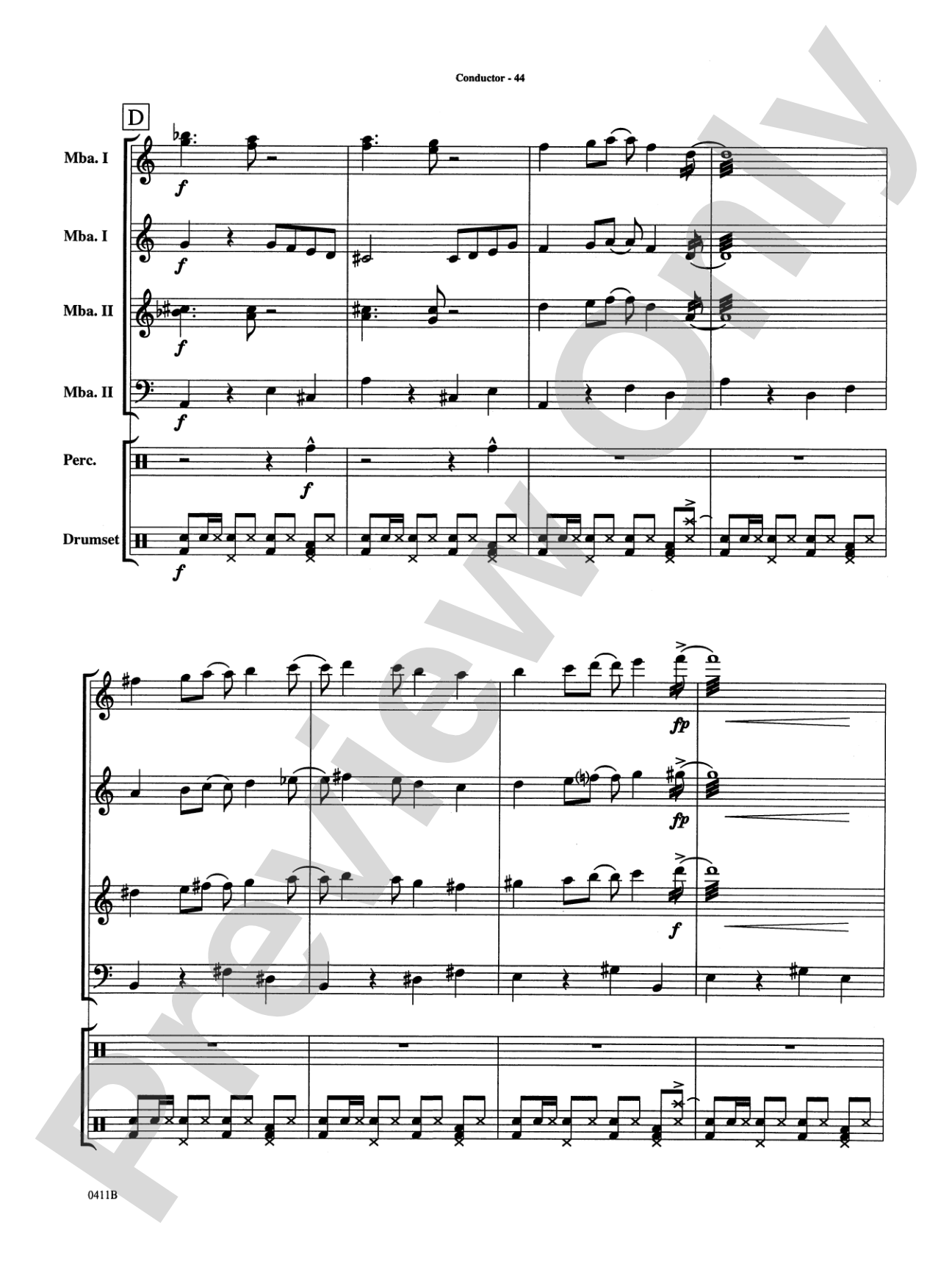
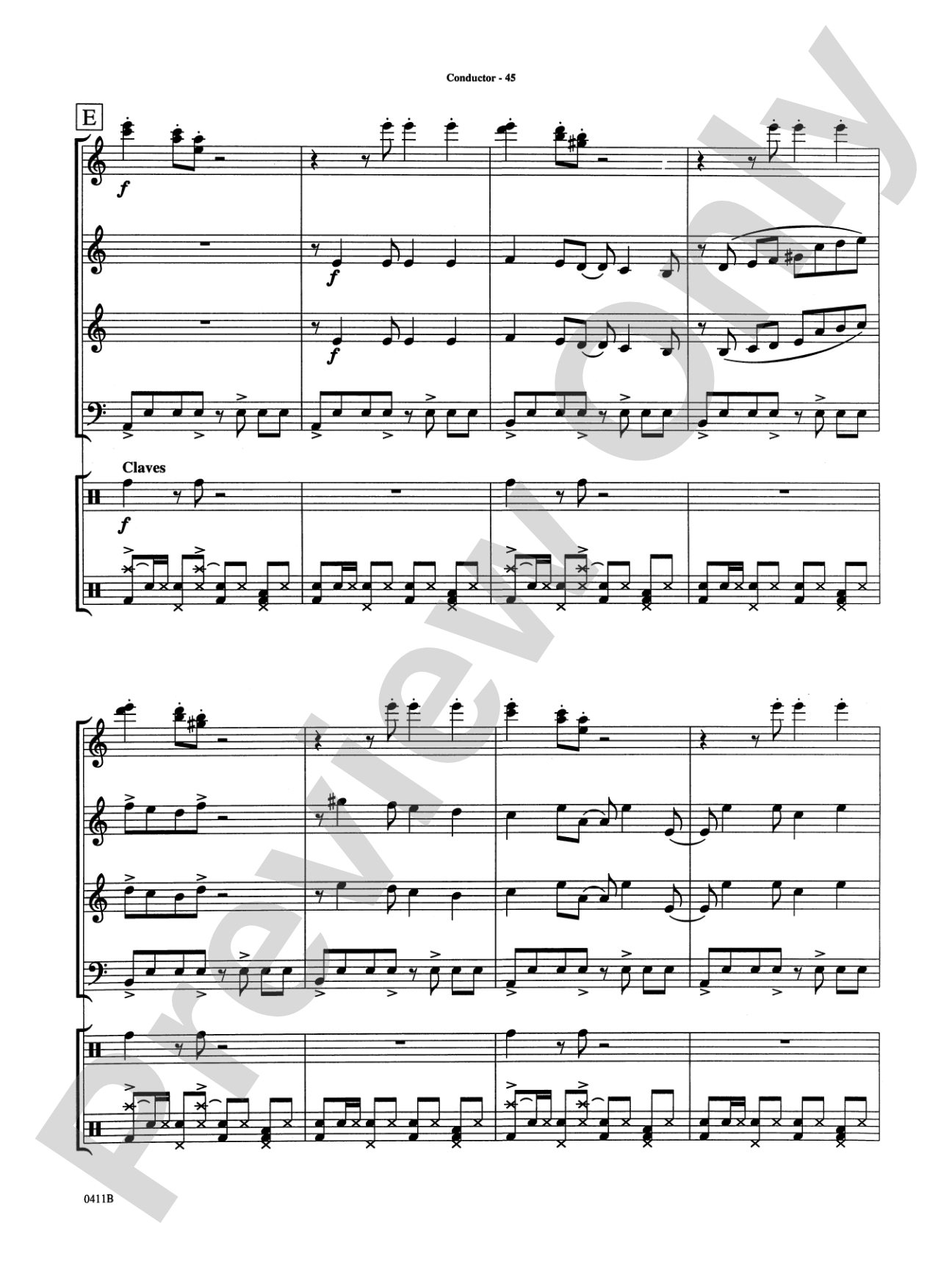
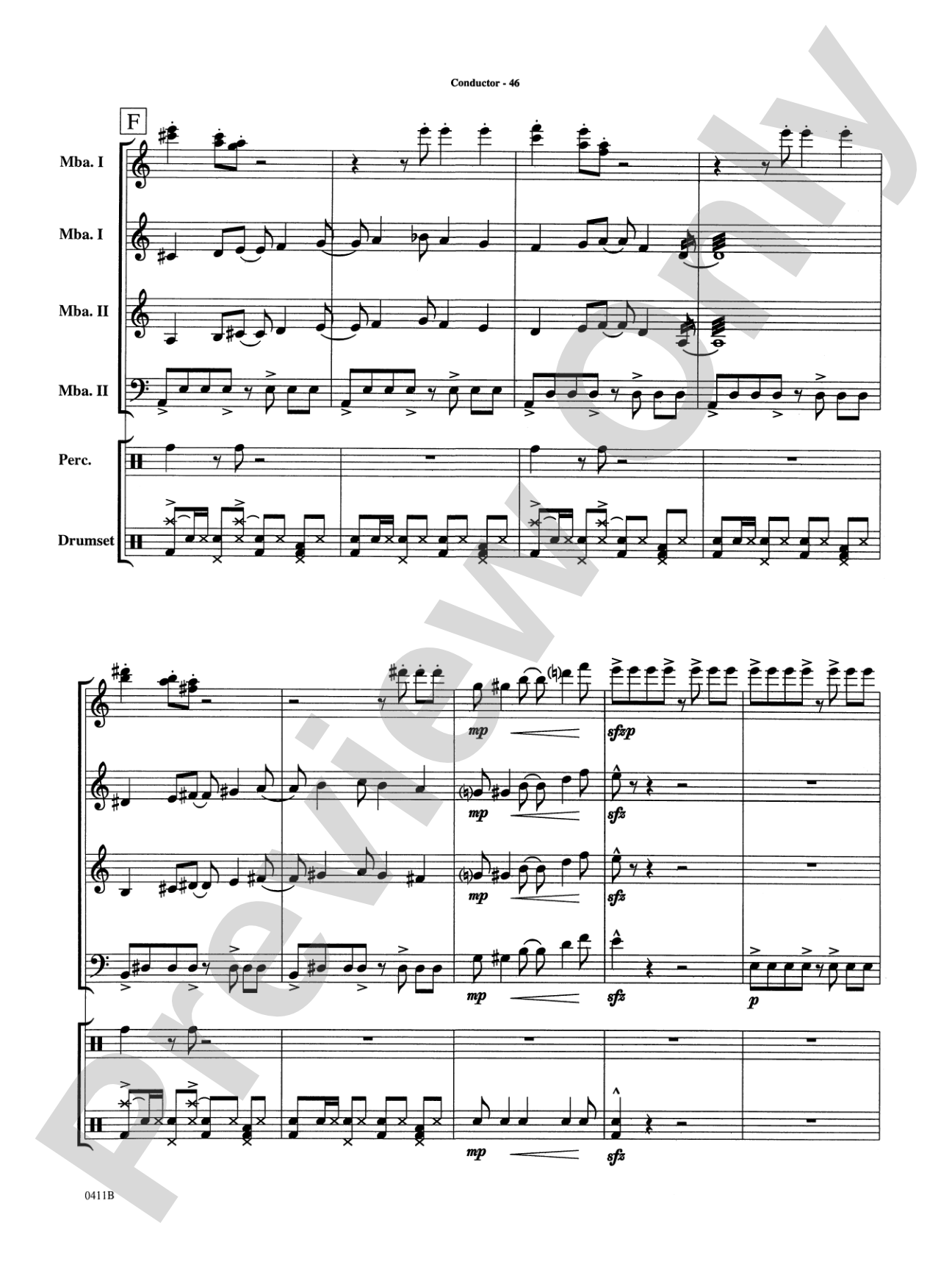
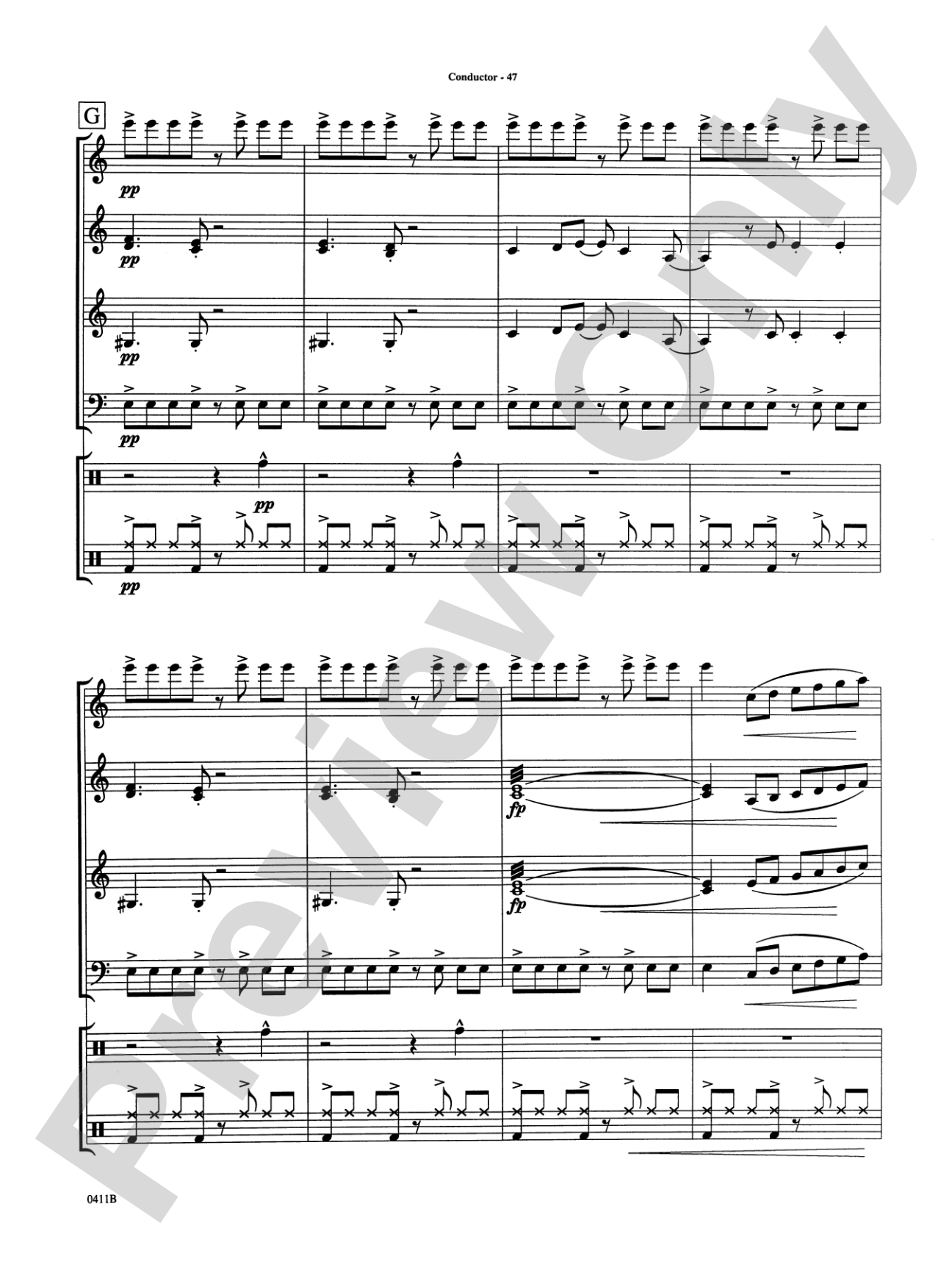
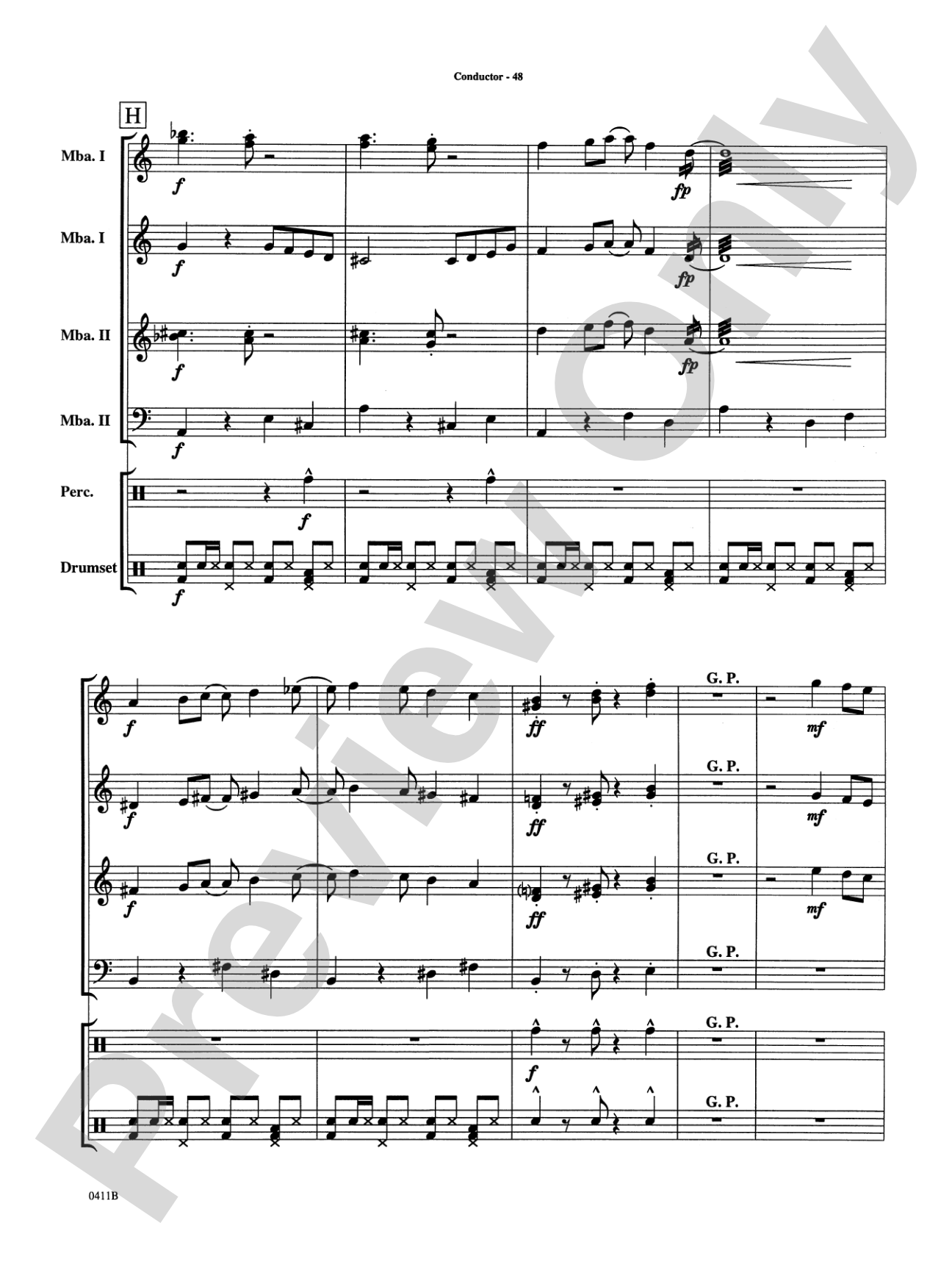
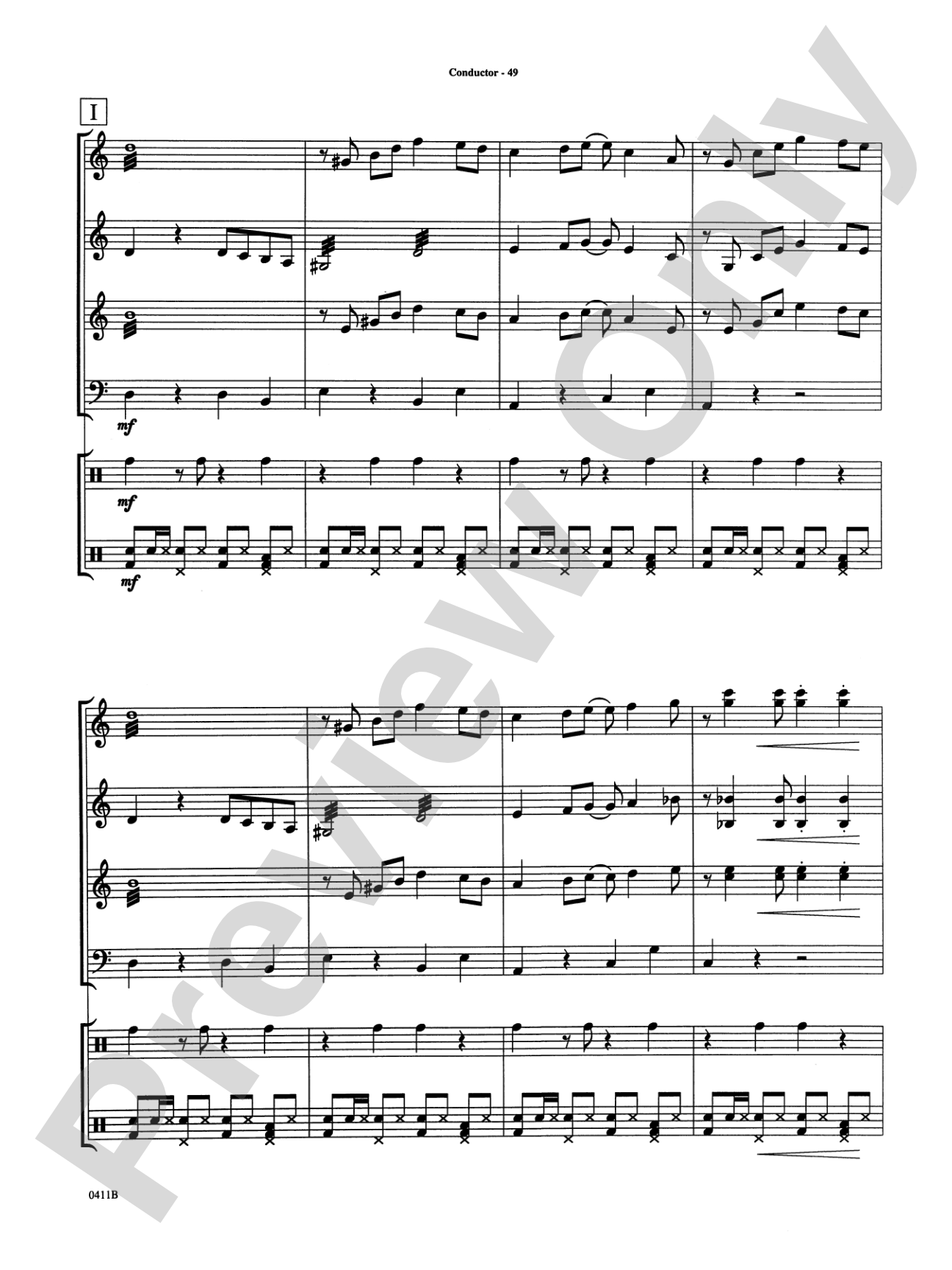
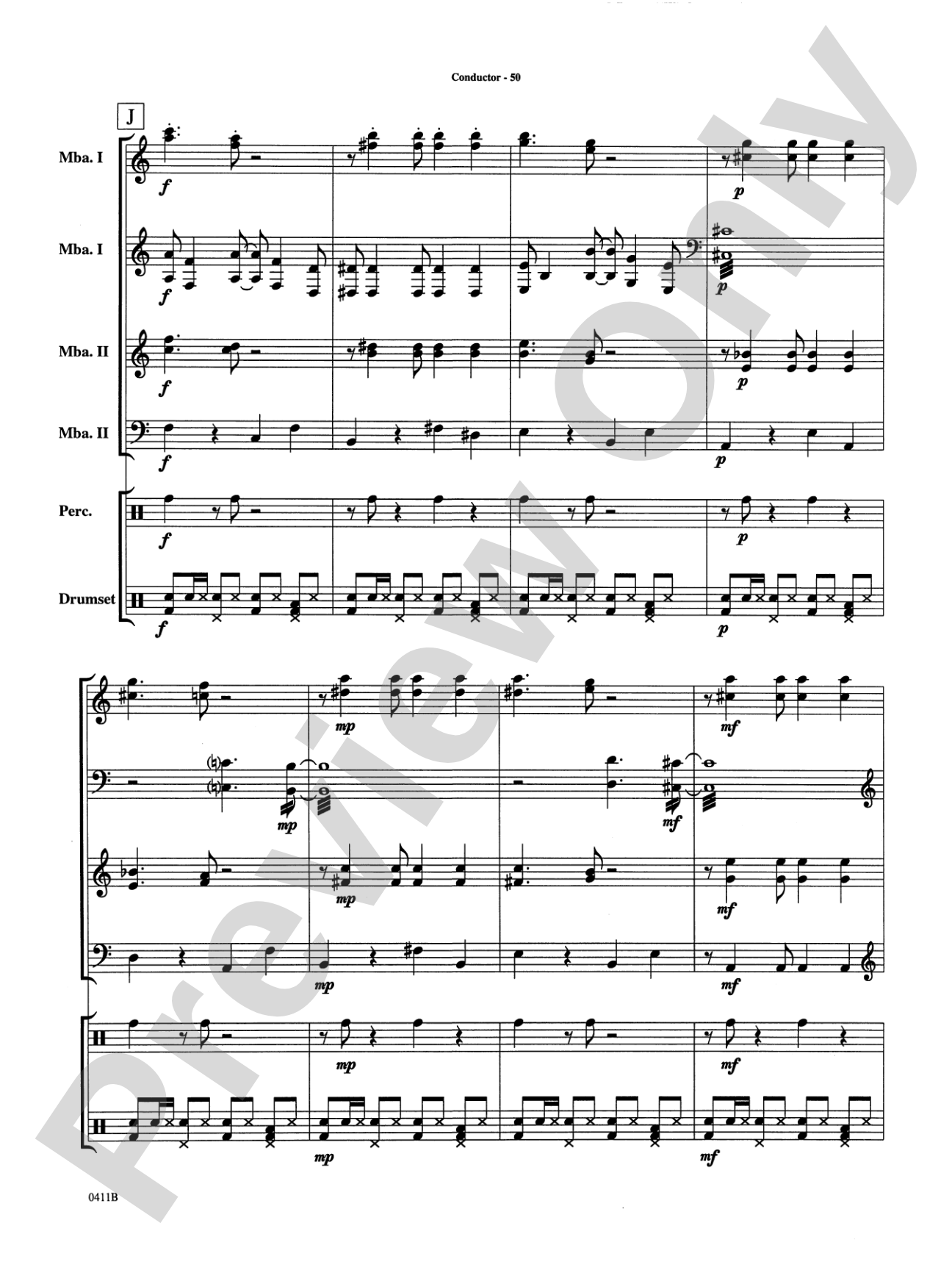

The Mexican Collection: Score
For Percussion Sextet
By Thomas A. Brown
Level: Intermediate Plus
Item: 00-PR-0006983
$10.00
Pickup currently not available
Description
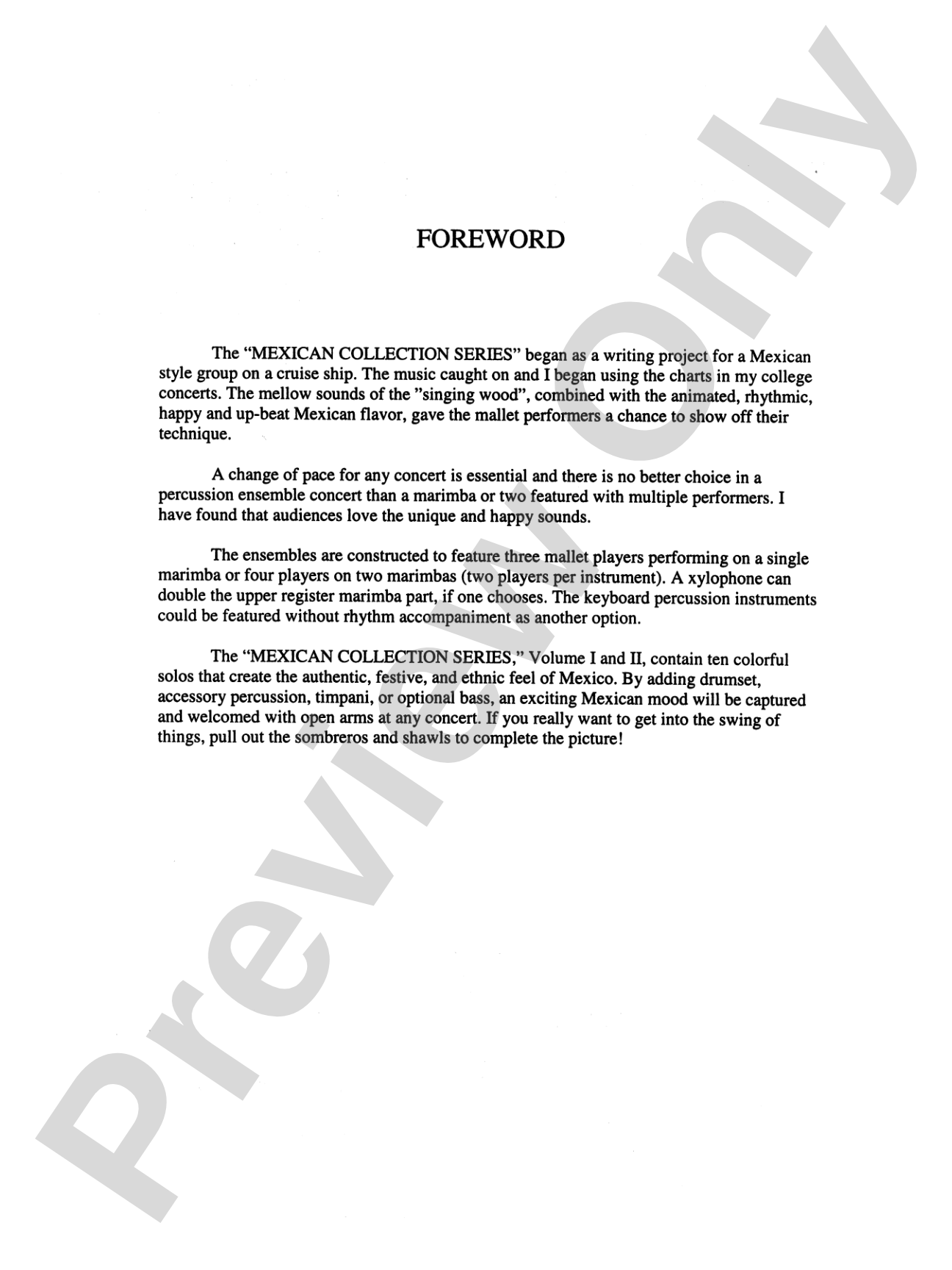
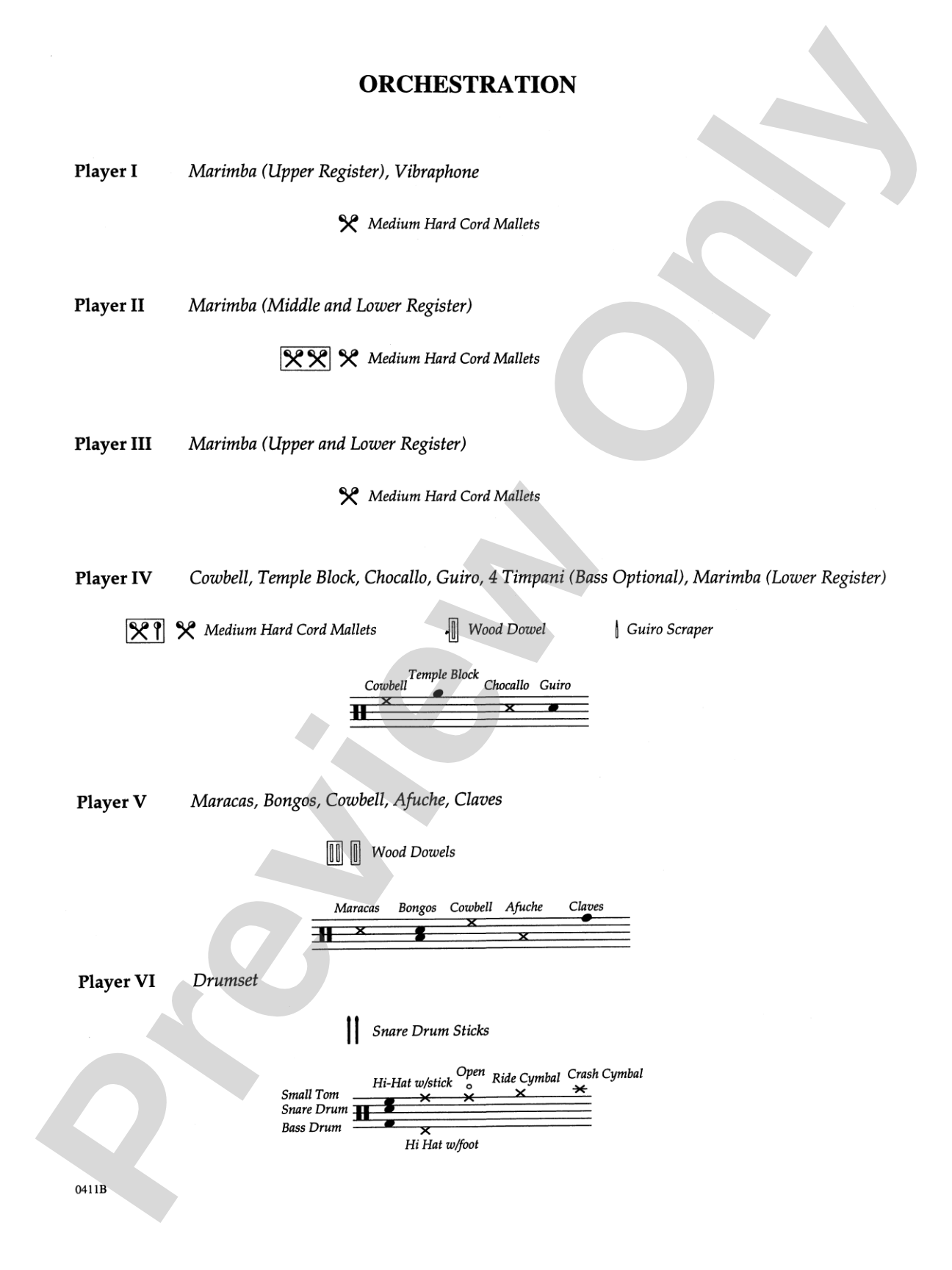
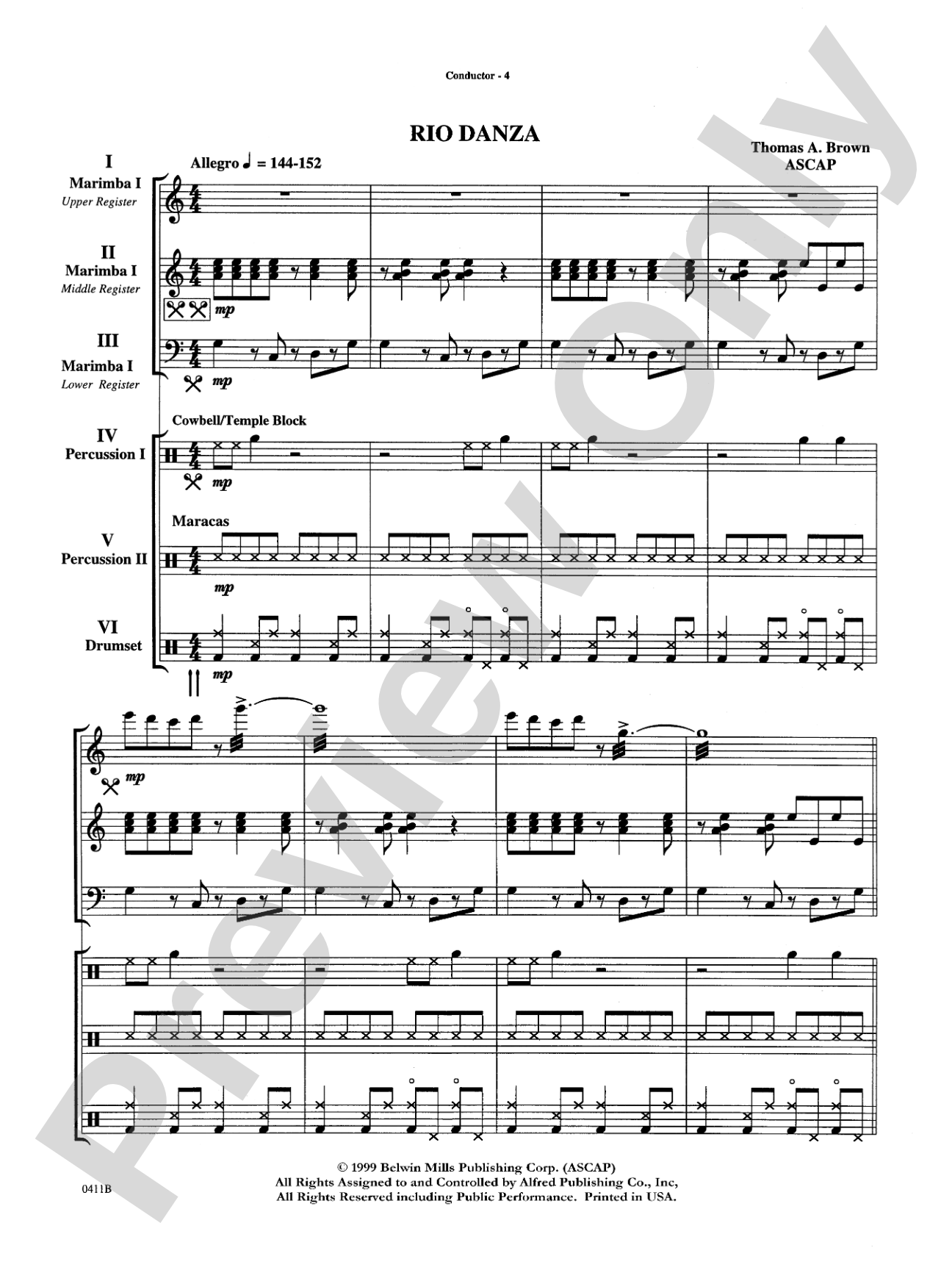
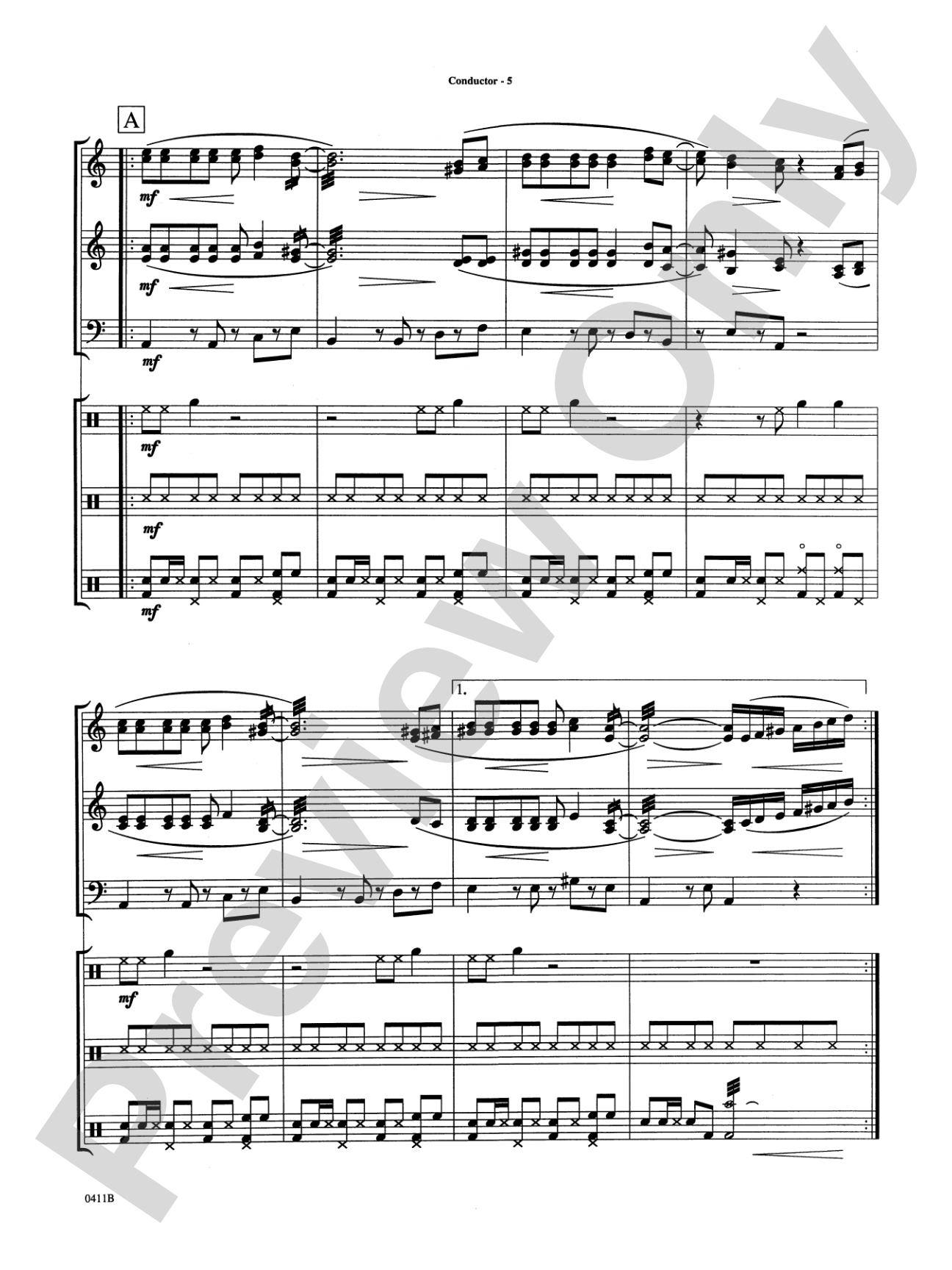
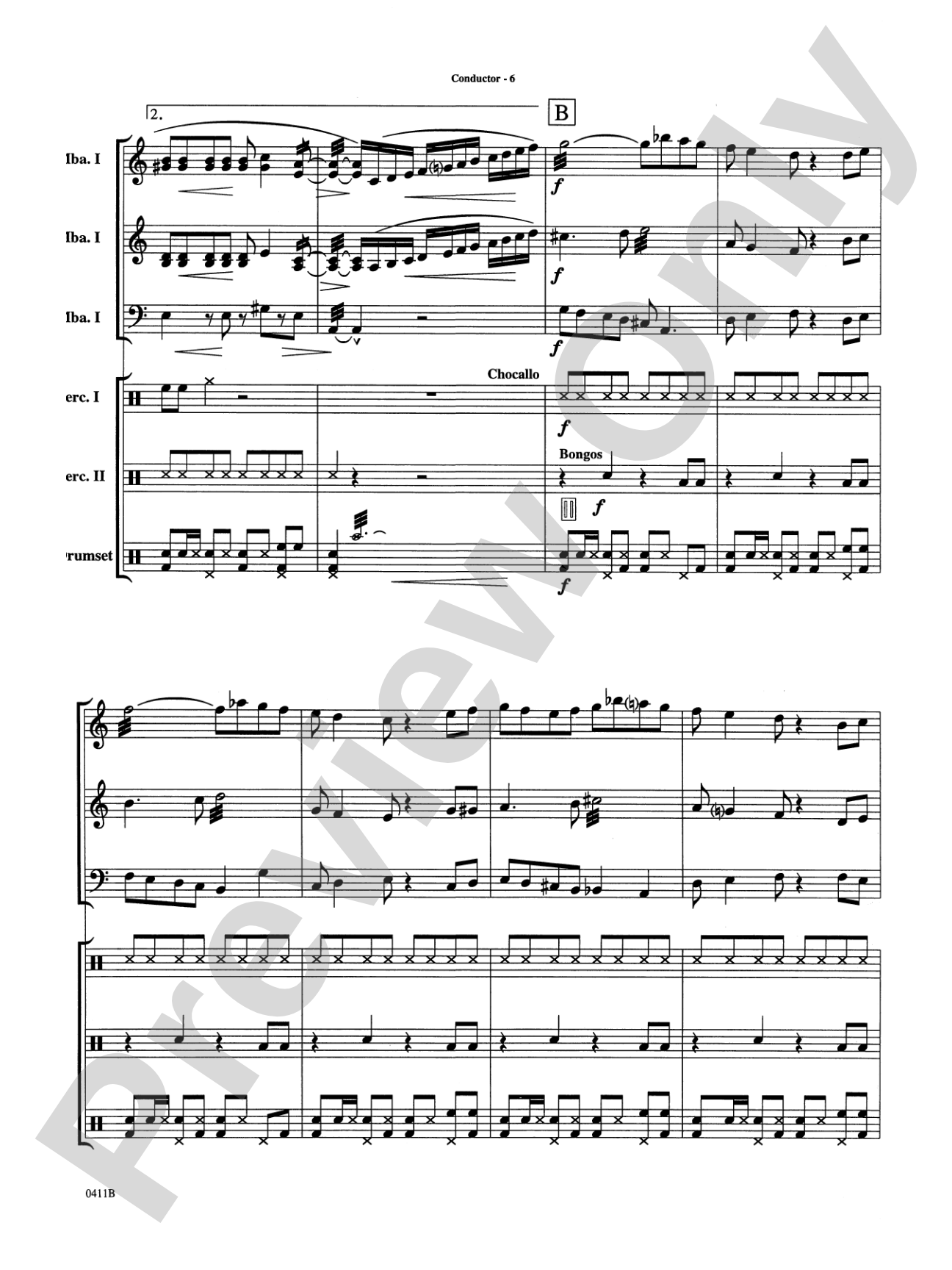
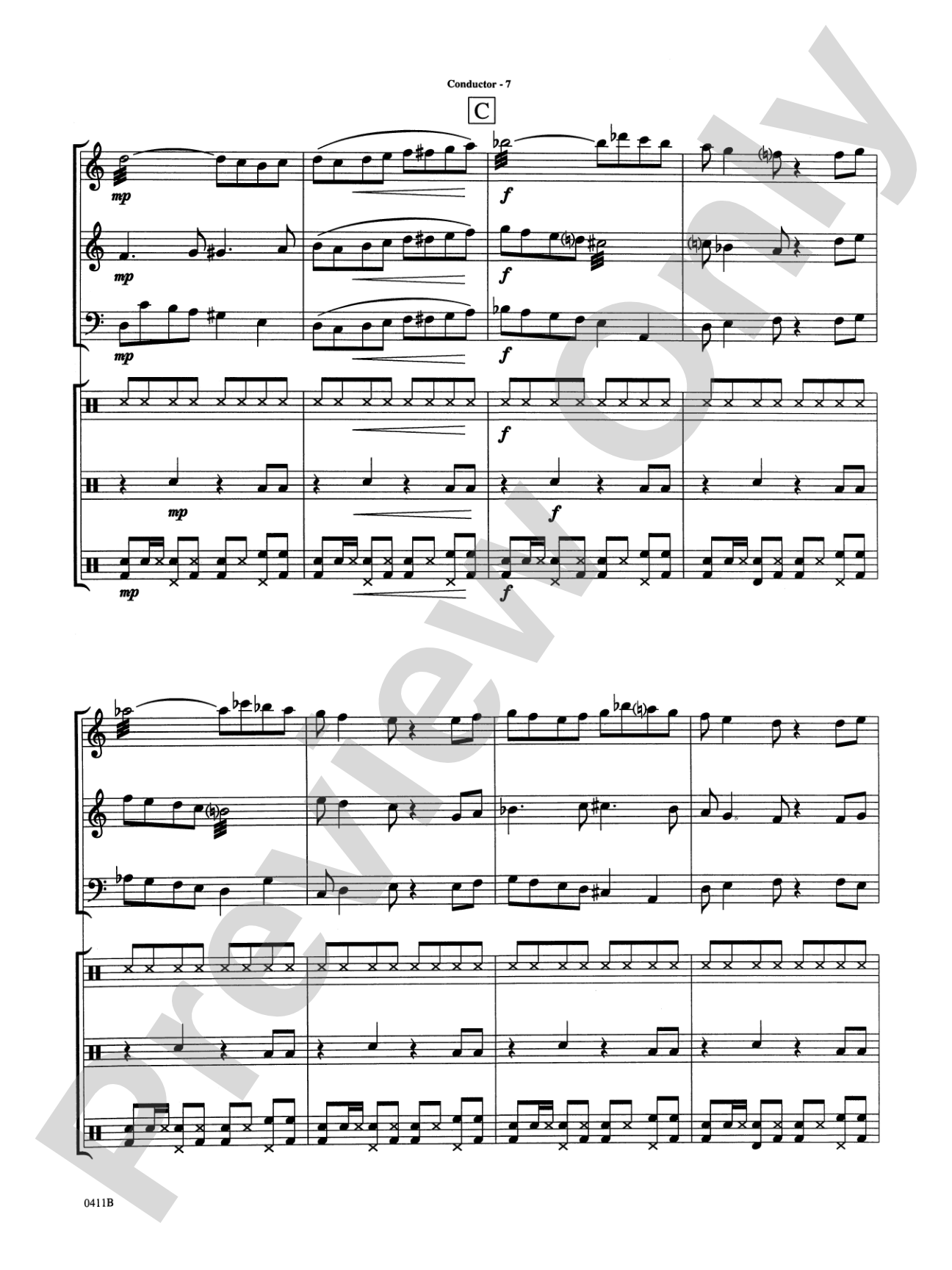
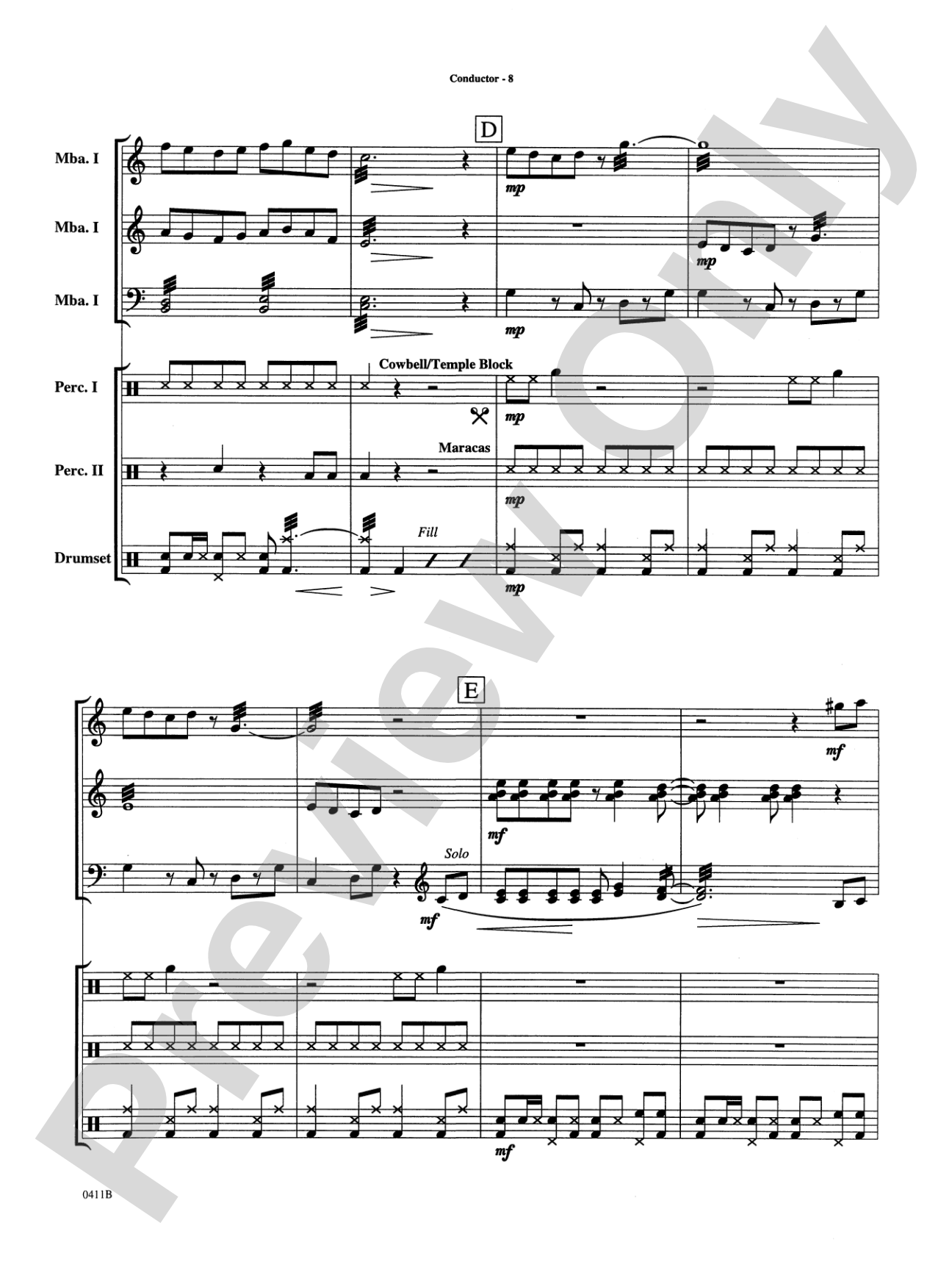
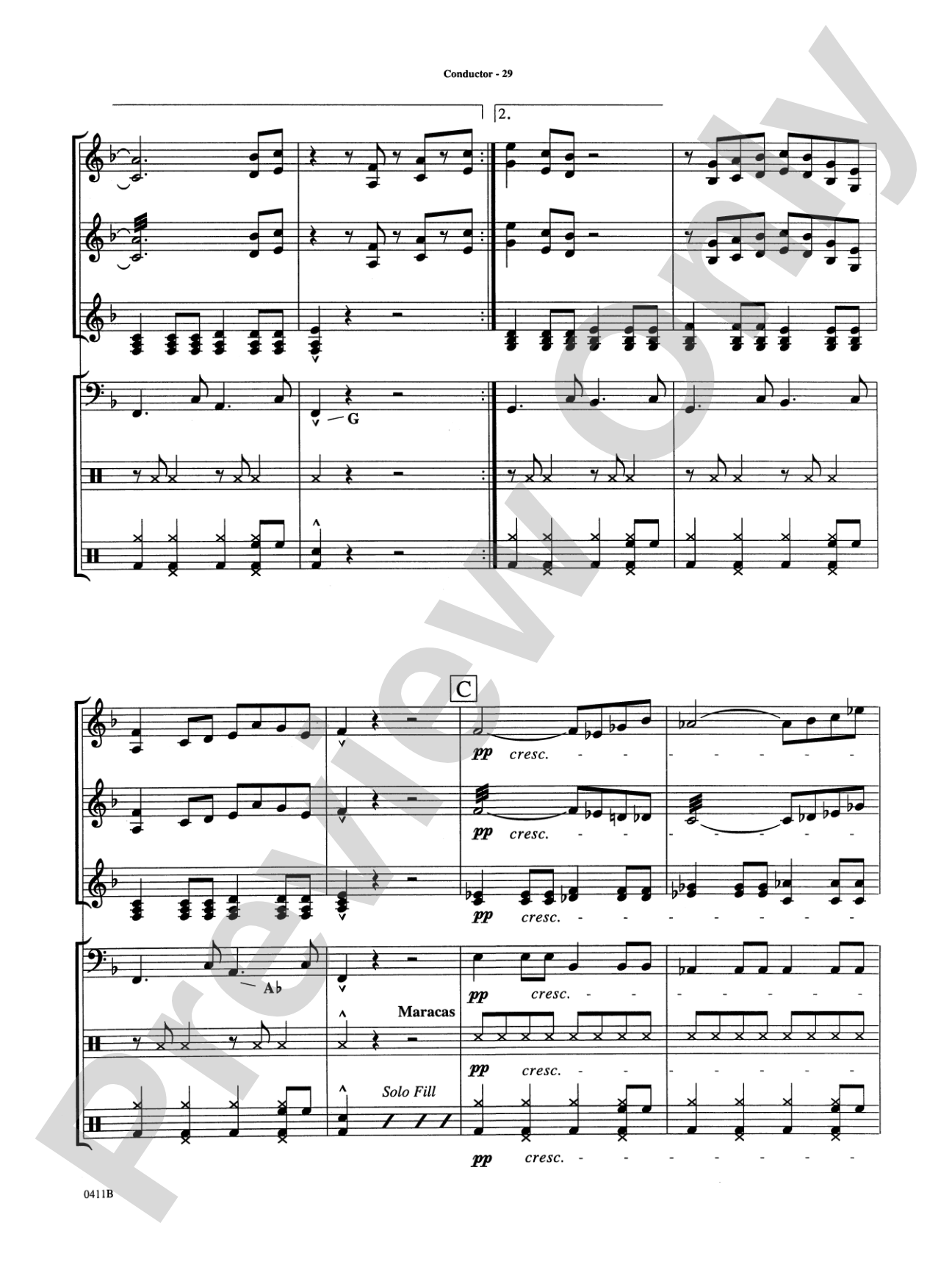
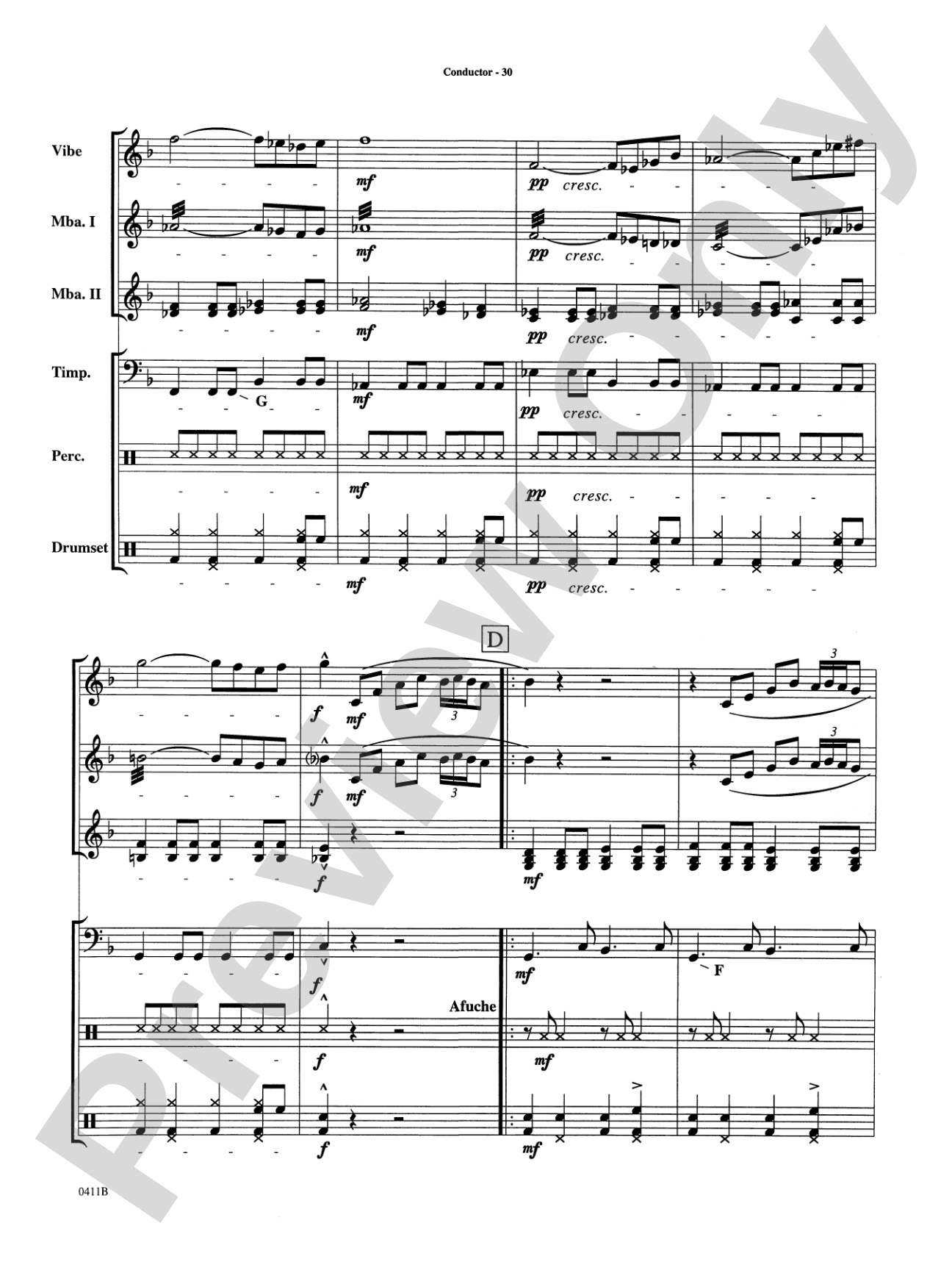
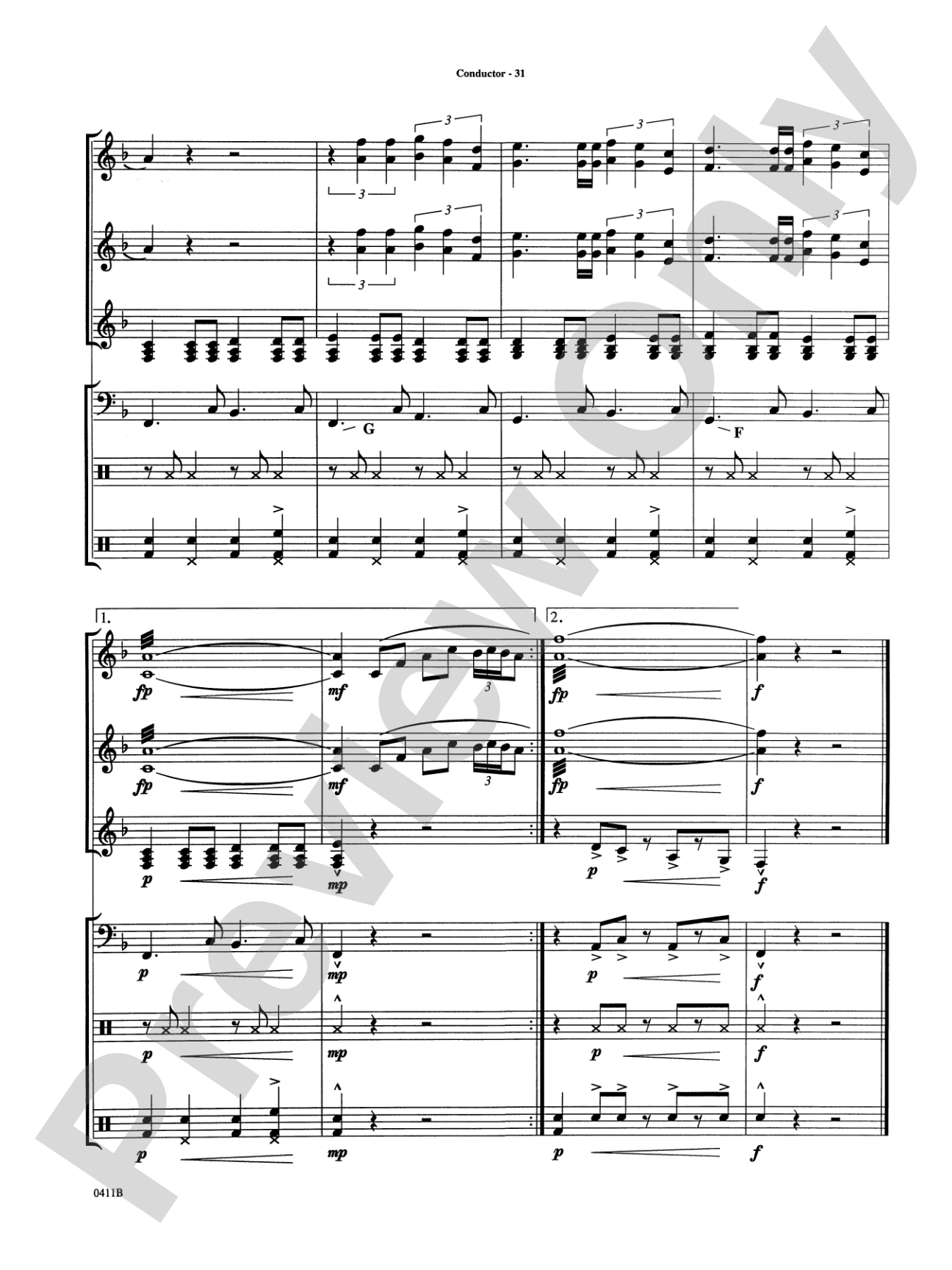
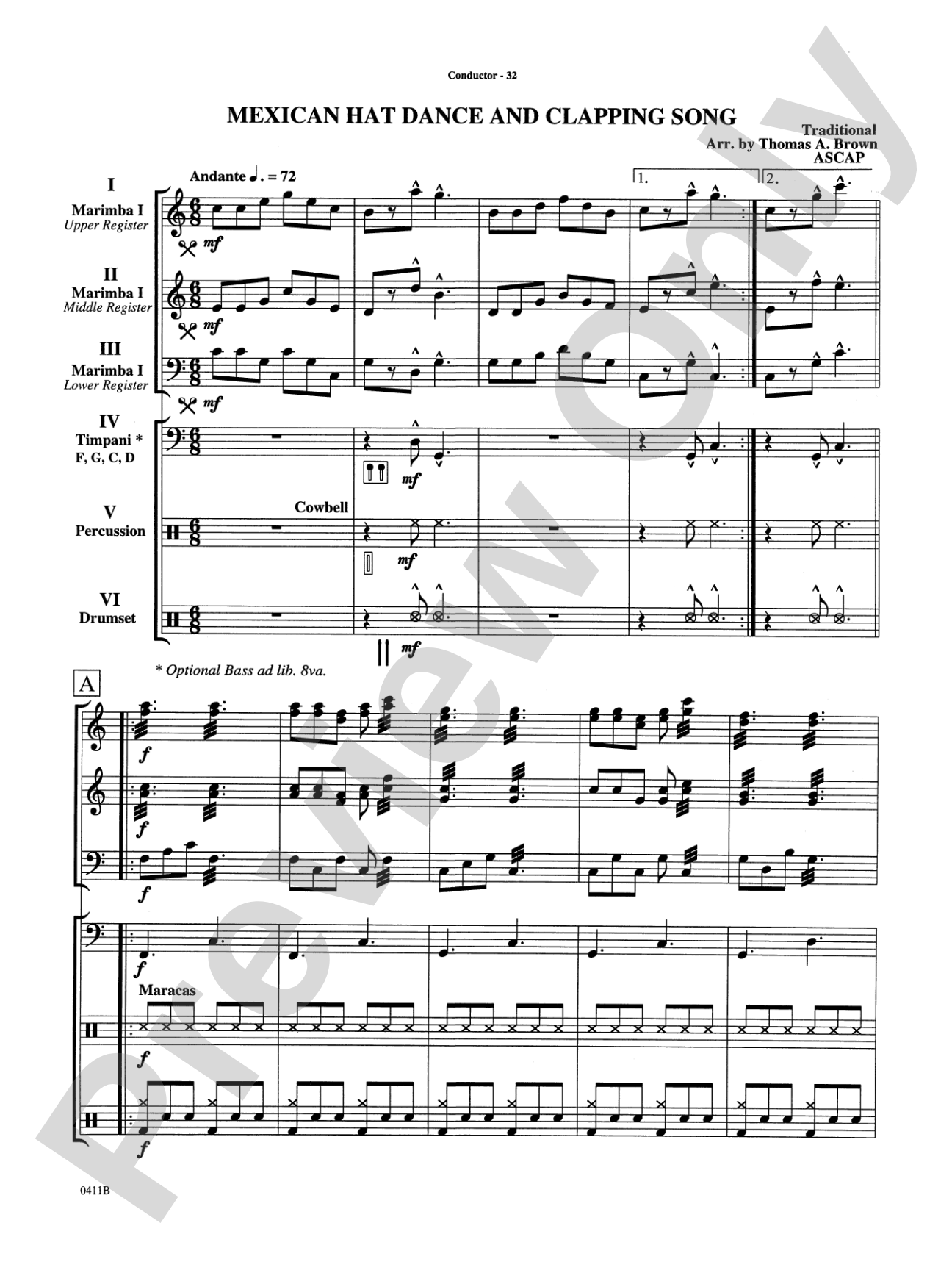
An authentic ensemble collection featuring three players on one marimba, four players on two marimbas, and vibraphone solo with marimba accompaniment. Can be used alone as solos, ensembles, or with the addition of the marimbas, accompanied by drumset, accessory percussion, timpani, or optional bass. Instrumentation: marimba (upper register), vibraphone (Player I); marimba (middle and low register) (Player II); marimba (upper and lower register) (Player III); cowbell, temple block, chocallo, guiro, 4 timpani (bass optional), marimba (low register) (Player IV); maracas, bongos, cowbell, afuche, claves (Player V); drumset (Player VI). Titles include: Rio Danza * Oro Rio * Dance On * Mexican Hat Dance and Clapping Song * Rosarita.


Don't just read it, hear it, play along with it, and watch your students grow with it. In MakeMusic Cloud, The Mexican Collection: Score comes alive with professional accompaniment, adjustable tempo, and built-in practice tools that turn solo practice into real progress.
Open in the Player
Jump straight in and assign it today.
Start Your Free Trial
Open this title and explore the full library in minutes.
Sample Audio
No sample audio found.
Sample Video
No sample videos found.
Additional Details
Publisher:
Alfred Music
Page Count:
120
SKU:
00-PR-0006983
More about this title
Why we love this
Brown's arrangements honor the rhythmic complexity and textural richness of Mexican music without oversimplifying the percussion work. The flexible instrumentation means you can build this collection gradually as your ensemble grows, starting with three marimbas and expanding to the full six-player version. Each piece stands alone while the collection as a whole gives students sustained exposure to Latin percussion techniques and ensemble coordination.
What to expect
Vibrant, rhythmically driving, and rooted in genuine Mexican tradition. These arrangements pulse with the interplay of multiple percussion voices, from the cascading marimba lines to the propulsive cowbell and clave patterns underneath. The sound is warm and accessible while never sacrificing the sophistication required to execute it well.
Who it's for
Intermediate-plus percussion ensembles ready to tackle the demands of Latin music, from high school programs developing serious mallet players to collegiate groups looking for stylistically authentic repertoire. The flexible scoring works for ensembles with 3 to 6 players, making it accessible whether you're a smaller school building percussion depth or a full ensemble wanting focused marimba and Latin percussion work.
How to get the most out of it
- Balance the four players on two marimbas by rehearsing the upper and lower register parts independently before combining them; mark which measures each player doubles or takes solo responsibility.
- Lock the cowbell ostinatos (appearing across multiple players) by having percussion players tap their bells in unison during early rehearsals, then layer back the melodic parts once the foundation is solid.
- Establish a clear hand signal from the drumset player (or designate a conductor) to manage the tempo and style variation between sections, especially in pieces that shift between steady grooves and syncopated fills.
- Spend focused time on the afuche, guiro, and chocallo articulations; these instruments carry much of the authentic character and need accurate technique to cut through the ensemble texture.
How to use it
Program individual pieces as appetizers in a mixed percussion concert, or perform the full collection as a substantial standalone set that showcases ensemble maturity and cultural repertoire. These arrangements also work well as supplementary material in a percussion curriculum unit on Latin music, since each piece targets specific technical and ensemble skills without requiring outside accompaniment.
Skills your students will build
- Mallet control and independence across upper, middle, and lower registers on multiple marimbas
- Latin percussion techniques including proper cowbell strike, guiro scraping, afuche shaking, and clave strikes
- Ensemble coordination and rhythmic interlocking across five to six simultaneous percussion lines
- Reading and executing syncopated rhythms and cross-rhythms typical of Mexican music
- Dynamic balance and voice leading when multiple players share the same instrument