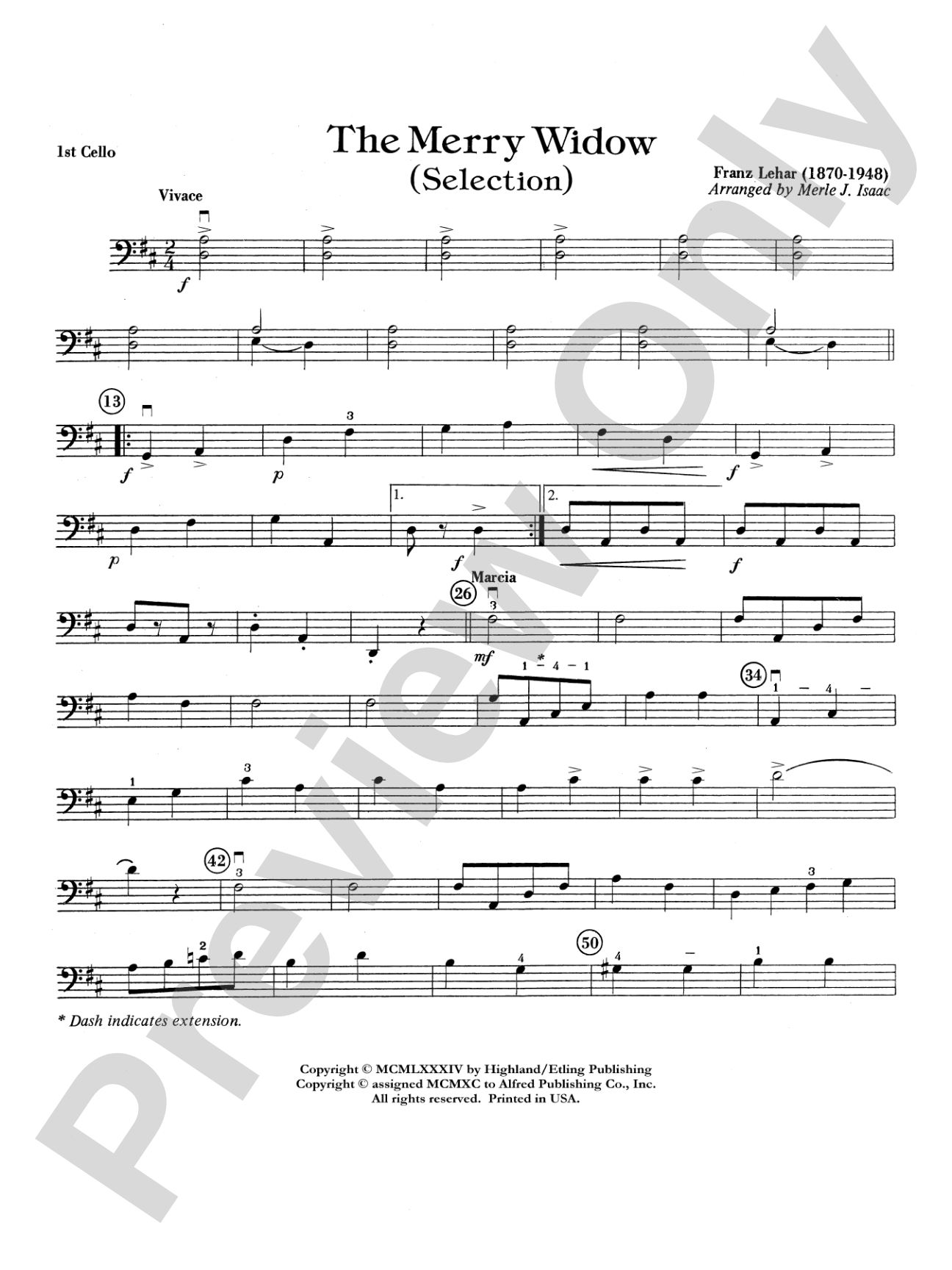
The Merry Widow: Cello Sheet Music Preview

The Merry Widow: Cello

(Selections)

By Franz Lehár / arr. Merle J. Isaac

Grade: 3

Item: 00-PC-0000109_VC1

Digital Download
$5.99
Description

Don't just read it, hear it, play along with it, and watch your students grow with it. In MakeMusic Cloud, The Merry Widow: Cello comes alive with professional accompaniment, adjustable tempo, and built-in practice tools that turn solo practice into real progress.

Sample Audio
No sample audio found.
Sample Video
Additional Details
Series: Highland/Etling String Orchestra
Publisher: Alfred Music
Page Count: 160
SKU: 00-PC-0000109_VC1

More about this title

About the Composer: Franz Lehár

Franz Lehár (1870-1948) was a Hungarian composer who became one of the most celebrated operetta masters of the late Romantic era. His gift for melody and theatrical storytelling elevated operetta to new artistic heights, and his works dominated European stages for decades. The Merry Widow remains his masterpiece, a score of unmatched elegance that blends Viennese charm with genuinely sophisticated orchestration.

Lehár's influence on musical theater cannot be overstated. He understood how to write music that appealed to broad audiences while maintaining artistic integrity, and his melodies have proven to be some of the most enduring in all of light music. For string orchestras, his works offer both technical challenge and the reward of playing music with genuine dramatic substance.

Why we love this

This Merle Isaac arrangement captures the brilliance and sophistication of Lehár's original without demanding the resources of a full operetta production. The orchestration sits perfectly for a school string orchestra at Grade 3, giving every section meaningful material while showcasing the elegance that made this operetta a cornerstone of musical theater. Directors get to program a legitimate masterwork that students will recognize, audiences will love, and adjudicators will respect.

What to expect

Elegant, graceful, and thoroughly romantic. The piece moves with the easy confidence of a Viennese waltz, full of charm and warmth, yet never lightweight. There's a gentle sophistication to the melody and harmony that feels both accessible and genuinely artistic.

Who it's for

String orchestras at the Grade 3 level who want to perform a piece with genuine musical substance and historical significance. This arrangement works equally well for a school orchestra working toward festival or a community ensemble seeking repertoire that audiences recognize and respect.

How to get the most out of it

  • Shape the main waltz melody with subtle dynamic refinement rather than exaggerated swells. Lehár's sophistication lives in restraint, and letting the melody breathe naturally will sound more European than forcing it.
  • Balance inner voices carefully in the ensemble passages. The charm of this arrangement depends on hearing how the parts interact, so ensure violas and second violins aren't buried under firsts.
  • Attend to the marked articulations precisely. Staccatos in the accompaniment figures give the piece its characteristic lightness, while sustained passages establish the sentimental moments that make the waltz resonate.
  • Work the section that modulates between keys with extra rehearsal time. These moments can feel disjointed if players aren't locked rhythmically, but when they land cleanly, they sound naturally expressive.

How to use it

Program this as a standalone feature or pair it with other lighter Romantic works to create a "Vienna and Beyond" concert theme. The piece works beautifully as a spring concert centerpiece or as an accessible opener that immediately tells the audience this orchestra has repertoire and taste.

Skills your students will build

  • Playing sustained legit passages with consistent tone and intonation
  • Balancing independent melodic lines within a full ensemble texture
  • Executing rhythmic precision in waltz meter with natural phrasing
  • Responding to key modulations and harmonic movement smoothly
  • Shaping Romantic-era operetta style with appropriate articulation and dynamic control

You May Also Like