The Merry Widow: Easy Piano Digital Sheet Music

The Merry Widow: Easy Piano Digital Sheet Music

Franz Ferenc Lehar

Item: 00-PS-0003286

Digital Download
$3.99
Description

The Merry Widow: Easy Piano Digital Sheet Music isn't in MakeMusic Cloud just yet...but it could be. Let us know you'd like to see it, and you'll help shape what comes next. In the meantime, start a free trial and dive into thousands of interactive titles your students can play along with today.

Sample Audio
No sample audio found.
Sample Video
Additional Details
SKU: 00-PS-0003286

More about this title

About the Creator: Franz Lehár

Franz Lehár composed The Merry Widow in 1905, and it became one of the most successful operettas of all time. His gift for melody and sophisticated harmonic language elevated the genre beyond typical light entertainment, creating a score that rewards both casual listening and serious musical study.

Lehár's influence on musical theater extended far beyond Vienna's golden age. His ability to craft unforgettable tunes while maintaining genuine compositional craft makes his work enduringly popular with pianists of all levels.

Why we love this

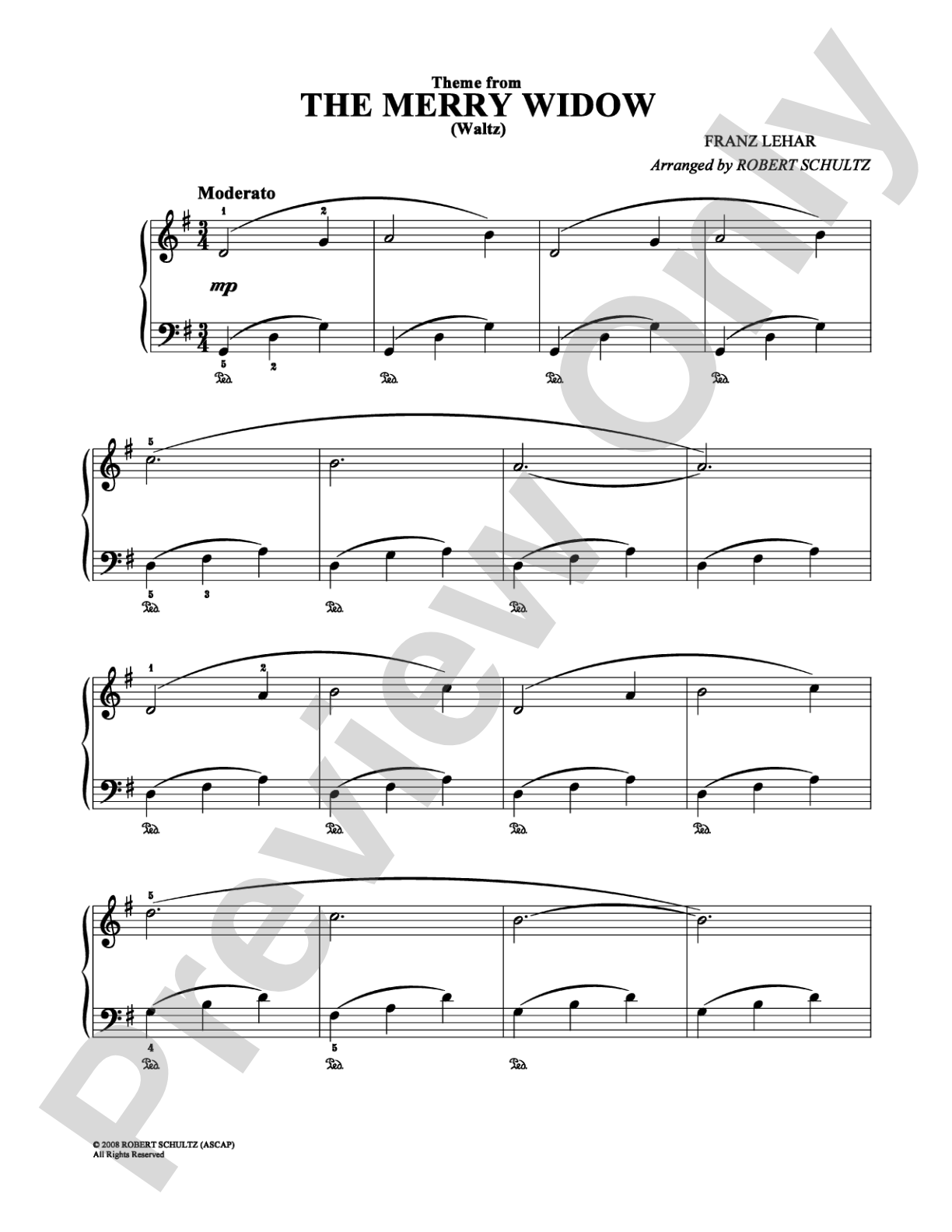
The Merry Widow's infectious melodies translate beautifully to easy piano, capturing the operetta's sparkle without overwhelming developing pianists. Students get genuine theatrical music rather than simplified exercises, which means they're learning repertoire that feels rewarding to perform. This arrangement maintains the piece's character while keeping the technical demands reasonable.

What to expect

Light, elegant, and full of charm. The Merry Widow floats with the grace of a Viennese waltz, combining sparkle with genuine melodic warmth. Playing it invites the performer into a world of dance and romance.

Who it's for

Early intermediate pianists who are ready for recognizable melodies and want to play music with real personality. This works well for students preparing for recitals, ensemble performances, or anyone who wants to explore operetta repertoire without advanced technique requirements.

How to get the most out of it

  • Bring out the waltz rhythm gently; the left hand provides the pulse, so keep it steady but never heavy.
  • Listen to a recording of the operetta to absorb the theatrical character; it will inform your phrasing and help you shape phrases musically rather than mechanically.
  • Pay attention to dynamics marked in the score; easy arrangements often rely on these contrasts to create interest and shape the form.

How to use it

Schedule this for a spring recital or as part of a light classical program that celebrates accessible operetta repertoire. It pairs nicely with other European salon pieces or works equally well as a standalone performance that audiences immediately recognize and enjoy.

Skills your students will build

  • Waltz rhythm and triple-meter subdivision
  • Legato phrasing in a lyrical melody
  • Left-hand accompaniment patterns (alberti bass and variations)
  • Rubato and flexibility appropriate to operetta style
  • Dynamic shaping to create musical interest within accessible technical limits

You May Also Like