The Melody Within Sheet Music Preview

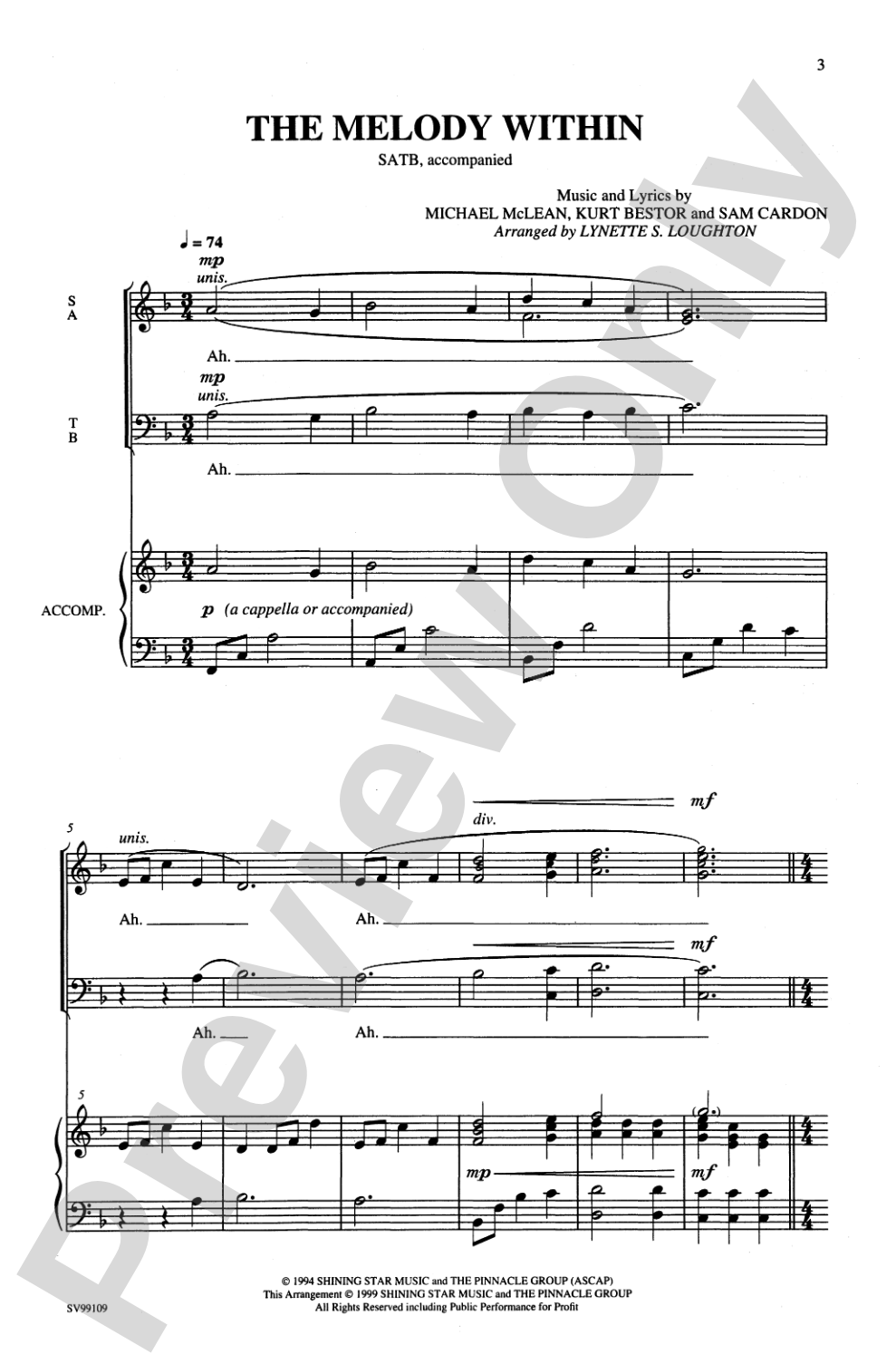
The Melody Within: SATB Choral Octavo

Music and lyrics by Michael McLean, Kurt Bestor, and Sam Cardon / arr. Lynnette S. Loughton

Item: 00-PO-0007675

Digital Download
$2.25

Minimum order quantity: 20 copies

Description
Choral directors may know the name Kurt Bestor from his highly acclaimed choral work "Prayer of the Children." This new song is adapted from a family entertainment film score.

The Melody Within: SATB Choral Octavo isn't in MakeMusic Cloud just yet...but it could be. Let us know you'd like to see it, and you'll help shape what comes next. In the meantime, start a free trial and dive into thousands of interactive titles your students can play along with today.

Sample Audio
No sample audio found.
Sample Video
Additional Details
Series: Alfred Archive Edition: Alfred Pop Choral Series
Publisher: Alfred Music
Page Count: 8
SKU: 00-PO-0007675

More about this title

About the Composer: Michael McLean

Michael McLean is a composer and lyricist with deep roots in faith-based and family entertainment music. His work spans film scores, choral compositions, and theatrical projects, often exploring themes of identity, belonging, and human connection through accessible melodic writing.

Why we love this

Kurt Bestor's name carries immediate credibility with choral directors, and this adaptation delivers the kind of singable, emotionally grounded writing that made "Prayer of the Children" a staple. The arrangement by Lynnette S. Loughton captures film score sensibility while keeping the SATB texture clear and balanced, giving your singers a piece that feels contemporary without demanding virtuosity.

What to expect

The piece carries the cinematic warmth of its film score origins, with lush harmonic support underlying a memorable melodic line. There is an intimate quality despite the full SATB voicing, as though the choir is sharing something personal rather than performing for spectators.

Who it's for

Directors programming concerts that blend classical choral traditions with contemporary appeal will find this octavo particularly valuable. It works equally well for intermediate to advanced high school choirs, college ensembles, and community choruses seeking material with emotional depth and broad audience recognition.

How to get the most out of it

  • Balance the melody between parts carefully in measures where it moves between voice sections; avoid letting any single line overshadow the harmonic support beneath it.
  • Attend to dynamic shape within phrases rather than treating sections as static; these sweeping melodic lines need subtle crescendos and releases to breathe naturally.
  • Work the text clarity early; film-derived material often benefits from singers understanding the emotional arc before diving into vocal technique.
  • Let your accompanist establish the film score character through tempo and rubato; the choral parts will settle into that groove more convincingly when the foundation is set first.

How to use it

Position this as a centerpiece number in a concert built around family-friendly themes or contemporary choral storytelling. It pairs naturally with other songs from the same film or with folk-influenced sacred and secular works that value clear melody and emotional directness.

Skills your students will build

  • Balancing melodic interest across four voice parts
  • Sustaining phrase shape through film score style rubato
  • Text expression and emotional delivery in contemporary idiom
  • Listening for harmonic color and blend in thick textures

You May Also Like