
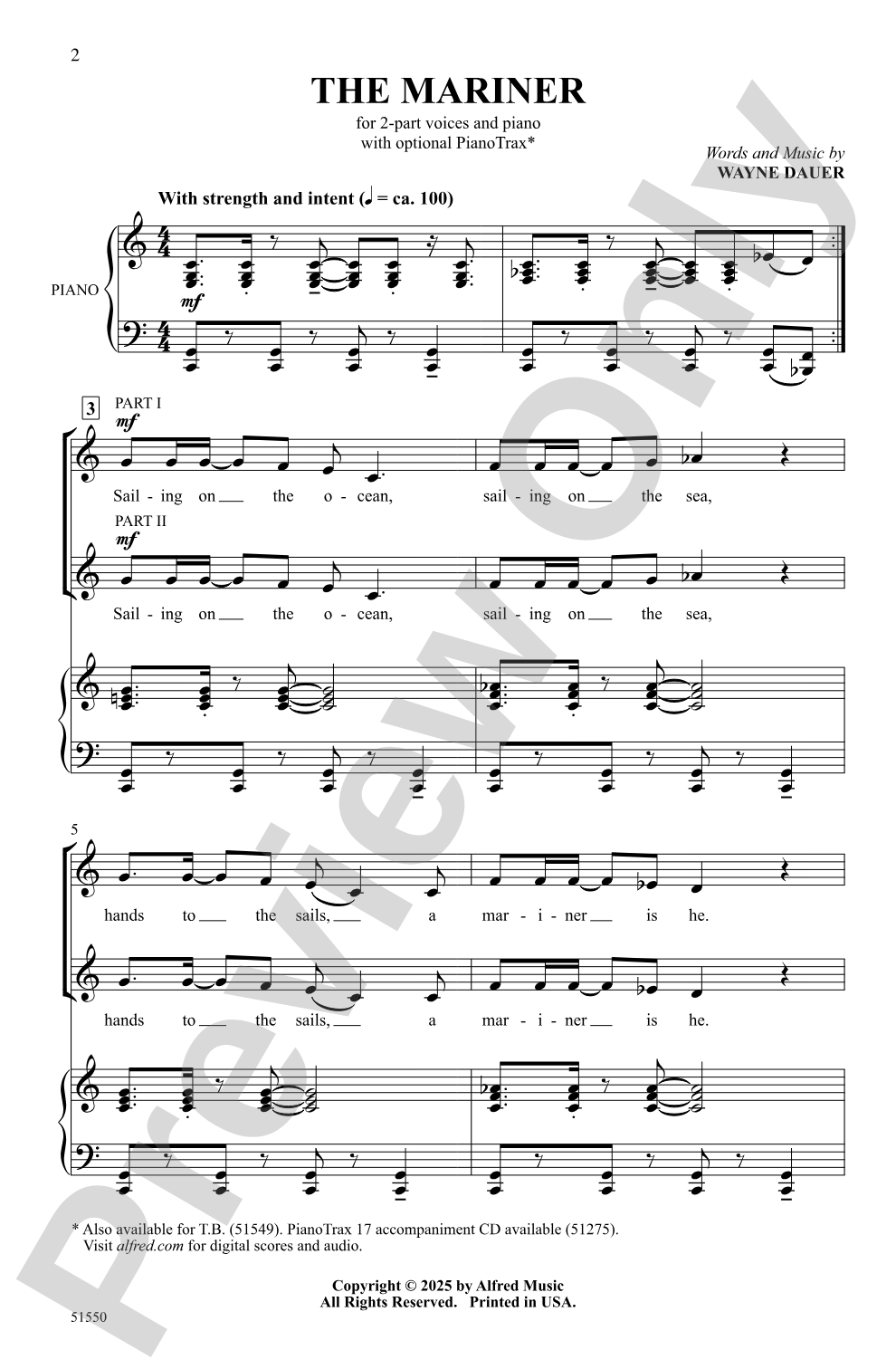
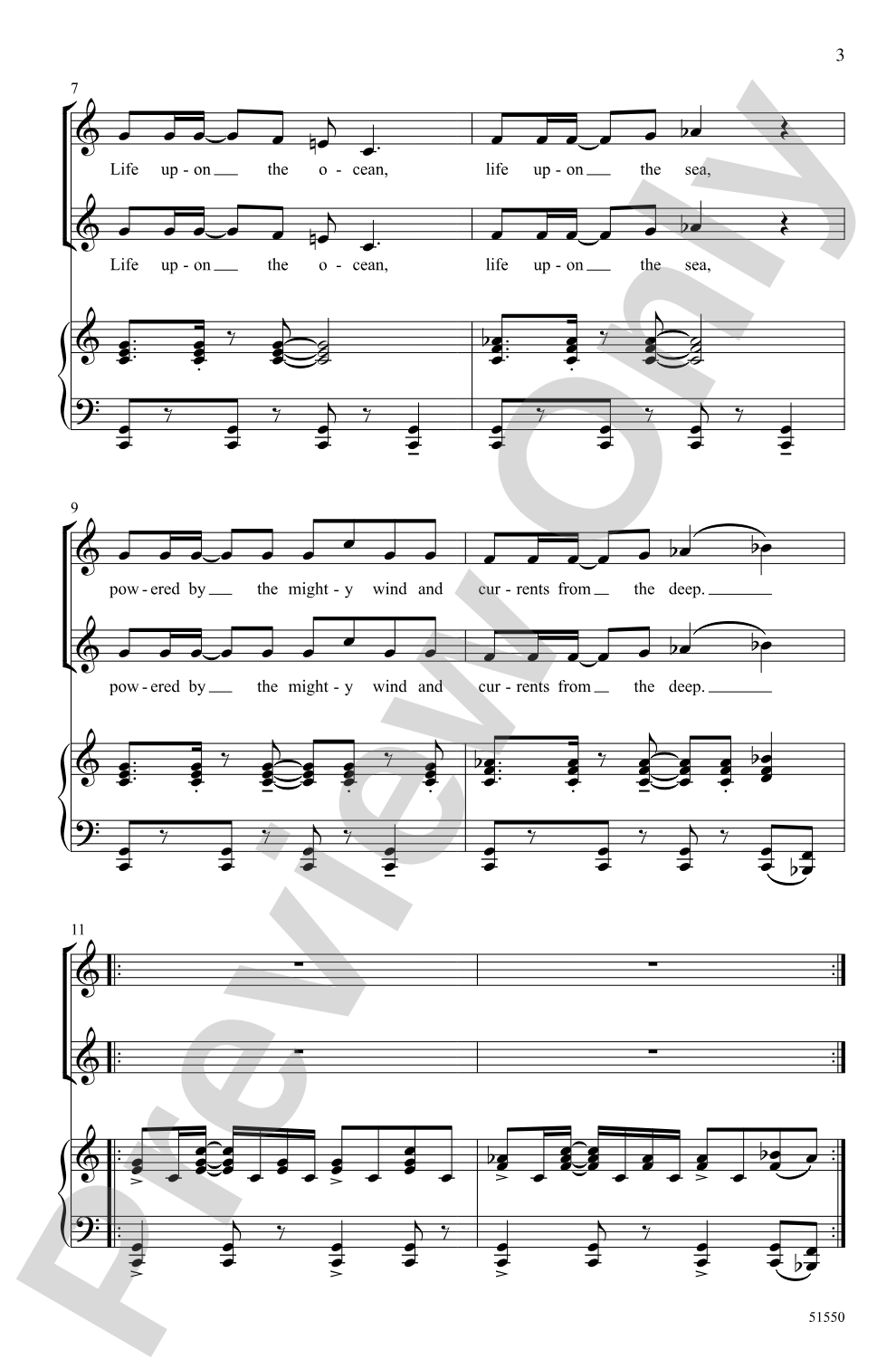
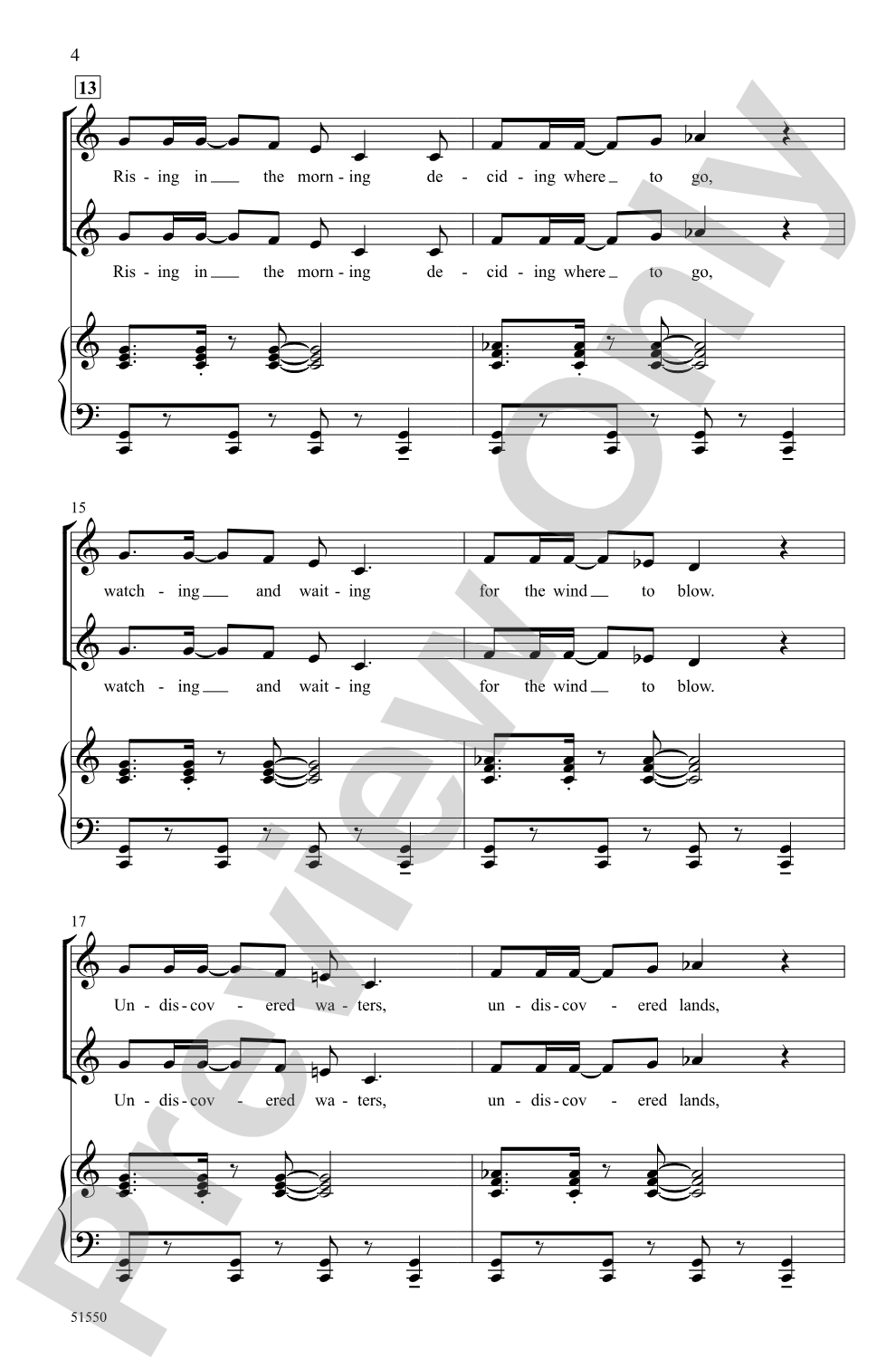

The Mariner: 2-Part Choral Octavo
Words and music by Wayne Dauer
Item: 00-PO-0007524
$2.30
Minimum order quantity: 20 copies
Pickup currently not available
Description
Designed for developing singers to set sail on a nautical adventure anchored by a hearty imaginative text with a rhythmic pulse that drives like the ocean's current. A sturdy piano accompaniment sets the scene of scowling winds, pounding waves, and life at sea in this mighty maritime piece for 2-part treble or changed voices.


The Mariner: 2-Part Choral Octavo isn't in MakeMusic Cloud just yet...but it could be. Let us know you'd like to see it, and you'll help shape what comes next. In the meantime, start a free trial and dive into thousands of interactive titles your students can play along with today.
Request This Title
Tell us you want it.
Start Your Free Trial
Explore everything that's ready to play right now.
Sample Audio
1
Audio File
--:--
0:00
0:00
Sample Video
Additional Details
Series:
Alfred Choral Designs
Publisher:
Alfred Music
Page Count:
12
SKU:
00-PO-0007524
More about this title
About the Composer: Wayne Dauer

Wayne Dauer is an Australian composer and educator born in 1969 who has spent nearly three decades teaching music to children across primary and secondary levels. His formal training spans piano, voice, classical guitar, and choral conducting, with composition study under several respected Australian composers including Mary Mageau. In recent years, Dauer has focused intensely on choral composition for young voices, drawing creative inspiration directly from the students in his classroom.
Dauer's teaching philosophy centers on making music accessible and joyful for all ability levels. He has created numerous educational programs for guitar, ukulele, and percussion, and authored hundreds of children's songs. His choral works reflect the personalities and lived experiences of his students, grounded in his conviction that music develops children mentally, physically, socially, and emotionally.
Why we love this
Dauer writes for the voices you actually have in front of you rather than writing around them. The text here is genuinely imaginative and the rhythmic drive keeps young singers engaged throughout, making this a standout choice when you need something that energizes a developing choir without asking them to stretch beyond their technical reach. The piano part carries real storytelling weight, which means your accompanist becomes a crucial ensemble member rather than filling space.
What to expect
The rhythmic momentum feels like being pulled by currents and tide; there's forward propulsion throughout that keeps the piece buoyant even during reflective moments. Dauer's text creates a vivid seascape through language and imagery, while the piano accompaniment adds textural detail that makes the nautical setting tangible rather than merely decorative.
Who it's for
Developing choir programs with treble or changed voices seeking substantial maritime material that connects young singers to a strong narrative without demanding advanced sight-reading skills. This works particularly well for choirs in grades 4-7 or mixed-age youth ensembles where you need something concert-ready that still feels age-appropriate.
How to get the most out of it
- Anchor the rhythmic pulse by having the accompanist practice independently first, then bring in the choir gradually so they can lock onto the piano's foundation rather than leading it.
- Shape the phrases around the imagery in the text (scowling winds, pounding waves) rather than treating each line as rhythmically equal; let the language guide where the air moves.
- Experiment with dynamic contrast between the two voice parts to suggest dialogue or layered storytelling, especially if your singers can handle independent parts.
- Record a sectional run-through early and play it back to your choir; hearing themselves as an ensemble often clarifies intonation and blend issues more effectively than repeated drilling.
How to use it
This piece thrives in a concert context where you're building a thematic set around adventure, exploration, or nature; it pairs naturally with folk songs or other world music that celebrates human resilience. It's also strong festival material because the text engagement and rhythmic clarity help young choirs make immediate impact with adjudicators.
Skills your students will build
- Reading 2-part arrangements with independent rhythmic lines
- Maintaining rhythmic momentum in longer phrases
- Connecting text imagery to dynamic and tonal choices
- Blend and balance between two distinct voice parts
- Interpreting sectional independence within an ensemble context