The Man That Got Away Sheet Music Preview

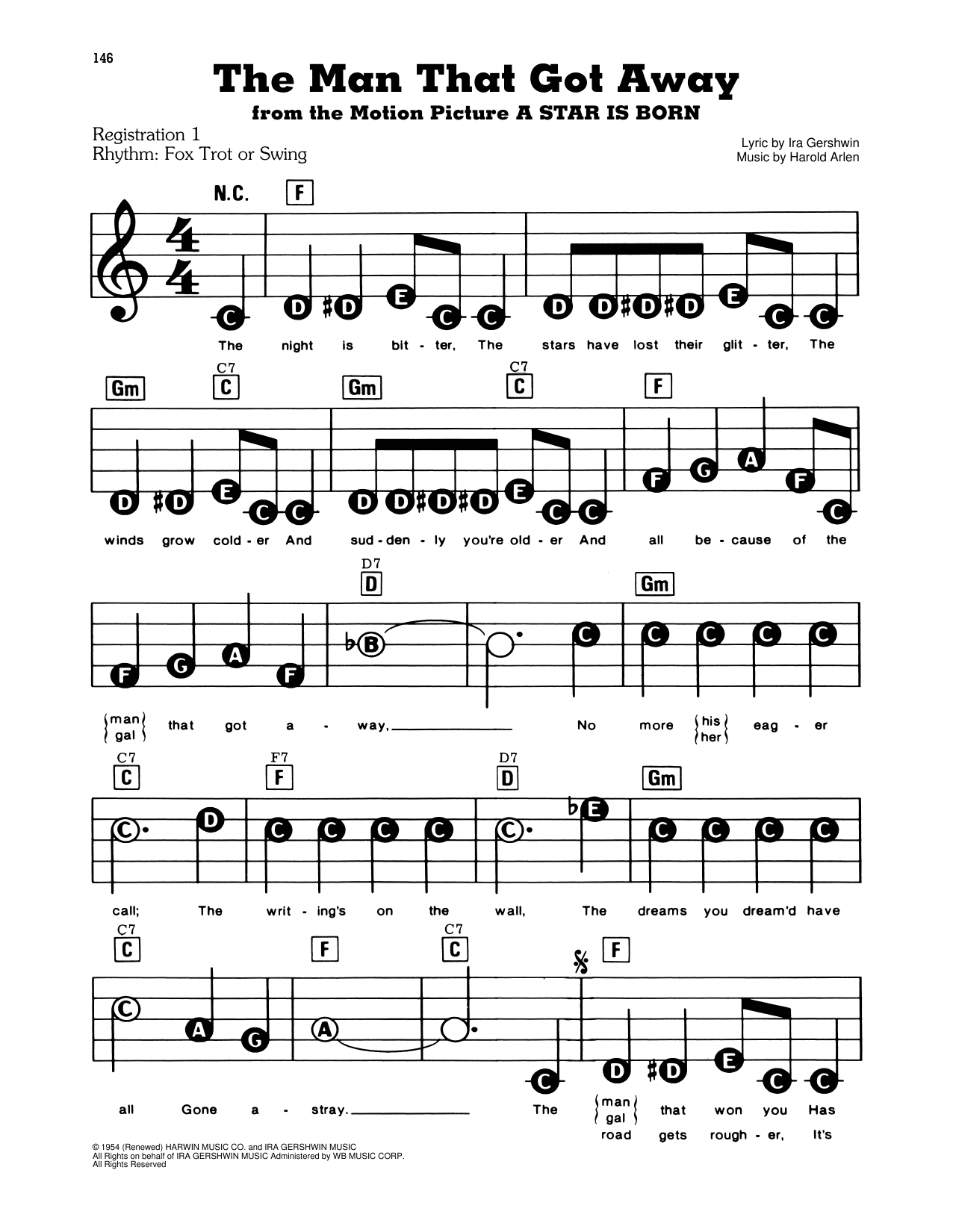
The Man That Got Away: E-Z Play Today

Item: 35-DS00496096

Digital Download
$4.99
Description

The Man That Got Away: E-Z Play Today isn't in MakeMusic Cloud just yet...but it could be. Let us know you'd like to see it, and you'll help shape what comes next. In the meantime, start a free trial and dive into thousands of interactive titles your students can play along with today.

Sample Audio
No sample audio found.
Sample Video
Additional Details
Publisher: Hal Leonard
Page Count: 3
SKU: 35-DS00496096

More about this title

About the Creator: Harold Arlen

Harold Arlen composed the music for "The Man That Got Away" in 1954, creating one of the most sophisticated and harmonically rich standards in the American songbook. His gift for memorable melody combined with jazz-influenced harmonic language made him a defining voice in mid-century musical theater, and this song stands as proof of his ability to write for both Broadway audiences and jazz musicians.

Why we love this

This E-Z Play arrangement makes a genuine jazz standard accessible without sacrificing the song's harmonic identity. The three-page format is exactly right for students ready to move beyond lead sheets but not yet prepared for a full score, and the writing respects Arlen's sophisticated chord changes while keeping the learning curve manageable.

What to expect

A wistful, introspective journey through a melody that feels both inevitable and surprising. The harmonies suggest longing and sophistication, creating an intimate musical conversation that draws the listener in even at modest tempos.

Who it's for

Pianists with a year or two of study who are beginning to explore jazz and standard repertoire. This arrangement also works well for music teachers introducing students to the American songbook without the complexity of a full jazz fake book.

How to get the most out of it

  • Treat the eighth-note figures as part of the song's forward momentum rather than decoration; they should breathe with the melodic line, not interrupt it.
  • The harmonic movement requires clarity in the left hand. Even at a moderate tempo, each chord should land with purpose to support the vocal or solo melody above.
  • Pay attention to any dynamic markings that shape the emotional arc. Jazz standards live and die by phrasing, and the printed dynamics are your roadmap for storytelling.
  • If performing with a vocalist or soloist, establish a clear tempo in your mind before starting. Your accompaniment sets the harmonic and rhythmic foundation the other musician depends on.

How to use it

Consider pairing this with other mid-century standards in a jazz or Americana-themed concert. It also serves well as an encore or as a bridge between classical repertoire and more improvisational jazz styles in a recital context.

Skills your students will build

  • Reading jazz chords and harmonic symbols
  • Balancing melody and accompaniment in single-staff arrangements
  • Phrasing with swing and legato in popular song style
  • Understanding chord function in the context of jazz standards

You May Also Like