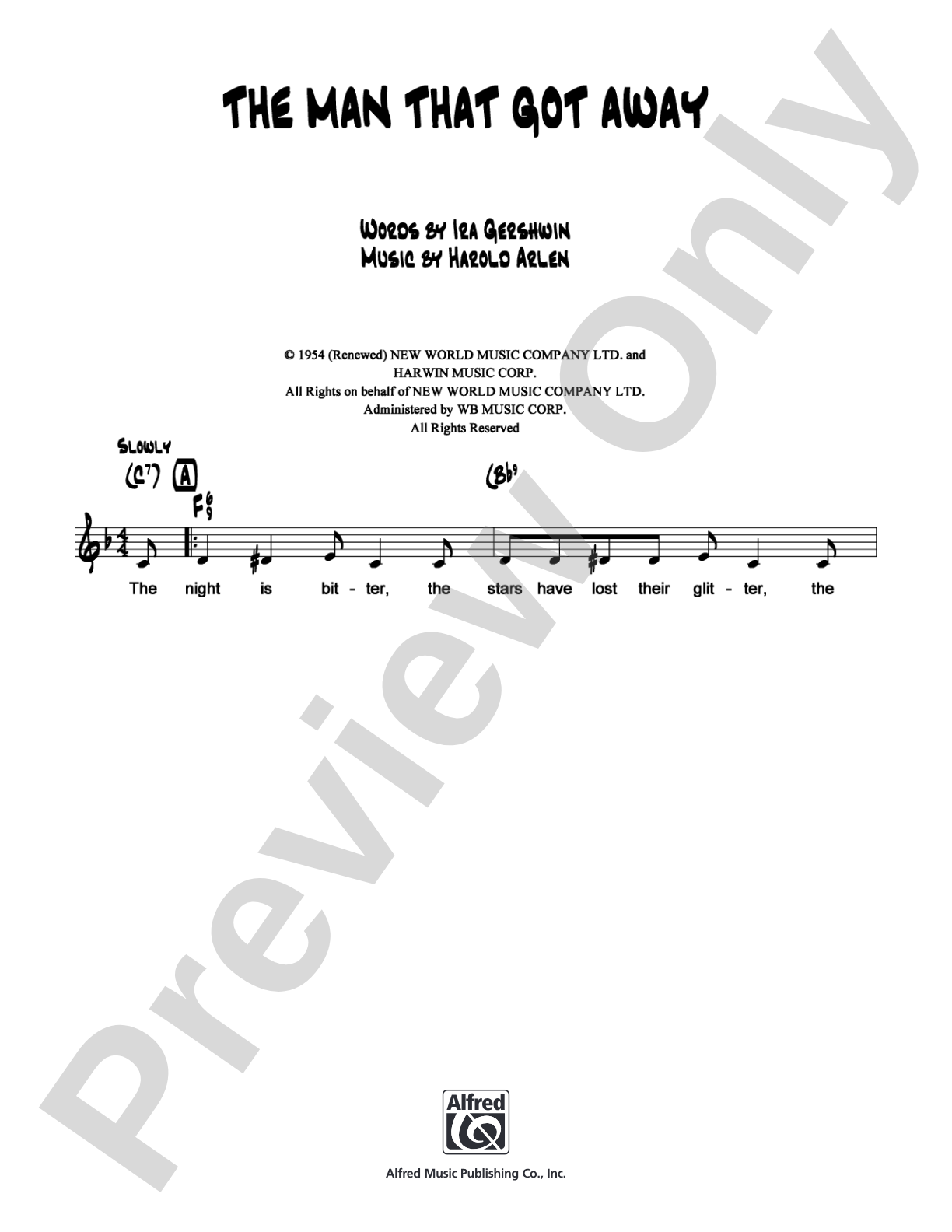
The Man That Got Away: Lead Sheet Digital Sheet Music

The Man That Got Away: Lead Sheet Digital Sheet Music

Harold Arlen, Judy Garland

Item: 00-PS-0003480

Digital Download
$1.99
Description

The Man That Got Away: Lead Sheet Digital Sheet Music isn't in MakeMusic Cloud just yet...but it could be. Let us know you'd like to see it, and you'll help shape what comes next. In the meantime, start a free trial and dive into thousands of interactive titles your students can play along with today.

Sample Audio
No sample audio found.
Sample Video
Additional Details
SKU: 00-PS-0003480

More about this title

About the Artist: Judy Garland

Judy Garland (1922–1969) became an American icon through her distinctive vocal artistry and charismatic stage presence. Her ability to inhabit a song with emotional directness and rhythmic flexibility made her interpretations of standards instantly recognizable and endlessly influential.

Garland's approach to singing emphasized storytelling over technical display. For musicians learning jazz standards and popular music of the mid-twentieth century, her recordings serve as masterclasses in phrasing, timing, and the marriage of lyrics to melody.

Why we love this

This standard carries the weight of one of Broadway and Hollywood's most iconic interpretations. Musicians and singers benefit from working with the exact harmonic framework Garland knew, allowing them to honor the song's legacy while building their own interpretive voice.

What to expect

The song unfolds with a kind of world-weary wisdom mixed with determination. There's vulnerability in the melody, especially in the lower passages, but the harmonic movement suggests movement forward, a refusal to stay defeated.

Who it's for

Jazz singers, standards-focused performers, and musicians learning the Great American Songbook will find this lead sheet essential. It's also valuable for music students exploring how iconic performers shape the standard repertoire.

How to get the most out of it

  • Study Garland's phrasing choices on the original recording; her rhythmic flexibility in the bridge becomes a model for building tension and release in your own interpretation
  • The melody sits in a conversational range, which invites you to shape dynamics through lyrical emphasis rather than belting; let the lyrics guide the volume
  • Treat the harmonic changes as emotional signposts, not obstacles; each chord shift supports a shift in the narrative about loss and resilience

How to use it

Program this as a solo feature in a jazz or cabaret concert, or pair it with other standards from the same era to create a thematic set. It works equally well in a recital exploring interpretations of classic songs or as a teaching piece for students learning how to navigate jazz harmony and lyrical storytelling.

Skills your students will build

  • Reading lead sheet notation and interpreting harmonic symbols
  • Phrasing strategies for storytelling-centered song interpretation
  • Tension and release through lyrical emphasis and dynamic shape
  • Understanding the relationship between melody and jazz harmony
  • Interpreting rubato and rhythmic flexibility in standards-based performance

You May Also Like