
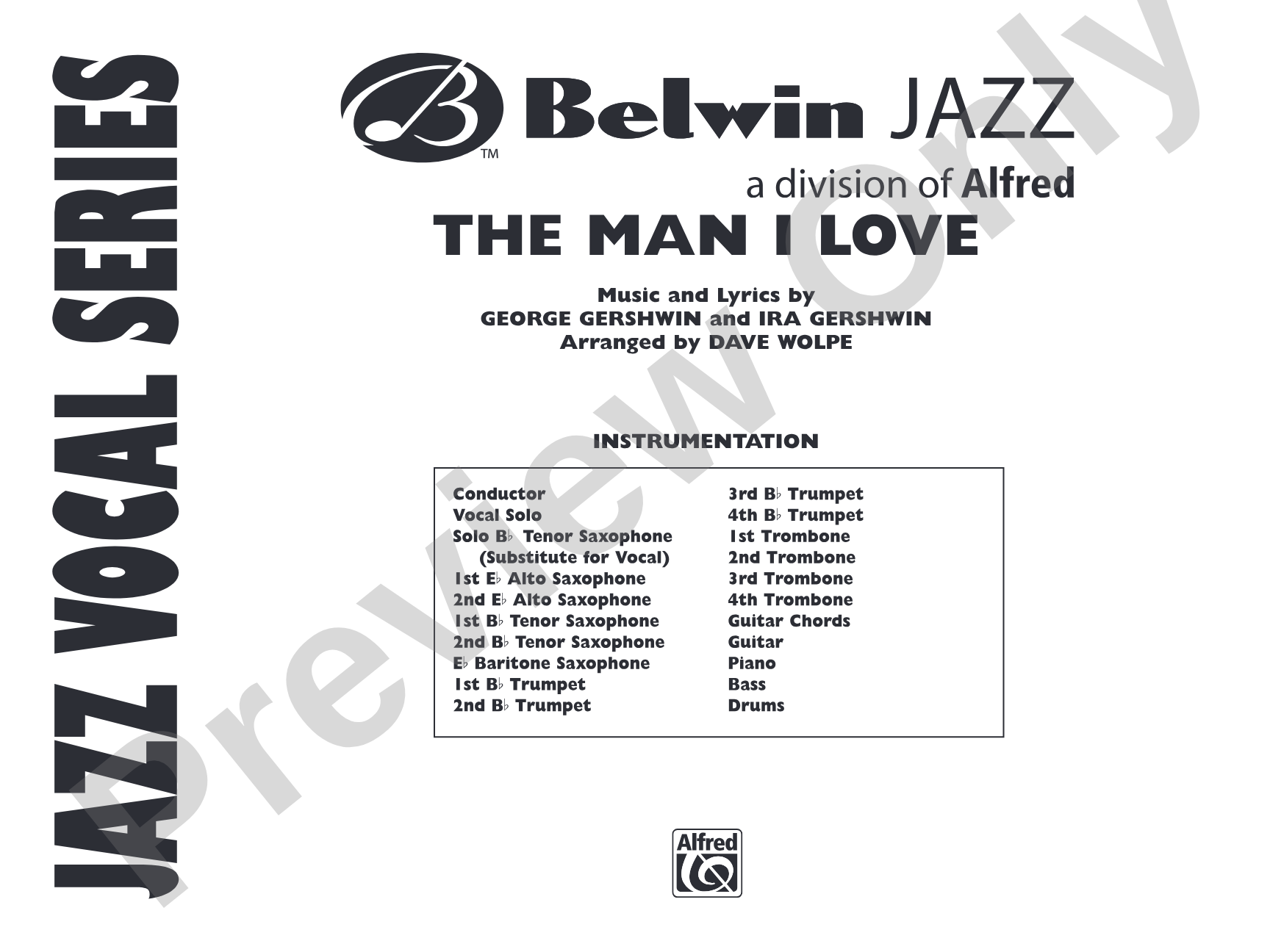

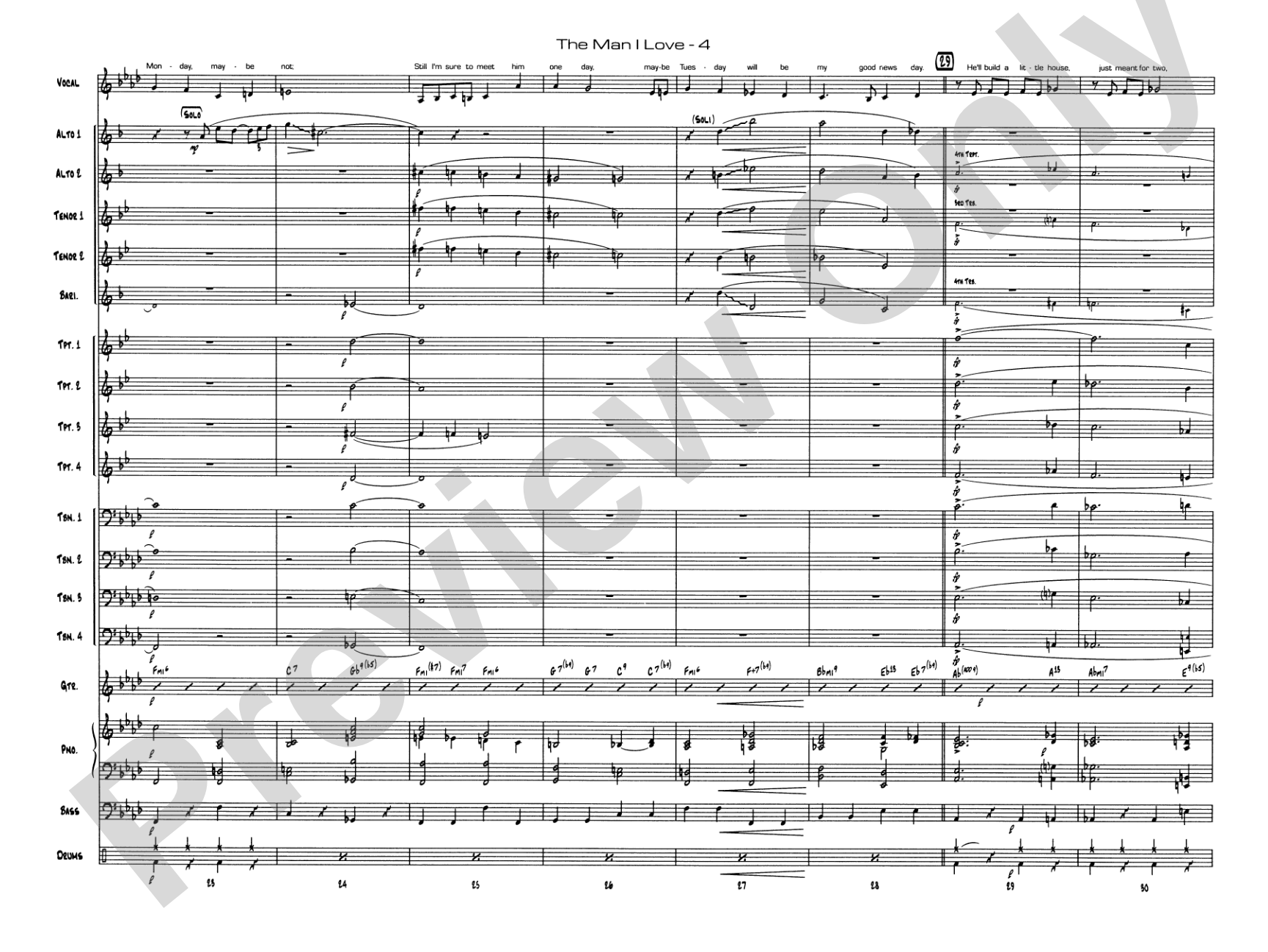
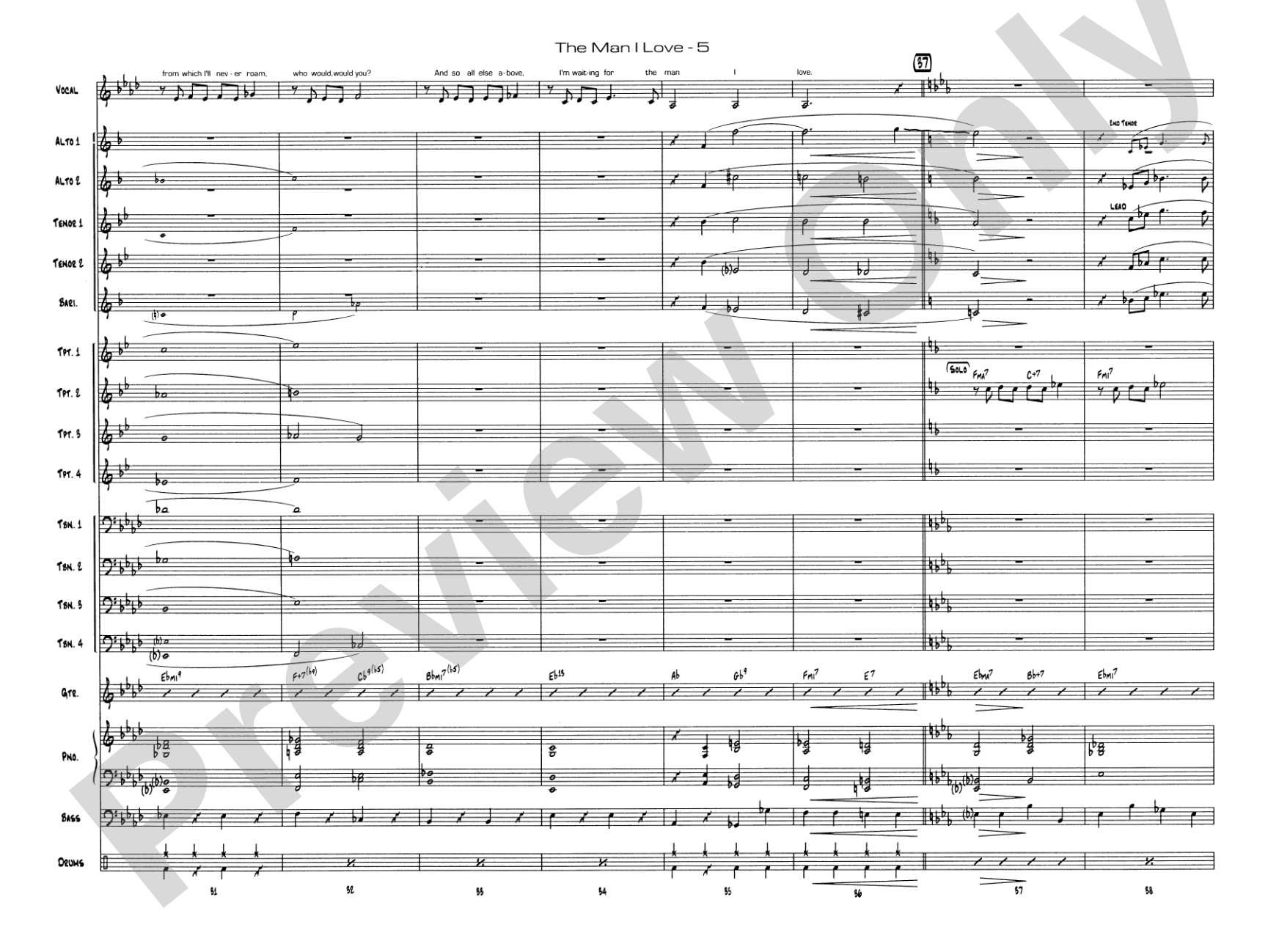
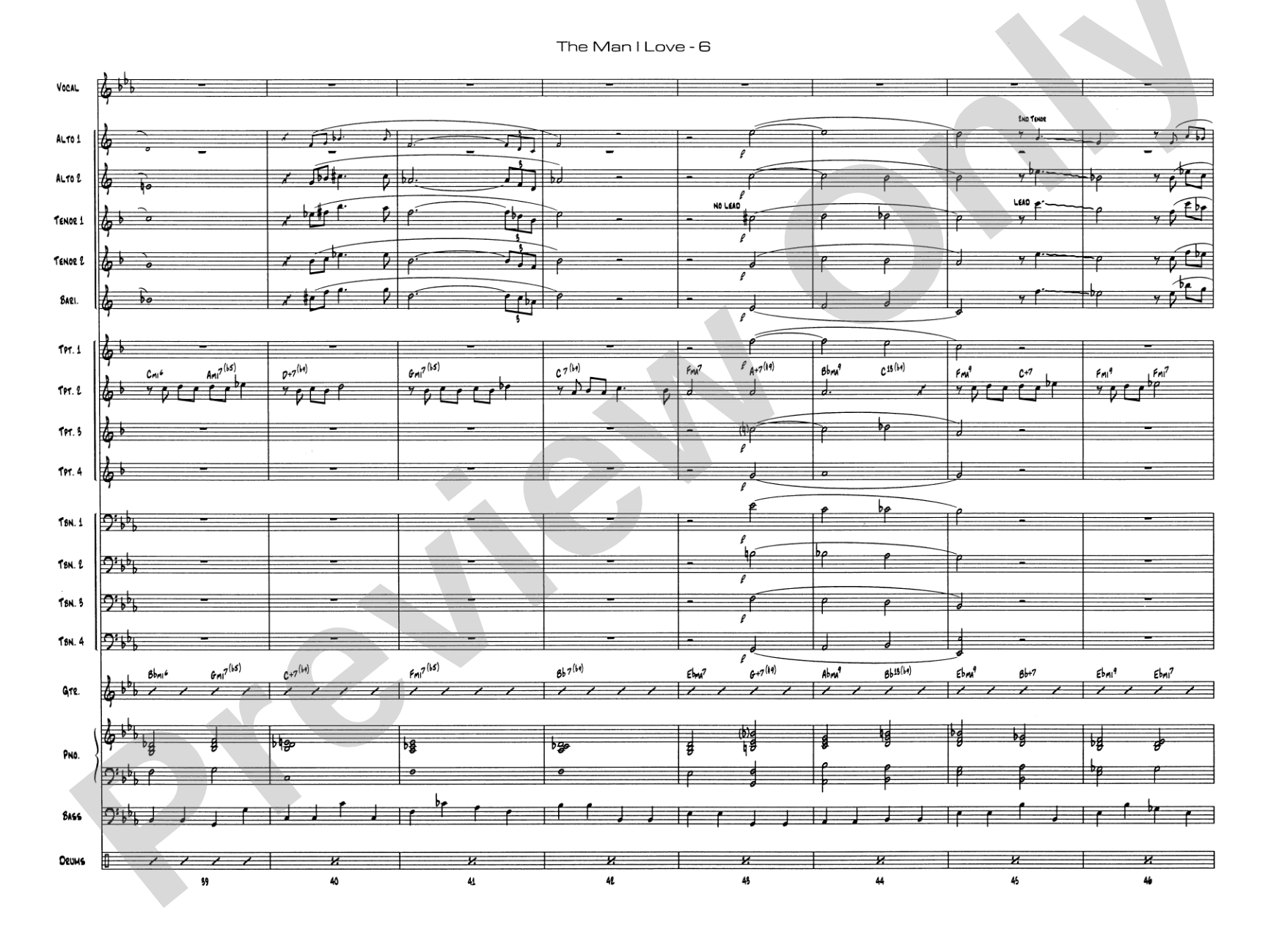
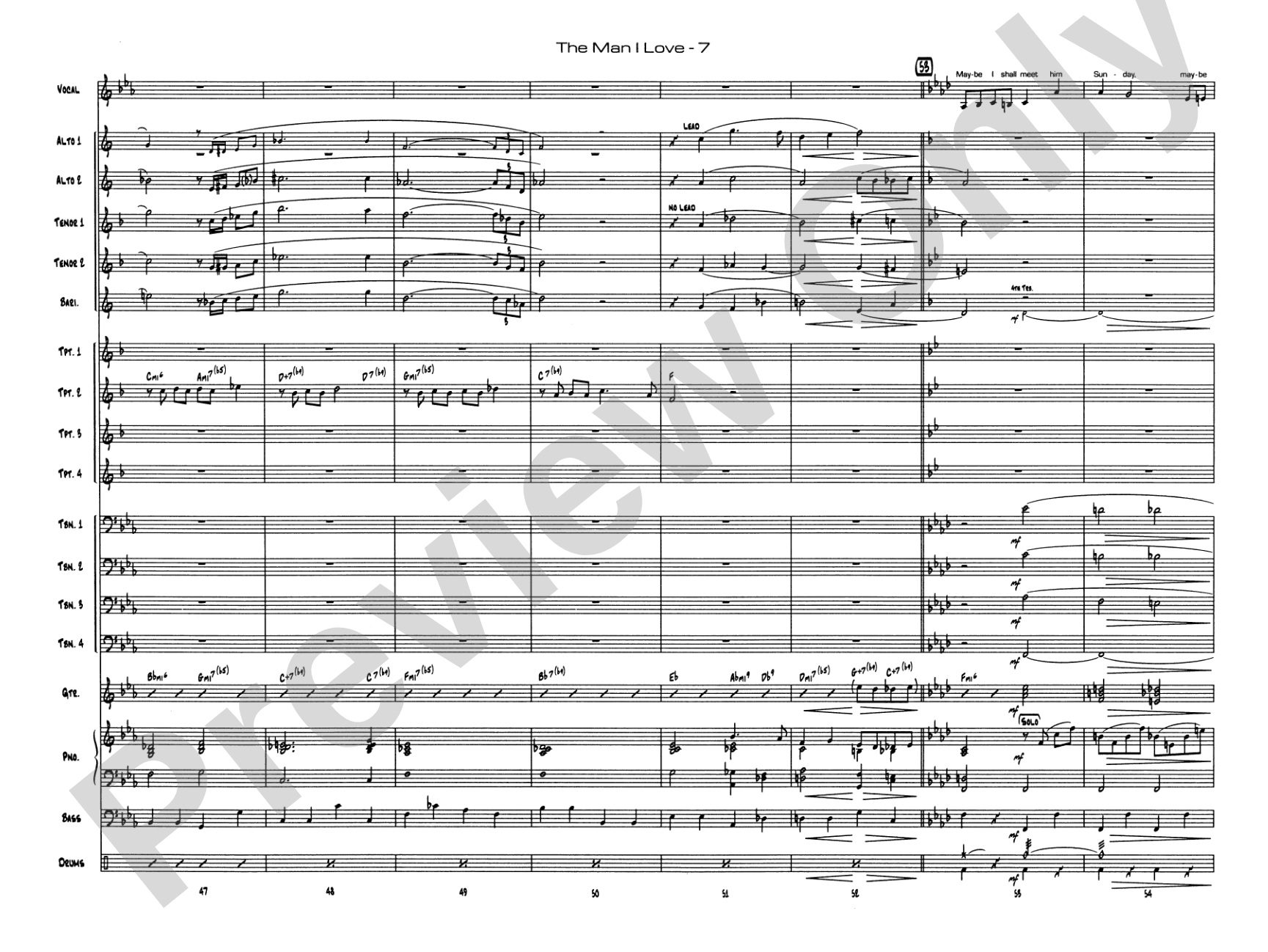
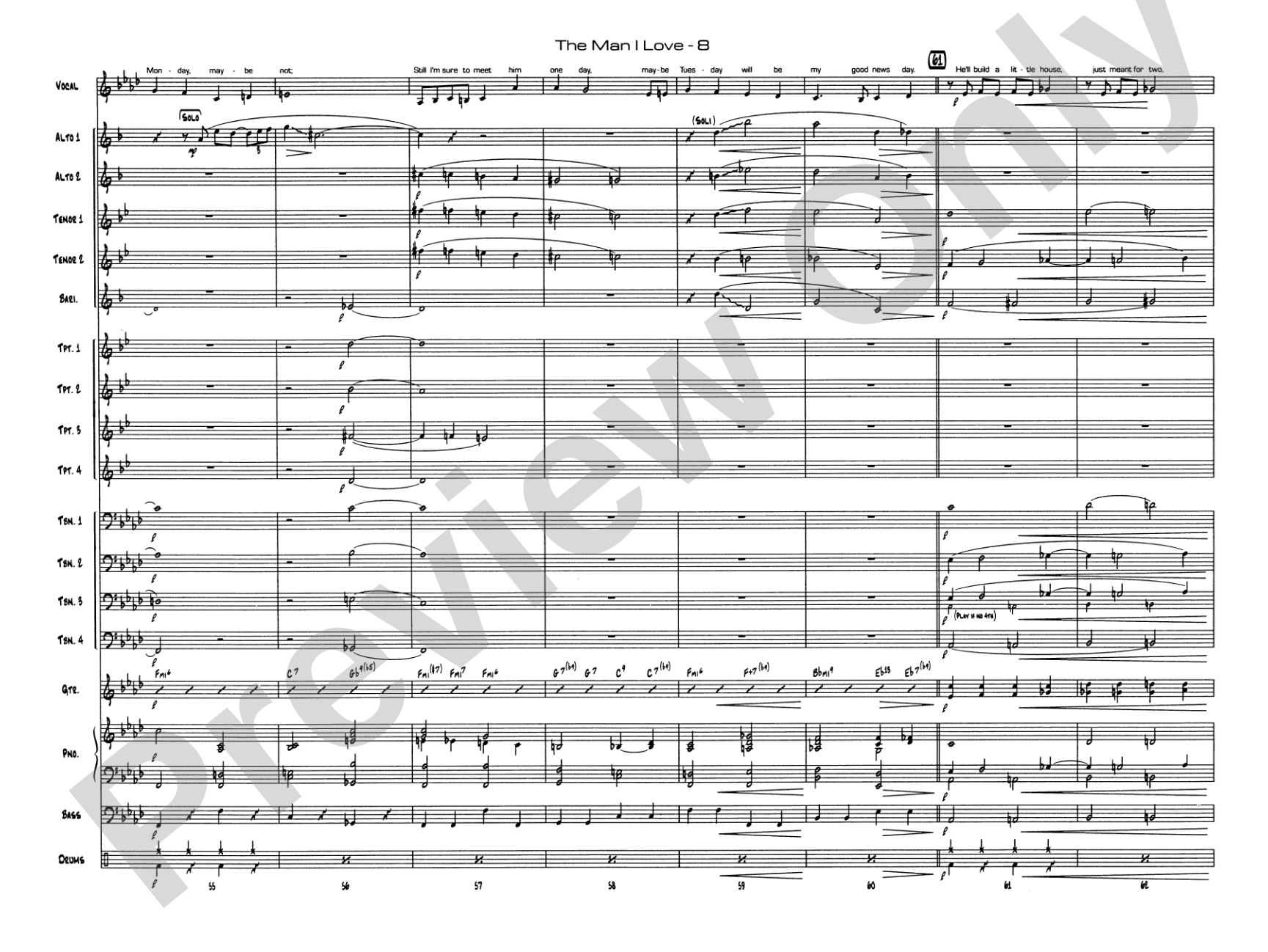
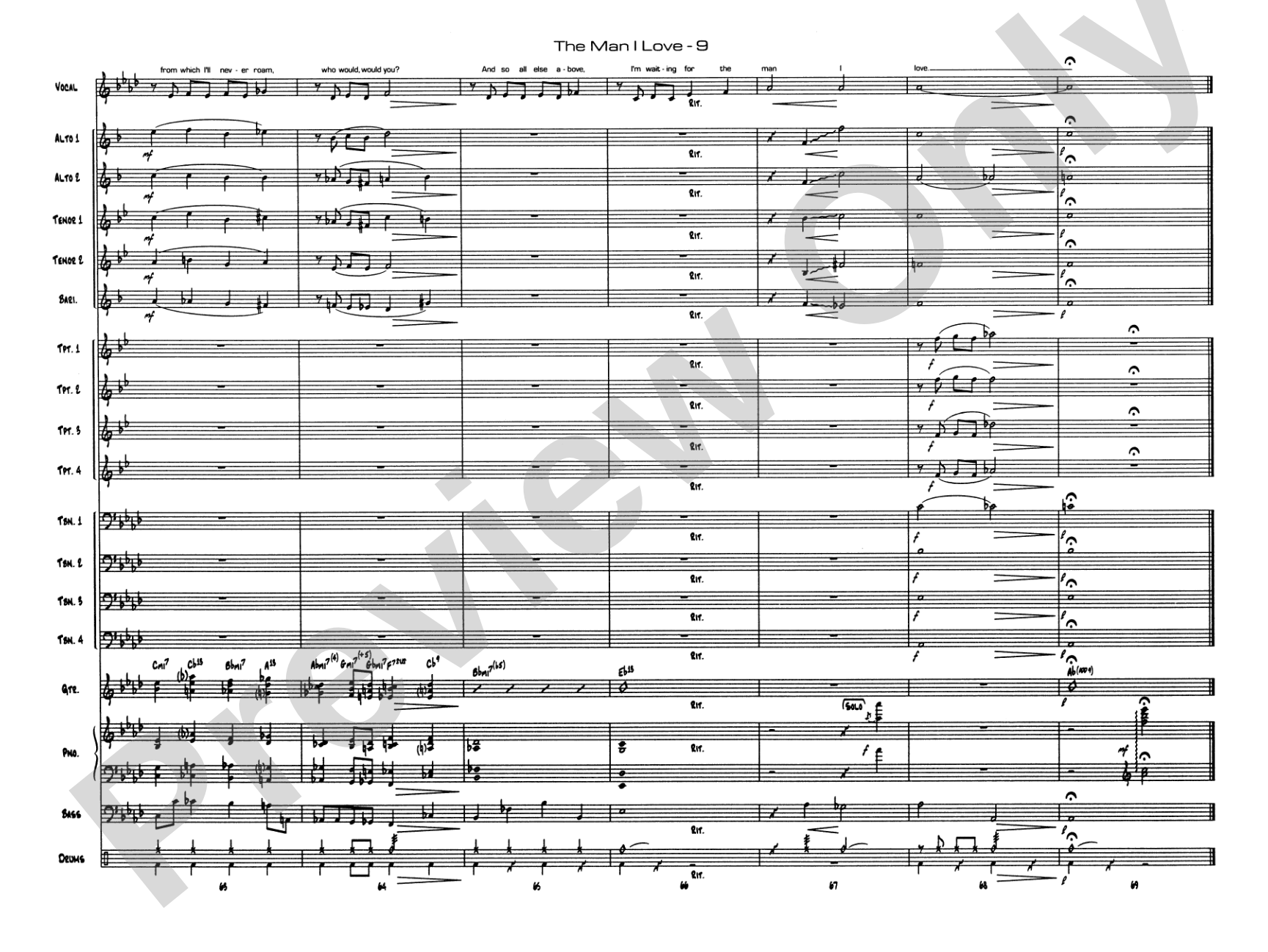


The Man I Love: Vocal Solo with Jazz Ensemble Conductor Score & Parts
Vocal Feature
By George Gershwin and Ira Gershwin / arr. Dave Wolpe
Grade: 3 (Medium)
Item: 00-PK-0002547

$54.00
One moment…
Description
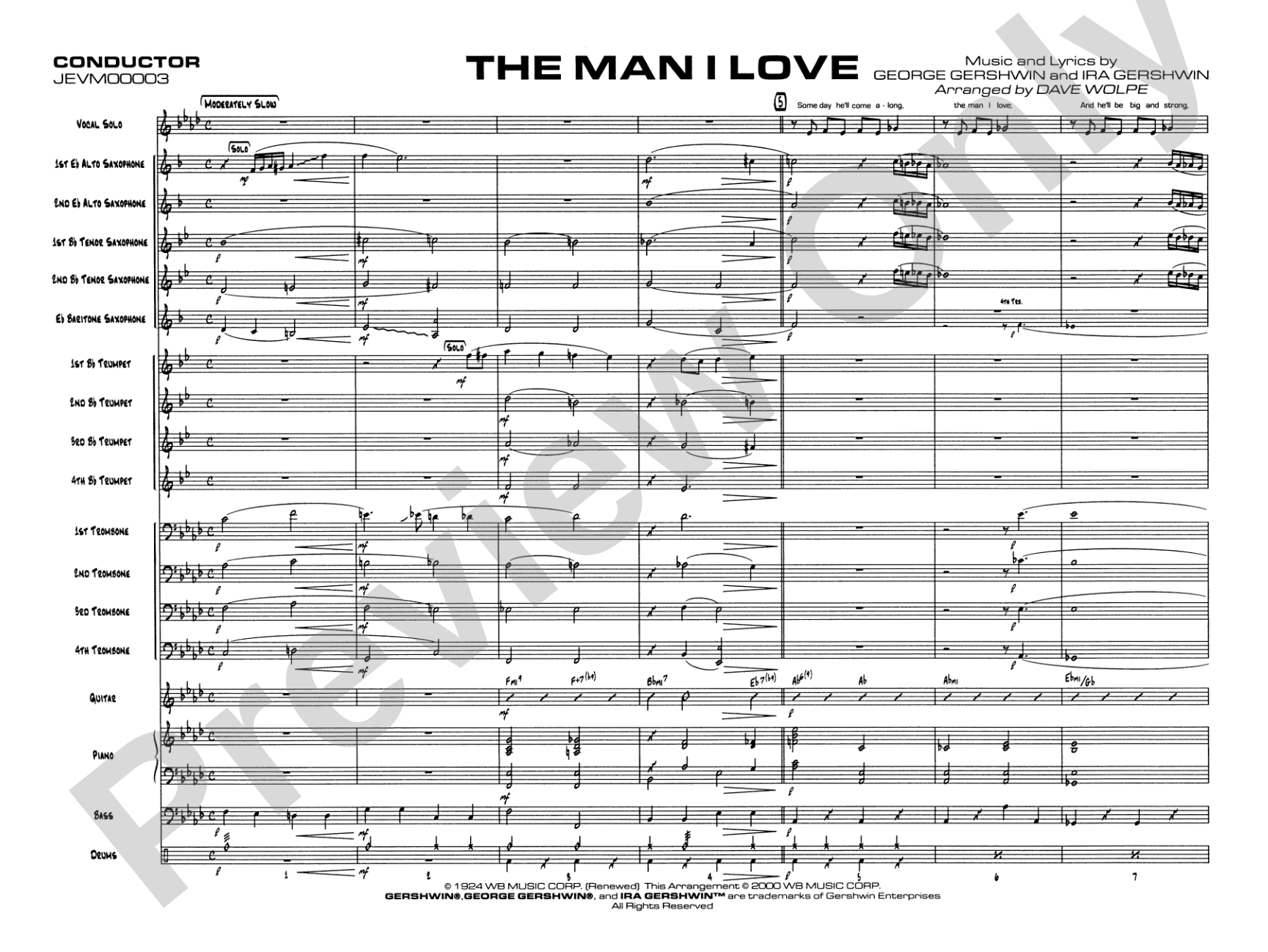
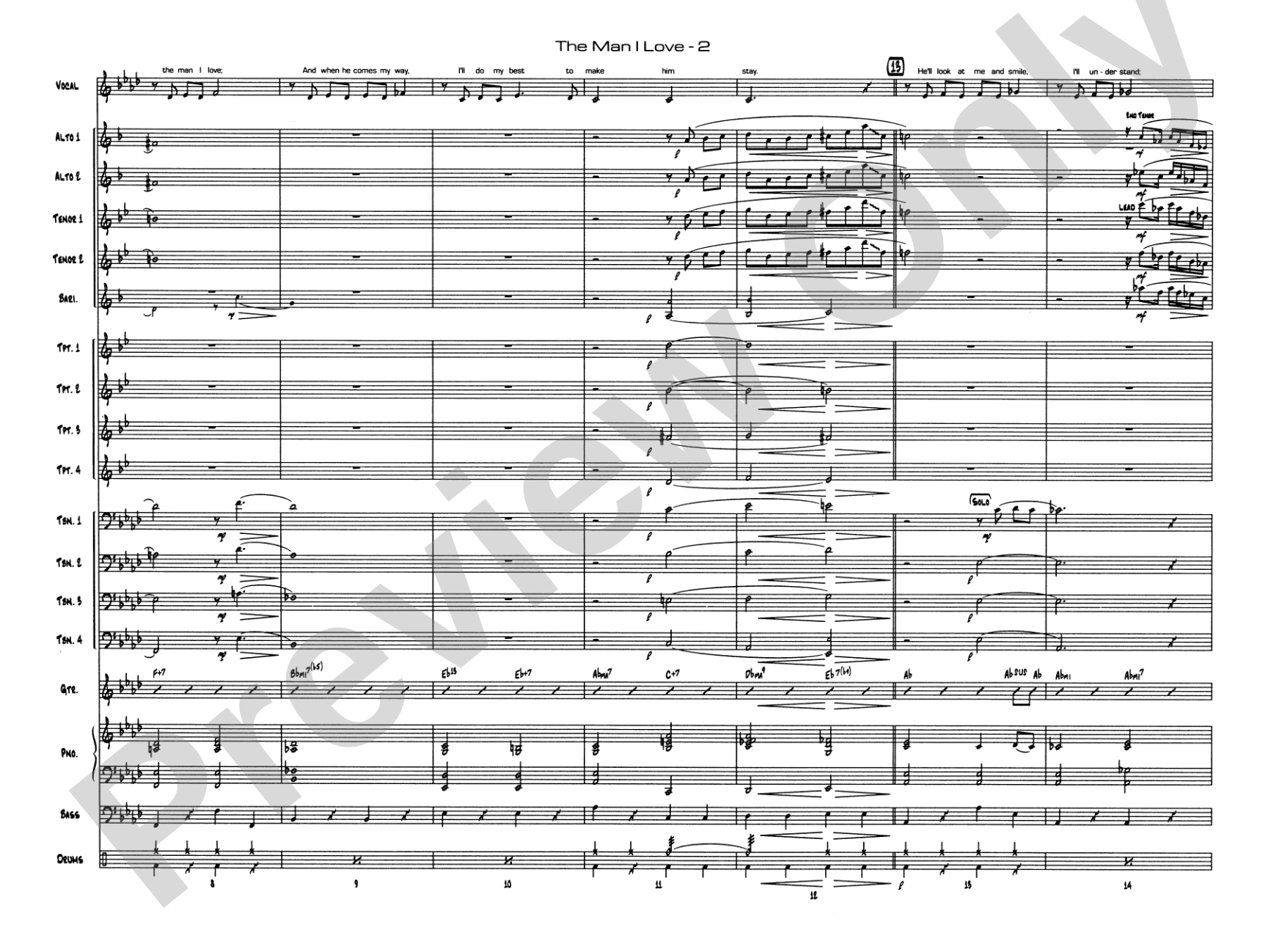
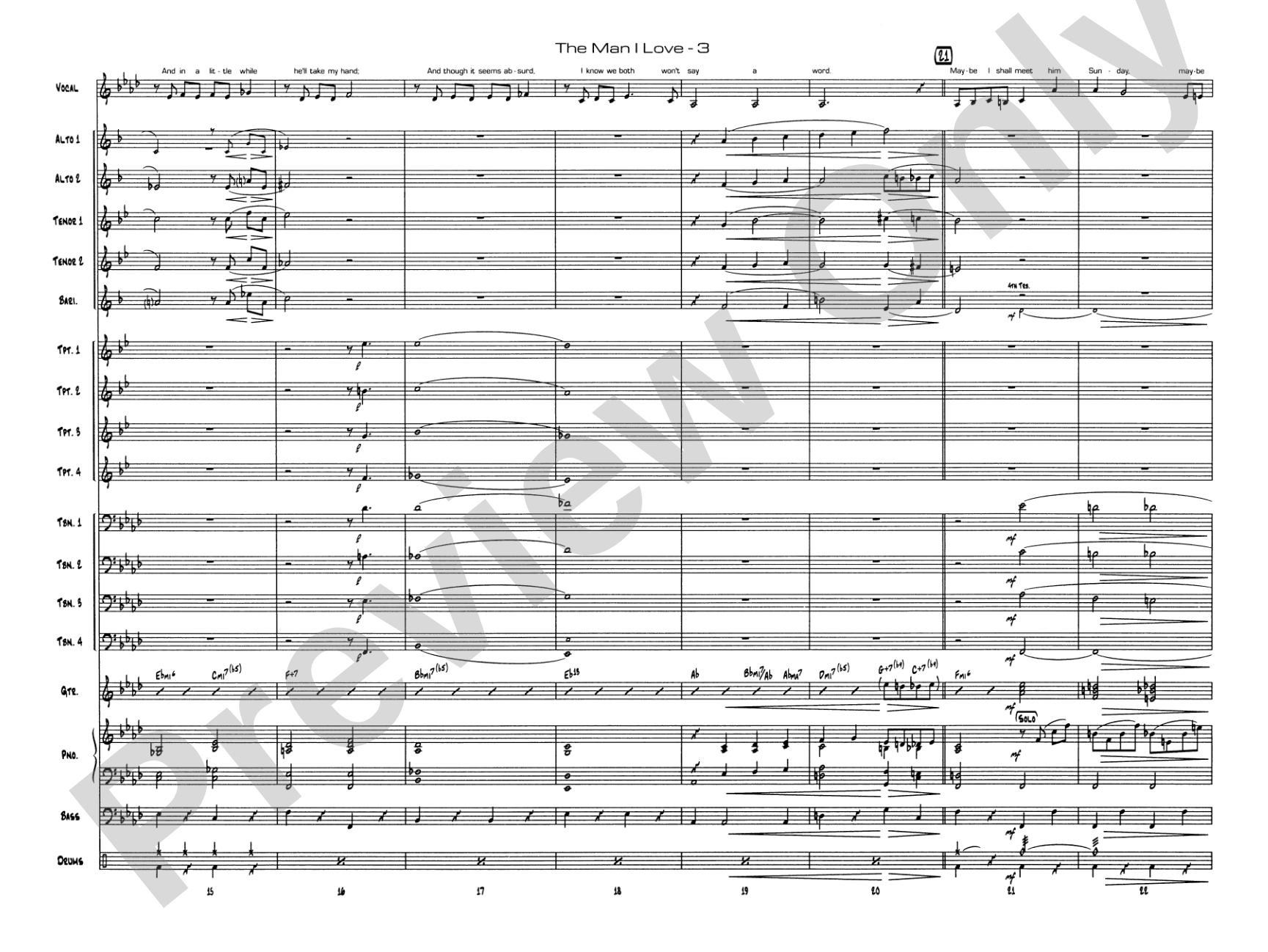
A wonderful feature for your female vocalist-smooth, sultry and romantic! You can almost hear Billie Holiday herself singing this Gershwin gem brilliantly arranged by Dave Wolpe. Featuring a modest vocal range of only an octave, easy brass ranges and a sweet written trumpet solo, this one is definitely a winner. Ideal for concert, show or dance, the audience will enjoy this well-known jazz vocal classic. Optional substitute vocal part written for tenor saxophone. (Vocal in A-flat)


Don't just read it, hear it, play along with it, and watch your students grow with it. In MakeMusic Cloud, The Man I Love: Vocal Solo with Jazz Ensemble Conductor Score & Parts comes alive with professional accompaniment, adjustable tempo, and built-in practice tools that turn solo practice into real progress.
Open in the Player
Jump straight in and assign it today.
Start Your Free Trial
Open this title and explore the full library in minutes.
Sample Audio
1
Audio File
--:--
0:00
0:00
Sample Video
No sample videos found.
Additional Details
Series:
Jazz Vocal Series
Publisher:
Alfred Music
Page Count:
88
SKU:
00-PK-0002547
More about this title
About the Composer: George Gershwin
George Gershwin (1898-1937) was an American composer who bridged classical and popular music with unprecedented ease. His gift for melody and harmonic sophistication made standards like "Rhapsody in Blue" and "An American in Paris" endure for nearly a century. "The Man I Love," written with his brother Ira as lyricist, emerged from the 1924 musical "Lady, Be Good!" and became one of the most recorded songs in jazz history.
Gershwin's work fundamentally shaped how American composers thought about jazz idioms and classical forms. His influence extends far beyond concert halls into the standard repertoire that jazz musicians, vocalists, and ensemble arrangers continue to interpret and reinterpret. For music educators, Gershwin's catalog offers direct access to the sound and sensibility of the early jazz age.
Why we love this
Dave Wolpe's arrangement respects the song's essential character while making it genuinely playable by high school and college jazz ensembles. The modest vocal range (just an octave) and accessible brass writing mean your focus stays on the artistry of the vocalist rather than technical survival. A tenor saxophone substitute part adds flexibility for programming, and the written trumpet solo gives your section a moment to shine without overwhelming the narrative.
What to expect
Sultry and introspective, with an ache underneath the romance. Gershwin's harmony carries sophisticated tension, and the Wolpe arrangement's lean orchestration lets that harmonic language breathe. A vocalist who can sit in the pocket while maintaining emotional vulnerability will find the piece deeply rewarding.
Who it's for
Ensembles with a strong vocalist who understands jazz interpretation and sensibility. This works equally well for a featured soloist in a jazz combo setting or as a showcase moment in a larger jazz band concert. Level 3 accessibility makes it suitable for high school through community college programs.
How to get the most out of it
- Shape the vocal line with rubato and space; this is not a metronomic delivery. Let the vocalist breathe into the phrasing and invite the ensemble to follow, not drive.
- Balance the ensemble so the vocalist sits naturally in the foreground without requiring excessive projection. The arrangement's restraint demands sensitive dynamics from every section.
- Pay attention to the trumpet solo's placement and character. It should feel like an intimate conversation with the vocalist, not a technical display.
- Establish the jazz feel early in rehearsal through the rhythm section. The accompaniment's groove determines how the melody lands emotionally.
How to use it
Program this as a concert centerpiece or as a bridge moment between high-energy numbers that lets the audience settle into something intimate. It pairs naturally with other vocal features or with other standards arranged for jazz ensemble, creating a set that showcases your ensemble's musicality beyond pure swing and funk.
Skills your students will build
- Interpreting jazz phrasing and vocal rubato while maintaining ensemble cohesion
- Reading and balancing accompaniment texture around a solo voice
- Understanding the harmonic language of American standards and swing-era composition
- Responding dynamically and rhythmically to a vocalist's interpretation in real time